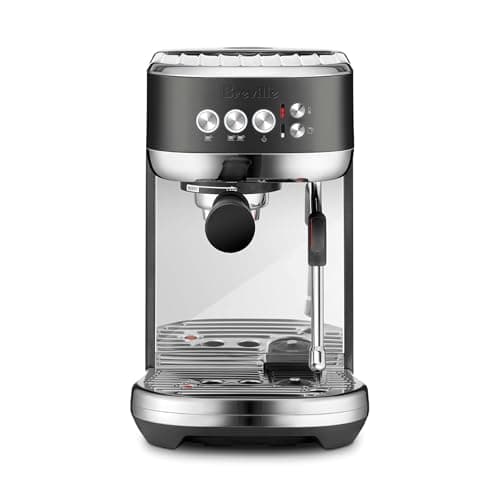
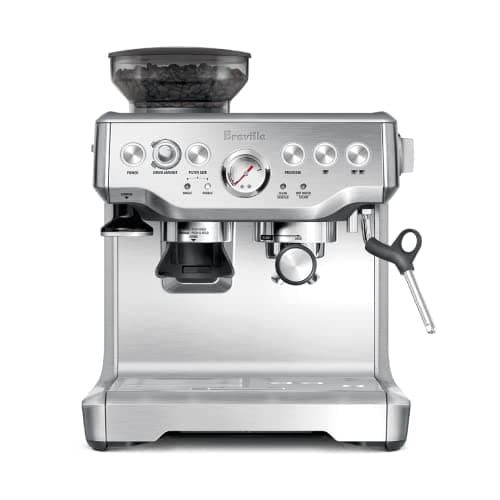
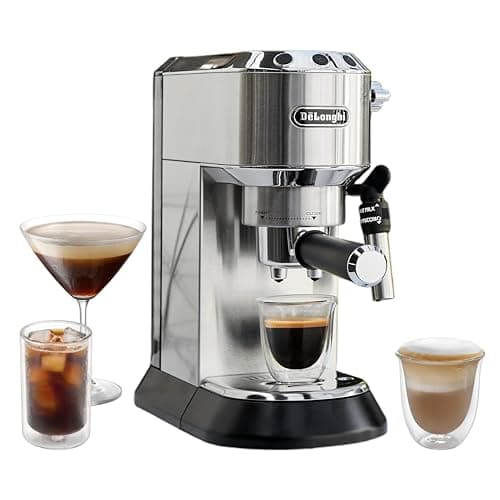
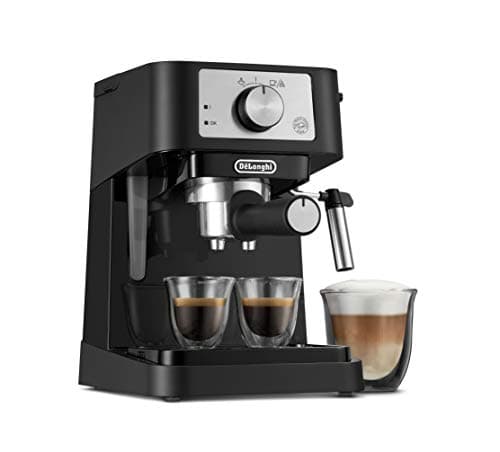
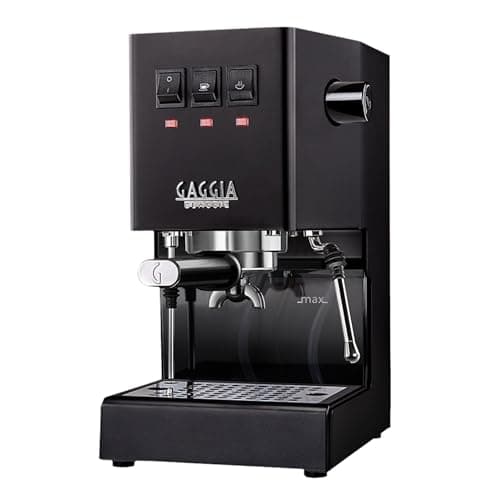
The best Breville Bambino alternative for most people is the Gaggia Classic Evo Pro— a metal-bodied machine with a standard 58mm commercial portafilter and a steam wand you drive yourself, which is what you move to when the Bambino's deliberate simplicity turns into a ceiling. If the only thing you want changed is the milk, the Breville Bambino Plus is the same machine with an automatic steam wand. And the cheaper alternative is the De'Longhi Stilosa, which is the lowest-risk way to find out whether you actually like making espresso.
First, what the Bambino is, stated accurately, because "alternative to" only means something if the original is described fairly. Breville built it around a ThermoJet heater that reaches brew temperature in about three seconds, digital PID temperature control, a 54mm portafilter, a 15-bar pump delivering 9-bar extraction, automatic one- and two-cup shot volumes and a manual steam wand that textures milk well above what its size suggests. It has no grinder and barely any footprint. This site recommends it to first-time buyers more often than any other machine, and our Breville Bambino review explains why. This page is not an argument against it — it is a page for the four different people who type its name followed by the word "alternative."
Reason one: the 54mm portafilter.This is the most common real reason and the least talked about. Breville's 54mm size is shared across its own range but almost nowhere else, so the accessory world — precision baskets, bottomless portafilters, puck screens, tampers, distribution tools — is wider, cheaper and better supplied at 58mm, which is the commercial standard. If you have started buying accessories and keep finding the part you want in 58mm only, that is the limit you have hit, and the Gaggia Classic Evo Pro is the direct answer. Portafilter size by brand has the full table, and 54mm portafilter accessories covers what does exist at the Breville size before you give up on it.
Reason two: the milk.The Bambino's wand is manual and it is genuinely good, but it is a one-hole tip on a small machine and it rewards practice you may not want to do. There are two ways out and they point in opposite directions: automate it with the Bambino Plus, whose wand sets temperature and froth level and shuts itself off, or move up to a bigger boiler with a commercial-style wand on the Gaggia and learn it properly. Pick the direction you actually want. How to steam milk is worth reading before you spend anything — the most common milk complaint is technique, not hardware.
Reason three: you are tired of a second appliance. The Bambino has no grinder on purpose, which is the right call at its price — a standalone grinder at any budget beats the compromised one squeezed into a machine chassis. But two boxes is two boxes, and if counter space is the binding constraint, the Barista Express puts both in one. Best espresso machines with a grinder covers that route, and best grinders for the Breville Bambino covers the other one.
Reason four: price."Cheaper alternative" is one of the most common ways this search is typed, and the honest answer is that below the Bambino you are buying a different class of machine, not a discounted version of the same one. The Stilosa at the bottom of this page makes real espresso with a decent grinder in front of it and costs a fraction of the Bambino. It also has a lower ceiling, a basic wand and a mostly plastic build, and we would rather tell you that than sell it as a like-for-like swap. See best espresso machines under $300 for the whole bracket.
Name the limit before you shop. Every pick above replaces one specific thing. 58mm parts and room to learn: the Gaggia Classic Evo Pro. Milk you do not have to steam yourself: the Bambino Plus. One appliance instead of two: the Barista Express. Six inches of counter: the Dedica. Less money: the Stilosa. Nothing here replaces all five at once, and a machine that claims to usually makes a mediocre job of each.
The three-second heater is harder to give up than people expect.The Bambino's ThermoJet is the reason owners actually make espresso on a Tuesday morning rather than reaching for the kettle. A traditional boiler machine like the Gaggia takes minutes to stabilize, and the honest version of that trade is not "you wait a few minutes" but "you will make fewer coffees in the first month than you expect to, until the routine settles." If you know you are impatient, weight this heavily — it is the single most common regret in this direction.
The portafilter size is a long-term commitment, not a spec line.58mm is the commercial standard and has the deepest market for baskets, bottomless portafilters, puck screens, tampers and distribution tools. Breville's 54mm is well supported because Breville sells a lot of machines, but it is a narrower market at higher prices. 51mm, which the Dedica uses, is thinner again. Whatever you buy, you are also buying into that size's accessory ecosystem for as long as you own the machine — see portafilter size by brand and, if you are staying at 54mm, 54mm portafilter accessories.
Spend on the grinder before you spend on the machine.This is the site's standing position and it applies with unusual force here, because the Bambino is already a good machine. If your shots are inconsistent, channeling or sour, a new machine will reproduce the problem faithfully — the grind is almost always the variable. Our best conical burr grinders page covers the bracket most Bambino owners should be shopping in, and best grinders for the Breville Bambino narrows it to the 54mm workflow specifically.
What sits above this page. If the budget stretches past the Gaggia, the next real step is a machine with a bigger boiler and a commercial wand — best espresso machines under $500 and best single boiler espresso machines cover that ground, and best espresso machines without a grinder is the wider field for anyone who, like the Bambino, would rather keep the grinder separate.
How we picked
We did not lab-test this gear
Everyone in this category says they tested twenty machines. We have not pulled shots on every product here, and we say so. What we did instead: compiled the published specifications, cross-checked the manufacturer manuals, computed the running cost (wattage to energy, grams-per-shot to cost-per-cup), weighed aggregated owner reports, and scored each product against a published rubric. The scores are judgments from documented research — not measurements we took, because we do not have a test lab and we will not pretend we do. Where hands-on time would tell you more than a spec sheet, we flag it. Where a number came from someone else's work, we name them in Sources.