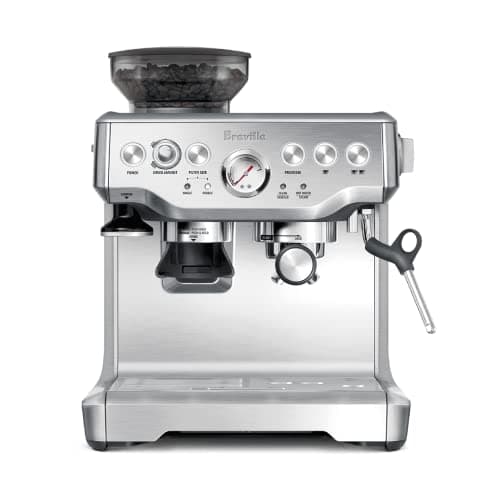
If you want to make espresso at home without owning two appliances, this is the page for you. A machine with a built-in grinderfolds the whole front end of the workflow — grinding whole beans, dosing them, in most cases tamping them — into the same body that brews the shot, so you go from beans to cup with one box on one stretch of counter. There is no second grinder to research, no extra plug, and no separate lump of metal fighting for space next to the machine. For a huge number of first-time buyers, that simplicity is the entire appeal, and it is a genuinely good reason to buy one.
It helps to be honest up front about the trade you are making, because the whole page hangs on it. An integrated grinder saves you money, saves you space, and removes steps from your morning — but a good dedicatedgrinder still has a higher ceiling. It grinds more consistently, dials in across a narrower window, and single-doses cleanly in a way a hopper-fed built-in unit does not. So a separate machine paired with a real grinder can out-brew any all-in-one on ultimate cup quality. What the all-in-one wins on is space, simplicity and getting started — and for most people, most of the time, that is the right trade. If you are not sure which side of it you fall on, skim our best grinders for espresso to see what the standalone route actually costs and gains before you commit.
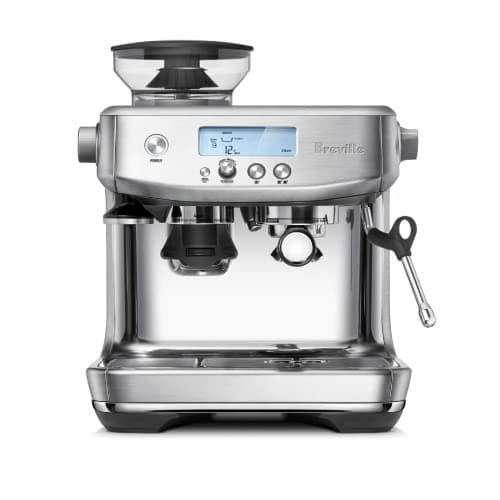
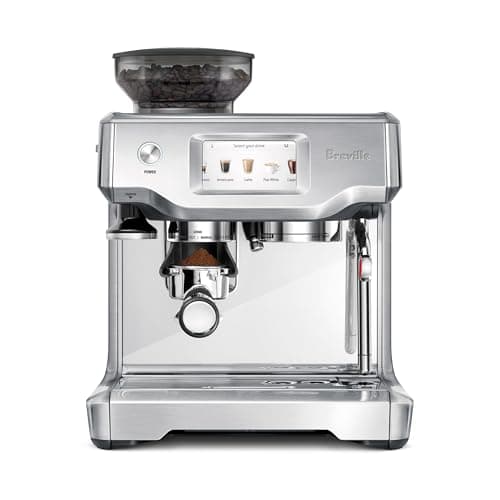
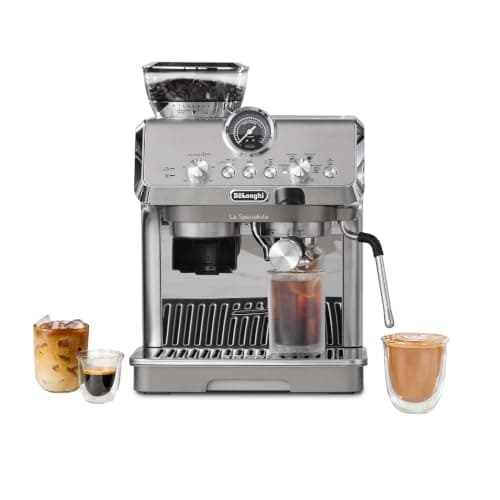
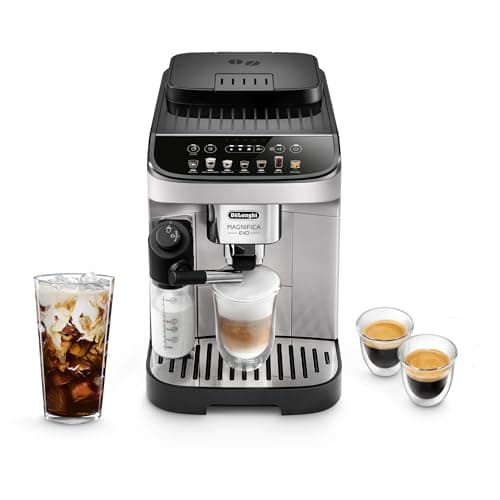
One more distinction shapes this list, so it is worth understanding now: not every all-in-one is the same kind of machine. The three Brevilles and the De'Longhi La Specialista are semi-automatic— the grinder is built in, but you still lock a real portafilter into a group head and, on all but the top Breville, texture milk by hand, so you can learn technique and pour latte art. The De'Longhi Magnifica Evo is a super-automatic (bean-to-cup)— you press one button and it grinds, tamps, brews and (with its milk carafe) froths for you, with no portafilter at all. Both have a grinder inside; they are completely different experiences to live with. Our top pick, the Breville Barista Express, is the all-in-one we point most people to first — but the right one for you depends on whether you want to make the coffee or just receive it.
What a built-in grinder actually gets you
The reason to buy any machine on this page is that the grinder lives inside it, and that buys you three real things. The first is money: a good standalone espresso grinder is a serious purchase in its own right, and an all-in-one folds a capable conical burr grinder into the price of the machine, so your total spend to get from whole beans to a shot is lower than machine-plus-grinder bought separately. The second is space: a dedicated grinder is a second box, a second plug and a second thing to keep clean, and a built-in unit removes all of that — one appliance on one stretch of counter does the whole job. The third is simplicity: you grind fresh straight into the portafilter (or, on the super-automatic, the machine never shows you the grounds at all), so there are fewer steps, fewer things to fiddle with, and a much shorter path from “I want coffee” to coffee.
None of that is a compromise for the buyer it suits. For someone brewing medium and dark roasts, who wants good coffee rather than a hobby, the built-in grinder is a feature, full stop. It is genuinely capable, it is fresh every time, and it means you never have to research, buy, tune or store a grinder at all. The whole point of an all-in-one is that it just works, and for a lot of first-time buyers that is exactly the promise worth paying for.
All-in-one vs a separate grinder: the honest ceiling
Here is the trade-off we will not hide, because it is the single most important thing to understand before you buy. A dedicatedespresso grinder has a higher ceiling than any grinder built into a machine. It has room for larger, better burrs and a wider, finer adjustment range, so it grinds more consistently and lets you dial in across a narrower window — and it single-doses cleanly, grinding exactly the beans you weigh out rather than pulling from a hopper that sits full. A built-in grinder has to fit inside the body and hit a price, and you cannot upgrade it on its own later. The practical upshot is blunt: a modest machine paired with a good separate grinder can out-brew any all-in-one on ultimate cup quality, and the gap grows the pickier your beans get — very fresh, light-roast single origins are exactly where a built-in grinder starts to feel its limits.
So why does the all-in-one still win for most people? Because it wins on everything except that ceiling. It wins on space, on simplicity, and on getting started— and most home drinkers never actually push the ceiling a dedicated grinder unlocks. The honest way to choose is to ask which side of the trade you are on. If you already own a grinder, or you know you will chase light roasts and fall down the rabbit hole, skip the built-in unit: a grinderless machine plus one of the picks in our best grinders for espressoroundup is the setup that scales further, and it is the smarter long-term spend. If you want one appliance that does the whole job today, an all-in-one is not a consolation prize — it is the right tool, and you can always add a better grinder years from now if you outgrow it.
Two kinds of all-in-one: semi-automatic vs bean-to-cup
“Machine with a built-in grinder” covers two genuinely different experiences, and picking the wrong one is the most common mistake buyers make on this page. The three Brevilles and the De'Longhi La Specialista Arte Evo are semi-automatic. The grinder is built in, but you stay in the loop: you grind into a real portafilter, lock it into a group head, and — on every one of them except the top Breville — texture milk yourself with a manual steam wand. That means a learning curve, but it also means control, real espresso-bar mechanics, and the ability to pour latte art once your hands know what they are doing. This is the machine for someone who wants to make the coffee.
The De'Longhi Magnifica Evo is a super-automatic, or bean-to-cup. There is no portafilter at all: the grinder, doser, tamper and brew group all live behind a sealed door, and one button press takes you from whole beans to a finished drink, with the LatteCrema carafe frothing the milk hands-free. It raises the floor — every cup is consistent, hot and effortless, with no dialing-in and no bad shots — but it lowers the ceiling, because a sealed process cannot be pushed the way a manual one can. This is the machine for someone who wants to receive the coffee. Both have a grinder inside; only you can say which experience you actually want to live with every morning. If you lean toward one-touch, weigh the Magnifica against the wider field in our best super-automatic machines roundup before you decide.
Which all-in-one fits you
- Want the safest all-round pick that grinds and brews everything? The Breville Barista Express — the most proven all-in-one, and the easiest one to recommend to most people. It anchors our best espresso machines for beginners guide for exactly that reason.
- Hate waiting and want an on-screen guide?The Breville Barista Pro — the same grind-to-cup formula with near-instant ThermoJet heat-up and an LCD that coaches grind, dose and shot time.
- Want the milk textured for you, hands-free?The Breville Barista Touch — the same shot, plus a touchscreen and an automatic wand, for the household that does not want to learn to steam milk.
- Want the most complete guided setup, or cold brew on demand?The De'Longhi La Specialista Arte Evo — grinder, tamping tools, a 2 L tank and a dedicated Cold Brew preset in one body, provided you are content with the 51mm group.
- Want a latte on one button with zero skill?The De'Longhi Magnifica Evo — the one-touch bean-to-cup, ideal if milk drinks are the whole point and you never want to touch a portafilter.
Cross-shopping the two brands rather than individual models? Our Breville vs De'Longhi comparison walks the trade — a wider 54mm group and the deepest owner community against a guided, cold-brew-capable body — side by side, and it is the natural next read once you have narrowed to one maker.
What we did not test
We have not run these machines on a bench for months, and we do not claim to have. This roundup compiles each maker's published specifications — the grinder type and setting count, the heating system, the portafilter size, the milk system — and weighs them against aggregated owner reports using our scoring rubric. Every factual spec, pro and con on each machine is carried over from its full single-product review, and the manufacturer pages we drew from are listed in Sources. Where hands-on time would tell you more than a spec sheet — exactly how a built-in grinder holds its setting over months, how forgiving a manual wand is for an absolute beginner, how consistent an automatic wand is across milk types — we say so rather than invent a measurement we did not take. Prices are never quoted from memory; the live price renders from our price pipeline inside the buy button.