Skip to content
Portafilter Co

Machines · Espresso Machines

The best manual espresso machines

Six lever presses and hand pumps that make genuine espresso without an electric pump — ranked on shot quality, what they ask of you, and value, with live prices and honest cons.

By Stephen V.Updated How we pick
#ad

We earn a commission when you buy through our Amazon links, at no extra cost to you. It never changes a verdict, and we say so when the cheaper product is the better buy. How this works.

A manual espresso machine makes real espresso the oldest way there is: you supply the pressure by hand. There is no electric pump forcing water through the coffee — a lever or a hand pump does that job, and you feel every second of the extraction happen. That sounds like a downgrade and it is not. The best manual makers pull shots that rival machines costing several times as much, they have almost nothing to break, and the good ones fit in a bag. What you trade is convenience: you heat the water, you grind, and you pull the shot yourself.

Every machine on this list makes genuine espresso — a real nine-bar extraction with crema, not the weak trickle a stovetop moka pot produces. They split into two families. Most are cold-press: a Flair lever or a Wacaco hand pump with no electronics at all, so you boil a kettle, add the hot water, and press. One — the La Pavoni — is a heated lever: it plugs in, heats its own brass boiler and even steams milk, but the pressure still comes entirely from your arm on the piston. Knowing which family you want is the whole decision, and the buyer's guide below walks through it.

The honest catch applies to all of them: a manual machine is only as good as the grind you feed it, and it punishes a bad grind more than a forgiving semi-automatic does. You cannot pull a good shot on any of these with pre-ground supermarket coffee. Budget for a burr grinder that can do espresso before you buy the machine — a good hand grinder pairs perfectly with a portable maker and keeps the whole kit off-grid. If you would rather an electric pump did the work, our under-$500 roundup and beginner machines are the pages to read instead.

The short answer

Quick picks

#ProductBest forScorePrice
01
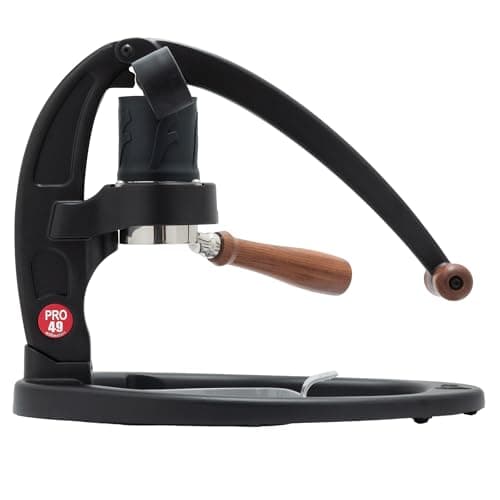
Flair Flair 49 PRO
Flair 49 PRO

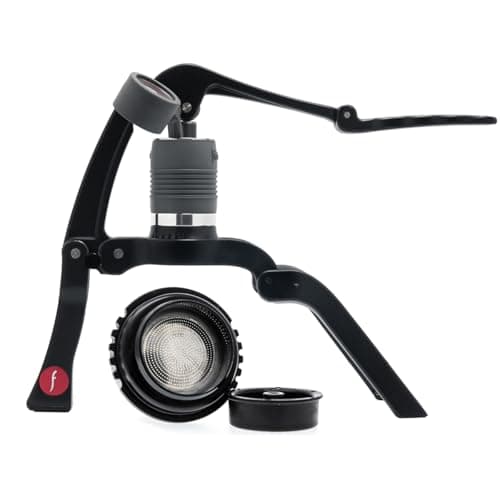
The best home manual machine for people who care most about the espresso in the cup. An all-stainless brew cylinder, valve and plunger mean no plastic ever touches your brew water, and the built-in gauge shows a 5-9 bar espresso zone so you can see the pressure you are pulling. Paired with a good grinder it makes shots that embarrass machines three times its price. It is not portable and it is not fast — it is the one here that treats espresso as the point, not a party trick.

Best manual overall
8.0
$359.00Amazon
02
Wacaco Wacaco Picopresso
Wacaco Picopresso

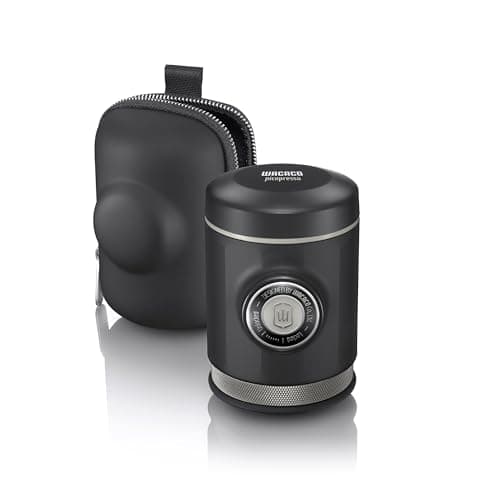
The portable that makes real espresso rather than an approximation. It uses a 52mm, 18-gram stainless basket — the commercial format serious machines use — and a naked portafilter, so with a fine enough grind it pulls a genuine double with proper crema. The whole kit, tamper and distribution tool included, packs into a case the size of a large mug. It asks for a very fine, even grind and a little patience, and it rewards both.

Best portable for real espresso
7.4
$129.90Amazon
03
Flair Flair 2GO
Flair 2GO

A full Flair lever that folds into a case the size of a lunch box. It brews at the same 6-9 bar as its countertop siblings with a live gauge, takes a 12-18 gram dose in a bottomless portafilter, and is built from aircraft-grade aluminum and a milled stainless brew cylinder. It is the pick if you want lever espresso you can actually pack — a real machine that collapses, not a compromise that travels.

Best packable lever
7.2
$169.00Amazon
04
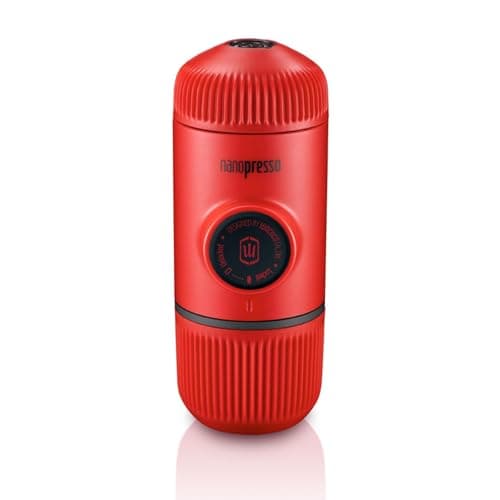
Wacaco Wacaco Nanopresso
Wacaco Nanopresso

The default first portable, and the best value in manual espresso. A patented hand pump reaches up to 18 bar with noticeably less effort than the old Minipresso, it weighs about as much as a phone and a half, and it costs less than a couple of bags of good beans. The shot is small — an 8-gram single — and it is more strong-rich-coffee than a spec-chasing double, but for camping, travel and desk drawers nothing touches it on price or convenience.

Best budget & travel
7.0
$64.90Amazon
05
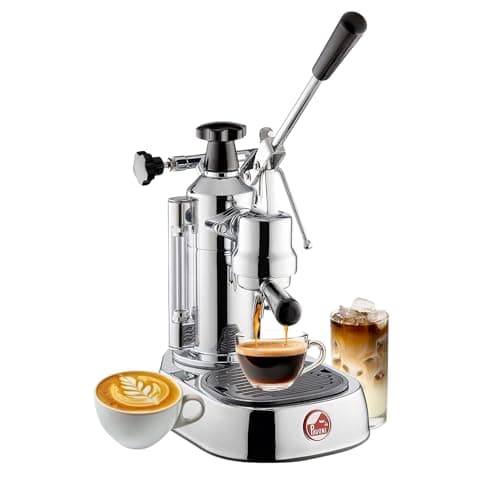
La Pavoni La Pavoni Europiccola (EPC-8)
La Pavoni Europiccola (EPC-8)

The romantic one, and the only machine here with its own boiler and a steam wand. A chrome, piston-lever Italian icon whose design dates to the 1960s, it heats a nickel-plated brass boiler, then you pull the shot on the lever and froth milk on the wand — a whole cappuccino from one hand-operated machine. It plugs in, but the pressure is pure lever. It scores lower here only on price and the skill it demands; on sheer espresso romance and build, nothing else on the page comes close.

Best traditional lever (the splurge)
6.4
$1,201.84Amazon
06
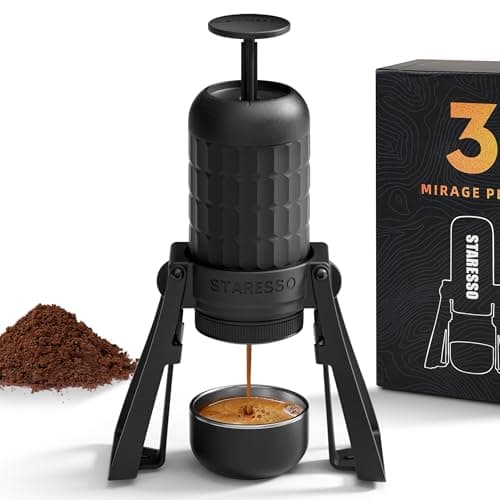
STARESSO STARESSO PLUS SP300
STARESSO PLUS SP300

The clever all-rounder of the portables. Its hand pump reaches a high extraction pressure and, unusually, it makes both hot espresso and cold brew from the same food-grade stainless chamber, taking up to a 24-gram dose. It is more plastic-and-gadget than the metal machines above and its shots are less refined, but for one device that covers espresso, cold coffee and travel on a budget, it is a genuinely useful Swiss-army option.

Best do-it-all portable
6.2
$99.59Amazon

#ad · Live prices from the Amazon Product API, as of Jul 26, 2026. Where we have no verified live price, we show none — a gap beats a number that has rotted.

In detail

The picks, in full

01
Flair Flair 49 PRO

Best manual overall

Flair 49 PRO

49mm portafilter5-9 bar pressure gaugeAll-stainless brew pathNo electricity
8.0/10

The best home manual machine for people who care most about the espresso in the cup. An all-stainless brew cylinder, valve and plunger mean no plastic ever touches your brew water, and the built-in gauge shows a 5-9 bar espresso zone so you can see the pressure you are pulling. Paired with a good grinder it makes shots that embarrass machines three times its price. It is not portable and it is not fast — it is the one here that treats espresso as the point, not a party trick.

Espresso quality
9
Ease of use
6
Consistency
8
Build
9
Value
8

Pros

  • All-stainless-steel brew cylinder, valve plunger and stem — no plastic touches the brew water
  • Integrated gauge with a marked 5-9 bar espresso zone, so you pull by feedback, not guesswork
  • Ships with a bottomless portafilter plus both a single-wall and a pressurized basket
  • Almost nothing to break: no pump, no boiler, no electronics to fail out of warranty

Cons

  • You heat the water separately in a kettle — there is no boiler in the machine
  • Single shots only; a busy morning for a household of four is slow going
  • No milk steaming, so lattes need a separate frother
  • The base is a countertop object at about 12 inches long, not a pack-anywhere traveler

Don't buy this if…

you want speed or a one-touch latte. This rewards a slow, deliberate ritual — if that reads as a chore rather than the appeal, a pump machine from our under-$500 roundup will suit you better.

$359.00View on Amazon

Price as of Jul 26, 2026. Prices change — Amazon's at checkout is the one that counts.

#ad · we may earn a commission from this link to Flair 49 PRO

02
Wacaco Wacaco Picopresso

Best portable for real espresso

Wacaco Picopresso

18-bar hand pump52mm / 18g basket80 ml tank, 350 gNo battery
7.4/10

The portable that makes real espresso rather than an approximation. It uses a 52mm, 18-gram stainless basket — the commercial format serious machines use — and a naked portafilter, so with a fine enough grind it pulls a genuine double with proper crema. The whole kit, tamper and distribution tool included, packs into a case the size of a large mug. It asks for a very fine, even grind and a little patience, and it rewards both.

Espresso quality
8
Ease of use
6
Consistency
7
Build
8
Value
8

Pros

  • 52mm 18-gram commercial-style basket and a naked portafilter — a true double, not a novelty shot
  • Comes complete: tamper, dosing funnel, distribution tool, brush and a hard travel case
  • Purely hand-pumped — no battery, nothing to charge or plug in
  • Packs to roughly 4 inches; genuinely goes anywhere

Cons

  • Demands a very fine, uniform grind — a mediocre grinder will choke it or channel
  • 80 ml tank and an 18-gram basket means one double at a time, then a refill and re-pack
  • You add hot water each time; there is no heater
  • Fiddlier to master than pressing a button

Don't buy this if…

your grinder cannot reach a fine, even espresso grind. The Picopresso is the least forgiving maker here on grind — without the right grinder it will frustrate you, and the Nanopresso is the more relaxed portable.

$129.90View on Amazon

Price as of Jul 26, 2026. Prices change — Amazon's at checkout is the one that counts.

#ad · we may earn a commission from this link to Wacaco Picopresso

03
Flair Flair 2GO

Best packable lever

Flair 2GO

Folding lever press6-9 bar gauge12-18g bottomless PFPacks to ~9.5 in
7.2/10

A full Flair lever that folds into a case the size of a lunch box. It brews at the same 6-9 bar as its countertop siblings with a live gauge, takes a 12-18 gram dose in a bottomless portafilter, and is built from aircraft-grade aluminum and a milled stainless brew cylinder. It is the pick if you want lever espresso you can actually pack — a real machine that collapses, not a compromise that travels.

Espresso quality
8
Ease of use
6
Consistency
7
Build
8
Value
7

Pros

  • Folds down to roughly 9.5 inches into its own case — a real lever you can pack
  • Live pressure gauge and a 6-9 bar brew range, the same lever principle as a countertop Flair
  • Bottomless 2-in-1 portafilter takes a full 12-18 gram dose
  • Aircraft-grade 6061 aluminum frame and a precision-milled stainless brew cylinder

Cons

  • Heavier than a hand-pump portable at about 3.7 pounds packed
  • Assembly and disassembly each session is more involved than a pump maker
  • You supply the hot water; there is no boiler on board
  • Single shots, and no milk steaming

Don't buy this if…

you want the lightest possible travel kit. A Nanopresso or Picopresso weighs a fraction and packs smaller — the 2GO is for people who specifically want the lever feel on the road.

$169.00View on Amazon

$199.0015% off

Price as of Jul 26, 2026. Prices change — Amazon's at checkout is the one that counts.

#ad · we may earn a commission from this link to Flair 2GO

04
Wacaco Wacaco Nanopresso

Best budget & travel

Wacaco Nanopresso

18-bar hand pump8g dose, 80 ml336 gNo battery
7.0/10

The default first portable, and the best value in manual espresso. A patented hand pump reaches up to 18 bar with noticeably less effort than the old Minipresso, it weighs about as much as a phone and a half, and it costs less than a couple of bags of good beans. The shot is small — an 8-gram single — and it is more strong-rich-coffee than a spec-chasing double, but for camping, travel and desk drawers nothing touches it on price or convenience.

Espresso quality
6
Ease of use
7
Consistency
6
Build
7
Value
9

Pros

  • Outstanding value — the cheapest genuine espresso maker here by a wide margin
  • Patented pump reaches up to 18 bar with about 15% less effort than the older Minipresso
  • Tiny and light (336 g) with no battery — ideal for travel, camping and the office
  • Very forgiving and quick to learn compared with the Picopresso

Cons

  • Small 8-gram single-shot basket (a 16-gram add-on exists but is sold separately)
  • Less pressure control and body than the 18-gram Picopresso
  • More plastic in the build than the metal Flair machines
  • You still heat the water yourself

Don't buy this if…

you want a full double with commercial-basket crema. Step up to the Picopresso for that — the Nanopresso is about convenience and price, not chasing the perfect shot.

$64.90View on Amazon

Price as of Jul 26, 2026. Prices change — Amazon's at checkout is the one that counts.

#ad · we may earn a commission from this link to Wacaco Nanopresso

05
La Pavoni La Pavoni Europiccola (EPC-8)

Best traditional lever (the splurge)

La Pavoni Europiccola (EPC-8)

Piston spring lever0.8 L brass boilerSteam wand for milkPlugs in (~1000 W)
6.4/10

The romantic one, and the only machine here with its own boiler and a steam wand. A chrome, piston-lever Italian icon whose design dates to the 1960s, it heats a nickel-plated brass boiler, then you pull the shot on the lever and froth milk on the wand — a whole cappuccino from one hand-operated machine. It plugs in, but the pressure is pure lever. It scores lower here only on price and the skill it demands; on sheer espresso romance and build, nothing else on the page comes close.

Espresso quality
8
Ease of use
4
Consistency
6
Build
9
Value
5

Pros

  • Its own heated brass boiler and a steam wand — the only maker here that can make a latte unaided
  • Chrome-and-brass build that lasts decades and is fully rebuildable with inexpensive gasket kits
  • A genuine mechanical heirloom; the design has barely changed since 1968
  • The manual lever gives real control over pressure and pre-infusion once you learn it

Cons

  • Four-figure price, and Amazon stock is thin and often third-party — buying from an authorized dealer is wiser
  • No PID or modern thermostat; you manage brew temperature by timing, which takes practice
  • Small boiler and a real learning curve — the group and lever get hot, and early shots will be rough
  • Overkill for anyone who just wants a quick, reliable cup

Don't buy this if…

you want a dependable daily driver on day one. This is a machine you commit to learning; if you want plug-in espresso without the apprenticeship, a PID Breville from our under-$500 or beginner roundups is the sane choice.

$1,201.84View on Amazon

Price as of Jul 26, 2026. Prices change — Amazon's at checkout is the one that counts.

#ad · we may earn a commission from this link to La Pavoni Europiccola (EPC-8)

06
STARESSO STARESSO PLUS SP300

Best do-it-all portable

STARESSO PLUS SP300

15-20 bar hand pumpUp to 24g doseHot espresso or cold brewNo electricity
6.2/10

The clever all-rounder of the portables. Its hand pump reaches a high extraction pressure and, unusually, it makes both hot espresso and cold brew from the same food-grade stainless chamber, taking up to a 24-gram dose. It is more plastic-and-gadget than the metal machines above and its shots are less refined, but for one device that covers espresso, cold coffee and travel on a budget, it is a genuinely useful Swiss-army option.

Espresso quality
6
Ease of use
7
Consistency
5
Build
6
Value
7

Pros

  • High extraction pressure from a hand pump — visible crema on a hot shot
  • Makes both hot espresso and cold brew from the same food-grade stainless-steel chamber
  • Takes a larger dose (up to 24 g) than most portables here
  • No electricity, and priced well below the metal levers

Cons

  • More plastic components than the Flair or Wacaco metal machines
  • Shots are less consistent and refined than a 52mm Picopresso
  • Its quoted bar numbers are internal pressure, not what reaches the puck — treat them loosely
  • You heat the water yourself for the hot mode

Don't buy this if…

you want the most espresso-focused portable. The Picopresso makes a better shot; the STARESSO wins only if the cold-brew-plus-espresso versatility genuinely matters to you.

$99.59View on Amazon

Price as of Jul 26, 2026. Prices change — Amazon's at checkout is the one that counts.

#ad · we may earn a commission from this link to STARESSO PLUS SP300

How we picked

Every maker here is a real, currently-purchasable manual espresso machine — one where you, not an electric pump, generate the brew pressure by hand. We ranked on five criteria, in this order.

  1. Espresso quality it can reach. The honest ceiling of the shot: basket format and size (a 52mm or 49mm commercial-style basket makes a fuller double than an 8-gram travel basket), whether the brew path is metal or plastic, and how much real, controllable pressure the mechanism delivers.
  2. What it asks of you. Manual espresso is a skill, but some machines are far more forgiving than others. We weighed how fussy the grind has to be, how involved each shot is, and how quickly a beginner gets to a drinkable cup.
  3. Consistency. Whether the machine helps you repeat a good shot — a pressure gauge, a stable basket, a design that does the same thing every time — or leaves it entirely to your hands.
  4. Build and longevity. Metal beats plastic in the brew path, and a machine you can rebuild with a cheap gasket kit is worth more over a decade than one you replace.
  5. Value. Espresso-per-dollar, honestly, including the fact that a portable you carry everywhere earns its keep differently from a countertop lever.

We did not lab-test these machines. Specifications come from Flair, Wacaco, La Pavoni and STARESSO's own documentation and authorized retailers, all listed in Sources, and our scores are editorial judgments from that research — the methodology page publishes the rubric.

The two families: cold-press vs heated lever

This is the decision that sorts the whole category. A cold-press manual maker — every Flair, both Wacacos, the STARESSO — has no heating element at all. You boil a kettle, pour the hot water into the machine, and pull the shot. That is why they can be so small, so cheap and so nearly indestructible: there is no boiler, no pump, no wiring. The cost is a step in the routine and a little temperature loss between kettle and cup, which a quick pre-warm of the parts mostly solves.

A heated lever— the La Pavoni here — plugs in and heats its own boiler, which means it can also produce steam and froth milk for a cappuccino without a separate gadget. It is still "manual" because the brew pressure comes entirely from the piston you pull, not a pump. What you gain is a self-contained machine that does milk drinks; what you pay is a much higher price, a larger footprint, and a real learning curve to manage the temperature by hand. If milk drinks matter and you want one device, the heated lever is the answer. If you mainly drink straight espresso — or you already own a milk frother — a cold-press maker gives you more espresso for far less money.

Lever vs hand pump

Within the cold-press family there are two mechanisms. A lever (the Flairs, the La Pavoni) uses a long arm and a piston to press water through the puck; the long lever gives you leverage, feel and a slow, controllable ramp, which is why levers tend to make the most refined shots. A hand pump(the Wacacos, the STARESSO) uses a small piston you stroke by hand to build pressure in bursts; it is more compact and quicker to pack, at the cost of a little control. Neither is "better" outright — a lever is the choice for shot quality and ritual, a hand pump for packing light. It is genuinely why the Flair 49 PRO and the Nanopresso can both be right answers to "best manual espresso machine," for two different people.

The grinder rule is stricter here

Every espresso setup lives or dies on the grinder, but manual makers are the least forgiving of all. A semi-automatic with a pressurized basket will paper over a mediocre grind; a naked portafilter on a Picopresso or a Flair will show you every flaw as a spraying, sour, channeling mess. You need a burr grinder that can reach a fine, even espresso grind — our espresso grinder roundup and the best grinders under $200 cover the options, and a good hand grinder is the natural partner for a portable maker because it keeps the whole kit off-grid. If you are still deciding how to split your budget, read what grind size espresso needs first. Spend on the grinder before you spend up on the machine.

What we would skip

Capsule-only pods dressed up as espresso. Some portable makers only take proprietary capsules; they are convenient but they are not the same as pulling a shot from fresh grounds, and they lock you into one supplier. Every pick here brews real ground coffee. The biggest bar number on the box.A maker advertising "20 bar" is quoting internal pressure, not what reaches the coffee — espresso extracts at about nine bars, and past that the number is marketing. And "espresso" makers that are really something else. A popular hand press that brews a long, low-pressure cup is a fine coffee maker and not an espresso machine; if crema and a real nine-bar shot are the point, it will disappoint you. When you are set on the machine, finish the kit with the accessories that actually matter and fresh espresso beans.

Which manual machine fits you

  • Best espresso at home, and you love the ritual? Flair 49 PRO, plus a real espresso grinder.
  • Real double shots on the road? Wacaco Picopresso — a commercial 52mm basket that packs into a mug-sized case.
  • Lever feel you can pack? Flair 2GO, the folding lever.
  • Cheapest way into travel espresso? Wacaco Nanopresso.
  • A traditional plug-in lever that also steams milk? La Pavoni Europiccola, if the price and the learning curve appeal rather than deter.
  • One gadget for hot espresso and cold brew? STARESSO PLUS SP300.

Whichever you choose, the technique matters more when you are the pump. Read how to pull an espresso shot before your first attempt — the recipe of dose, yield and time is the same as on any machine, you are just supplying the pressure yourself.
How we picked

We did not lab-test this gear

Everyone in this category says they tested twenty machines. We have not pulled shots on every product here, and we say so. What we did instead: compiled the published specifications, cross-checked the manufacturer manuals, computed the running cost (wattage to energy, grams-per-shot to cost-per-cup), weighed aggregated owner reports, and scored each product against a published rubric. The scores are judgments from documented research — not measurements we took, because we do not have a test lab and we will not pretend we do. Where hands-on time would tell you more than a spec sheet, we flag it. Where a number came from someone else's work, we name them in Sources.

Questions

Frequently asked

What counts as a manual espresso machine?
A manual espresso machine is one where you generate the brew pressure by hand — with a lever or a hand pump — instead of an electric pump doing it. Most manual makers (the Flairs, the Wacacos, the STARESSO) are 'cold-press': they have no heating element, so you add hot water from a kettle and press. A few, like the La Pavoni Europiccola, plug in to heat their own boiler and even steam milk, but the pressure still comes entirely from the piston you pull, which is why they still count as manual.
Do manual espresso machines make real espresso?
Yes. Every machine on this list reaches a genuine nine-bar (or higher) extraction and produces real crema, which is what separates espresso from other coffee. That is the key difference from a moka pot, which brews a rich stovetop coffee at a fraction of the pressure and is not true espresso. The shot from a good manual maker with a good grinder can match, and sometimes beat, a semi-automatic several times the price.
Do you have to heat the water yourself?
For most of them, yes. The cold-press makers — Flair, Wacaco, STARESSO — have no boiler, so you heat water in a kettle and pour it in. It sounds like a chore and takes about a minute; pre-warming the metal parts with a little of that hot water keeps the shot temperature stable. The exception here is the La Pavoni Europiccola, which plugs in and heats its own brass boiler, so it needs no separate kettle.
What grinder do you need for a manual espresso machine?
A burr grinder that can reach a fine, even espresso grind — and manual makers are the least forgiving of a bad one, because their naked portafilters show every flaw. A blade grinder or pre-ground coffee will not work. Our espresso grinder roundup covers the electric options and the hand-vs-electric guide explains why a good hand grinder is the perfect off-grid partner for a portable maker.
Can you make lattes with a manual espresso machine?
Only one on this page can do it unaided: the La Pavoni Europiccola has a steam wand, so it can froth milk for a cappuccino from the machine itself. The cold-press makers pull the espresso but cannot steam milk, so for milk drinks you pair them with a separate handheld or electric frother — the accessories starter kit covers the options. The espresso itself is the same quality either way.
Are portable espresso makers actually worth it?
For travel, camping, the office or a small kitchen, genuinely yes. A Nanopresso or Picopresso makes a real shot with no power and packs into a bag, which nothing on a countertop can match. They are not the fastest or highest-volume way to make espresso, and for a busy household kitchen a semi-automatic is more practical — but as a second, go-anywhere setup, or a first machine for someone tight on space and money, they earn their place.

Keep reading

Receipts

Sources

We do not run a testing lab, and we do not pretend to. Where a measured number came from someone else's work, we name them and link them. Where we could not verify something, we say so on the page rather than quietly leaving it out. Read our full method.