Skip to content
Portafilter Co

Machines · Espresso Machines

The best espresso machines without plastic

No mains-powered machine is genuinely plastic-free — seals and tank fittings are polymer by necessity. What you can buy is an all-metal brew path, and four machines deliver it.

By Stephen V.Updated How we pick
#ad

We earn a commission when you buy through our Amazon links, at no extra cost to you. It never changes a verdict, and we say so when the cheaper product is the better buy. How this works.

If you want hot water to touch nothing but metal on its way into your cup, buy the Flair PRO 2: an all-stainless brew cylinder, valve and plunger, no pump, no boiler and no electronics, so there is no polymer anywhere in the brew path at all. If you want a machine that plugs in and steams milk, the La Pavoni Europiccola is chrome over brass with a nickel-plated brass boiler. If you want a conventional pump machine, the Rancilio Silvia has a chromed brass group head in constant contact with an insulated brass boiler inside a single-piece stainless body — and the Gaggia Classic Evo Pro is the cheapest way onto a lead-free brass boiler and a 58mm commercial portafilter.

Before the picks, the thing this page owes you. There is no mains-powered espresso machine, at any price, with zero plastic in it. Anyone telling you otherwise is selling something. Group gaskets are rubber or silicone because they have to seal and deform against a metal rim thousands of times. Water tanks are almost universally plastic even on $2,000 machines, because a transparent tank you can see the level through is worth more to most buyers than a stainless one you cannot. Pump inlets and tank fittings use polymer. Some internal tubing is PTFE or silicone rather than copper, because it survives vibration better.

So the useful goal is not a plastic-free appliance. It is a metal brew path — the parts hot water actually touches on its way through the coffee: the boiler, the group head, the portafilter and basket, and the tubing between them. That is a goal you can genuinely buy, it is the part that affects taste and longevity, and it is how this page ranks.

Why people ask for this, and which reasons hold up

Taste.This one holds up, with a caveat. New plastic parts in a hot-water path can impart a detectable flavour for the first few weeks, which is why every machine manual tells you to run several blank cycles before the first coffee. Metal does not do that, and it does not retain the smell of old coffee oils the way plastic can over years. If you have ever tasted a "plasticky" note from a cheap machine and wondered if you imagined it, you probably did not.

Longevity and repairability. This holds up strongly and is the better argument. A brass boiler and a chromed brass group are parts you descale, re-gasket and keep. A plastic thermoblock housing with moulded-in fittings is a part you replace, if the part is even sold, which on cheap machines it usually is not. The machines on this page are the ones people are still using in fifteen years, and that is mostly a materials story.

Thermal stability. Also holds up, and it is the one with the clearest effect in the cup. Brass has real thermal mass: a heavy brass group bolted to a brass boiler acts as a thermal battery that evens out the temperature swings a light aluminium or thermoblock machine cannot. That is why the Silvia is described as rock-steady once warm, and it is a materials property, not a feature.

Health concerns about hot water and plastic.We are not going to make claims here that we cannot source. What we can say is factual and limited: the parts contacting hot water on the machines below are stainless steel, brass or chrome-plated brass, the Gaggia Classic Evo Pro's brew group and water path were moved to fully lead-free materials in the Evo revision, and if avoiding hot water through polymer is your requirement, the Flair PRO 2 is the only machine here that satisfies it completely — because you pour kettle water straight into a stainless cylinder.

What to look for on a spec sheet

Boiler material, stated explicitly.Brass, stainless or copper is what you want. "Thermoblock" or "thermocoil" is a different architecture — a heated metal block the water flows through — which is usually aluminium with a stainless or PTFE-lined channel. Not plastic, but not brass either, and much lighter in thermal mass. If a listing does not name the boiler material at all, assume it is aluminium.

Group head material. Brass or chrome-plated brass is the marker of a machine built to be kept. A group head is the single heaviest metal part in a good machine and the most expensive to make, so manufacturers mention it when it is there.

Portafilter size and construction.A real 58mm or 54mm portafilter is chromed brass or stainless with a wooden or phenolic handle; a cheap machine's portafilter is thin stamped steel in a plastic handle and frequently holds a pressurised dual-wall basket. Pressurized vs unpressurized baskets is how to tell, and it matters more to your coffee than the body panels do.

Whether parts are sold.The real test of "built from metal" is whether the manufacturer sells you a gasket, a shower screen and a boiler. All four picks below pass; most machines under $300 do not.

What to ignore: a stainless exterior. Brushed steel panels over a plastic chassis and an aluminium thermoblock is the most common way this category is faked, and it tells you nothing about what your water touches. Read the boiler line, not the body line.

The short answer

Quick picks

#ProductBest forScorePrice
01
Flair Flair PRO 2
Flair PRO 2

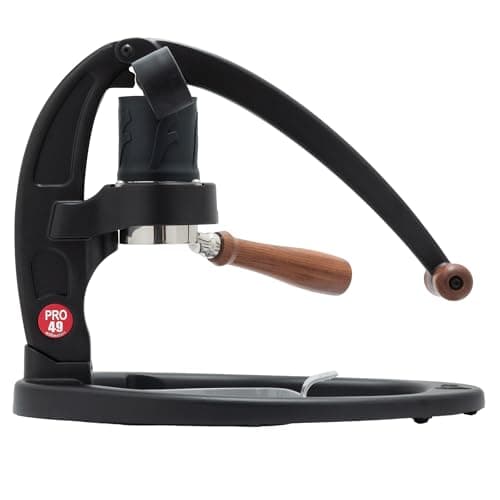
The only machine here with genuinely no polymer in the brew path, because there is no pump, no boiler and no plumbing. You boil a kettle, pour the water into an all-stainless brew cylinder, seat a 49mm basket and pull the shot on a lever against a 5-9 bar gauge. The cylinder, valve and plunger stem are all stainless steel, so nothing but metal and coffee touches your brew water. The trade is everything automatic: no steam wand, one shot at a time, and you heat the water yourself.

Best all-metal brew path, full stop
8.4
$359.00Amazon
02
La Pavoni La Pavoni Europiccola (EPC-8)
La Pavoni Europiccola (EPC-8)

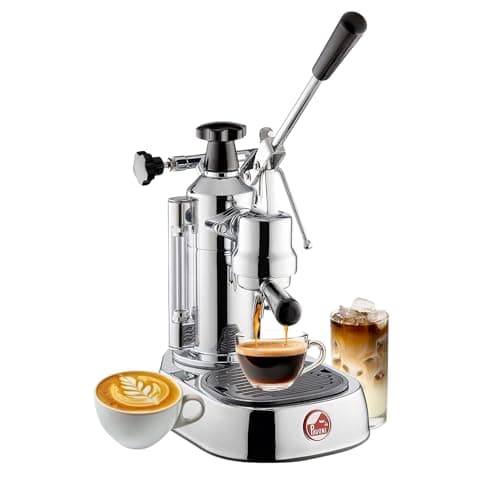
Chrome over brass, a 0.8 L nickel-plated brass boiler, and a design that has barely changed since the 1960s — the heirloom answer. It plugs in and heats its own brass boiler, and it carries a steam wand, so it is the only manual maker that can produce a whole cappuccino unaided. The pressure is still pure lever, pulled by your arm. It is rebuildable with cheap gasket kits and lasts decades, and it demands a real apprenticeship before the shots are good.

Best metal machine that also steams milk
7.8
$551.94Amazon
03
Rancilio Rancilio Silvia
Rancilio Silvia

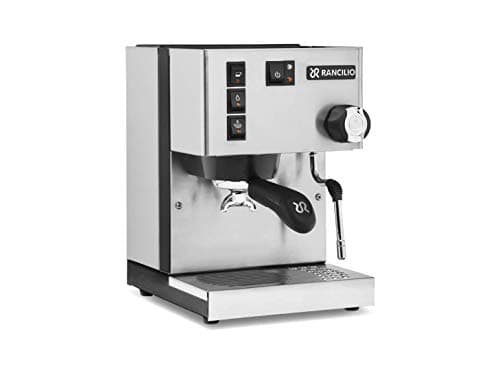
The best answer if you want a conventional pump machine built from metal. A chromed brass group head bolted in constant contact with an insulated brass boiler, a full-motion stainless steam wand and a genuine 58mm portafilter, all inside a single-piece stainless body. The brass acts as a thermal battery, which is why owners describe it as rock-steady once warm. The honest limits: no factory PID, a single boiler, and a 2 L plastic reservoir like almost every pump machine made.

Best pump machine with a brass brew path
8.2
$995.00Amazon
04
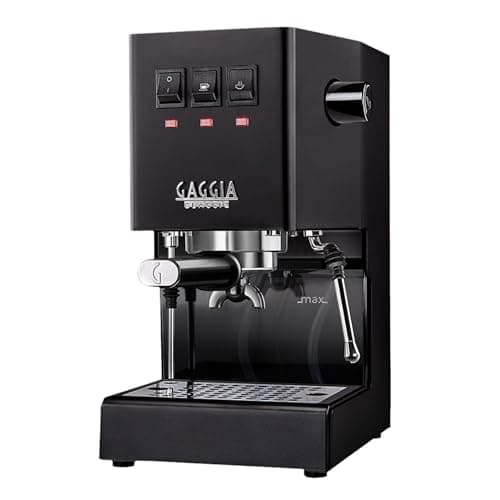
Gaggia Gaggia Classic Evo Pro
Gaggia Classic Evo Pro

The cheapest route onto a brass boiler and a 58mm commercial portafilter, and the pick if budget is the binding constraint. A lead-free brass boiler in a single-piece 17-gauge stainless body, a 15-bar Ulka pump, and the largest parts-and-mods community in home espresso behind it. The Evo revision's headline change is exactly on topic here: the brew group and water path moved to fully lead-free materials.

Cheapest brass boiler and 58mm group
8.2
$505.09Amazon

#ad · Live prices from the Amazon Product API, as of October 17, 2026. Where we have no verified live price, we show none — a gap beats a number that has rotted.

In detail

The picks, in full

01
Flair Flair PRO 2

Best all-metal brew path, full stop

Flair PRO 2

All-stainless brew cylinder, valve and plunger stemNo pump, no boiler, no electronics49mm basket, 5-9 bar pressure gaugeKettle water poured in by hand
8.4/10

The only machine here with genuinely no polymer in the brew path, because there is no pump, no boiler and no plumbing. You boil a kettle, pour the water into an all-stainless brew cylinder, seat a 49mm basket and pull the shot on a lever against a 5-9 bar gauge. The cylinder, valve and plunger stem are all stainless steel, so nothing but metal and coffee touches your brew water. The trade is everything automatic: no steam wand, one shot at a time, and you heat the water yourself.

Metal brew path
10
Shot potential
9
Repairability
10
Convenience
4
Value
9

Pros

  • No plastic touches the brew water at any point — nothing else here can claim that
  • No pump, boiler or electronics means almost nothing to fail out of warranty
  • The gauge shows the pressure you are actually pulling rather than a factory claim
  • Pulls shots that embarrass machines several times the price when fed a good grind
  • Fully rebuildable with inexpensive gasket and piston kits

Cons

  • No steam wand at all, so milk drinks need a separate frother
  • You heat the water in a kettle — there is no boiler in the machine
  • One shot at a time, and the ritual is slow by design
  • Needs a genuinely good grinder more than any machine here, because there is no pressure profile to hide behind

Don't buy this if…

…you make milk drinks or more than two coffees in a sitting. The Flair is a straight-espresso instrument and a slow one; a household of latte drinkers will resent it inside a week.

The Flair wins this page almost by definition: remove the pump, the boiler and the plumbing and you remove every part that would otherwise have to be polymer. What is left is a stainless cylinder, a stainless plunger and a metal lever. It is also, not coincidentally, the machine on this page that asks the most of your grinder — see our Flair PRO 2 review for the full account and best manual espresso machines for the rest of the lever field.

If you want a lever that also steams milk, that is the pick directly below — and our La Pavoni Europiccola vs Flair PRO 2 comparison is exactly that decision.

$359.00View on Amazon

Price as of October 17, 2026. Prices change — Amazon's at checkout is the one that counts.

#ad · we may earn a commission from this link to Flair PRO 2

02
La Pavoni La Pavoni Europiccola (EPC-8)

Best metal machine that also steams milk

La Pavoni Europiccola (EPC-8)

0.8 L nickel-plated brass boilerChrome-over-brass body and groupManual lever — no pumpSteam wand for milk drinks
7.8/10

Chrome over brass, a 0.8 L nickel-plated brass boiler, and a design that has barely changed since the 1960s — the heirloom answer. It plugs in and heats its own brass boiler, and it carries a steam wand, so it is the only manual maker that can produce a whole cappuccino unaided. The pressure is still pure lever, pulled by your arm. It is rebuildable with cheap gasket kits and lasts decades, and it demands a real apprenticeship before the shots are good.

Metal brew path
9
Shot potential
9
Repairability
10
Convenience
4
Value
7

Pros

  • Brass boiler, brass group and chrome body — the brew path is metal throughout
  • The only lever here with its own boiler and a steam wand, so it makes milk drinks alone
  • Rebuildable for decades with inexpensive gasket and seal kits
  • Lever pressure means you shape the shot by hand, which no pump machine allows
  • Genuinely beautiful, and holds resale value in a way appliances do not

Cons

  • No PID: you manage brew temperature by timing and feel
  • Small boiler, so back-to-back milk drinks need patience
  • The group and lever get genuinely hot — this is a machine you learn to handle
  • Early shots will be rough, and the learning curve is weeks not days

Don't buy this if…

…you want reliable coffee next week. The Europiccola rewards an apprenticeship and punishes impatience, and nobody in a hurry has ever been happy with one.

The Europiccola is the machine people inherit. Chrome over brass does not degrade, the gaskets are a few dollars, and the design is old enough that every failure mode is documented somewhere. Our La Pavoni Europiccola review covers the craft and the caveats in full.

$551.94View on Amazon

Price as of October 17, 2026. Prices change — Amazon's at checkout is the one that counts.

#ad · we may earn a commission from this link to La Pavoni Europiccola (EPC-8)

03
Rancilio Rancilio Silvia

Best pump machine with a brass brew path

Rancilio Silvia

Insulated brass boilerChromed brass commercial group headSingle-piece stainless bodyGenuine 58mm portafilter, full-motion steam wand
8.2/10

The best answer if you want a conventional pump machine built from metal. A chromed brass group head bolted in constant contact with an insulated brass boiler, a full-motion stainless steam wand and a genuine 58mm portafilter, all inside a single-piece stainless body. The brass acts as a thermal battery, which is why owners describe it as rock-steady once warm. The honest limits: no factory PID, a single boiler, and a 2 L plastic reservoir like almost every pump machine made.

Metal brew path
8
Shot potential
9
Temperature stability
8
Repairability
9
Value
7

Pros

  • Brass boiler and brass group give real thermal mass, so shot temperature holds steady
  • Commercial 58mm portafilter with the widest accessory ecosystem in espresso
  • Single-piece stainless body built to be serviced rather than replaced
  • Full-motion commercial steam wand that textures milk properly once you learn it
  • Every part is available, and the PID mod is the best-documented upgrade in home espresso

Cons

  • No PID from the factory — you temperature-surf or fit a kit
  • Single boiler means waiting between brewing and steaming
  • The 2 L water reservoir is plastic, as on effectively every pump machine
  • No grinder, and it costs more than a Gaggia Classic for a broadly similar recipe

Don't buy this if…

…you want one-touch anything. The Silvia is a machine that rewards patience and technique and offers no automation whatsoever in return.

The Silvia is the machine that shows where the plastic genuinely becomes unavoidable: a brass boiler, a brass group and a stainless chassis, and still a plastic water tank, because a tank is a part you want to see through and lift out. That is the compromise the whole category makes. Our Rancilio Silvia review covers it in detail, Rancilio Silvia vs Gaggia Classic is the comparison against the pick below, and Silvia vs Silvia Pro X is the step up to a PID and a dual boiler.

$995.00View on Amazon

Price as of October 17, 2026. Prices change — Amazon's at checkout is the one that counts.

#ad · we may earn a commission from this link to Rancilio Silvia

04
Gaggia Gaggia Classic Evo Pro

Cheapest brass boiler and 58mm group

Gaggia Classic Evo Pro

Lead-free brass boilerSingle-piece 17-gauge stainless body58mm commercial portafilterLead-free brew group and water path (Evo revision)
8.2/10

The cheapest route onto a brass boiler and a 58mm commercial portafilter, and the pick if budget is the binding constraint. A lead-free brass boiler in a single-piece 17-gauge stainless body, a 15-bar Ulka pump, and the largest parts-and-mods community in home espresso behind it. The Evo revision's headline change is exactly on topic here: the brew group and water path moved to fully lead-free materials.

Metal brew path
8
Shot potential
9
Temperature stability
6
Repairability
9
Value
9

Pros

  • Brass boiler at roughly half the price of the Silvia above
  • Evo revision moved the brew group and water path to fully lead-free materials
  • Genuine 58mm commercial portafilter with a real single-wall basket in the box
  • Serviceable and moddable: gaskets, shower screens, OPV springs and PID kits all off-the-shelf
  • Stainless body that survives daily use for years

Cons

  • No PID from the factory, same as the Silvia
  • Two-hole steam wand needs practice before it textures milk properly
  • Single small boiler, so brewing and steaming are sequential
  • Plastic water tank and some polymer fittings, like every pump machine here

Don't buy this if…

…you want the machine to meet you halfway. Nothing about the Classic is automatic, and it is a machine you learn rather than operate.

Ranked fourth here only because the three above have more metal in the brew path, not because it is a weaker machine — on value it is arguably the best thing on the page. Our Gaggia Classic Evo Pro review is the full account, and the $1,000 setup page builds a complete 58mm kit around it.

$505.09View on Amazon

Price as of October 17, 2026. Prices change — Amazon's at checkout is the one that counts.

#ad · we may earn a commission from this link to Gaggia Classic Evo Pro

The four machines compared

Materials below are the manufacturers' published figures for these exact models. Prices come from the live price layer with the "as of" date shown in the quick picks table.

MachineBrew pathBoilerPortafilterSteams milk?Plastic water tank?
Flair PRO 2All stainlessNone — kettle water49mm basket setNoNo tank at all
La Pavoni EuropiccolaChrome over brass0.8 L nickel-plated brassLever groupYesNo — brass boiler is filled directly
Rancilio SilviaChromed brass group, brass boilerInsulated brass58mm commercialYesYes — 2 L reservoir
Gaggia Classic Evo ProLead-free brew group and water pathLead-free brass58mm commercialYesYes

Which plastic parts you cannot avoid

Gaskets and seals. The group gasket compresses against the portafilter rim every time you lock in, thousands of times a year. It is rubber or silicone on every machine ever made, including commercial ones, and it is a wear part you replace. There is no metal alternative because the whole job is deformation.

The water tank. Plastic on effectively every pump machine, including machines costing thousands. Lever machines like the Europiccola dodge it by having you fill the brass boiler directly, and the Flair dodges it by having no tank. If this is your binding requirement, those are your two options.

Some internal tubing and fittings. PTFE and silicone lines survive pump vibration better than rigid copper and are standard even on prosumer machines. A machine with fully copper plumbing throughout is a commercial plumbed-in unit.

Switches, knobs and feet.Nobody minds these, and they never touch water. Worth saying only because "no plastic parts" taken literally is not a thing that exists, and being precise about where the plastic is beats pretending it is absent.

What to avoid if a metal brew path is the goal

Anything built around a thermoblock with no boiler material named. Cheap machines heat water as it flows through an aluminium block. That is not plastic, but it has little thermal mass and the fittings around it are usually moulded polymer. If a listing avoids naming materials, that is the answer.

Bean-to-cup super-automatics, as a category. Their internal brew units are necessarily largely polymer: they are mechanisms that move, compress and eject a puck, and they are designed to be lifted out and rinsed. That is a reasonable engineering decision and the opposite of what this page is about. Our best super-automatic machines roundup is the right page if convenience outranks materials for you.

Brushed-steel bodies on budget machines. A stainless front panel is the cheapest way to look like the machines on this page. Read the boiler line.

If aluminium is also on your list

The autocomplete for this question includes "no plastic or aluminum", so it is worth addressing. Aluminium shows up in two places in home coffee: thermoblock heaters in cheap pump machines, and stovetop moka pots, which are traditionally cast aluminium. Of the four picks here, none uses an aluminium boiler. If you also want to avoid aluminium in a stovetop brewer, stainless moka pots exist — see our best moka pots roundup, which flags material on every pick.

Keeping a metal machine alive

The upside of brass and stainless is that maintenance actually works: descaling removes mineral scale from a brass boiler and the boiler is then as good as it was, which is not true of a scaled-up thermoblock with moulded fittings. The flip side is that you have to do it. How to descale an espresso machine is the routine, cleaning vs descaling explains why the two chemicals are not interchangeable, and water for espresso is how to stop the scale forming in the first place. On a machine you intend to keep for fifteen years, the water you put in it matters more than the body panels.
How we picked

We did not lab-test this gear

Everyone in this category says they tested twenty machines. We have not pulled shots on every product here, and we say so. What we did instead: compiled the published specifications, cross-checked the manufacturer manuals, computed the running cost (wattage to energy, grams-per-shot to cost-per-cup), weighed aggregated owner reports, and scored each product against a published rubric. The scores are judgments from documented research — not measurements we took, because we do not have a test lab and we will not pretend we do. Where hands-on time would tell you more than a spec sheet, we flag it. Where a number came from someone else's work, we name them in Sources.

Questions

Frequently asked

Is there an espresso machine with no plastic parts at all?
Not a mains-powered one. Group gaskets, tank fittings and some internal tubing are polymer on every pump machine made, because they have to seal and flex. The Flair PRO 2 comes closest in practice: no pump, no boiler and no plumbing means no plastic touches your brew water at any point — you pour kettle water into an all-stainless cylinder. For a machine that plugs in, the La Pavoni Europiccola is the next best, because you fill its brass boiler directly rather than through a plastic tank.
Does plastic in an espresso machine affect the taste?
New polymer parts in a hot-water path can impart a detectable flavour for the first few weeks, which is why machine manuals tell you to run blank cycles before the first coffee. Over years, plastic can also retain coffee oils and odours in a way brass and stainless do not. Those are the two honest taste arguments; a well-flushed machine with some polymer fittings makes excellent coffee.
Is a brass boiler better than stainless or aluminium?
For home espresso, brass and stainless are both good and aluminium is the one to avoid in a boiler. The reason brass gets specified on machines like the Silvia is thermal mass: a heavy brass boiler in contact with a brass group evens out temperature swings, so shot temperature holds steady without a PID. A light aluminium thermoblock heats fast and swings more — see single boiler vs double boiler for the wider architecture question.
Why is the water tank plastic even on expensive machines?
Because buyers want to see the water level and lift the tank out to fill it, and a transparent, light, drop-resistant tank is plastic. It is a deliberate trade, not cost-cutting — the same machines will happily sell you a brass boiler behind it. Lever machines that you fill directly, like the La Pavoni Europiccola, are the exception.
Are super-automatic machines full of plastic?
Largely, inside the brew unit, and necessarily so — it is a mechanism that compresses and ejects a coffee puck and is designed to be removed and rinsed by hand. If a metal brew path is your requirement, a super-automatic is the wrong category. If convenience is the requirement instead, that is a perfectly good reason to buy one; see semi-automatic vs super-automatic.
What is the cheapest espresso machine with a metal brew path?
The Gaggia Classic Evo Pro, which puts a lead-free brass boiler and a genuine 58mm commercial portafilter in a single-piece stainless body for roughly half the price of the Rancilio Silvia. The Flair PRO 2 is cheaper still and has a fully stainless brew path, but it has no boiler and no steam wand — you heat the water yourself. Live prices for both are in the table above.

Keep reading

Same gear, other pages

We cover this gear elsewhere too

Receipts

Sources

We do not run a testing lab, and we do not pretend to. Where a measured number came from someone else's work, we name them and link them. Where we could not verify something, we say so on the page rather than quietly leaving it out. Read our full method.