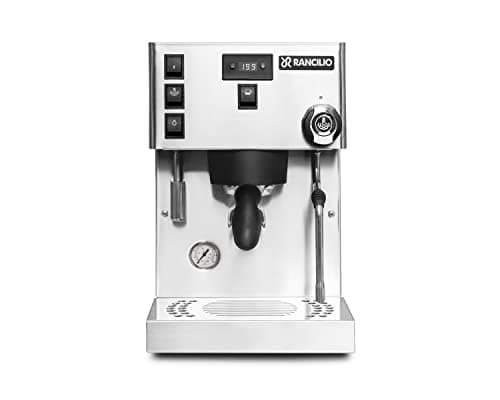
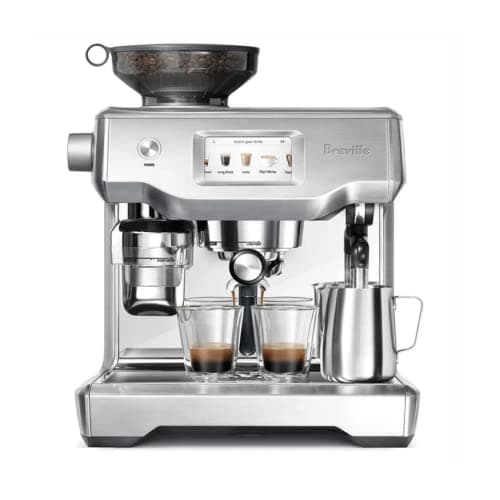
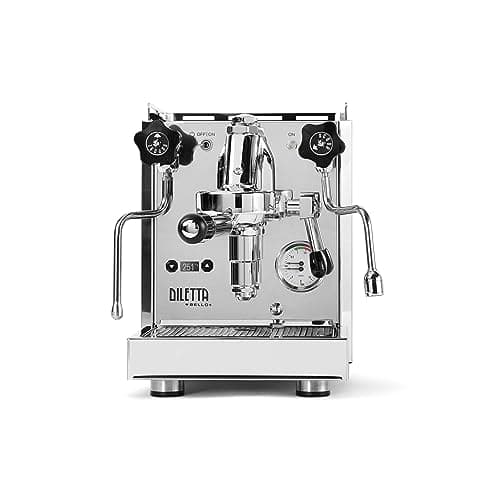
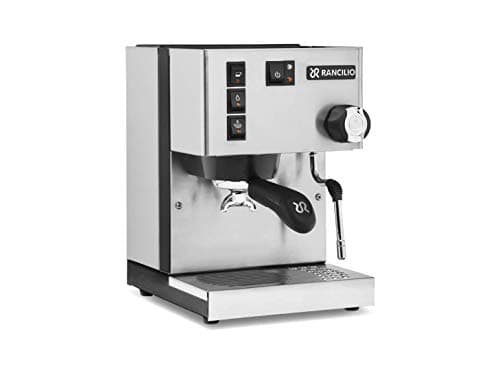
“Prosumer” is one of those words that sounds like marketing until you use one of these machines, and then it means something very specific. A prosumer espresso machine borrows the ideas that make a cafe machine work — brew temperature that holds steady to the degree, steam powerful enough to texture milk drink after drink, a genuine 58mm portafilterthat accepts commercial parts, and a body built to be opened and serviced rather than thrown away — and packs them into something that fits a home counter and runs on a normal wall socket. It is the tier you graduate to once a budget machine has taught you to pull a shot and you have discovered that the machine, not your technique, has become the thing holding your coffee back. That is the honest trigger for spending here: not that more boilers are better, but that you have run out of machine.
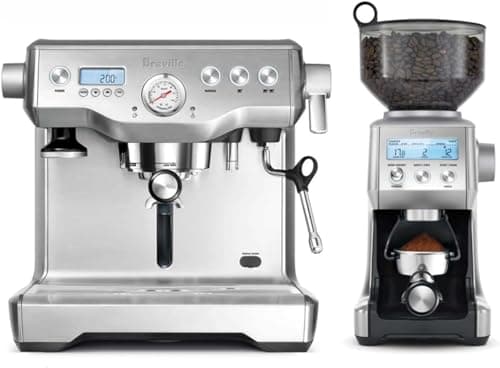
Before you read a single verdict, hear the part that matters most to your cup: on all but two of these machines the grinder is a separate purchase, and it matters at least as much as the machine itself. A prosumer machine with rock-steady temperature and cafe steam, fed by a weak grinder, will lose to a humble single boiler fed by a great one, because temperature stability only counts once the grind is even. So the total cost of getting into this tier is almost never the machine alone — it is the machine plus a serious espresso grinder, and you should price both from the start. Read best grinders for espresso before you commit to any machine on this page, and if you want the single-dose route enthusiasts eventually land on, our best single-dose grinders covers it. Only the Breville Dynamic Duo bundle and the automated Oracle Touch put the grinder in the box.
With that said, this page ranks six machines you can actually buy today, and they split into three architectures worth understanding before you choose. Two are true dual boilers — two separate boilers, each PID-controlled to its own job, the steadiest and most flexible design. One is a PID heat exchanger, the Italian route that brews and steams at once for less money. And two are the benchmark 58mm single boilers that mark the honest entry to the tier — they wait a beat between brewing and steaming, but they are where most enthusiasts start and learn. If you want the full mechanism behind why a second boiler changes the daily experience, our single vs double boiler guide walks through it, and our best dual boiler espresso machines roundup drills into the top of this field specifically. Every pick below gets honest cons and a clear line on who it is not for, because at this money the wrong machine is an expensive mistake.
How we picked
Every machine here is a real, currently-purchasable prosumer machine — a true dual boiler, a PID heat exchanger, or one of the two benchmark 58mm single boilers that mark the entry to the tier — and we ranked them for the buyer who has decided they want commercial ideas at home, not against a cafe machine they will never own. Five things decided the order.
- Temperature stability. The whole reason to spend here is a brew temperature that does not drift. True dual boilers with independent PID hold it best; a PID heat exchanger does it well but less surgically; a single boiler without a factory PID relies on brass thermal mass and your timing. We weighted this heavily because it is the thing your palate notices.
- Steam power. Back-to-back milk drinks are much of the point of moving up, so steam strength and recovery mattered. A large dedicated steam boiler or heat-exchanger boiler leads here; a small single boiler that has to switch jobs is weakest.
- Build and serviceability.At this money, longevity counts. All-metal machines you can open, service and rebuild scored above plastic-bodied machines built to be used rather than restored — though the latter often win on features and value per dollar.
- Ease of use. Some buyers want to do everything by hand; others want the machine to grind, tamp and steam for them. We rewarded each machine for doing its chosen job well rather than forcing one philosophy on all of them.
- Value.Prosumer money is real money. The best value was not the cheapest machine but the one that delivers the most capability for what you pay — sometimes including a grinder in the box, which changes the sum completely.
We did not lab-test these machines; we do not run a lab. There is no measured temperature-stability chart and no timed back-to-back steaming log — the scores are editorial judgments built from published manufacturer and retailer specs, the mechanics of how each architecture works, and aggregated owner reports, exactly as our methodology pageexplains. Specifications come from the makers' own product pages, listed in Sources.
What “prosumer” actually means
Strip away the marketing and a prosumer machine is defined by four things, not by a price tag. The first is temperature stability: a shot brews best in a narrow window, and a prosumer machine holds that window — with a PID, with brass thermal mass, or both — instead of letting a cheap thermostat swing through a band. The second is a genuine 58mm portafilter and the ecosystem it unlocks. The third is steam power that can texture real microfoam and recover between drinks rather than fizzing out. And the fourth is serviceability: these are machines designed to be opened, maintained and, on the all-metal ones, rebuilt for years. Not every pick nails all four — the single boilers trade simultaneous steaming and factory PID for a lower entry price — but those four axes are what separate this tier from the pressurized-basket machines below it. If your priority is one-touch convenience above all, a prosumer machine is arguably the wrong category, and a bean-to-cup super-automatic is the honest alternative.
The 58mm ecosystem is half the reason to buy in
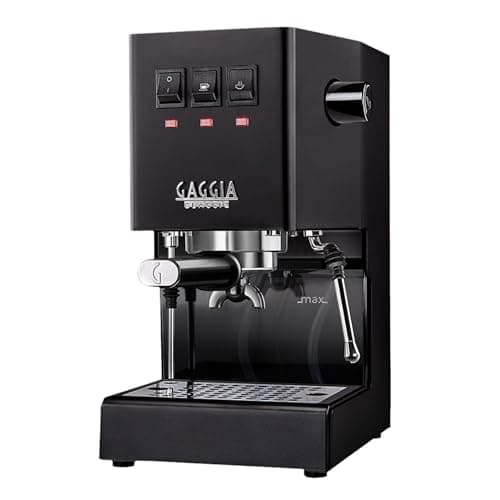
It is worth being specific about why enthusiasts fixate on that portafilter number. A genuine 58mm group — on the Breville Dual Boiler, the Oracle Touch, both Rancilios, the Diletta and the Gaggia — is the same diameter used behind most cafe counters, and it means you are not locked into whatever proprietary basket a manufacturer ships. Instead you can reach an entire standard of cafe-grade parts: precision baskets, competition tampers, distribution tools, WDT gadgets and a bottomless portafilter that shows you exactly where a puck is channeling. That standard is why a 58mm machine keeps improving long after you buy it — the upgrades are cheap, plentiful and transferable, and the skills you learn move with you if you ever change machines. It is also the single biggest reason a serviceable single boiler like the Gaggia Classic Evo Pro belongs on a prosumer list at all: it hands you the commercial standard on day one, for the least money of anything here.
Almost every one of these needs a grinder — price it in
This is the total-cost truth the whole page turns on, so we will repeat it plainly: four of these six machines ship with no grinder, and on hardware this capable the grinder matters as much as the machine. A prosumer machine fed by a weak grinder makes worse coffee than a budget machine fed by a great one, because temperature stability, pressure profiling and 58mm baskets can only extract what the grind gives them. So the real cost of entering this tier is the machine plusa serious espresso grinder — budget for both from the start, not the machine now and the grinder “later.” The two exceptions are the ones that bundle grinding: the Breville Dynamic Duo, which includes the Smart Grinder Pro, and the Oracle Touch, which grinds internally. For everything else, start with our best grinders for espresso, and if you want the flat-burr, single-dose grinders serious owners graduate to, read best single-dose grinders. Skipping this step is the most expensive mistake at this tier — the case is laid out in full in do you need a grinder for espresso.
Dual boiler vs heat exchanger vs single boiler
These are the three architectures on this page, and the difference is worth understanding because two of them can steam and brew at once. A single boiler— the Silvia and the Gaggia — has one tank that heats to brew temperature or steam temperature but not both, so you brew, then wait for it to climb to steam. That is fine for a couple of drinks and tedious for a crowd, and it is the one real limitation of the tier's entry machines. A heat exchanger— the Diletta Bello+ — keeps one boiler hot enough for steam and runs cooler brew water through a pipe inside it on demand, so it does both at once for less than a dual boiler; the trade is slightly less precise brew temperature and the occasional cooling flush after it sits idle. A dual boiler— the Breville Dual Boiler, the Oracle Touch and the Silvia Pro X — simply uses two separate boilers, each PID-controlled to its own job, which gives the steadiest brew temperature and the most flexible steaming, at the highest price and complexity. Our single vs double boiler guide goes deeper on the mechanism, and our best dual boiler roundup focuses only on the machines that steam and brew simultaneously.
Serviceability and total cost of ownership
One more axis separates these machines beyond the day-one experience: how they age. The all-metal picks — the Rancilio Silvia Pro X, the Diletta Bello+, the single-boiler Silvia and, at the budget end, the Gaggia — are built to be opened, maintained and, in most cases, rebuilt part by part, backed by parts stocks and exploded diagrams; these are machines you keep for a decade and beyond. The Brevilles are engineered brilliantly for their price but use more plastic and are built to be used hard rather than restored, so plan to own them a shorter span and lean on their bundled convenience instead. Neither approach is wrong, but it should shape your decision: if you want an heirloom you service forever, weight build and pay the Italian premium; if you want the most capability per dollar in a package that serves years of daily drinks, the Breville route wins. Either way, remember the running cost is not just the machine and the grinder — it is fresh espresso beans, the occasional gasket and descaling, and the accessories that turn a good machine into a great cup.
Which machine fits you
- Want the most prosumer capability per dollar, grinder included?Breville Dynamic Duo Dual Boiler — a true dual boiler and a matched grinder for less than most machines cost bare.
- Want the best-built, most serviceable machine and the strongest steam?Rancilio Silvia Pro X — commercial bones for the enthusiast who brings the skill and the grind.
- Want cafe milk drinks with no skill and no ritual?Breville Oracle Touch — it grinds, doses, tamps and steams for you on real dual-boiler hardware.
- Want the Italian E61-style experience with a PID, for less than a dual boiler? Diletta Bello+ — a heat exchanger that adds the shot control a basic one lacks.
- Want the benchmark single boiler to learn and mod on?Rancilio Silvia — the most permanent-feeling entry to the tier, PID-ready when you are.
- Want the cheapest honest way into real 58mm parts?Gaggia Classic Evo Pro — the serviceable platform enthusiasts start on and keep for years.
Whichever you land on, remember what a prosumer machine does and does not do: it takes temperature and steam limits out of your coffee, but it does not put skill or a good grind into it. Match it to a serious grinder and fresh beans, learn to dial in, and any of these will make espresso as good as most cafes. If a full countertop machine is more than you want to commit to right now, our best manual espresso makers covers the lever-and-hand-pump route at the other end of the spectrum, and best espresso machines under $1,000 maps the tier just below this one, where most people should honestly start.