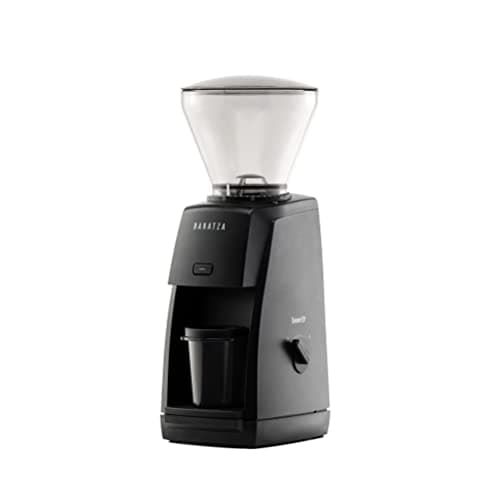
The Baratza Encore ESP exists to fix a specific, well-known problem. The original Baratza Encore is one of the best beginner grinders ever made — but it was built for filter coffee, and its adjustment steps were spaced too coarsely to reliably hit the narrow espresso window. The ESP (for “espresso”) takes the same proven 40mm conical burrs and re-gears the adjustment so far more of its forty settings fall in the espresso range, turning a great drip grinder into a genuine, affordable entry into home espresso.
What you are really buying, though, is a Baratza. The company's reputation is built on two things beginners only appreciate later: consistent, well-engineered conical burrs that punch above their price, and support you can actually use. Baratza publishes exploded parts diagrams, sells individual replacement parts, and runs a repair program — so an Encore ESP is a grinder you fix rather than replace when something wears out years down the line. That is rare at this end of the market, and it is the difference between a grinder and a disposable appliance.
The honest limits are the ones every stepped grinder has. It is not stepless, so on a demanding non-pressurized setup you can occasionally find yourself wishing for a setting halfway between two clicks, and it is not the fastest or the tidiest grinder on the counter. But for a first espresso grinder — or a pairing for a machine like the Breville Bambino— it hits a sweet spot of consistency, serviceability and price that little else matches. See where it sits among the field in our best grinders for espresso and best grinders under $200 roundups.
The Encore ESP's closest rival at the same price is the stepless, single-dosing Fellow Opus 2, and the choice between them comes down to workflow rather than cup quality: Fellow Opus 2 vs Baratza Encore ESP works through it. This grinder is also our electric pick for a moka pot, because the espresso re-gearing puts the medium-fine window mid-dial rather than at the edge — see moka pot grind size.
Encore ESP vs the original Encore
This is the question that sends people to this page, and the answer is simple: buy the ESP if you want espresso. The standard Encore is a superb, affordable grinder for filter coffee, but its adjustment steps are spaced for drip, so it struggles to land in the fine, narrow espresso range — something we cover in the best grinders for drip and pour over roundup, where the original Encore rightly features. The ESP keeps the same excellent burrs but re-gears the settings so the espresso window actually has usable clicks in it. If you will only ever brew drip and pour over, save the money and get the standard Encore — our Baratza Encore review covers it on its own terms, including exactly where its fine end runs out. If espresso is on the menu, the ESP is the one.
Stepped vs stepless: will it dial in?
The Encore ESP is a stepped grinder with forty positions, and for most home espresso setups that is enough resolution to find a good shot. The honest nuance: espresso lives in a tiny window, and a stepped grinder occasionally leaves you between two clicks — one a touch too fast, the next a touch too slow. On a forgiving machine, or with slightly older beans, you will rarely notice. On a demanding non-pressurized basket with very fresh, light-roast beans, you may sometimes wish for the infinite micro-adjustment of a stepless grinder. That is the real ceiling of this class, and it is why enthusiasts eventually move up — but it is not a reason for a first-timer to spend double before they need to.
Who it is for
The Encore ESP is the right grinder for someone buying their first serious espresso setup who wants an electric grinder that grinds on demand and holds its setting — and who values being able to repair it rather than bin it. It pairs naturally with entry-and-enthusiast machines: the Breville Bambino, the machines in our best under $500 roundup, and anything in best for beginners. If you would rather crank by hand and get stepless adjustment for similar money, read our best hand grinders and the 1Zpresso vs Comandantecomparison — a hand grinder is the other honest answer at this budget.
What to pair it with
A grinder is one leg of the setup. To turn its consistency into good shots you also want a basket-matched tamper, a WDT tool to break up clumps, and a scale so you can weigh dose and yield and actually repeat a good shot. Fresh espresso beans matter as much as any of it. If you are still assembling the setup, our do you need a grinder for espresso guide explains why the grinder is the piece to get right first.
What we did not test
We have not run this grinder for months on a bench, and we do not claim to have. This review compiles Baratza's published specifications, cross-checks the parts and repair documentation, and weighs aggregated owner reports against our scoring rubric. The burr size, step count and espresso-range claims come from Baratza's own materials, listed in Sources. Where hands-on time would tell you more than a spec sheet — exactly how much it retains, how it behaves single-dosing — we say so rather than invent a figure.
The closest rival at this money has the opposite character. Our Fellow Opus 2 review covers a stepless 48mm conical that grinds faster and retains less but gives up the numbered, repeatable settings and the parts-and-repair support that make the Encore ESP easy to live with for years.
How we picked
We did not lab-test this gear
Everyone in this category says they tested twenty machines. We have not pulled shots on every product here, and we say so. What we did instead: compiled the published specifications, cross-checked the manufacturer manuals, computed the running cost (wattage to energy, grams-per-shot to cost-per-cup), weighed aggregated owner reports, and scored each product against a published rubric. The scores are judgments from documented research — not measurements we took, because we do not have a test lab and we will not pretend we do. Where hands-on time would tell you more than a spec sheet, we flag it. Where a number came from someone else's work, we name them in Sources.