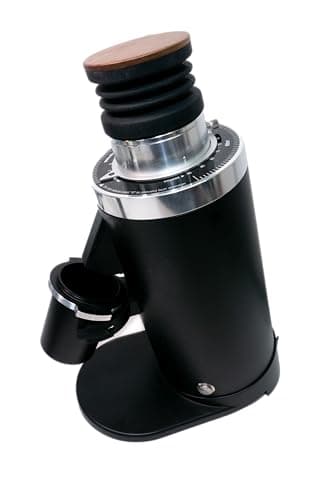
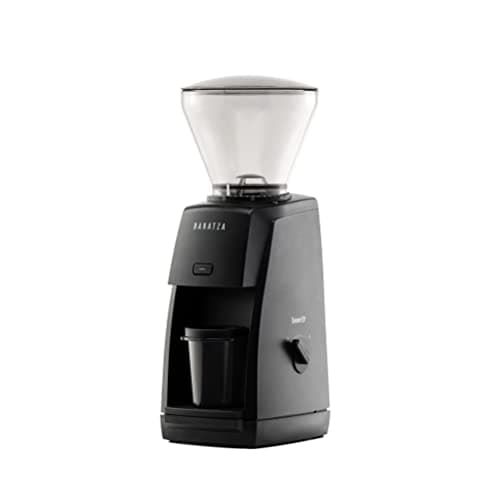
The Baratza Encore ESP and the DF64 Gen 2 are the two grinders most home espresso drinkers end up choosing between — not because they are alike, but because they sit on either side of the same upgrade question. The Encore ESP is the affordable, hopper-fed, stepped entry grinder: pour beans in the top, pick one of forty clicks, and grind on demand. The DF64 Gen 2 is the single-dose step up: bigger 64mm flat burrs, a stepless dial you can nudge by a hair, and a body built around weighing in one shot at a time. One is where most people should start; the other is where a lot of them eventually go.
So this is less a fight than a fork in the road, and being honest about both directions matters. The Encore ESP's pitch is simple: it is enough grinder to learn on, from a company that will sell you parts and help you repair it for years rather than bin it. Its 40mm conical burrs are proven, its re-geared steps genuinely reach the espresso range the original Encore missed, and it doubles for pour over and drip. The DF64 Gen 2's pitch is finer control and a cleaner cup: larger flat burrs, stepless micro-adjustment, and a short, low-retention path so what you weigh in is very close to what lands in the cup. Both are electric grind-on-demand machines. We reviewed each on its own — the Baratza Encore ESP and the DF64 Gen 2— and this page is about which one belongs on your counter, and when stepping from the first to the second is worth the extra money and fuss.
The short version, before the detail: if this is your first dedicated espresso grinder and the budget is entry-level, start on the Encore ESP with a clear conscience — it is not a compromise you will resent, and it is repairable enough to keep for years. Step up to the DF64 Gen 2 when you specifically want the things a stepped, hopper-fed grinder cannot give you: finer dial-in between clicks, lower retention, and true single-dosing so you can switch beans shot to shot without stale grounds in the way. For the wider field either grinder competes in, see our best grinders for espresso and best grinders under $200roundups — the Encore ESP anchors the value end of both.
The head-to-head, point by point
Adjustment resolution:the DF64 Gen 2 wins clearly. Its stepless dial lets you creep the grind finer by a hair, which is exactly the micro-adjustment espresso rewards, where the Encore ESP gives you forty fixed clicks — enough to find a good shot on most setups, but occasionally leaving you between two positions, one a touch too fast and the next a touch too slow. Retention:the DF64 wins again — it is built around single-dosing with a short, low-retention path, so very little coffee is trapped inside between shots, while the Encore ESP's hopper-and-chute design holds onto some grounds by comparison. Grind quality:the DF64's larger 64mm flat burrs edge ahead of the Encore's 40mm conical set for pure uniformity, though the Baratza burrs punch well above their price and are more than good enough to learn on. Ease and forgiveness:the Encore ESP takes this one — pour beans in, pick a click, grind, with no bellows and no distribution ritual to learn, where the DF64 wants a puff and a stir to grind at its best. Noise: the Encore ESP is the quieter, more appliance-like grinder; the DF64 is louder, though it motors through a small single dose quickly rather than droning. Build and support: the Encore ESP wins on the certainty of a single brand with a famous repair program, while the DF64 is a third-party platform whose warranty and spares depend on buying from a reputable seller. On value both are standouts for what they do. We did not lab-test either grinder; our methodology explains how we score from published specs and aggregated owner reports.
Adjustment resolution and retention: where the DF64 pulls ahead
These two differences are the heart of the upgrade, so they are worth slowing down on. Espresso lives in a tiny grind window, and a small move in either direction changes how fast the shot runs and how it tastes. The Encore ESP addresses this with steppedadjustment: forty discrete clicks, re-geared so a usable number of them fall in the espresso range the original Encore could not reach. For most home setups — a forgiving machine, beans a few days off roast — that resolution is enough to land a genuinely good shot. The honest ceiling is that on a demanding non-pressurized basket with very fresh, light-roast beans, you can sometimes want the setting that lives between two clicks, and a stepped grinder simply does not have it. The DF64 Gen 2 answers with a stepless dial that moves continuously, so there is always a finer or coarser hair to reach for. That is the single biggest reason enthusiasts step up. Our espresso grind size guide covers why that last hair of control matters once you are chasing a specific shot.
Retention is the second structural gap. The Encore ESP is a hopper-fed grinder with a conventional grind path, so a little coffee is always left inside, and it can be a touch messy at the chute. That is fine if you brew the same bean day after day — the small amount of carry over barely matters. The DF64 Gen 2 is designed the opposite way: you weigh in one dose, grind it, and almost nothing stays behind, so what you put in is close to what you get out. That low retention is what makes real single-dosingpractical — you can switch from a dark espresso blend to a bright single origin between two shots without the previous bean lingering in the machine. If bean-switching and squeezing every gram out of a fresh bag are things you care about, the DF64 is built for it and the Encore ESP is not.
Noise, workflow and the daily ritual
The two grinders ask for different amounts of you each morning, and that shapes which one you will actually enjoy living with. The Encore ESP is the more appliance-like of the pair: it is quieter, you fill the hopper, and grinding is a button press. It is not the fastest grinder — a double dose takes its time — and it retains some grounds, but there is no ceremony to it, which is a real virtue when you are still learning and do not want a dozen variables. The DF64 Gen 2 is a more hands-on ritual by design. To grind at its best it wants a puff or two from its bellows to clear the chamber and keep retention low, and a quick stir with a WDTtool in the dosing cup to break up any clumps before you tamp. That is about ten seconds of workflow once it is a habit, and it noticeably evens out the shot — but it is genuine fuss the Encore ESP does not ask for. The DF64 is also louder, though as a single-doser it runs briefly through a small load rather than droning on. If a near-silent, fill-and-forget experience is what you want, the Encore ESP is closer to it; if you find the single-dose ritual satisfying rather than annoying, the DF64 pays you back with the cleaner cup.
When the step up is worth it (and when the Encore ESP is enough)
Here is the decision, made plainly. Start with the Encore ESPif this is your first dedicated espresso grinder, the budget is entry-level, and you want the simplest path into pulling shots. It is not a placeholder you should feel bad about — it is a properly capable grinder with proven burrs, and because Baratza sells parts and runs a repair program, it is one you can keep and fix for years rather than replace. Many people pair it with an approachable machine and never feel a pressing need to move on. Step up to the DF64 Gen 2when you can name the thing you are missing: you keep landing between two clicks and want stepless micro-adjustment; you want to switch beans shot to shot without stale grounds in the way; or you simply want the cleaner, more uniform grind that larger flat burrs and single-dosing deliver. Buying the DF64 first can make sense too — if you already know you want stepless control and single-dosing, paying once for the step up beats buying twice. What you should not do is jump to the DF64 expecting it to be less work: it is more control at the cost of a little more ritual and a reputable-seller purchase. Both grinders appear in our best grinders for espresso field, and the Encore ESP anchors the value end of our best grinders under $200roundup if budget is the deciding factor. Whichever you choose, the grinder is the part of an espresso setup most worth getting right — more than the machine — so neither of these is money badly spent.