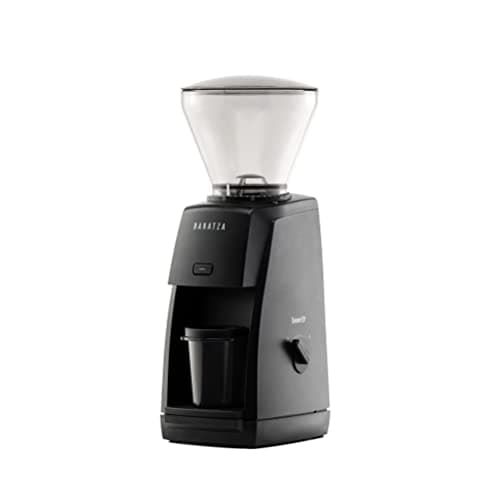
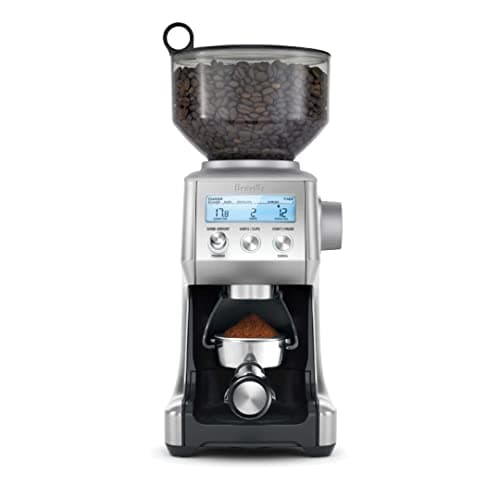
The Breville Smart Grinder Pro and the Baratza Encore ESP are the two names that come up most when someone wants their first real espresso grinder without spending to the top of the budget. Both are affordable, both use conical burrs, both grind on demand and hold a setting, and both can genuinely reach the fine espresso window — which already puts them ahead of any blade grinder or bundled unit. The difference is in what each one leans toward: the Breville is the feature-forward, do-it-all grinder with a display, a timer and a range that runs from espresso to French press, while the Baratza is the focused, repairable grinder that Baratza re-geared specifically so its steps land in espresso. This page sorts out which is the better first grinder on a tight budget.
Name the split before the specs. The Breville Smart Grinder Pro is the versatile, friendly-to-live-with pick: a clear display shows the dose and grind time, timed dosing grinds hands-free straight into the portafilter, and its 60 stepped settings cover your morning shot and a weekend pour over or press without swapping grinders. The Baratza Encore ESPis the focused, keep-it-for-years pick: Baratza re-geared its proven 40mm conical burrs so its 40 steps finally reach espresso, and — the thing that really sets it apart — the company publishes parts diagrams and runs a repair program, so this is a grinder you fix rather than bin. Read the Baratza in full in our Baratza Encore ESP review; this page is about which one belongs on your counter first.
One honest framing up front: neither of these is the finest espresso grinder money can buy, and neither pretends to be. Both are stepped (not stepless), both are conical (not flat), and a picky machine or a very light single-origin will occasionally want more resolution than either offers. What they are is the smart, affordable entry point — the grinder that lets a new espresso drinker pull genuinely good shots while the budget still stretches to the machine and the beans. If you want to see where each sits against the field, our best electric espresso grinders under $500 ranks them both, and our best grinders under $200 covers the tightest end.
Espresso: re-geared steps vs a wide-range 60-click dial
Both grinders reach espresso, but they were tuned with different priorities. The Encore ESP is the more espresso-focusedof the two by design: Baratza re-geared the original Encore's drivetrain specifically so its 40 steps land in the fine espresso window that the standard Encore could not reach. That means more of its usable range is aimed at shots, which helps a beginner dial in. The Breville spreads 60 settings across a much wider range, from espresso all the way to French press, so while it has more clicks in total, fewer of them fall inside the tight espresso band — and because espresso lives in such a narrow window, a picky machine can occasionally want a setting that sits between two of them. Both are stepped, not stepless, so neither gives you the continuous micro-adjustment a premium espresso grinder does; that is the honest ceiling on both. For most beginners on most beans, either dials in a good shot — but if espresso is clearly the point and filter is an afterthought, the Encore ESP's espresso-first gearing is the better-aimed tool. Our best grinders for espresso shows where both sit against grinders with finer resolution.
Versatility: which one brews more than espresso
This is where the Breville pulls ahead for a lot of households. Its 60 settings genuinely span the whole spectrum — espresso, pour over, drip, and all the way out to French press — so a single grinder can handle a morning shot and a weekend carafe without compromise. If your kitchen brews more than one way, that range is a real convenience. The Encore ESP is versatile too, and grinds beautifully for pour over and drip, but its gearing keeps its center of gravity on the finer, espresso end. So the split is honest: the Breville is the wider all-rounder that reaches the coarsest French press grind comfortably, while the Encore ESP is the espresso-leaning grinder that also does filter well. If filter and pour over are actually the bigger part of your week, cross-check both against the grinders tuned for brewed coffee in our best grinders for drip and pour over.
Living with them: display and timer vs simple and repairable
The two grinders feel different on the counter every day. The Breville is the feature-forward one: a clear digital display shows the grind time and dose, timed dosing grinds hands-free straight into the portafilter or a container, and it repeats the same dose each morning with no thought. It is familiar, widely available, and about as easy to live with as an entry grinder gets. The Encore ESP is deliberately simpler— approachable controls that are hard to get wrong, but no display and no programmable timer — and it trades those conveniences for a different kind of value: repairability. Baratza publishes exploded parts diagrams and runs a repair program, so when something wears out years from now you replace the part rather than the grinder. Both have honest limits worth naming: both hold more retention than a dedicated single-doser and can be a little messy at the chute, the Encore ESP is not the fastest and its plastic body feels entry-level (because it is), and the Breville's conical burrs trail flat-burr grinders for outright espresso clarity. Neither of us bench-tested these; our methodology explains how we score from documented specs and aggregated owner reports instead.
The long game: repairability is the Baratza's trump card
If you plan to keep your first grinder for years — and a good grinder is the part of an espresso setup that most rewards keeping — the Encore ESP's repair story is its single biggest advantage. Baratza's parts-and-service culture is the best in the category: burrs, motors and small parts are available, diagrams are published, and the company will help you fix rather than upsell you a replacement. That turns a modest entry grinder into a genuine long-term tool. The Breville is a perfectly durable appliance, but it is more of a sealed consumer product — you are less likely to be rebuilding it in five years than swapping it. So weigh your intent: if you want the cheapest capable grinder that you can maintain and keep well past the first machine, the Baratza is built for exactly that. If you would rather have the display, the timer and the wider range now and are relaxed about eventual replacement, the Breville is the more convenient buy. Either way, both are the smart affordable entry, not the finish line — you can always step up later to a stepless or flat-burr grinder from our best electric espresso grinders under $500 once you know espresso is for you.
Which first grinder fits you
- Brew espresso and filter and want a display, timer and the widest range?The Breville Smart Grinder Pro — espresso through French press on 60 settings, hands-free and easy.
- Espresso-focused and want a grinder you can fix and keep for years? The Baratza Encore ESP— re-geared for espresso and repairable, the smarter long-term first buy.
- On the very tightest budget? Check both against the cheapest capable options in our best grinders under $200 before you decide.
Whichever you choose, remember the grinder is one leg of the setup: pair it with a capable machine and fresh beans and the money you spent on the grind will show up in the cup. Both of these get a new espresso drinker to genuinely good shots without spending to the ceiling — the choice is versatility and convenience versus repairability and espresso focus.
How we picked
We did not lab-test this gear
Everyone in this category says they tested twenty machines. We have not pulled shots on every product here, and we say so. What we did instead: compiled the published specifications, cross-checked the manufacturer manuals, computed the running cost (wattage to energy, grams-per-shot to cost-per-cup), weighed aggregated owner reports, and scored each product against a published rubric. The scores are judgments from documented research — not measurements we took, because we do not have a test lab and we will not pretend we do. Where hands-on time would tell you more than a spec sheet, we flag it. Where a number came from someone else's work, we name them in Sources.