A drip machine or a pour over cone is far more forgiving than an espresso machine — but the grinder still decides how the cup tastes. Filter brewing pours water through the bed slowly and by gravity, so uniform particles matter for a different reason than they do in espresso: every ground needs to give up roughly the same amount of flavor in the same three or four minutes. Grind unevenly and the dust over-extracts into bitterness while the boulders sit there tasting like nothing, and you get both faults in the same mug. Every grinder below is a burr grinder that produces a genuinely even medium grind, which is the one thing that separates good filter coffee from the flat, papery cup most people accept as normal.
The criteria we ranked on are deliberately different from our espresso grinder roundup. There, the decisive spec is adjustment resolution at the very fine end. For drip and pour over, the decisive specs are grind uniformity in the medium range (how few fines a grinder throws off when set for filter), how many usable steps fall in that middle band rather than at the extremes, and capacity and workflow — because a full carafe needs 50 to 60 grams of coffee, not the 18 grams an espresso basket takes. A grinder can be superb at one job and mediocre at the other, which is exactly why this list is not a copy of that one.
Six picks follow, from the electric most people should buy to a 64mm flat-burr specialist built only for filter, plus a hand grinder for people who brew one cup at a time. Every pick carries its honest limits, including the ones that would send you to a different page — if espresso is really your priority, read what grind size espresso needs first, because several grinders here cannot go there.
What actually makes a grinder good for filter coffee
Filter brewing is gentler than espresso, and that leads a lot of people to conclude the grinder does not matter much. It matters — just for a different reason. In a drip machine or a pour over cone, water passes through the bed slowly under nothing but gravity, and it has three or four minutes to pull flavor out of every particle it touches. The fine dust a poor grinder produces gives up everything it has in the first thirty seconds and then keeps going, turning bitter and drying out the finish. The boulders in the same scoop barely extract at all and contribute the thin, sour, papery note people blame on their beans. Both faults land in the same mug at once, which is why bad filter coffee so often tastes weak and harsh rather than one or the other.
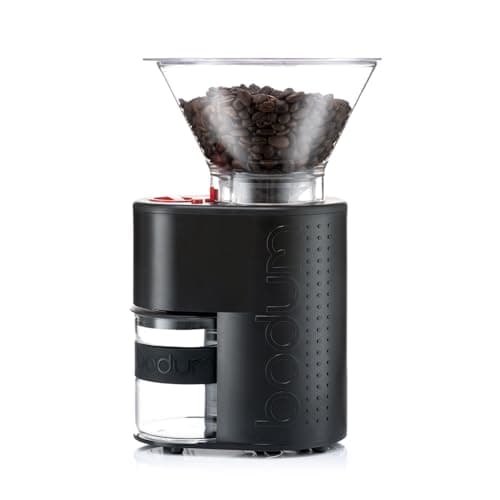
Burrs are the fix, because they crush beans between two shaped cutters set a fixed distance apart and produce particles of a deliberate size. A blade grinder simply chops for as long as you hold the button, and no amount of technique makes that even. That is the single largest upgrade in filter coffee, and it happens at the bottom of the price range — the Bodum Bistro clears it. Everything above that is buying you fewer fines, finer control and a nicer daily routine, not the difference between drinkable and undrinkable.
How many grind settings you actually need
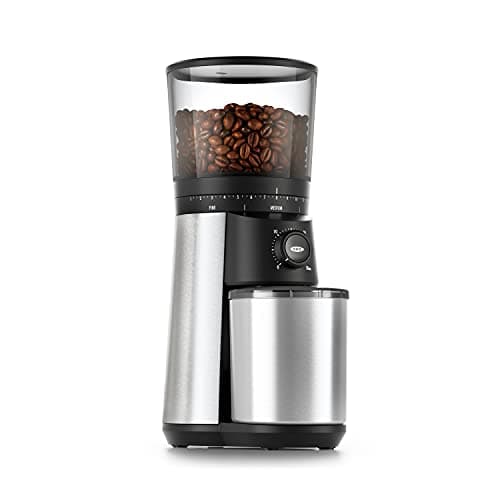
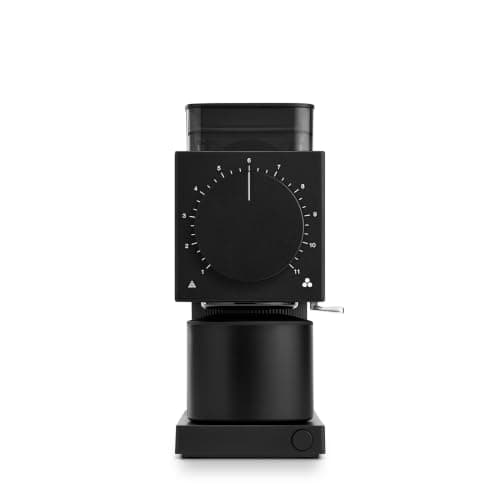
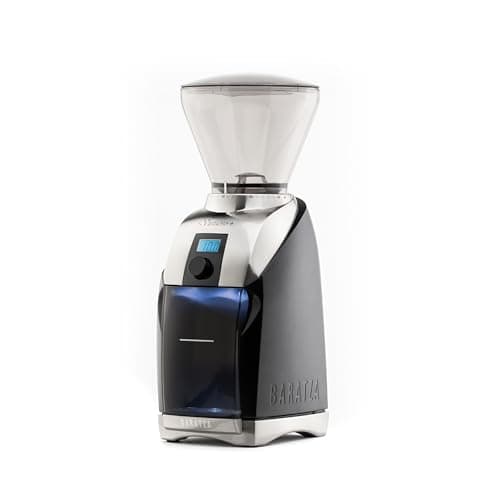
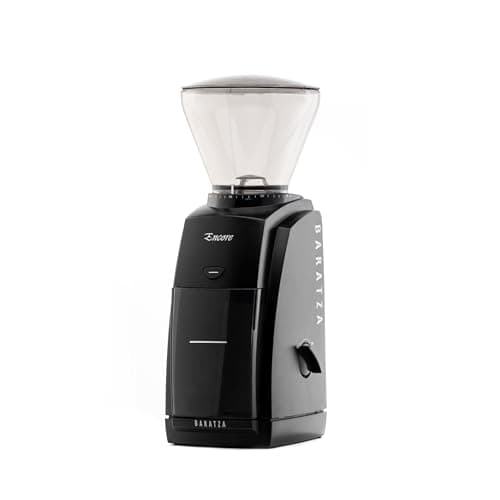
Filter coffee lives in the middle of the grind range — roughly the texture of granulated sugar for drip, a touch finer for a pour over cone, coarse sea salt for French press. What matters is not a grinder's total number of settings but how many of them fall in that middle band. This is where the picks genuinely separate. The Bodum's 12 settings are stretched across the whole range, so only a handful land anywhere near drip and each click moves the grind a long way. The OXO's 15 settings plus micro settings give you a workable middle with room to nudge. The Encore and Virtuoso+ each offer 40 settings across a 250 to 1200 micron span, which is enough resolution that one click is a real but small change. And the Ode Gen 2 spends all 31 of its steps inside the filter range alone, because Fellow deliberately gave up espresso to do it.
A useful way to think about it: if you brew one method with one bag of beans, 12 steps is survivable. If you switch between a cone, a drip machine and a French press, or you change roasters often, you want at least the OXO's resolution and ideally the Encore's. Our grind size guide has the full method-by-method chart, including what each texture should feel like between your fingers.
Flat versus conical, and single-dose versus hopper
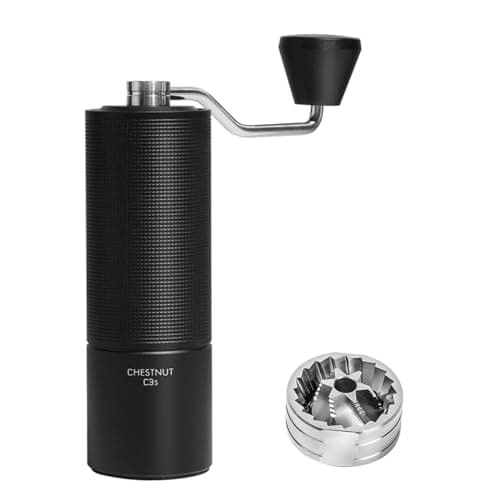
Two structural choices sit on top of the settings question. Conical burrs — a cone spinning inside a ring, as in the Encore, Virtuoso+, OXO, Bodum and the Timemore — are efficient, forgiving and dominate at every price. Flat burrs, two facing rings like the Ode's 64mm set, tend to produce a narrower particle distribution, which in filter brewing shows up as clarity: individual flavors read more distinctly. It is a real difference and a subtle one, and it is not worth three times the money unless you brew pour over deliberately and taste for it.
The workflow choice matters more day to day. A hopper grinder like the OXO or Encore holds a batch of beans and grinds on demand — you press once and walk away, which is exactly right for a household making a carafe at 6am. Single-dosing, as the Ode and every hand grinder do, means weighing in only the beans you are about to brew: fresher, precise, almost nothing retained, but a slower ritual and one more thing to do before coffee. Neither is better. Pick the one that matches the morning you actually have, not the one that sounds more serious. How each score behind these picks was reached is set out on our methodology page.
Can one grinder do filter and espresso?
Sometimes, but not the way most people hope. Espresso needs a fine grind adjusted in very small increments; filter needs a medium grind where the steps can be a little wider. A grinder built for espresso can almost always brew filter well, because the coarse end of its range is easy to reach. The reverse is much less reliable: a filter grinder often either will not go fine enough or has so few steps down there that you skip straight past the setting you need. The Ode is the honest extreme — Fellow says outright it is not intended for espresso. The Encore is the instructive middle case: Baratza sells a separate ESP version precisely because the standard Encore's steps are too coarse at the fine end.
So if espresso is your main brew and filter is the occasional weekend cup, buy from our best grinders for espresso roundup instead and grind coarser when you want a pour over. If filter is what you make every day, buy from this page and do not pay for espresso capability you will never use. And if you are torn between an electric and a hand grinder at any price, our hand versus electric grinder guide lays out the trade in detail.
Which grinder fits your brewer
- Drip machine, full carafe, every morning: the Baratza Encore for resolution, or the OXO if you would rather press one button than weigh beans. Pair either with a machine from our best drip coffee makers roundup.
- Pour over, deliberately, one or two cups: the Fellow Ode Gen 2 if the budget allows, otherwise the Encore.
- You want repeatable doses without a scale: the Baratza Virtuoso+ and its tenth-of-a-second timer.
- One cup at a time, or you travel: the Timemore Chestnut C3S.
- Smallest budget that still beats a blade grinder: the Bodum Bistro — with eyes open about its 12 settings.