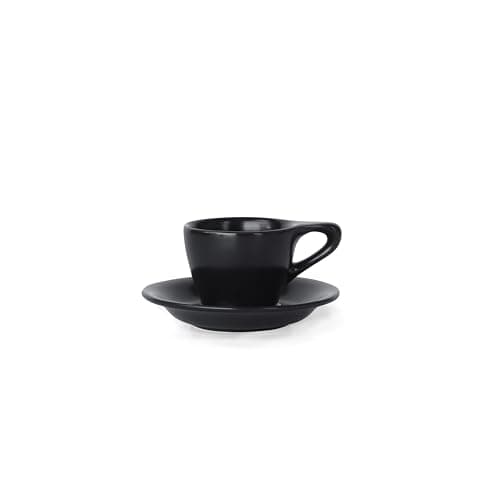
It is easy to spend months chasing a better grinder, fresher beans and a cleaner shot, then pour the result into whatever mug is nearest and wonder why the last sip tastes flat. The cup is the final piece of equipment every espresso passes through, and it does more to the drink than most people expect. A double shot is a tiny amount of very hot liquid with a fragile layer of crema on top, and both of those — the heat and the crema — start to fade the moment the espresso leaves the machine. The right cup slows that fade down; the wrong one speeds it up. This page ranks six espresso cups and demitasse sets on the things that actually change the drink in the cup, not on how they photograph.
Three properties do almost all of the work. The first is heat: a thick, preheated, dense cup behaves like a small heat bank, so a shot poured into it holds temperature and the last mouthful is still warm instead of tepid. A cold, thin cup steals that heat instantly — a chilled demitasse can drop a shot ten to fifteen degrees before you have taken a sip. The second is size. Espresso wants a demitasse of roughly two and a half to three ounces; that is enough room for a single or a double with a little headroom for crema, and no more. Pour the same shot into a six-ounce cup and the crema spreads out thin, cools fast against all that cold surface, and loses the concentrated look and feel that makes espresso espresso. The third is shape: a rounded, egg-shaped interior gathers the crema toward the center and holds it, where a wide, flat-bottomed cup lets it break up and drift to the edges. Get these three right and a good shot tastes the way it did on the way out of the portafilter.
Material is where personal taste comes in, and there are two honest camps. Porcelain is the classic — dense, a touch of thermal mass, and it holds heat beautifully once it is warm, which is why nearly every cafe cup and every competition cup is porcelain. Double-walled glass takes the opposite route: two thin walls with an air gap between them insulate the drink, so the outside stays cool to hold while the shot stays hot inside, and you get to watch the espresso settle into its layers through the glass. Neither is wrong; they suit different mornings. One last thing worth saying out loud, because it is true: a good set of espresso cups is one of the easiest, most reliably welcome gifts you can give a coffee person — small, useful, and nicer than they would buy for themselves. If your setup pulls into milk drinks too, our best milk pitchers guide covers the latte-and-cappuccino side of the cupboard; and none of this cup talk matters until the shot underneath is right, so start with good espresso beans and a solid shot routine.
How we picked
Every cup here is a real, currently-purchasable espresso cup or demitasse set you can buy in the US, and every spec below — size in ounces, material, set count, whether a saucer or stand is in the box — is taken from the maker's own listing. We ranked on five things, in this order.
- Heat retention. Espresso is a small volume of hot liquid that cools fast, so the single most important job of the cup is to keep it warm to the last sip. Thick, dense porcelain that warms into a heat bank and insulating double-walled glass both score well; thin, light cups that shed heat quickly do not.
- Shape and size. A demitasse of roughly 2.5 to 3 ounces suits a single or a double with headroom for crema, and a rounded interior keeps that crema gathered in the center. Cups that are too big let the shot spread thin and cool; cups that are too small crowd the crema.
- Build quality. How solid and well-finished the cup feels, how durable the material is in daily use, and whether the rim and handle feel considered rather than cheap.
- Everyday use. Set count, whether it is microwave- and dishwasher-safe, how neatly it stores, and small touches like a matching saucer that make the cup pleasant to reach for every morning.
- Value. Not simply the lowest price, but what you get for it — the cups, any saucers, spoons or stand, the material and the heft — measured against what you actually need.
We did not lab-test these cups; we do not run a lab. The scores are editorial judgments built from published manufacturer specifications and aggregated owner reports, and our methodology pagespells out exactly how. The keySpecs on each pick are high-level, verifiable facts from the makers' own product pages, listed in Sources — not measurements we took ourselves.
The right size for espresso
Size is the spec most people get wrong, and it changes the drink more than the material does. A straight espresso — single or double — wants a demitasse of about 2.5 to 3 ounces. That is enough to hold the liquid with a little headroom for the crema and no more, so the shot stays deep, concentrated and hot against a small, quickly-warmed surface. Pour that same double into a 6-ounce cup and you actively make it worse: the crema spreads out across all that width, thins, and fades in seconds, and the shot sheds heat fast against a large, cold expanse of porcelain. It looks like a small puddle at the bottom of a big cup, and it tastes cooler and flatter than it should. The takeaway is simple — for straight espresso, err toward the smaller, snugger demitasse.
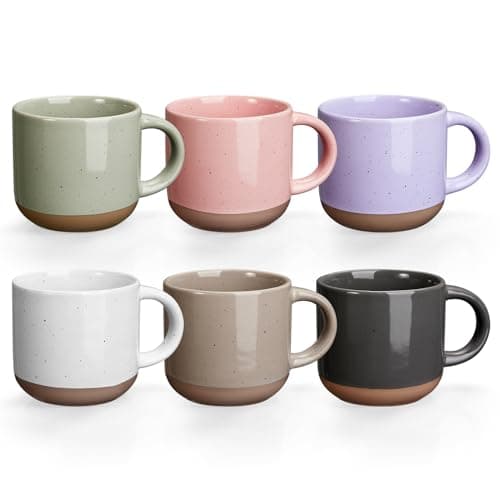
Milk drinks are the exception, and it is worth knowing where the line sits. If you pull your shot into a splash of milk for a cortado, or want a short cappuccino, a 5-ounce cup earns its keep — the extra room is for the milk, not the espresso. That is exactly why the 5oz Gencywe Morandi set sits where it does on this list: it is a fine little milk-drink cup and a compromised straight-espresso cup. If your mornings are mostly lattes and cappuccinos, the cup is only half the story — the froth is the other half, and our best milk pitchers guide covers the steaming side.
Porcelain vs double-walled glass
These are the two materials worth considering, and they solve the heat problem in opposite ways. Porcelain is the classic. It is dense, it carries a bit of thermal mass, and once it is warm it holds heat beautifully — which is why every cafe cup and every competition cup is porcelain. The heavier and thicker the cup, the more it behaves like a heat bank, cushioning the drop in temperature when the hot shot meets the cup. The trade is that porcelain is cold when it comes out of the cupboard, so it needs preheating to do its best work, and a thick cup is heavier to lift and takes more shelf.
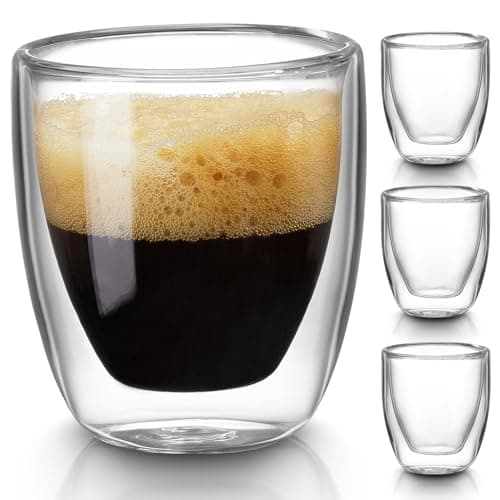
Double-walled glass takes the other road. Two thin glass walls with an air gap between them insulate the drink: the air is a poor conductor, so heat struggles to escape, the shot stays hot inside, and the outer wall stays cool enough to hold with bare fingers. As a bonus you get to watch the espresso settle into its dark liquid and pale crema through the clear glass, which is genuinely lovely. The costs are that glass is more fragile than porcelain and a thin-walled cup never feels as substantial in the hand. Neither material is the right answer for everyone — porcelain if you want heft, tradition and a cup you can preheat into a heat bank; glass if you want insulation without preheating, a cooler exterior, and a view of the shot.
Preheat the cup
Here is the free upgrade that matters more than which cup you buy: warm the cup first. A cold demitasse is a heat thief — pour a hot double into a cup straight from the cupboard and it can pull ten to fifteen degrees out of the shot before you have taken a sip, which is enough to notice. The fix costs nothing and takes seconds. Run some hot water from the machine into the cup while everything else warms up, or park the cups on top of the machine if it has a cup-warming tray, then tip the water out and dry the cup just before you pull. A preheated thick porcelain cup is the difference between a shot that is still warm at the bottom and one that has gone tepid halfway down. It is the cheapest thing you can do for espresso, and it belongs in the same reflex as tamping — fold it into your shot routine and you will never go back.
What we would skip
Paper-thin novelty cups. The gimmicky, wafer-thin cups sold on looks alone shed heat almost as fast as you can pour, so the shot is lukewarm by the second sip — they undo the exact thing a cup is for. Oversized mugs for straight espresso. A big diner-style mug or a tall latte glass is the wrong home for a double: the crema spreads and dies, the shot cools against all that surface, and it looks lonely at the bottom. Save the big vessels for milk drinks and long coffees, and keep a proper 2.5-3oz demitasse for espresso. And skip buying the cup before the shot is right. No cup rescues a sour, channeling espresso from a bad grind or stale beans — the cup finishes a good shot, it does not create one. Get the beans and the technique sorted first, and there is more on how we test and score in our methodology.
Which espresso cups fit you
- Want the best cup and do not mind paying for it? notNeutral LINO — thick barista-designed porcelain, a 3oz volume sized right, and a matching saucer.
- Like watching your coffee and want great value? Gencywe Double-Walled glass — insulated, cool to hold, and it shows off the layers.
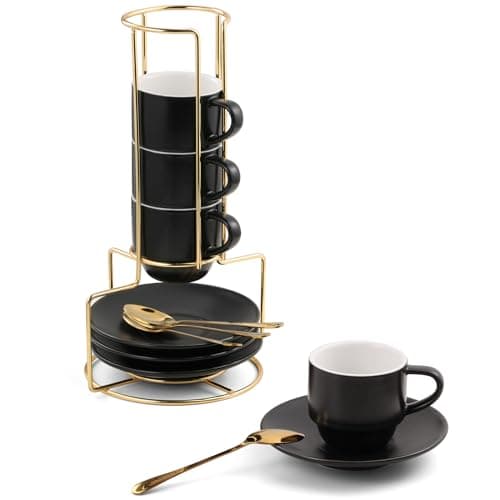
- Buying it as a gift?Lareina's set — four cups, saucers, spoons and a display stand in gift-ready packaging make it the easy, presentable present.
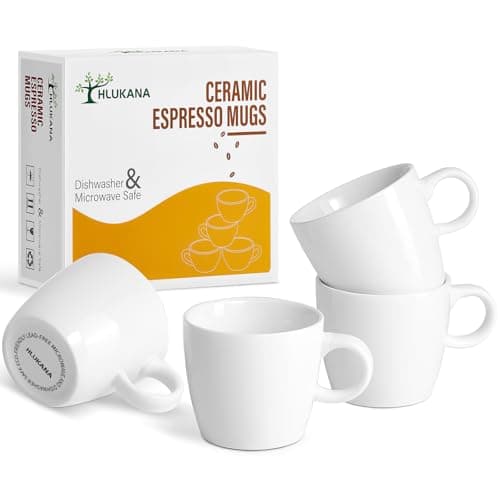
- Want honest porcelain for as little as possible? Hlukana — plain white, microwave- and dishwasher-safe, cheap enough not to fret over.
- Need enough cups for a household — and drink milk drinks? Gencywe Morandi, a set of six 5oz cups better suited to cortados and short cappuccinos than straight shots.
- Short on cupboard space? vancasso — 2.5oz porcelain that stacks into a tidy tower and keeps a single shot concentrated.
Whichever you land on, remember the order of operations: the cup is the last thing that touches the shot, not the first. Sort the beans and the shot routine first, warm the cup, and then a good demitasse does the last, easy job of keeping a hot, crema-topped shot exactly as it left the machine — right up to the final sip.