A moka pot makes a wonderful cup of coffee — rich, strong and syrupy — but let us clear up the biggest myth first: it does notmake true espresso. A real espresso machine forces water through the grounds at around nine bars of pressure; a moka pot builds only a small fraction of that, maybe one to two bars, from steam pressure on the stovetop. What you get is its own thing — closer to a very strong, concentrated brewed coffee than to a cafe's shot — and for many people it is the most rewarding coffee you can make for the least money and fuss. If you specifically want crema and pressurized shots, an entry espresso machine is the honest answer; if you want deep, bold stovetop coffee, read on.
Because a moka pot has no settings, the two decisions that matter are both physical: size and material. A moka pot only makes the amount it is built for — a six-cup pot brewed half-full will not make good coffee — so buy the size that matches how much you actually drink. And the material decides where you can use it: classic aluminum is light, cheap and traditional but will not work on an induction cooktop and should not go in the dishwasher, while stainless steel is heavier and pricier but induction-compatible and dishwasher-safe. Get those two right and any pot below will serve you for years. For a lower-effort electric cup instead, see our best drip coffee makers.
Two things to settle before you pick a pot. If you cook on induction, the classic aluminium pots are out entirely — an induction coil cannot heat aluminium, and can you use a moka pot on induction covers the stainless pots that work. And whichever pot you choose, it wants a medium-fine grind rather than an espresso grind: moka pot grind size explains why, and it is the single most common reason a moka pot disappoints. If you need the grinder as well as the pot, our best grinders for a moka pot roundup ranks the ones whose adjustment range actually covers that window.
A moka pot is not an espresso machine
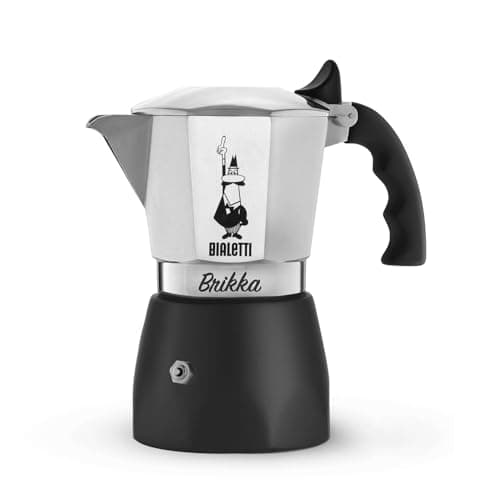
This is the most important thing to understand before you buy, because it sets your expectations correctly. Espresso is defined by pressure — a machine forces hot water through finely ground coffee at roughly nine bars, and that pressure is what emulsifies the oils into the thick crema and concentrated shot you get at a cafe. A moka pot works completely differently: steam pressure from water boiling in the bottom chamber pushes water up through the grounds at only about one to two bars, a small fraction of a machine's force. The result is genuinely delicious — bold, strong and full-bodied — but it is its own category of coffee, not espresso. If crema and real pressurized shots are what you are after, start with an entry-level espresso machine instead. The Brikka narrows the gap with its weighted valve, but even it produces a foam layer rather than true crema.
Buy the right size — a moka pot only makes what it is built for
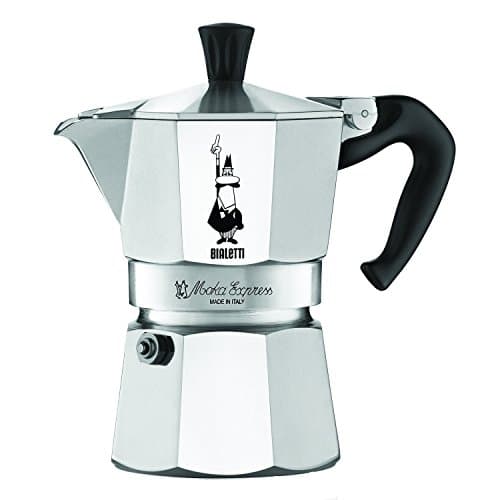
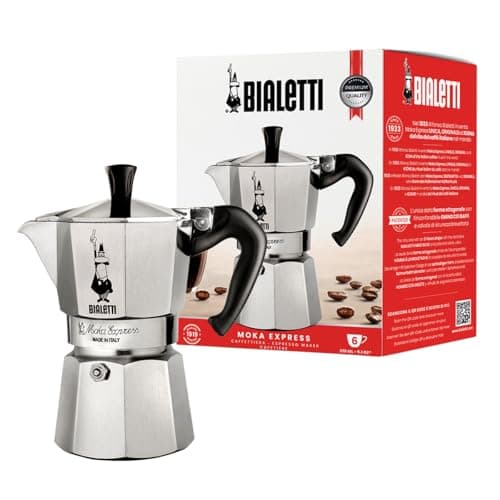
Unlike a drip machine, a moka pot has no way to brew a smaller batch well. The bottom chamber is designed to be filled to the safety valve and the basket filled level with grounds; brew a six-cup pot half-full and you throw off the ratio and the pressure, and the coffee comes out weak and flat. So the "cup" number on the box is not a maximum you scale down from — it is roughly the amount you should plan to make each time. Note that a moka "cup" is a small espresso-size serving, not a mug. Match the size to your real habit: the three-cup Moka Express for a solo drinker, the six-cup for a couple or a small household, and step up from there for more. When in doubt, buy the size closest to a single sitting rather than the biggest one.
Aluminum or stainless — the material decides where you can use it
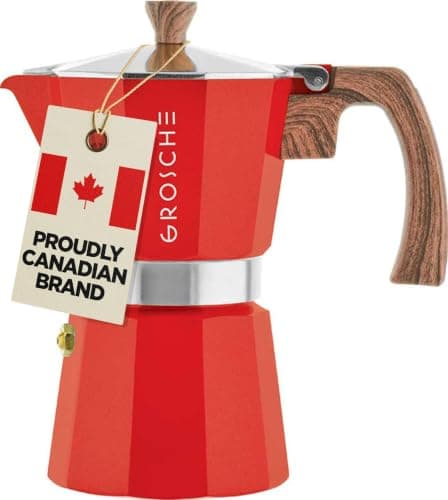
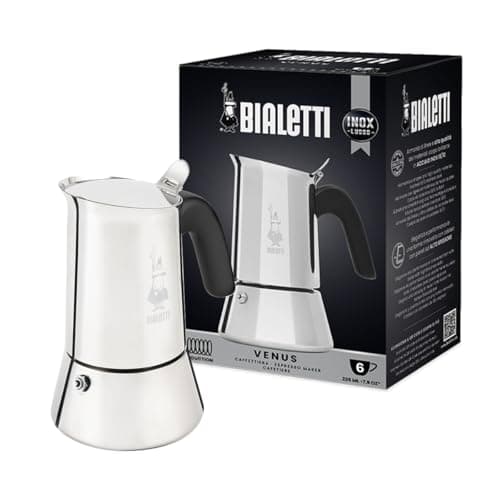
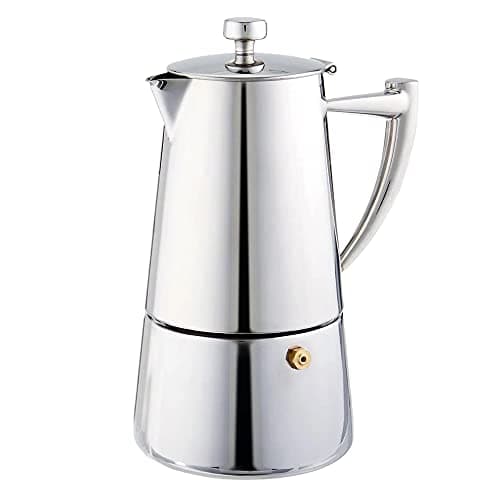
The classic moka pot is aluminum: light, inexpensive, quick to heat and traditional, and it makes a wonderful cup. The trade-offs are that aluminum will not work on an induction cooktop (induction needs a magnetic base) and should be hand-washed, since a dishwasher dulls and pits it. Stainless steel — the Bialetti Venus and the Cuisinox Roma — costs more and heats a little slower, but it works on every stovetop including induction, is dishwasher-safe, and shrugs off years of use. The choice is mostly about your kitchen: if you have an induction cooktop, you need stainless, full stop; if you have gas or a standard electric coil and want to spend the least, aluminum is the classic pick. Whichever you choose, grind matters as much here as anywhere — use a burr grinder set to a moka-appropriate grind (a touch coarser than espresso, finer than drip) and start with fresh beans.
How we picked
We did not lab-test this gear
Everyone in this category says they tested twenty machines. We have not pulled shots on every product here, and we say so. What we did instead: compiled the published specifications, cross-checked the manufacturer manuals, computed the running cost (wattage to energy, grams-per-shot to cost-per-cup), weighed aggregated owner reports, and scored each product against a published rubric. The scores are judgments from documented research — not measurements we took, because we do not have a test lab and we will not pretend we do. Where hands-on time would tell you more than a spec sheet, we flag it. Where a number came from someone else's work, we name them in Sources.