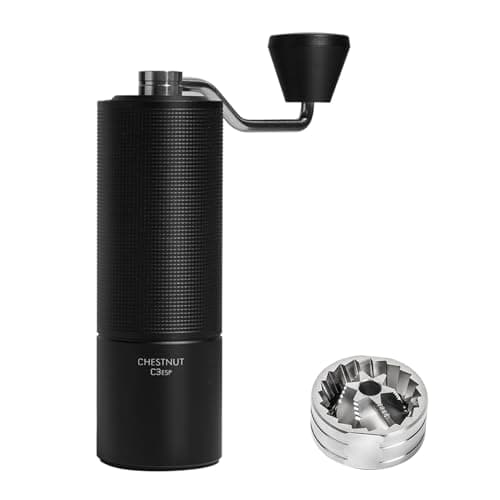
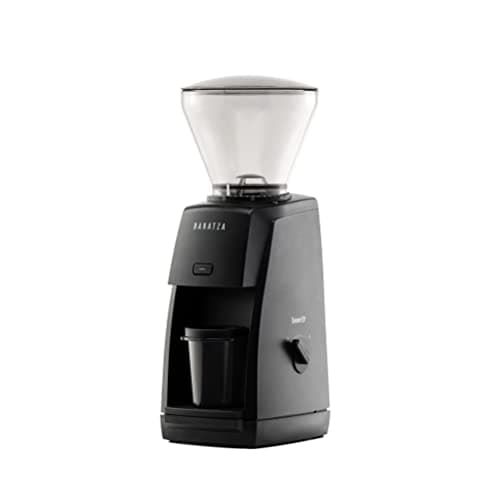
For espresso, the grinder matters more than the machine — and it is not close. A shot is espresso only because pressurized water is forced through a finely, evenly ground puck, and the grinder is the single tool that decides how fine and how even that puck is. Put a great grinder in front of a modest machine and you get good espresso; put a bad grinder in front of a great machine and you get a fast, expensive disappointment. Every grinder on this list can do the one thing that actually defines an espresso grinder: adjust finely enough, in small enough steps, to dial a shot in.
What separates an espresso grinder from an ordinary coffee grinder is adjustment resolution. Espresso lives in a tiny sliver of the grind range, so you need many closely spaced steps — or a stepless dial — to move the grind by a hair and land on the sweet spot. That is also why a blade grinder cannot make espresso: it chops beans into random, uneven bits with no way to set a size at all. Below we rank six burr grinders that clear the bar, from an affordable electric to a cafe-grade step-up and hand grinders that rival machines costing far more. New to this? Start with do you need a grinder for espresso and espresso grind size, then come back for the picks.
Burr grinders only — why a blade grinder can't make espresso
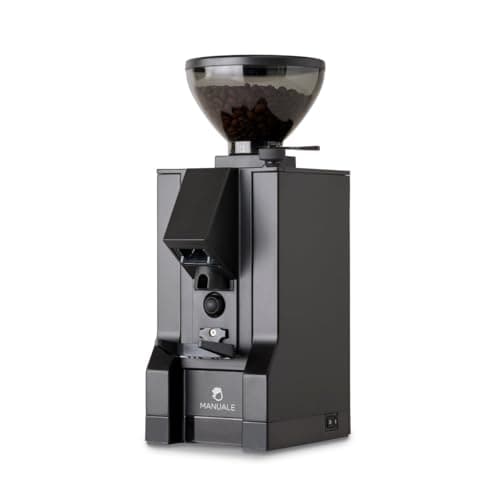
A blade grinder spins a small propeller that chops beans into a random mix of dust and boulders, with no way to set a particle size. Espresso forces pressurized water through the coffee, and an uneven grind channels — the water races through the gaps between big chunks and barely touches the rest, so the shot runs sour, thin and fast. Only a burr grinder, which crushes beans between two shaped cutters set a fixed distance apart, produces the uniform particles espresso needs. Within burrs you will see two shapes: conical (a cone spinning inside a ring) and flat(two facing rings). Conical burrs, like those in the Encore ESP and the hand grinders here, are efficient and forgiving; flat burrs, like the Notte's 50mm set, tend to produce an especially uniform espresso grind. Both make excellent espresso. Neither is a blade grinder — and that is the line that actually matters.
Adjustment resolution is the whole game
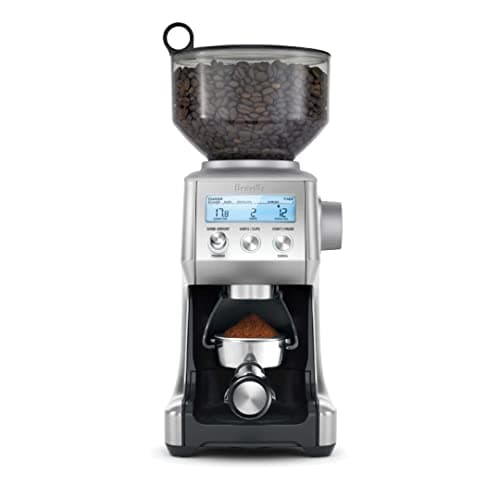
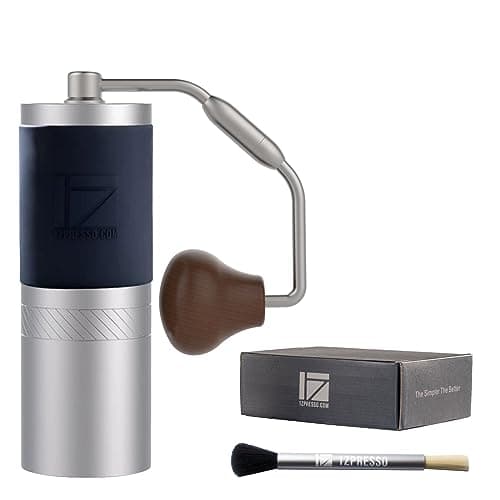
Espresso occupies a sliver of the grind range, and moving a hair too fine or too coarse is the difference between a balanced shot and one that chokes or gushes. That is why the number that matters most on an espresso grinder is not the burr size but the adjustment resolution— how small a change you can make near the fine end. The Encore ESP concentrates about 40 closely spaced steps in the espresso zone; the Breville spreads 60 steps across the entire range, so fewer of them fall where espresso lives. Stepless grinders like the Notte move continuously, letting you nudge by the tiniest amount, while numbered hand grinders such as the 1Zpresso J and Timemore C3 ESP let you record a setting and return to it exactly. If you want to understand what "fine enough" really means before you buy, our espresso grind size guide walks through it, and how to pull an espresso shot shows how the grind and the shot connect.
Hand vs electric, and single-dosing
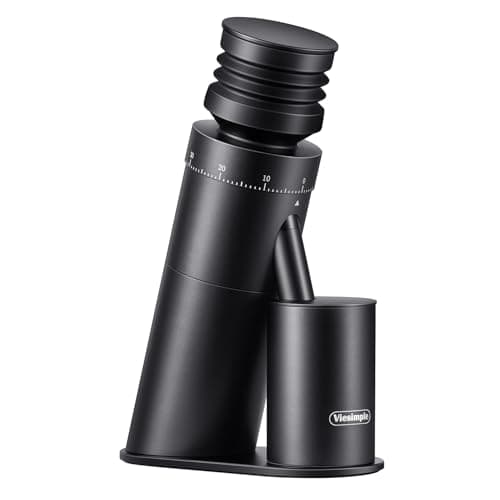
At every price, hand grinders buy you more grind quality per dollar than electrics — the money all goes into the burrs and adjustment instead of a motor. They are quiet, retain almost no coffee and travel anywhere, but you supply the effort, and grinding a fine espresso dose by hand is genuine work that gets slow past a drink or two. Electrics trade some of that grind quality for speed and push-button convenience. A second choice sits on top of that: single-dosing (weighing in exactly the beans you want and grinding them all out, as the Viesimple does) gives you fresher, more precise doses with almost no waste, at the cost of a slower routine, while a hopper grinder like the Breville is faster and more convenient for a household but keeps beans exposed and retains a little coffee. There is no wrong answer — only the one that matches your morning. How we arrive at every score is spelled out on our methodology page.
Which grinder is right for you
- Want the best all-round espresso grinder for the money? The Baratza Encore ESP. It is our top pick for a reason.
- Ready to step up to cafe-grade grinding? The Eureka Mignon Notte, with its stepless flat burrs.
- Want repeatable doses and an easy display? The Breville Smart Grinder Pro.
- Happy to grind by hand for top quality? The 1Zpresso J, or the budget Timemore C3 ESP.
- Want clean single-dosing without the premium price? The Viesimple Gen 4.
Pairing a grinder with a specific machine
This ranking is machine-agnostic. If you own a Breville Bambino or Bambino Plus — the most common machine that ships without a grinder — the criteria shift towards dose precision for a 54mm basket, retention and footprint, and our grinder picks for the Breville Bambino rank the same field against those requirements instead.
How we picked
We did not lab-test this gear
Everyone in this category says they tested twenty machines. We have not pulled shots on every product here, and we say so. What we did instead: compiled the published specifications, cross-checked the manufacturer manuals, computed the running cost (wattage to energy, grams-per-shot to cost-per-cup), weighed aggregated owner reports, and scored each product against a published rubric. The scores are judgments from documented research — not measurements we took, because we do not have a test lab and we will not pretend we do. Where hands-on time would tell you more than a spec sheet, we flag it. Where a number came from someone else's work, we name them in Sources.