Skip to content
Portafilter Co

Machines · Espresso Machines

The best espresso machines under $1,000

Six machines between roughly $500 and $1,000, ranked on temperature control, steam power, what the box actually includes and what the whole setup really costs.

By Stephen V.Updated How we pick
#ad

We earn a commission when you buy through our Amazon links, at no extra cost to you. It never changes a verdict, and we say so when the cheaper product is the better buy. How this works.

A $1,000 ceiling is the most interesting budget in home espresso, because it is the first point where one purchase can genuinely be the whole setup. Under $500 the honest advice is to buy a modest machine and put the rest into a grinder. Above $1,000 you are into prosumer territory — dual boilers, E61 groups, plumbed-in tanks. In between sits this bracket, and the decision that defines it is not which brand you like. It is whether you want one appliance or two.

Every machine below is currently purchasable in the US and sits between roughly $500 and $1,000 at its normal price. Three of them have a burr grinder built into the same chassis, so the price tag is the setup. Three of them do not, which means the real cost is the machine plus a burr grinder — and for two of them that total lands well past $1,000. We say so on every card, because a roundup that presents a $995 machine as an under-$1,000 answer without mentioning the $300 grinder it needs is not being straight with you.

If your ceiling is genuinely $500, our under-$500 roundup is the better page and nothing here will embarrass those picks. If you want the machine to do the grinding, dosing and frothing for you, read the bean-to-cup roundup instead — that is a different product, not a cheaper one.

The short answer

Quick picks

#ProductBest forScorePrice
01
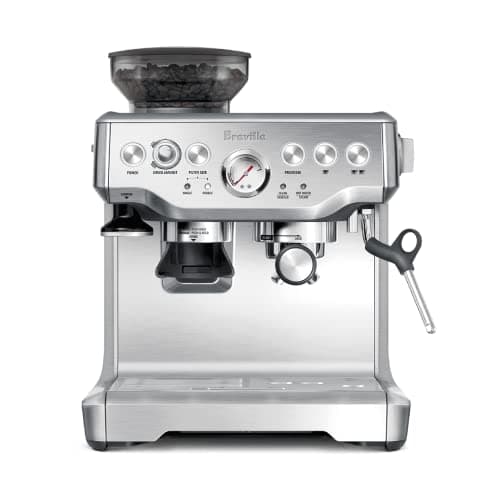
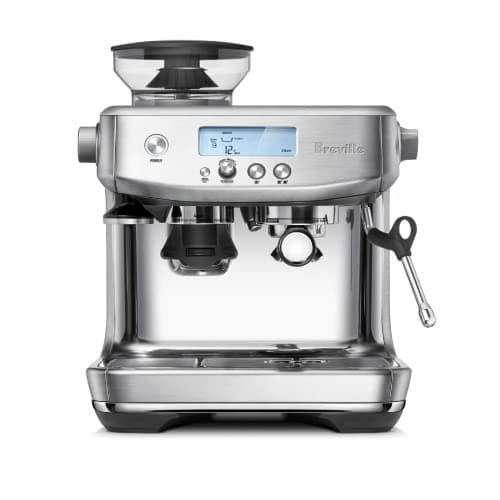
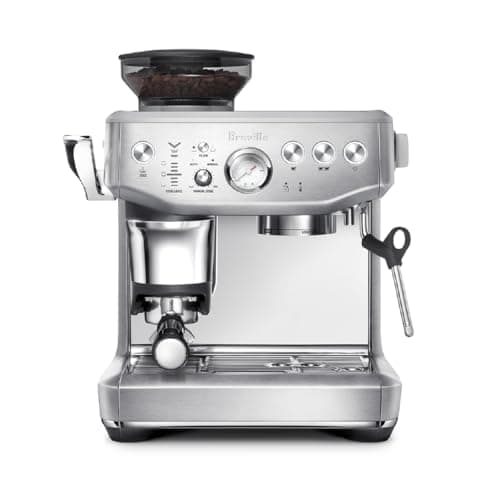
Breville Breville Barista Express (BES870XL)
Breville Barista Express (BES870XL)

The most espresso setup you can buy for one price. A 54mm machine with a 16-setting conical burr grinder in the same chassis, a thermocoil held at 200°F by a PID, and roughly $450 of a $1,000 budget still in your pocket. It is not the fastest or the most refined machine here — it is the one that leaves you money for a scale, a real tamper and good beans.

Best overall under $1,000
8.0
$549.95Amazon
02
Breville Breville Barista Pro (BES878)
Breville Barista Pro (BES878)

The Barista Express with the waiting engineered out. ThermoJet heating reaches extraction temperature in three seconds, the grinder gains 30 settings instead of 16, and an LCD replaces the dial-and-guess routine. What the extra money buys is speed and grind resolution — not a higher ceiling on how good the shot can be.

Best for speed
7.8
$849.95Amazon
03
Breville Breville Barista Express Impress (BES876)
Breville Barista Express Impress (BES876)

The machine that removes the step beginners get wrong. An assisted lever applies a constant 22 lb tamp finished with a 7-degree twist, and the dosing system auto-corrects toward an 18 g target based on your last shot. It does not raise the ceiling on how good your espresso can be — it raises the floor, which in a busy household matters more.

Best for consistency
7.5
$799.95Amazon
04
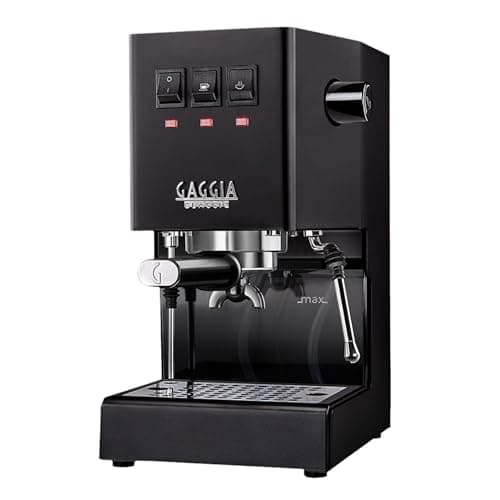
Gaggia Gaggia Classic Evo Pro
Gaggia Classic Evo Pro

The enthusiast's entry point, and the cheapest route here to a genuine commercial-size 58mm portafilter. A single-piece 17-gauge stainless body, a lead-free brass boiler and a 15-bar Ulka pump make it a machine you service and modify rather than replace. It has no grinder, so plan the other half of your $1,000 around one.

Best to grow into
7.2
$501.21Amazon
05
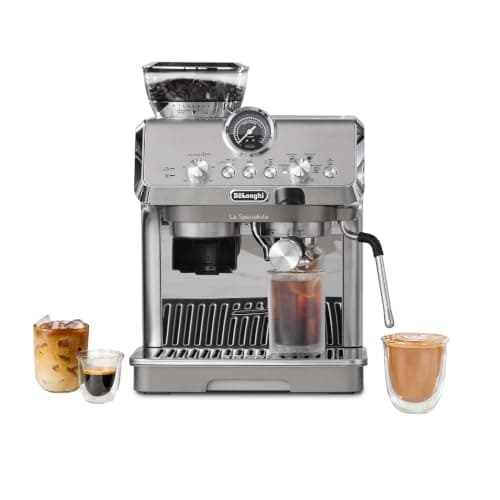
De'Longhi De'Longhi La Specialista Arte Evo (EC9255)
De'Longhi La Specialista Arte Evo (EC9255)

The strongest non-Breville all-in-one in this bracket, and the cheapest complete setup on the page. A 1,550 W thermoblock machine with a built-in conical burr grinder, a 2 L tank and dedicated cold-coffee settings. The catch is the 51mm portafilter — a much smaller world of baskets and accessories than 54mm or 58mm.

Best guided all-in-one
7.0
$499.95Amazon
06
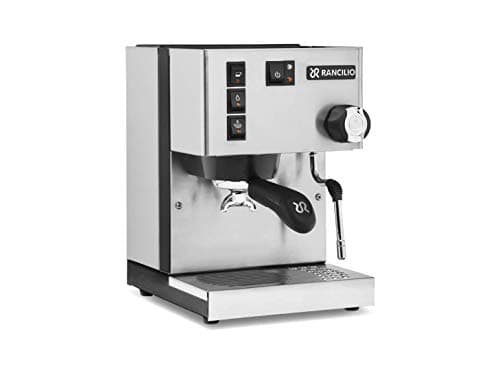
Rancilio Rancilio Silvia
Rancilio Silvia

The most machine here and the least complete setup. A commercial brass group head fed by a 0.3 L insulated brass boiler, an ergonomic 58mm portafilter and a full-motion stainless steam wand — parts from Rancilio's cafe machines in a home-sized body. At its normal price it uses the entire $1,000 and still needs a grinder.

Best build quality
6.7
$995.00Amazon

#ad · Live prices from the Amazon Product API, as of Jul 24, 2026. Where we have no verified live price, we show none — a gap beats a number that has rotted.

In detail

The picks, in full

01
Breville Breville Barista Express (BES870XL)

Best overall under $1,000

Breville Barista Express (BES870XL)

Integrated grinder, 16 settings54mm portafilterThermocoil + PID at 200°F15-bar pump, 9-bar extraction
8.0/10

The most espresso setup you can buy for one price. A 54mm machine with a 16-setting conical burr grinder in the same chassis, a thermocoil held at 200°F by a PID, and roughly $450 of a $1,000 budget still in your pocket. It is not the fastest or the most refined machine here — it is the one that leaves you money for a scale, a real tamper and good beans.

Shot quality
8
Temp control
8
Steam power
7
Complete setup
9
Build
7
Value
9

Pros

  • Grinder and machine in one purchase — no second appliance to budget for
  • PID-held 200°F brew temperature, the spec that decides shot-to-shot consistency
  • Low-pressure pre-infusion before the 9-bar extraction, so the puck saturates evenly
  • Leaves roughly $450 of a $1,000 budget for accessories and beans

Cons

  • Thermocoil needs a warm-up — this is not the three-second machine in the range
  • The built-in grinder is capable, not exceptional; a good standalone grinder still beats it
  • Ships with pressurized dual-wall baskets that hide grind problems instead of showing them
  • Single boiler, so there is a wait between pulling a shot and steaming milk
  • Big on the counter at 15.9 x 13.1 x 12.4 inches

Don't buy this if…

you already own a good grinder. You would be paying for a second one — a Gaggia Classic Evo Pro, or a cheaper machine plus the grinder you have, is a better use of the same money.

$549.95View on Amazon

$689.9920% off

Price as of Jul 24, 2026. Prices change — Amazon's at checkout is the one that counts.

#ad · we may earn a commission from this link to Breville Barista Express (BES870XL)

02
Breville Breville Barista Pro (BES878)

Best for speed

Breville Barista Pro (BES878)

ThermoJet: 3-second heat-up30 grind settings54mm chromed brass portafilterDigital PID, about ±2°C
7.8/10

The Barista Express with the waiting engineered out. ThermoJet heating reaches extraction temperature in three seconds, the grinder gains 30 settings instead of 16, and an LCD replaces the dial-and-guess routine. What the extra money buys is speed and grind resolution — not a higher ceiling on how good the shot can be.

Shot quality
8
Temp control
9
Steam power
8
Complete setup
9
Build
7
Value
6

Pros

  • Three-second heat-up — the single biggest quality-of-life difference in this bracket
  • 30 grind settings give real resolution when you are dialing espresso in
  • Digital PID temperature control, held to roughly ±2°C
  • Same 15-bar pump regulated to a 9-bar extraction as the rest of the Barista line

Cons

  • Roughly $300 more than the Barista Express for the same 54mm basket and a similar shot
  • Still a single boiler — fast to heat, but you wait between brewing and steaming
  • Grinder retains a little coffee in the chute between doses
  • At its normal price it eats most of a $1,000 budget before beans and accessories

Don't buy this if…

the three-second heat-up does not excite you. That is the main thing the extra money buys, and if you make one drink a morning while the kettle is boiling anyway, the Express does the same job.

$849.95View on Amazon

Price as of Jul 24, 2026. Prices change — Amazon's at checkout is the one that counts.

#ad · we may earn a commission from this link to Breville Barista Pro (BES878)

03
Breville Breville Barista Express Impress (BES876)

Best for consistency

Breville Barista Express Impress (BES876)

Assisted tamp: 22 lb + 7° twist25 grind settings54mm portafilterThermocoil + PID at 200°F
7.5/10

The machine that removes the step beginners get wrong. An assisted lever applies a constant 22 lb tamp finished with a 7-degree twist, and the dosing system auto-corrects toward an 18 g target based on your last shot. It does not raise the ceiling on how good your espresso can be — it raises the floor, which in a busy household matters more.

Shot quality
8
Temp control
8
Steam power
7
Complete setup
9
Build
7
Value
6

Pros

  • Consistent tamping without technique — the most common beginner failure, engineered out
  • Intelligent dosing auto-corrects from the previous shot toward an 18 g dose
  • 25 grind settings, plenty of resolution for espresso
  • Same PID-held 200°F brew temperature as the Barista Express

Cons

  • About $250 more than the Barista Express for a tamping mechanism, not a better shot
  • Thermocoil, not ThermoJet — the Barista Pro is the fast machine, this is not
  • One more mechanism to keep clean, and one more part that can eventually fail
  • Large footprint at 16.6 x 14.4 x 12.2 inches

Don't buy this if…

you actually want to learn to tamp. It is a short skill and a cheap tool — our tamper roundup covers it — and the difference is better spent on the grinder.

$799.95View on Amazon

Price as of Jul 24, 2026. Prices change — Amazon's at checkout is the one that counts.

#ad · we may earn a commission from this link to Breville Barista Express Impress (BES876)

04
Gaggia Gaggia Classic Evo Pro

Best to grow into

Gaggia Classic Evo Pro

58mm commercial portafilterLead-free brass boiler1,425 W, 72 oz tank15-bar Ulka pump
7.2/10

The enthusiast's entry point, and the cheapest route here to a genuine commercial-size 58mm portafilter. A single-piece 17-gauge stainless body, a lead-free brass boiler and a 15-bar Ulka pump make it a machine you service and modify rather than replace. It has no grinder, so plan the other half of your $1,000 around one.

Shot quality
9
Temp control
6
Steam power
7
Complete setup
4
Build
9
Value
8

Pros

  • 58mm basket opens the whole accessory world — bottomless portafilters, precision baskets, better tampers
  • Brass boiler and a single-piece 17-gauge stainless body, built to be opened and serviced
  • Huge modification and repair community; parts stay findable years later
  • Leaves roughly $500 of a $1,000 budget for a genuinely good grinder

Cons

  • No PID from the factory — you temperature surf, or fit one as a mod
  • No grinder in the box, so the honest setup cost is the machine plus $200-350
  • Two-hole commercial-style steam wand works well but demands more practice than a Breville's
  • Long brew-to-steam wait on a small single boiler

Don't buy this if…

you want to press a button and get coffee. This machine expects you to learn, and repays it — but if that reads as a chore rather than a hobby, buy the Barista Express.

$501.21View on Amazon

Price as of Jul 24, 2026. Prices change — Amazon's at checkout is the one that counts.

#ad · we may earn a commission from this link to Gaggia Classic Evo Pro

05
De'Longhi De'Longhi La Specialista Arte Evo (EC9255)

Best guided all-in-one

De'Longhi La Specialista Arte Evo (EC9255)

51mm portafilterBuilt-in conical burr grinderThermoblock, 1,550 W2 L tank + cold extraction
7.0/10

The strongest non-Breville all-in-one in this bracket, and the cheapest complete setup on the page. A 1,550 W thermoblock machine with a built-in conical burr grinder, a 2 L tank and dedicated cold-coffee settings. The catch is the 51mm portafilter — a much smaller world of baskets and accessories than 54mm or 58mm.

Shot quality
7
Temp control
6
Steam power
6
Complete setup
9
Build
6
Value
8

Pros

  • Grinder, dosing funnel and tamper included — a complete setup at the bottom of the band
  • Large 2 L water tank, so noticeably less refilling than most machines here
  • Dedicated cold-coffee and Americano settings the Brevilles do not offer
  • A manual steam wand rather than an automatic frother, so milk texturing is a skill you can learn

Cons

  • 51mm portafilter — far fewer bottomless portafilters, baskets and tampers than 54 or 58mm
  • Thermoblock heating is less stable across back-to-back shots than a PID-held thermocoil
  • De'Longhi does not publish a grind-setting count on the US spec sheet, so grind resolution is hard to judge before you buy
  • Cold extraction is a novelty for most espresso drinkers, and it is part of what you are paying for

Don't buy this if…

you expect to buy accessories later. A 51mm basket boxes you in where a 54mm Breville or a 58mm Gaggia does not.

$499.95View on Amazon

Price as of Jul 24, 2026. Prices change — Amazon's at checkout is the one that counts.

#ad · we may earn a commission from this link to De'Longhi La Specialista Arte Evo (EC9255)

06
Rancilio Rancilio Silvia

Best build quality

Rancilio Silvia

Commercial brass group head0.3 L insulated brass boiler58mm portafilter2 L reservoir
6.7/10

The most machine here and the least complete setup. A commercial brass group head fed by a 0.3 L insulated brass boiler, an ergonomic 58mm portafilter and a full-motion stainless steam wand — parts from Rancilio's cafe machines in a home-sized body. At its normal price it uses the entire $1,000 and still needs a grinder.

Shot quality
9
Temp control
6
Steam power
8
Complete setup
3
Build
9
Value
5

Pros

  • Brass group head in constant contact with the boiler — excellent thermal mass and stability once warm
  • Commercial 58mm portafilter with full 58mm accessory compatibility
  • Powerful full-motion stainless steam wand that textures milk properly
  • Built to be repaired rather than replaced; these run for many years

Cons

  • No PID at this price — you temperature surf, or budget for a PID kit on top
  • Takes the whole $1,000 and has no grinder at all
  • Needs a long warm-up before it is thermally stable
  • The small 0.3 L boiler means a real wait between brewing and steaming

Don't buy this if…

your $1,000 is the total budget. The Silvia is a superb machine attached to a bad total-cost story — add the grinder it needs and you are at $1,300 or more.

$995.00View on Amazon

Price as of Jul 24, 2026. Prices change — Amazon's at checkout is the one that counts.

#ad · we may earn a commission from this link to Rancilio Silvia

How we picked

Every machine here is a real, currently-purchasable semi-automatic or manual espresso machine that sits between roughly $500 and $1,000 at its normal price. We ranked on four criteria, in this order.

  1. Total setup cost, not sticker price. This is the criterion that reorders the whole category. Espresso needs a grinder, so a $550 machine with a competent grinder inside it and a $995 machine with none are not remotely the same purchase. Where a machine has no grinder we count the grinder into the budget, and where that pushes the total past $1,000 we say so on the card rather than in a footnote.
  2. Temperature control. Espresso extracts in a narrow band, and the machines that hold it are the machines that make repeatable shots. A PID-controlled thermocoil (the Breville Barista line, held at 200°F) is genuinely more consistent than a plain thermoblock, and a large brass mass in constant contact with the boiler (the Silvia) is stable in a different way — superb once warm, slow to get there.
  3. Steam power and the basket size you are married to.Milk drinks are what most people actually make, and a weak wand ruins them. Basket diameter is the quieter decision: 58mm is the commercial standard with an endless accessory ecosystem, 54mm is Breville's well-supported middle ground, and 51mm is a noticeably smaller world. You choose that ecosystem once, when you buy the machine.
  4. What breaks, and whether you can fix it. A metal body, a serviceable boiler and a large parts community are worth real money over a decade. So is the opposite warning: every extra automated mechanism is another thing that can fail out of warranty.

We did not lab-test these machines — the section below the picks says exactly what we did instead, and our methodology pagepublishes the rubric. Specifications come from the manufacturers' own product pages and authorised retailers, all listed in Sources.

What another $500 actually buys you

Compared with the under-$500 bracket, the extra money in this band buys three things and one illusion. It buys an integrated grinder, which is the big one — it turns a machine into a setup and removes the second appliance from your counter and your budget. It buys speed: the Barista Pro's three-second ThermoJet heat-up is the difference between espresso being a decision and espresso being a routine. And it buys materials: brass boilers, 58mm groups and stainless bodies that can be opened, gasket-changed and kept alive.

The illusion is shot quality. A well-dialled Bambino with a $300 grinder makes espresso that is every bit as good as anything on this page, and better than some of it. Nothing between $500 and $1,000 changes the physics of nine bars through a well-prepared puck. What changes is how easy, how fast and how repeatable it is to get there — which is worth paying for, but only if you know that is what you are buying.

One box or two: the decision that defines this budget

Here is the honest math. One box: a Barista Express at roughly $550 leaves about $450 for a scale, a decent tamper, a bag of good beans and a year of not thinking about it. Two boxes: a Gaggia Classic Evo Pro at roughly $500 plus a $300 espresso grinder puts you at $800 with a 58mm commercial group and a grinder that will outlive the machine and can move to your next one.

The two-box route makes better espresso at the top end and ages far better. The one-box route is cheaper to start, takes half the counter, and is the difference between making espresso and meaning to. Most people who ask us this question want the one box, and most people who have owned both prefer the two. Pick honestly, and read do you need a grinder for espresso before you decide the built-in grinder settles the question — it does not settle it for pour over or French press, which the built-in grinder cannot serve at all.

Why three of these are Brevilles

Because in the US, at this price, Breville genuinely owns the all-in-one category, and pretending otherwise to make a list look balanced would be dishonest. The Barista Express, Pro and Impress share a 54mm basket, a 15-bar pump regulated to a 9-bar extraction, and a conical burr grinder in the chassis. What separates them is one variable each: the Pro adds speed and grind resolution, the Impress adds assisted tamping and dose correction, and the Express adds neither and costs several hundred dollars less. If you want a non-Breville all-in-one, the La Specialista Arte Evo is the credible alternative, and its 51mm basket is the price of admission.

What we would skip at this price

Bundles. A $700 machine sold with a knock box, a plastic tamper and a milk jug is a $550 machine with $30 of accessories and a story. Buy the machine, then buy the accessories that actually matter separately. Pressurised baskets as a selling point. Several machines here ship with dual-wall baskets that create fake crema and disguise a bad grind; they are a useful training wheel and a terrible destination — move to the single-wall baskets once your grinder can support them. And the 15-bar and 20-bar numbers on the box. Espresso is extracted at nine bars. A pump rated higher is regulated down by an over-pressure valve; a bigger number on the carton is marketing, not capability.

Which under-$1,000 machine fits you

  • Want the whole setup in one purchase? Breville Barista Express, and spend the difference on beans and a scale.
  • Hate waiting? Breville Barista Pro — three seconds to brew temperature.
  • Want consistent shots without learning to tamp? Breville Barista Express Impress.
  • Plan to keep upgrading? Gaggia Classic Evo Pro plus a proper espresso grinder.
  • Want an all-in-one that is not a Breville?De'Longhi La Specialista Arte Evo.
  • Buying a machine for the next decade, and already own a grinder? Rancilio Silvia.

Whichever you pick, finish the setup properly: fresh espresso beans, a scale, and the technique in how to pull an espresso shot. A $900 machine fed stale supermarket coffee makes worse espresso than a $300 one fed properly.
How we picked

We did not lab-test this gear

Everyone in this category says they tested twenty machines. We have not pulled shots on every product here, and we say so. What we did instead: compiled the published specifications, cross-checked the manufacturer manuals, computed the running cost (wattage to energy, grams-per-shot to cost-per-cup), weighed aggregated owner reports, and scored each product against a published rubric. The scores are judgments from documented research — not measurements we took, because we do not have a test lab and we will not pretend we do. Where hands-on time would tell you more than a spec sheet, we flag it. Where a number came from someone else's work, we name them in Sources.

Questions

Frequently asked

What is the best espresso machine under $1,000?
The Breville Barista Express, for most people. It is the only pick here that is a complete setup — machine and a 16-setting burr grinder — at a price that still leaves several hundred dollars of a $1,000 budget for a scale, a tamper and good beans. If you already own a grinder, the answer changes: a Gaggia Classic Evo Pro or a Rancilio Silvia gives you a better machine for the same money.
Is a machine with a built-in grinder better than buying them separately?
Not better — cheaper and smaller. A built-in grinder is tuned for the machine it lives in and takes no extra counter space, which is worth a lot. A standalone grinder at the same price is usually more capable, holds its setting more precisely, will outlive the machine, and can also grind for pour over or French press, which a built-in grinder cannot do at all. If counter space and simplicity matter most, buy the all-in-one; if grind quality and longevity matter most, buy them separately.
Do you need to spend $1,000 to make good espresso?
No. Genuinely good espresso starts well under $500, and the ceiling on shot quality in this bracket is set by the grinder and your technique, not by the machine. What the extra money buys is speed, convenience, better materials and a bigger accessory ecosystem. Our under-$500 roundup covers the cheaper end honestly.
Breville Barista Express vs Barista Pro: what is the actual difference?
Three things. The Pro uses ThermoJet heating and reaches extraction temperature in about three seconds, where the Express uses a thermocoil that needs a warm-up. The Pro's grinder has 30 settings to the Express's 16, which gives finer control when dialing in. And the Pro adds an LCD display for shot timing and settings. Both use the same 54mm basket, the same 15-bar pump regulated to a 9-bar extraction, and both make an equally good shot once dialled in.
Is the Rancilio Silvia still worth buying without a PID?
It depends on how you brew. The Silvia's commercial brass group head and brass boiler give it excellent thermal mass, so once fully warmed up it is very stable — but without a PID you have to manage brew temperature yourself (the 'temperature surfing' routine) or fit an aftermarket PID kit. If you find that interesting, it is a machine that will last a decade. If it sounds like homework, a PID-controlled Breville is the easier path to a consistent shot.
What portafilter size should I look for at this price?
58mm is the commercial standard and has the largest accessory ecosystem — bottomless portafilters, precision baskets, and every tamper made. 54mm is Breville's size and is well supported, though the choice of accessories is narrower. 51mm, used on the De'Longhi La Specialista Arte Evo, is the most limited. You pick this ecosystem once, when you buy the machine, so if you expect to add accessories over time it is worth weighing.
What else do I need to buy with the machine?
A scale with a timer, a tamper that matches your basket diameter, and a distribution tool — roughly $50-80 in total, and all three change the cup more than $200 of extra machine would. Our accessories starter kit lists them, and the tamper roundup is organised by basket size so you do not buy the wrong one. Then buy fresh beans, not a supermarket bag ground three months ago.

Keep reading

Receipts

Sources

We do not run a testing lab, and we do not pretend to. Where a measured number came from someone else's work, we name them and link them. Where we could not verify something, we say so on the page rather than quietly leaving it out. Read our full method.