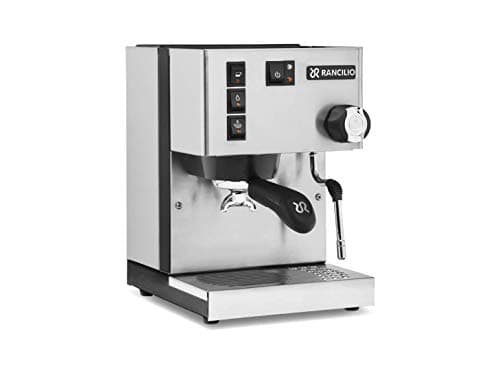
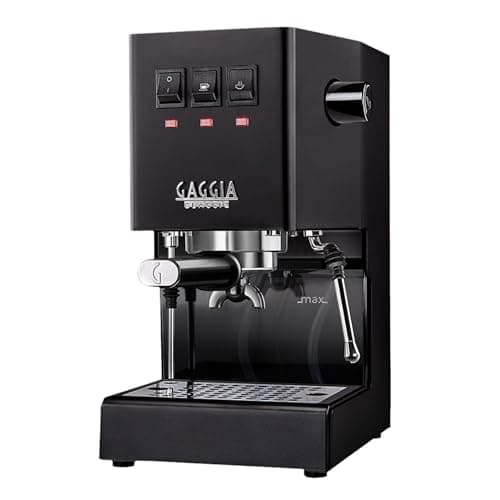
The Rancilio Silvia and the Gaggia Classic Evo Pro are the two machines almost everyone cross-shops when they decide to leave entry-level espresso behind and buy something they can actually grow into. They are more alike than the price gap suggests. Both are all-metal, single-boiler machines built around a real commercial 58mm portafilter— the same size a café uses — so your baskets, tampers and bottomless portafilters cross over from the pro world. Both are serviceable and mod-friendly, with parts you can actually buy. Neither ships with a factory PID, so you either learn to temperature-surf or add a PID kit later. Neither comes with a grinder. And both have a proper steam wand you have to learn rather than a one-touch frother. They are, in other words, the two honest "last machine for a long time" picks in this class.
The differences are real but narrower than the forums make them sound. The Rancilio Silvia is the heavier, more commercial-feeling of the two: a chunky brass group head, an insulated brass boiler and a big two-liter reservoir, built like a tank and often called the benchmark home single boiler. It costs meaningfully more than the Gaggia. The Gaggia Classic Evo Prois lighter and cheaper, with a lead-free brass boiler and an enormous parts-and-mods community behind it — it is the best value route to genuine 58mm espresso, full stop. Our honest read: buy the Gaggia for value and the biggest mod ecosystem, and buy the Silvia for build quality and steam if your budget can stretch. Whichever you pick, budget for a real espresso grinder too, because on either machine the grinder decides more of your cup than the machine does. For the wider field, start at the espresso machines hub.
The head-to-head, point by point
Build and boiler:this is where the Silvia earns its price. Its group head and boiler are heavy commercial brass parts shared with Rancilio's professional line, and the extra thermal mass makes temperature more stable once the machine is warmed through. The Gaggia Classic Evo Pro uses a lead-free brass boiler and is well made for the money, but it is lighter, with more plastic at the touch points and less mass in the group. Both are all-metal enough to service and keep alive for years; the Silvia simply feels like a small café machine on the counter where the Gaggia feels like an excellent home one.
Steam wand:the Silvia is the class benchmark here. The larger, insulated brass boiler and a stronger wand let it steam a jug of milk quickly and with authority, which is the single biggest day-to-day difference you feel between the two. The Gaggia steams perfectly well for flat whites and lattes, but the smaller boiler and single-hole tip recover and texture a little more slowly. Both use a real manual wand you have to learn — there is no automatic frother on either — so milk skill matters more than the badge.
PID and temperature surfing:neither machine ships with a factory PID, so out of the box you manage brew temperature the old-fashioned way — "temperature surfing," where you time your shot against the heating element cycling on and off. Both machines accept aftermarket PID kits that hold the temperature to a set point and take the guesswork out, and both have huge how-to communities for fitting one. The Silvia's heavier boiler is a touch more forgiving before you add a PID; the Gaggia has more off-the-shelf PID options because of its community. If a set-and-forget temperature matters to you, plan on a PID mod for either.
Mods and parts community:the Gaggia Classic wins this outright. It has the largest modding and spare-parts ecosystem of any machine in the class — PID kits, silicone gaskets, bottomless portafilters, OPV pressure adjustments, steam-tip swaps and rebuild kits are cheap and everywhere, and there are years of guides for all of them. The Silvia is also very serviceable with widely available parts and its own strong following, but nothing in this bracket matches the sheer depth of Gaggia Classic support. If you enjoy tinkering, the Gaggia is a platform as much as a machine. A bottomless portafilter is the first mod most people fit to either.
Price and value:the Gaggia costs meaningfully less and delivers most of the same espresso, which is why it is the value pick and our default recommendation for most people stepping up. The Silvia asks for a real premium, and you pay it for the build and the steam, not for a better shot — pulled with the same grinder and beans, the two are closer in the cup than the price gap implies. We did not lab-test these machines; the scores and verdicts here are compiled from published Rancilio and Gaggia specifications and aggregated owner reports, and our methodologyexplains how we judge. What we did not test: long-term reliability over years of daily use, precise shot-temperature stability, and steam recovery times — treat those as informed judgments from owner consensus, not measurements.
Which should you buy
- Buy the Gaggia Classic Evo Pro if you want the best value in 58mm espresso, the biggest mod and parts community, and a clear, cheap upgrade path. It is the right call for most people, and it leaves budget for a better grinder. See our full Gaggia Classic Evo Pro review and where it lands among the best machines under $500.
- Buy the Rancilio Silvia ifyou want the most solid, commercial-feeling build and the best steam in the class, and your budget can absorb the premium. It is the "last machine for a long time" choice for people who steam a lot of milk and want it to feel like the real thing. It sits with the step-up options in our best espresso machines under $1,000.
- Consider a third option ifyou would rather have automatic temperature control and faster warmup out of the box than a manual, mod-it-yourself machine — that is a different trade-off, covered in our Breville Bambino vs Gaggia Classic comparison.
Both need a grinder — budget for it
Neither the Silvia nor the Gaggia includes a grinder, and on either machine the grinder is the single biggest thing that decides your espresso. A great machine fed by a poor grinder makes poor espresso, while a modest machine fed by a good espresso grinder makes genuinely good coffee. Espresso needs a grinder that can go fine enough and adjust in tiny, repeatable steps, which rules out most cheap all-purpose grinders. Before you spend the premium on a Silvia over a Gaggia, ask whether that money would do more in the grinder — for many people it would. See our best grinders for espresso for options at every budget to pair with whichever machine you choose.
How we picked
We did not lab-test this gear
Everyone in this category says they tested twenty machines. We have not pulled shots on every product here, and we say so. What we did instead: compiled the published specifications, cross-checked the manufacturer manuals, computed the running cost (wattage to energy, grams-per-shot to cost-per-cup), weighed aggregated owner reports, and scored each product against a published rubric. The scores are judgments from documented research — not measurements we took, because we do not have a test lab and we will not pretend we do. Where hands-on time would tell you more than a spec sheet, we flag it. Where a number came from someone else's work, we name them in Sources.