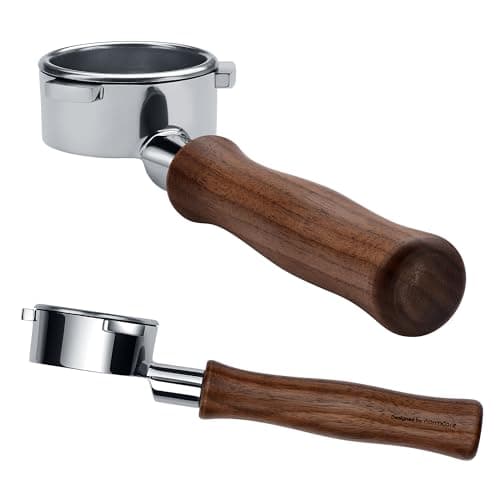
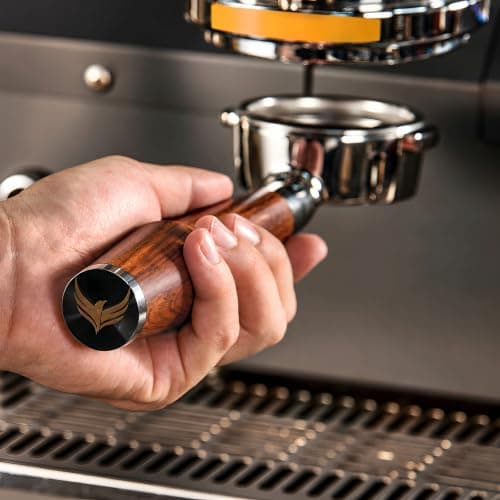
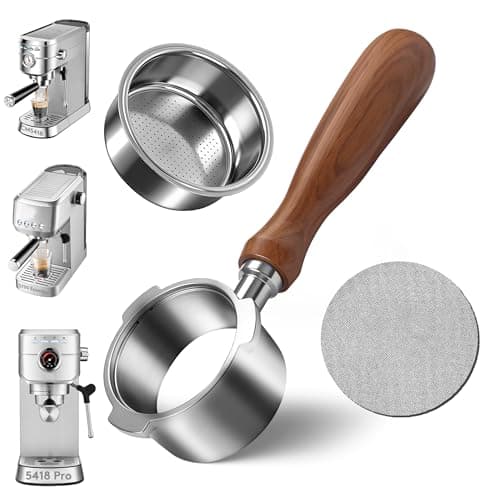
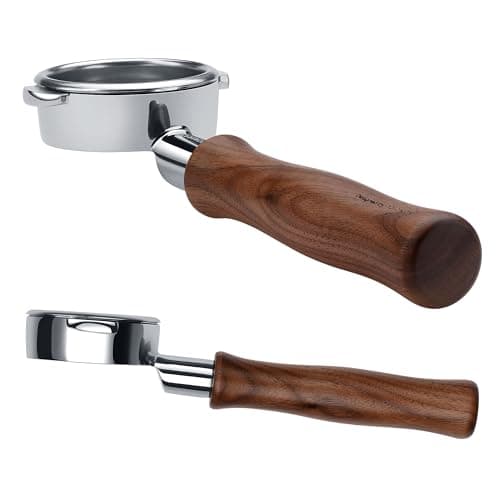
A bottomless portafilter — also called a naked portafilter — is an ordinary portafilter with the spouts and the metal underside cut away, leaving the bottom of the basket completely open. That one change makes it the best diagnostic tool in home espresso. With the spouts gone you watch the shot come straight off the base of the basket, and the coffee tells you everything: a single, even, honey-colored stream that draws together into one rope means the water moved through the puck evenly and you distributed and tamped well. Blonde jets that spray sideways, spurt from one edge, or split into several racing streams mean the opposite — the water found a path of least resistance and channeled through, and the shot behind it will taste sour, thin and hollow no matter how carefully you weighed the dose.
That is why a naked portafilter earns a place on the shelf and not just in a diagnostics kit. It is two things at once. It is a mirror that shows exactly what your distribution is doing, shot after shot, so you learn faster than you ever would watching coffee vanish into a spout — and, fitted with a good precision basket, it is a small genuine upgrade in its own right, giving a cleaner pour and a touch more crema than the pressurized basket most entry machines ship with. The catch, and the whole reason this page is organized the way it is, is that a portafilter is not one-size-fits-all. It has to physically fit your machine, and "fit" means two separate things have to line up at once.
The first is basket diameter. Home machines come in three common sizes: 58mm on most prosumer and E61-group machines (think Gaggia, Flair 58, Lelit, ECM and Rocket), 54mm on the Breville and Sage Barista Express family (Barista Express, Pro, Bambino Plus), and 51mm on many entry De'Longhi and CASABREWS units — and a 54mm portafilter will simply not seat in a 58mm group. The second is the ear or lug pattern: the tabs that lock the portafilter into the group head are shaped differently between brands, so a 58mm portafilter cut for an E61 group will not necessarily twist into a 58mm Breville group even though the diameters match. Before you buy anything below, do two things — find your basket size (measure the basket's inside diameter, or check the manual or the size stamped on your current portafilter) and confirm the listing names your exact machine. And because a naked portafilter exposes bad distribution rather than hiding it, plan to pair it with a WDT tool: see our best WDT tools and, for the whole routine, how to pull an espresso shot.
How we picked
Every portafilter here is a real, currently-purchasable bottomless portafilter you can buy in the US, and the size and fit facts below come from the maker's own listing. We ranked on five things, in this order.
- Build quality. A portafilter takes daily locking force and hot water for years. We weighed the head material and machining, the solidity of the handle, and how crisply the whole thing seats and locks — the difference between a tool that feels planted in the group and one that feels like a stamped shell.
- Basket included. A naked portafilter is only as good as the basket in it. Picks that ship with a precision or otherwise usable single-wall basket score higher than a bare shell you then have to source a basket for.
- Handle and feel. Wood species and shaping, balance in the hand, and how comfortable it is to lock and release — the small ergonomics you notice every single morning.
- Fit clarity. The most important criterion and the one buyers get wrong. How clearly the listing states the diameter and names the machines it fits, and how easy it is to confirm the ear or lug pattern matches your group before you order.
- Value. Not the lowest price, but what you get for it — an included precision basket, a puck screen, a nicer handle, a genuinely correct fit — versus what you actually need.
We did not lab-test these portafilters; we do not run a lab. The scores are editorial judgments built from published manufacturer specs and aggregated owner reports, and our methodology pagespells out exactly how. Sizes, handle materials and what is in the box come from the makers' own product pages, listed in Sources.
Get the size right first (58mm vs 54mm vs 51mm)
This is the single most important thing on the page, so read it before you look at any product. A bottomless portafilter is not universal. Two things have to match your machine at once, and if either is wrong the portafilter is useless. The first is basket diameter, which comes in three common home sizes. Most prosumer and E61-group machines — Gaggia, Flair 58, Lelit, ECM, Rocket and the like — use 58mm. The Breville and Sage Barista Express family — Barista Express, Pro, Bambino Plus and their siblings — use 54mm. Many entry De'Longhi and CASABREWS machines use 51mm. These are not interchangeable: a 54mm portafilter will not seat in a 58mm group, and vice versa.
The second is the ear or lug pattern — the tabs that lock the portafilter into the group head. These are shaped differently between brands, which is why a 58mm head cut for an E61 group is not guaranteed to twist into a 58mm Breville group even though the diameters match. So the safe way to buy is: find your basket size — measure the inside diameter of your current basket with calipers or a ruler, or check the machine manual or the size stamped on the portafilter that came with it — and then confirm the listing names your exact machine. If you are shopping for a brand-new machine and want the naked portafilter to be easy later, the 58mm and 54mm worlds are the best supported; our best espresso machines for beginners guide flags which size each pick uses.
What a bottomless portafilter actually teaches you
Once the fit is right, the reason to own one is that it turns every shot into a lesson. With the spouts gone you see the extraction directly, and there is a simple visual vocabulary. A single, even, honey-colored stream that starts a few seconds in and pulls together into one rope is the goal — it means the water met a uniform puck. Spraying, spurting, or several fast jets means channeling: the water punched through a weak spot instead of soaking the whole bed evenly, and that shot will taste sour and thin. A very pale, blonde, fast pourusually means the shot is under-dosed or the grind is too coarse, so there is not enough resistance. None of these are the machine's fault — they are distribution and grind faults, and the naked portafilter is what makes them visible.
The fix for the most common of them, channeling, is upstream of the portafilter. It pairs naturally with a WDT tool to break up the clumps a grinder throws off, and a level, consistent tamp with a good tamper. Dial the grind size in, distribute with the needles, tamp flat, and watch the naked portafilter tell you whether it worked. In that loop it earns its keep as a learning tool more than as a piece of hardware — it closes the feedback loop that a spouted portafilter hides.
Pressurized vs non-pressurized baskets
This is the caveat that catches entry-machine owners, and it is worth its own section. A naked portafilter only helps with a single-wall, non-pressurized basket — the kind with lots of tiny laser-drilled holes across the whole base. On a basket like that, your puck controls the flow, so the pour is an honest picture of your distribution, and that is exactly what you want to see. Many entry machines instead ship with a pressurized, dual-wall basket, which has a single small pinhole behind a second wall and forces the coffee through under artificial pressure to fake crema for beginners. Put a naked portafilter on a pressurized basket and it does nothing useful — the coffee blasts out of that one pinhole and sprays everywhere, because the valve, not your puck, is running the show. So before you buy a naked portafilter for an entry machine, make sure you can fit a single-wall basket; if you cannot, the portafilter will only make a mess, not better espresso.
What we would skip
Cheap no-name portafilters whose ears do not seat properly. The one place a budget portafilter can genuinely fail is the lock: if the ears are slightly off the tool will not seat square in the group, and a portafilter that does not lock cleanly is not a bargain at any price. Buy from a listing that names your exact machine and read the fit reviews for it. Buying before you can distribute and tamp. A naked portafilter does not improve espresso by itself — it only shows you what your technique is doing. If you have not yet got a WDT tool and a workable tamp, the honest sequence is to sort those first, because otherwise the naked portafilter just shows you a mess you cannot yet fix. And a pressurized-basket setup you cannot convert — as above, there is no point until you can fit a single-wall basket.
Which bottomless portafilter fits you
- 58mm E61 / prosumer machine (Flair 58, Lelit, ECM, Rocket)? The Normcore 58mm E61 — best build here, with an included precision 18g basket. Confirm your group is E61/58mm.
- Breville or Sage Barista Express family (54mm), and want the nicest? Normcore 54mm — same premium build, sized for Breville.
- Breville owner watching the budget? KNODOS 54mm — fits the wide Breville line and includes an 18-21g naked basket for less.
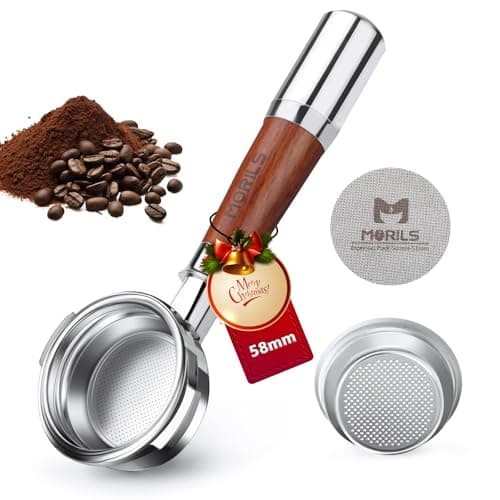
- 58mm machine on a tight budget? MORILS 58mm — a double-shot basket and a puck screen in the box. Confirm your machine is 58mm first.
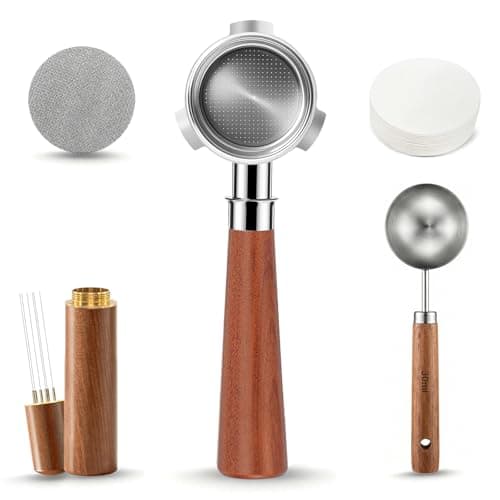
- Starting from nothing on a Breville? The 54mm 5-piece kit — naked portafilter plus a WDT tool, puck screen, filters and scoop in one box.
- 51mm entry machine (CASABREWS, some De'Longhi)? The 51mm CASABREWS portafilter — but only if you can fit a single-wall, non-pressurized basket.
Whichever you land on, the order of operations is the same: get the size and ear pattern right first, fit a single-wall basket, then let the naked portafilter show you what your distribution and shot routine are really doing. It is the cheapest window into your own technique in all of home espresso.