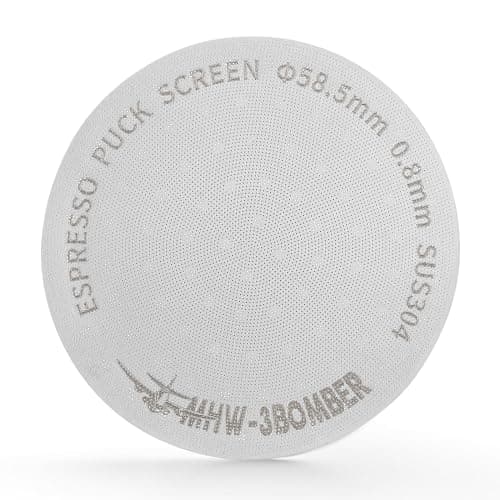
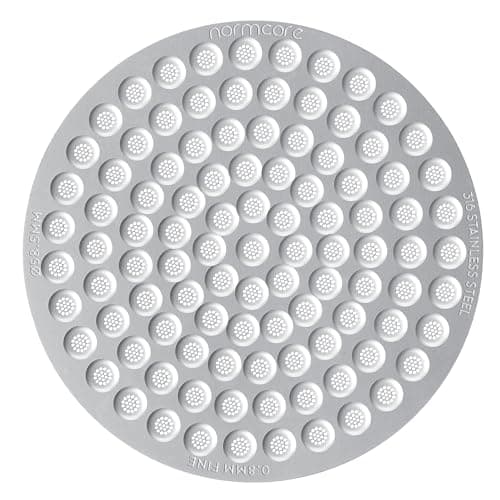
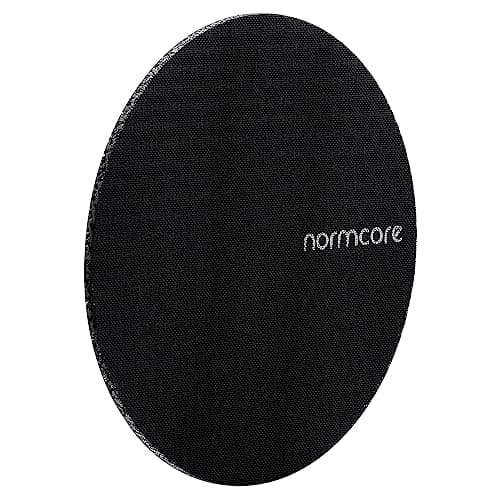
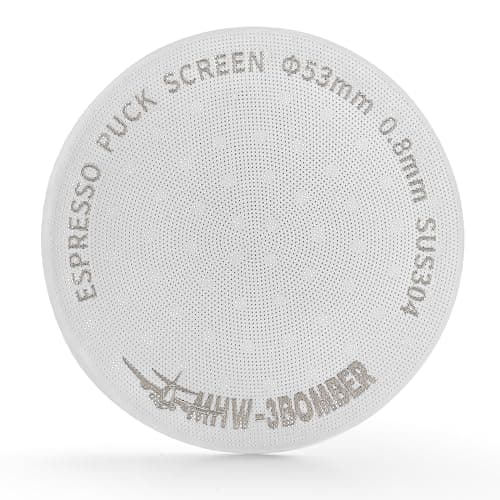
A puck screen is one of the smallest things you can add to an espresso setup: a thin metal mesh disc, the diameter of your basket, that sits on top of the tamped coffee puck and under the group head's shower screen. It does two honest, modest jobs. It keeps the group head cleaner — less coffee residue is pulled up and baked onto the shower screen when you lift the lever, so you clean and backflush a little less often — and it can help even out how water first spreads across the top of the puck. That is genuinely useful, and it is also the whole story.
Here is the part most product pages skip: a puck screen is a workflow and upkeep upgrade, not a shot fixer. It will not rescue a badly ground, unevenly distributed puck, and it will not stop channeling that starts deeper in the coffee bed. If your shots gush, run sour, or spray from the bottom of the portafilter, the answer is dialing in your grind and distributing the grounds properly — a WDT tool does far more for what is in the cup than any screen sitting on top of the puck. Treat a puck screen as the tidy finishing touch it is, and you will be happy with it; expect a taste transformation and you will be disappointed.
With that framing set, the single most important buying decision is not brand or coating — it is size. A puck screen has to match your portafilter basket. Most prosumer machines use a 58mm basket, so you buy a 58.5mm screen. Breville and Sage machines use a 54mm basket, which takes a roughly 53 to 54mm screen. Some De'Longhi machines use a 51mm basket. Get the size wrong and the screen either will not seat or lets grounds past its edge, which is the number-one reason people end up unhappy. Measure your basket first, then read on. If you are still building out the basics, our accessories starter kit puts a puck screen in context against the tools that matter more, and are puck screens worth it is our honest answer on which of the advertised benefits hold up before you spend anything at all.
How we picked
A puck screen is a low-stakes accessory that never touches your drink directly, so we ranked on how well each one fits, holds up and lives in a daily routine rather than on any dramatic effect on the cup — because, honestly, there is no dramatic effect on the cup. Five things decided the order.
- Fit and sizing. The most important thing a puck screen does is match your basket. A screen that is oversized will not seat; one that is undersized lets grounds slip past the edge. We weighted correct, clearly-stated sizing heavily, and we call out exactly which basket each screen suits.
- Build quality. Stainless grade, thickness and how flat and stiff the disc sits all decide whether a screen keeps its shape or dishes and warps over months of use. A screen that stays flat seats evenly every time.
- Ease of cleaning.The whole point is keeping the group head cleaner, so a screen that itself rinses clear in seconds — and does not trap fines in its mesh — matters. Coatings that shed oils faster earned credit here.
- Even distribution. A puck screen can help spread the first contact of water across the top of the puck. It is a modest effect and it does not fix channeling, but a fine, evenly woven mesh does the job better than a coarse one.
- Value. These are inexpensive items, so we rewarded screens that deliver the same real-world benefit for less, and marked down premiums paid purely for finish.
What we did not test.We did not run these screens in a lab — we have no lab, and we do not pretend to. There are no measured extraction yields, no timed flow tests and no puck-height micrometer readings here. Our scores are compiled from published manufacturer specifications (Normcore and MHW-3BOMBER) and aggregated owner reports, exactly as our methodologydescribes. Where a spec is a firm, published fact — diameter, thickness, mesh micron rating, stainless grade — we state it; where a number is uncertain, we keep the description qualitative rather than guess.
Do puck screens actually do anything?
Yes, but less than the marketing implies, and it is worth being clear about what. The reliable benefit is a cleaner group head. Without a screen, when you release pressure and lift the lever the puck can pull grounds and oils up onto the machine's shower screen, which bakes on and means more frequent wiping and backflushing. A puck screen sits between the two and keeps most of that mess off the shower screen, so the group stays cleaner for longer. That is a genuine, everyday convenience.
The second, softer benefit is distribution at the very top of the puck. Because the screen spreads incoming water across its surface before it reaches the coffee, some people find it nudges shots toward slightly more even flow, especially on machines without a great built-in shower screen. Treat that as a nice-to-have, not a promise.
What a puck screen does notdo is fix bad coffee. It sits on top of the bed, so it cannot undo clumpy, uneven grounds or stop channeling that forms deeper down. If your shots are inconsistent, your grind and your distribution are where the real gains are — a WDT tool and a dialed-in grind size matter far more than any screen. Buy a puck screen for a cleaner machine and a tidy workflow, not as a shortcut to better espresso.
Match the size to your machine (58 vs 54 vs 51mm)
This is the decision that makes or breaks a puck screen purchase, so do this before anything else. Puck screens are sold to match portafilter basket diameters, and there are three common sizes:
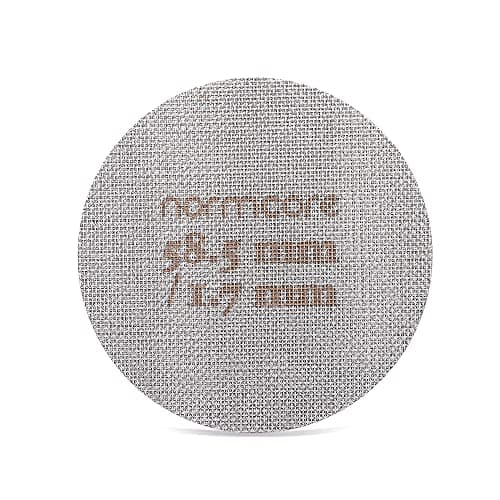
- 58mm — most prosumer machines. The large majority of enthusiast espresso machines use a 58mm basket. For these you buy a 58.5mmscreen — slightly larger than 58 so it seats across the basket. All four of our 58mm picks are 58.5mm.
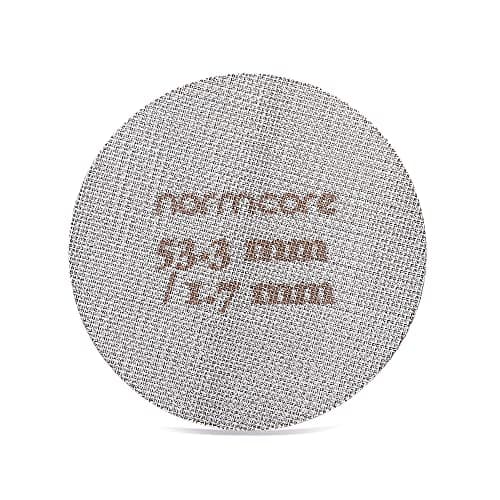
- 54mm — Breville and Sage. Breville (sold as Sage outside North America) machines use a 54mm basket, which takes a screen around 53.3 to 54mm. Our two Breville picks cover the budget and the better-built ends of that.
- 51mm — some De'Longhi.A number of De'Longhi machines use a smaller 51mm basket. If that is you, look specifically for a 51mm screen — a 58 or 54mm disc will not fit.
Do not assume from the machine's brand alone; baskets vary within a lineup. Measure the inside diameter of your basket with a ruler or calipers, or check the size printed on a spare basket, before you order. The same basket-size logic drives every accessory that meets the coffee, which is why our bottomless portafilter roundup sorts its picks the same way.
Then thickness and coating
Once the diameter is right, two smaller choices remain. The first is thickness. A standard screen is around 1.7mm and feels solid, stays flat and is easy to handle; a slim screen is around 0.8mm and adds almost nothing to the height of the puck. Thickness matters because a puck screen raises the coffee bed slightly, and on baskets with little headspace a thick screen can make the portafilter hard to lock in or force you to dose down. If your portafilter already locks in comfortably, the sturdier standard thickness is the nicer thing to live with. If lock-in is tight, or you dose on the higher side, choose slim.
The second is coating. Most screens are bare stainless steel, which is perfectly good and cleans easily. Titanium or PVD-coated screens add a dark, slick surface that, by most owner accounts, sheds coffee oils a little more readily and looks a step up. The coating is about cleaning ease and appearance, not the taste of your espresso — so it is a reasonable thing to pay for if you value it, and an easy thing to skip if you do not.
Which puck screen fits you
- Have a 58mm machine and want one screen, done right?The Normcore 58.5mm standard — 316 stainless, 1.7mm, the reliable default.
- Want the same job for less? The MHW-3BOMBER 58.5mm, a slim dual-layer budget pick that usually comes as a two-pack.
- Struggling to lock in a full basket? The Normcore 58.5mm ultra-slim 0.8mm, for tight-headspace machines.
- Want the nicest one and an easier rinse?The Normcore 58.5mm titanium PVD — a finish upgrade, not a shot upgrade.
- Own a Breville or Sage on a budget? The MHW-3BOMBER 54mm, slim and inexpensive.
- Own a Breville and want Normcore build? The Normcore 53.3mm, the best-made 54mm option.
Whichever you land on, it is a few dollars that keeps your machine cleaner and your routine tidier — a modest, worthwhile add-on rather than a game-changer. Fit it alongside the rest of a sensible starter kit and spend the attention you save on grind and distribution, which is where the shot is actually won.