Yes, mostly — a puck screen is worth about fourteen dollars, and we use them. But buy one for the reason that holds up, which is that it keeps the shower screen and group head meaningfully cleaner and makes cleanup faster, not for the reasons printed on the listing. A puck screen will not fix channeling, will not make an uneven puck extract evenly, and will not improve a shot that is going wrong for any other reason. Anyone selling it as an extraction upgrade is overselling a $14 metal disc.
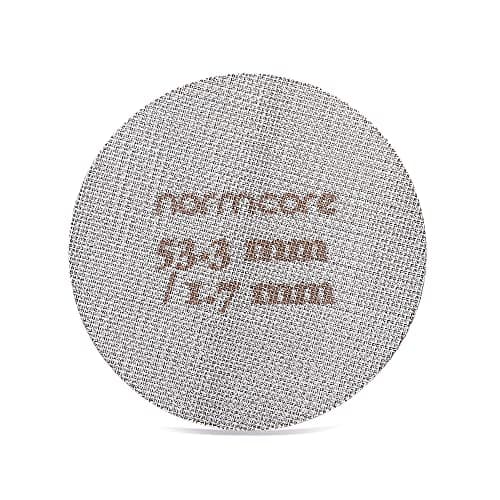
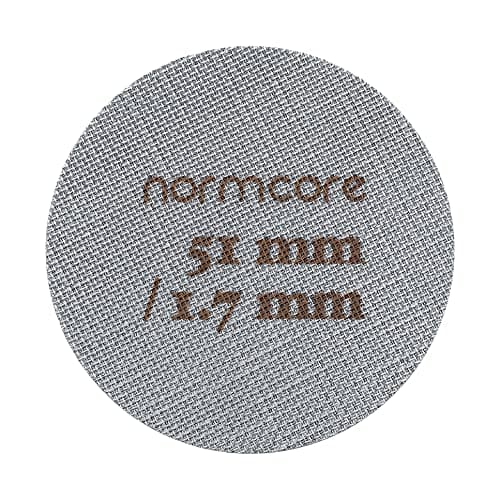
A puck screen is a thin perforated or mesh metal disc you place on top of the tamped coffee before locking the portafilter into the group head. That is all it is. Thickness runs from about 0.8mm up to 1.7mm or more, and the fine ones are a sintered mesh with pores measured in microns.
What a puck screen genuinely does
It keeps the shower screen clean, and this is the real benefit.Without a screen, the top of the puck is pressed directly against the group's shower screen, and coffee fines migrate into its holes every shot. Over weeks that builds into a layer of rancid coffee oil and grounds exactly where your brew water passes last. With a screen, most of that stays on the screen, which you rinse in the sink in two seconds. If you have ever pulled a shower screen off a machine that has run six months without one, you already believe this part.
It makes the group easier to wipe down between shots. Less loose grounds clinging to the shower screen means a quicker wipe and less mess on the counter. Small, but it is every single shot.
It spreads the incoming water across the puck surface. This one is real but smaller than advertised. Water arriving from a few holes in a shower screen hits specific spots on the coffee first; a mesh screen distributes that arrival across the whole surface. On machines with a crude shower screen — many budget machines — this is a noticeable improvement in how the bloom looks. On a machine with a good dispersion screen it changes little, because the shower screen was already doing the job.
It can slightly reduce the mess on the first few seconds of a bottomless pull. Because the surface stays put rather than being disturbed as water arrives.
What a puck screen does not do
It does not fix channeling. This is the claim to be sceptical about, and it is the one that sells screens. Channeling is water finding a low-resistance path through the coffee bed — caused by clumps, by density differences inside the puck, by an uneven tamp, or by a dose that leaves the puck loose. All of those live inside the puck. A disc sitting on top of the puck cannot change the internal structure of the bed beneath it. If your shots channel, the fixes are a WDT tool, a level tamp and the right dose — see how to fix channeling and espresso puck prep.
It does not replace puck prep. Related, and worth saying separately because people buy a screen instead of a WDT tool. The screen costs about the same and does a completely different, much smaller job. If you are buying one of the two, buy the needles.
It does not meaningfully improve extraction yield. Home comparisons on this are inconsistent and the effect, where reported, is small and within the noise of normal shot-to-shot variation. We are not going to claim a number we did not measure. If anyone shows you a confident percentage improvement from a puck screen, ask how many shots were in the sample.
It does not keep a wet puck dry. A soupy puck after the shot is about dose and headspace, not about the screen — and in fact a thick screen takes up headspace, which can make it worse.
The real costs
It eats headroom. A 1.7mm screen takes 1.7mm out of the space between your tamped puck and the shower screen. If you dose high already, adding a thick screen can mean the puck is pressed against the group when you lock in — which is not a disaster, but it changes your shot and can make the portafilter hard to turn. Either drop your dose a little or buy a slim 0.8mm screen.
It is another thing to clean, and it will clog if you do not. Fine sintered screens block up with coffee oil over weeks and then genuinely restrict flow, which shows up as a slower shot you will blame on your grind. They need a rinse after every session and a soak in espresso machine cleaner regularly — how to clean a portafilter covers the routine, and a screen goes in the same soak.
It is easy to lose or warp. They are thin, they stick to wet pucks, and they end up in the knock box. Buy two.
So who should buy one?
Buy one if you pull more than a couple of shots a day, you dislike pulling the shower screen off to clean it, you own a machine with a basic shower screen, or you simply like the tidier workflow. At $14 against the hassle of a gummed-up group head, it is a straightforwardly sensible purchase and we would make it again.
Skip it if you are new to espresso and your shots are not yet consistent — it adds a variable while you are trying to remove them. Skip it also if you dose high in a shallow basket and do not want to change your recipe, and skip it if you are choosing between a screen and a WDT tool, because the needles do far more.
What to look for when you do buy.Three specs and no more. Get the right diameter for your portafilter — 58.5mm for a 58mm commercial group, 53.3mm for Breville 54mm machines, 51mm for most De'Longhi and Amazon-brand machines; portafilter sizes explained is how to check. Get the thickness your dose can afford: 0.8mm if you dose high, 1.5-1.7mm if you have headroom and want the sturdier disc. And prefer stainless steel, because the cheapest screens deform the first time they are prised off a puck.
The claims, assessed
A plain summary of what the marketing says against what we are willing to stand behind.
| Claim | Holds up? | Why |
|---|
| Keeps the shower screen clean | Yes | Fines that would migrate into the shower screen stay on the disc instead |
| Faster cleanup between shots | Yes | Less loose grounds clinging to the group when you unlock |
| Spreads incoming water across the puck | Partly | Real, and biggest on machines with a crude shower screen; minor on good ones |
| Fixes channeling | No | Channeling happens inside the bed; a disc on top cannot restructure it |
| Replaces a WDT tool | No | Different job entirely — needles break clumps, a screen covers the surface |
| Measurably raises extraction yield | Unproven | Reported effects are small and inconsistent; we did not measure it and will not claim it |
| Keeps the puck dry | No | A wet puck is about dose and headspace, and a thick screen can worsen it |
Thickness: 0.8mm or 1.7mm?
The only real decision once you have the diameter right. A 1.7mm screen is sturdier, easier to handle and harder to deform, and it is the default we would buy. A 0.8mm slim screen exists for one reason: headroom. If you dose 18-20g into a shallow stock basket, the gap between your tamped puck and the shower screen is already a couple of millimetres, and 1.7mm of steel is most of it.
The quick test: lock in the portafilter without a screen, unlock it, and look at the top of the puck. If the shower screen has left a clear imprint, you have no headroom at all and a thick screen will press the puck. If the surface is untouched, you have room.
Cleaning a puck screen so it does not slow your shots
This is the part people skip and then misdiagnose. A 150-micron screen will progressively block with coffee oil, and a blocked screen restricts flow — so your shots get slower and you start grinding coarser to compensate, chasing a problem that is sitting on top of the puck.
The routine: rinse under hot water after each session, and soak in espresso machine cleaner — the same Cafiza-type detergent you use for backflushing — every week or two, then rinse thoroughly. If your shot times have crept up and your grind has not changed, soak the screen before you touch the grinder. How to clean a portafilter covers the soak, and how to backflush an espresso machine is the group-head side of the same job.
If you want the extraction improvement instead
Spend the $14 on a WDT tool rather than a screen. Ground coffee leaves every grinder in clumps, a clump is a dense spot water refuses to pass through evenly, and stirring the dry bed with fine needles for ten seconds removes them. That is the cheap upgrade that changes shots. Best WDT tools ranks them, and if you want to see whether your puck prep is working, a bottomless portafilter shows you channeling directly — best bottomless portafilters and bottomless vs spouted portafilters cover that.