Skip to content
Portafilter Co

Learn · Guides

How to clean a portafilter

Rancid coffee oil is what makes espresso taste stale, and it builds up in the basket holes and under the spouts. Here is the daily routine, the weekly soak, and how to rescue a basket that has stopped flowing.

By Stephen V.Updated How we pick
#ad

We earn a commission when you buy through our Amazon links, at no extra cost to you. It never changes a verdict, and we say so when the cheaper product is the better buy. How this works.

The short version: rinse and wipe after every session, and soak in espresso machine detergent once a week. Knock the puck out, rinse the basket and portafilter under hot water, wipe the rim and the underside with a cloth, and leave them dry. Once a week, drop a Cafiza-type cleaning tablet or a measure of powder into a mug of hot water, put the basket and the portafilter head in it for fifteen to thirty minutes, then scrub the basket holes with a brush and rinse thoroughly. That is the whole job, and it takes two minutes a day and five minutes a week.

The reason it matters is the thing nobody tells new owners: the most common cause of stale-tasting espresso from good beans is rancid coffee oil on your equipment. Coffee is roughly 10 to 15 percent oil by weight, that oil is forced through your basket under nine bars of pressure at every shot, and it oxidises. Old oil tastes bitter, flat and faintly rancid, and it is in the brew path of every subsequent shot.

Oil, scale and fines — three different problems

Almost every cleaning mistake comes from treating these as one thing. They need different chemicals, and using the wrong one does nothing useful.

Coffee oil needs a detergent, specifically an alkaline one. This is what Cafiza, Urnex and the Breville and manufacturer-branded cleaning tablets are: alkaline detergents formulated to break down coffee oils and proteins. Dish soap is a detergent too and it is better than nothing, but it is formulated for food fats and it leaves a surfactant residue that can carry into the next shot. Espresso machine cleaner is formulated to rinse clean, which is the difference.

Limescale needs an acid, and that is descaler. Scale is dissolved minerals from your water precipitating out when heated. It builds up inside the boiler and the water path — not meaningfully on the portafilter, which is why descaler is the wrong product for this job. Putting descaler on a portafilter does not remove coffee oil, and repeated acid exposure is not kind to chrome plating. Cleaning vs descaling an espresso machine is the full distinction, and how to descale an espresso machine is that separate job.

Coffee fines need mechanical action — a brush.The tiny particles that lodge in your basket holes are not dissolved by anything. They are glued in place by oil, so the soak loosens them and then a brush removes them. A soak alone will not unclog a basket, which is why people conclude cleaner "does not work".

The daily routine, after your last shot

1. Knock the puck out while it is still hot. A warm puck releases cleanly; a cold one glues itself to the basket. A knock box with a rubber bar is the right tool — best knock boxes ranks them — and knocking the portafilter against a bin edge eventually deforms the basket seat and the handle.

2. Rinse the basket and the portafilter under hot water. Keep the basket in the portafilter and run water through it, then pop the basket out and rinse both sides. Thirty seconds.

3. Wipe the rim and the underside. The rim is where the group gasket seals, and grounds there cause the leaks people blame on the gasket — espresso machine leaking from the portafilter is the full diagnosis. The underside of a spouted portafilter is the single most-neglected surface in home espresso: oil pools inside the spouts and in the cavity behind them, where you cannot see it.

4. Flush the group head. Run water through the empty group for a couple of seconds to clear grounds off the shower screen, then wipe the screen with a cloth.

5. Leave it dry, and leave the basket out. Do not re-seat a wet basket and lock the portafilter into the machine overnight. Water sitting between the basket and the portafilter encourages the stain-and-smell build-up that makes a six-month-old portafilter look twenty years old. Many people leave the portafilter locked in to keep it warm, which is fine — just make sure it is dry and the basket is clean.

The weekly soak

1. Dissolve the cleaner. One Cafiza-type tablet or the dosed amount of powder in a mug or bowl of hot water — not boiling. Follow the label; these are concentrated.

2. Put the basket in, and the head of the portafilter. Submerge the basket fully and stand the portafilter head-down so the metal is covered. Keep the handle out of the water: wooden handles swell and crack, and even phenolic handles do not need soaking.

3. Wait fifteen to thirty minutes. You will see the water turn brown. That is the oil coming off, and it is the point.

4. Brush the basket holes, both sides. This is the step that actually unclogs. A stiff nylon brush, or a dedicated grouphead brush, worked over the outside and inside of the basket. Hold the basket up to a light afterwards — you should see light through every hole. Any dark hole is still blocked.

5. Scrub the spouts and the cavity. If your portafilter has spouts, the inside of them and the chamber above is where old oil hides. A brush or a cloth corner gets in there.

6. Rinse until the water runs clear, then rinse again. Alkaline detergent residue tastes soapy and unpleasant, and this is the step people rush. Then pull one shot and discard it before you make a coffee you intend to drink.

While the portafilter is soaking is the obvious time to backflush, if your machine has a three-way solenoid valve — same detergent, same ten minutes. See how to backflush an espresso machine, and note that not every machine can be backflushed.

Unclogging a basket that has stopped flowing

The symptom: shot times creep up over weeks, or the shot runs unevenly from one side, and nothing you do at the grinder fixes it. The cause is partially blocked basket holes.

Do the weekly soak above, but leave it for an hour and use fresh, hot cleaner solution. Brush thoroughly, then hold the basket up to a bright light. If holes are still dark, soak again. If a few holes stay blocked after two soaks, the basket is near the end of its life — a replacement basket is inexpensive, and a precision basket is a genuine upgrade on a stock stamped one.

Two things not to do. Do not poke the holes with a needle or a pin: the hole pattern and diameter are the basket's entire function, and widening one hole permanently biases flow toward that spot. And do not put a portafilter in the dishwasher. Dishwasher detergent is aggressive and alkaline enough to dull and pit chrome plating and aluminium, and the heat is hard on handles. Baskets usually survive it; portafilters do not deserve it.

What to use

Three things cover it: an alkaline espresso machine detergent in tablet or powder form, a brush stiff enough to work basket holes and get under a shower screen, and — for Breville owners who would rather buy one box — a kit that includes the right-size brush, tablets and the tools that machine needs. The picks below are those three.

The short answer

Quick picks

#ProductBest forScorePrice
01
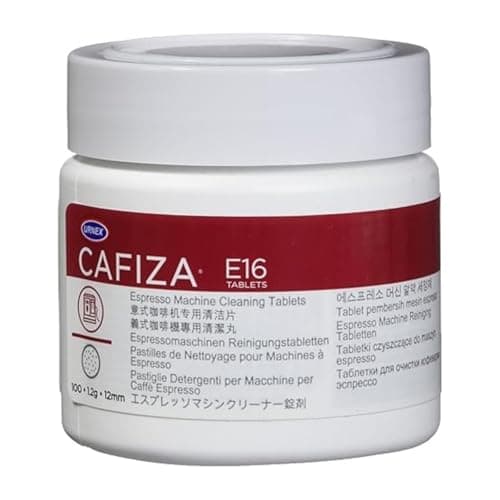
Urnex Urnex Cafiza Espresso Machine Cleaning Tablets (100 ct)
Urnex Cafiza Espresso Machine Cleaning Tablets (100 ct)

The industry-standard answer and the only cleaner this routine actually needs. Cafiza is an alkaline detergent formulated specifically to break down coffee oils and rinse clean without leaving a surfactant film — which is exactly what dish soap does not do. Tablets are the right format for home use because the dose is fixed: one tablet in a mug of hot water for soaking a basket and portafilter, or one in the blind basket for backflushing. A 100-count box is years of weekly cleaning.

Soaking baskets and backflushing
9.5
$17.99Amazon
02
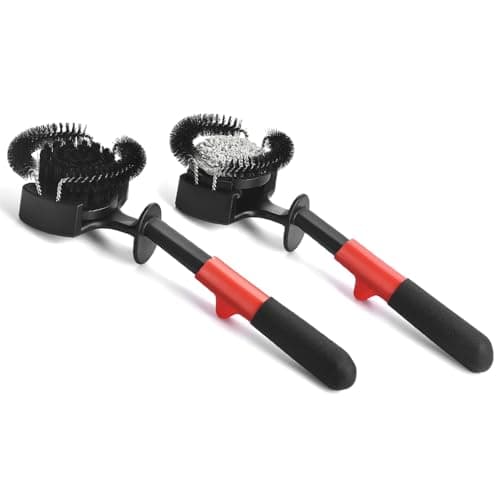
CAFEMASY CAFEMASY Grouphead Cleaning Brush (58mm, 2-pack)
CAFEMASY Grouphead Cleaning Brush (58mm, 2-pack)

The step that actually unclogs a basket. Coffee fines are glued into the basket holes by oil: the soak dissolves the glue, and then something has to physically remove the particles. This is an angled brush with stiff nylon bristles and a scraper, designed to get under a group head's shower screen and to work basket holes from both sides without scratching the stainless. A two-pack means one lives by the machine and one by the sink.

Scrubbing basket holes and the group head
8.5
$22.99Amazon
03
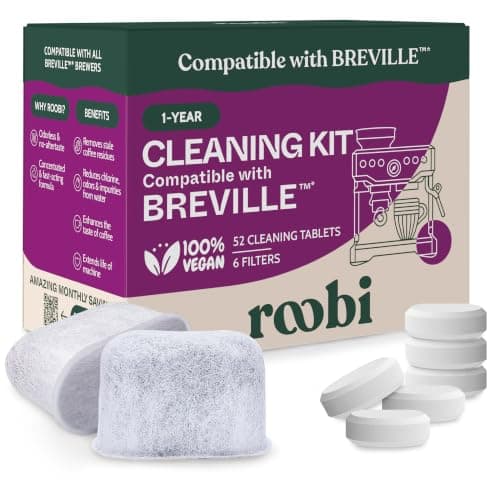
Roobi Roobi Breville-Compatible Cleaning & Maintenance Kit
Roobi Breville-Compatible Cleaning & Maintenance Kit

The one-box answer for Breville owners, and the pick if you would rather not assemble a kit. It bundles the parts a Barista Express, Bambino or Barista Pro actually needs for a full clean — the correctly sized blind disc for backflushing, cleaning tablets, the group brush and the small tools the manual calls for — so nothing is missing at the point you decide to do the job properly. It is a convenience purchase rather than a chemistry one, and it is a sensible convenience.

Breville owners who want one box
8.3
$29.99Amazon

#ad · Live prices from the Amazon Product API, as of October 17, 2026. Where we have no verified live price, we show none — a gap beats a number that has rotted.

In detail

The picks, in full

01
Urnex Urnex Cafiza Espresso Machine Cleaning Tablets (100 ct)

Soaking baskets and backflushing

Urnex Cafiza Espresso Machine Cleaning Tablets (100 ct)

Alkaline coffee-oil detergentTablets — fixed dose, no measuringWorks for soaking and backflushing100 tablets per box
9.5/10

The industry-standard answer and the only cleaner this routine actually needs. Cafiza is an alkaline detergent formulated specifically to break down coffee oils and rinse clean without leaving a surfactant film — which is exactly what dish soap does not do. Tablets are the right format for home use because the dose is fixed: one tablet in a mug of hot water for soaking a basket and portafilter, or one in the blind basket for backflushing. A 100-count box is years of weekly cleaning.

Effect on coffee oil
10
Rinses clean
9
Ease of use
9
Value
10

Pros

  • Formulated for coffee oil specifically, not for food fats like dish soap
  • Rinses clean without leaving a soapy residue in the brew path
  • Fixed tablet dose removes the guesswork and the risk of over-concentrating
  • Doubles as your backflushing detergent, so one product covers both jobs
  • 100 tablets is years of use at one a week — the cheapest cleaning per shot you will find

Cons

  • Alkaline, so it needs a thorough rinse and a discarded first shot
  • Does nothing for limescale — that is descaler's job, a separate product
  • Not a substitute for brushing; the soak loosens, the brush removes
  • Keep it away from wooden portafilter handles

Don't buy this if…

…your problem is limescale rather than coffee oil — a slow-heating machine or white crust around the steam tip. That needs an acid descaler instead.

If you prefer a machine-branded equivalent, Breville's own espresso cleaning tablets do the same job for Breville machines and are sized for their blind basket. The chemistry is the same family; what you are buying is convenience. Our best espresso cleaning kits roundup covers the options, and best descaling solutions is the other chemical, for the other job.

$17.99View on Amazon

Price as of October 17, 2026. Prices change — Amazon's at checkout is the one that counts.

#ad · we may earn a commission from this link to Urnex Cafiza Espresso Machine Cleaning Tablets (100 ct)

02
CAFEMASY CAFEMASY Grouphead Cleaning Brush (58mm, 2-pack)

Scrubbing basket holes and the group head

CAFEMASY Grouphead Cleaning Brush (58mm, 2-pack)

Angled handle for group-head accessStiff nylon bristlesIntegrated scraper edge2-pack
8.5/10

The step that actually unclogs a basket. Coffee fines are glued into the basket holes by oil: the soak dissolves the glue, and then something has to physically remove the particles. This is an angled brush with stiff nylon bristles and a scraper, designed to get under a group head's shower screen and to work basket holes from both sides without scratching the stainless. A two-pack means one lives by the machine and one by the sink.

Unclogging baskets
9
Group-head access
9
Durability
7
Value
9

Pros

  • Angled head reaches under a shower screen, which a straight brush cannot
  • Stiff enough to clear basket holes and soft enough not to scratch stainless
  • Scraper edge lifts the grounds that build up at the group's rim
  • Two in the pack, so one can be the dirty one
  • The cheapest part of this routine and the one that does the mechanical work

Cons

  • Nylon bristles splay over time and need replacing every year or so
  • Will not remove oil on its own — it works with the detergent, not instead of it
  • Sized around a 58mm group, though the bristle head works on any basket
  • Not dishwasher-safe in practice; rinse it by hand

Don't buy this if…

…nothing, honestly. Some brush is mandatory for this job, and a dish brush is a poor substitute because it cannot reach under a shower screen.

Hold the basket up to a light after brushing. Every hole should pass light. That two-second check is the only reliable way to know whether the basket is actually clean, and it is how you catch a basket that is reaching the end of its life — see best precision baskets for the replacement worth buying.

$22.99View on Amazon

Price as of October 17, 2026. Prices change — Amazon's at checkout is the one that counts.

#ad · we may earn a commission from this link to CAFEMASY Grouphead Cleaning Brush (58mm, 2-pack)

03
Roobi Roobi Breville-Compatible Cleaning & Maintenance Kit

Breville owners who want one box

Roobi Breville-Compatible Cleaning & Maintenance Kit

Breville-compatible blind discCleaning tablets includedGroup-head brush includedFits the Bambino and Barista line
8.3/10

The one-box answer for Breville owners, and the pick if you would rather not assemble a kit. It bundles the parts a Barista Express, Bambino or Barista Pro actually needs for a full clean — the correctly sized blind disc for backflushing, cleaning tablets, the group brush and the small tools the manual calls for — so nothing is missing at the point you decide to do the job properly. It is a convenience purchase rather than a chemistry one, and it is a sensible convenience.

Completeness for a Breville
9
Convenience
9
Value per tablet
6
Fit
9

Pros

  • Everything the Breville manual's cleaning cycle asks for, in one purchase
  • Correct blind-disc size, which is the part people order wrong
  • Removes the excuse — a complete kit in a drawer gets used
  • Cheaper than buying each item separately for a Breville
  • Covers the whole Bambino and Barista line, so it survives an upgrade

Cons

  • Breville-specific — the blind disc will not fit a 58mm commercial group
  • Tablet count is far lower than a 100-count Cafiza box, so refills work out dearer
  • Third-party kit rather than Breville's own, so check your warranty terms if that matters
  • Includes items you may already own

Don't buy this if…

…you have a 58mm machine. Buy Cafiza tablets, a brush and a 58mm blind basket separately — it will cost less and fit.

A note for Breville owners specifically: Breville baskets are shallower and the portafilter is 54mm, so the brush and blind disc sizes differ from the 58mm commercial standard. Our 54mm portafilter accessories page lists the correct dimensions for every accessory on those machines.

$29.99View on Amazon

Price as of October 17, 2026. Prices change — Amazon's at checkout is the one that counts.

#ad · we may earn a commission from this link to Roobi Breville-Compatible Cleaning & Maintenance Kit

The schedule, in one table

WhenWhatUsesTime
After each sessionKnock, rinse, wipe rim and underside, flush group, dryHot water and a cloth1-2 min
WeeklySoak basket and portafilter head, brush holes both sides, rinse twiceAlkaline detergent and a brush~5 min plus soak
Weekly (if your machine allows)Backflush with detergent while the portafilter soaksBlind basket and detergent~10 min
MonthlyRemove and clean the shower screen and group gasket areaBrush, detergent, screwdriver on some machines~10 min
Every 1-3 monthsDescale the water path — a different job and a different chemicalAcid descaler~30 min

Why dish soap is not the answer

It is not that dish soap does nothing — it is a detergent and it removes some oil. Two problems. First, it is formulated for food fats on crockery, not for the polymerised coffee oils that build up under pressure, so it is less effective at the specific job. Second, it is formulated to foam and cling, which means surfactant residue stays behind in basket holes and spout cavities, and that residue tastes exactly as bad as it sounds in the next shot. Espresso machine detergents are designed to rinse away completely, which is what you are paying for.

If dish soap is all you have, use the smallest amount that works and rinse far longer than feels necessary. Then buy a box of tablets, because 100 of them costs less than a bag of decent coffee and lasts years.

Things that quietly ruin portafilters

The dishwasher. Dishwasher detergent is strongly alkaline and abrasive enough to dull chrome and pit aluminium, and the drying cycle is hard on wooden and phenolic handles. Hand-wash.

Knocking out pucks on a bin edge. It deforms the basket seat over time, loosens the handle and chips the spouts. Use a knock box with a rubber bar.

Soaking the handle. Wood swells, splits and lifts its finish; the metal ferrule can loosen. Stand the portafilter head-down with the handle clear of the water.

Pins and needles in the basket holes.A basket's hole pattern and hole diameter are its entire function. Widening one hole permanently sends more water through that spot for the rest of the basket's life. Soak and brush; replace if it will not clear.

Leaving the puck in overnight. A cold, wet puck sets into the basket like clay and takes mechanical force to remove — the force that deforms baskets. Knock out while it is hot.

How clean equipment changes the taste

If you have never done the weekly soak and you do it now, the first clean shot often surprises people — brighter, sweeter, with the dull bitter edge gone. That edge was not your beans, your grinder or your technique. It was rancid oil in the brew path.

This is also the first thing to check when a setup that was working suddenly tastes worse, before you touch the grinder. Shot times creeping up and a flat, bitter cup are the two classic symptoms of a basket and group that need cleaning, and both get misdiagnosed as grind problems — see why is my espresso sour or bitter and how to dial in espresso for the order to work through. And while you are cleaning, do the grinder too — how to clean a coffee grinder covers stale grounds in the chute, which is the same problem one step upstream.
How we picked

We did not lab-test this gear

Everyone in this category says they tested twenty machines. We have not pulled shots on every product here, and we say so. What we did instead: compiled the published specifications, cross-checked the manufacturer manuals, computed the running cost (wattage to energy, grams-per-shot to cost-per-cup), weighed aggregated owner reports, and scored each product against a published rubric. The scores are judgments from documented research — not measurements we took, because we do not have a test lab and we will not pretend we do. Where hands-on time would tell you more than a spec sheet, we flag it. Where a number came from someone else's work, we name them in Sources.

Questions

Frequently asked

How do you clean an espresso portafilter?
Rinse it and the basket under hot water after every session, wipe the rim and the underside, and leave both dry. Once a week, soak the basket and the portafilter head — handle out of the water — in hot water with an alkaline espresso machine cleaning tablet for 15 to 30 minutes, brush the basket holes from both sides, then rinse thoroughly twice and discard the next shot.
Can I use dish soap to clean a portafilter?
It is better than nothing but it is the wrong tool. Dish soap is formulated for food fats rather than polymerised coffee oil, and it leaves a clinging surfactant residue in basket holes and spouts that carries into the next shot. Espresso machine detergent is designed to break down coffee oil and rinse away completely.
Why has my basket stopped flowing properly?
Partially blocked holes — coffee fines glued in place by oil. Soak in fresh hot detergent for an hour, brush both sides, then hold the basket up to a bright light: any dark hole is still blocked. If holes stay blocked after two soaks, replace the basket. Never clear holes with a pin, because widening one hole permanently biases flow — see best precision baskets for the replacement.
Should I use descaler on my portafilter?
No. Descaler is an acid for dissolving limescale inside the boiler and water path; portafilter build-up is coffee oil and fines, which needs an alkaline detergent instead. Using descaler here achieves nothing useful and repeated acid exposure is not good for chrome plating. Cleaning vs descaling explains why the two are not interchangeable.
Can a portafilter go in the dishwasher?
Don't. Dishwasher detergent is aggressive enough to dull and pit chrome and aluminium, and the heat damages wooden and phenolic handles. Baskets generally survive it; portafilters do not deserve it. Hand-wash, and keep the handle out of any soak.
How often should I clean the portafilter and basket?
Rinse and wipe after every session, soak and brush weekly, and take the shower screen off monthly. If you pull more than four or five shots a day, move the soak to twice a week. Backflushing — if your machine has a three-way solenoid valve — fits neatly into the same weekly slot; see how to backflush.

Keep reading

Same gear, other pages

We cover this gear elsewhere too

Receipts

Sources

We do not run a testing lab, and we do not pretend to. Where a measured number came from someone else's work, we name them and link them. Where we could not verify something, we say so on the page rather than quietly leaving it out. Read our full method.