Skip to content
Portafilter Co

Accessories & Tools · Espresso Accessories

The best espresso descaling solutions

Six descalers ranked on how well they strip limescale from your boiler and water path, plus a plain guide to liquid versus powder, universal versus brand-specific, which acid does what, how often to descale, and whether you can just use vinegar (you can, but you probably should not).

By Stephen V.Updated How we pick
#ad

We earn a commission when you buy through our Amazon links, at no extra cost to you. It never changes a verdict, and we say so when the cheaper product is the better buy. How this works.

Descaling is the maintenance job that quietly decides how long your espresso machine lives. Every time the machine heats water, the calcium and magnesium dissolved in that water precipitate out as hard mineral scale — limescale — and it coats the inside of the boiler, the heating element and the narrow water lines that carry water to the group. Left alone, that scale insulates the element so the machine struggles to reach temperature, chokes flow so your shots slow and sputter, and eventually blocks the water path solid. A descaler is an acid solution you run through the tank to dissolve that scale back out. This page ranks the descaler solutionsthemselves — the liquids and powders you pour in — not the brushes or backflush detergents that handle a completely different problem.

That distinction matters, because people mix the two jobs up constantly. Descaling removes mineral scale from the boiler and water path with an acid. Backflushingremoves coffee oils from the group head and shower screen with a detergent. A descaler will not touch coffee oils, and a backflush cleaner will not touch limescale — different chemical, different part of the machine, different schedule. If it is the coffee-oil side you are after — brushes, blind baskets and backflush tablets — our espresso cleaning kits roundup covers that end, and this page sticks strictly to scale. For the actual step-by-step of running a descale, pair this with our guide to descaling an espresso machine.

The good news is that descaler is cheap and lasts a long time — most people buy one bottle a year and forget about it. The choices are narrower than the shelf makes them look: liquid or powder, a universal formula or your machine's own branded one, and which acid it is built on. Super-automatic and bean-to-cup machines make the decision loudest, because they count your shots and flash a descale prompt at you — a De'Longhi Magnifica Evo or any of the best super-automatics will not let you ignore it for long. Below are six descalers we would actually buy, ranked, followed by the plain-English guide to picking the right one and the honest verdict on the vinegar question everyone asks.

The short answer

Quick picks

#ProductBest forScorePrice
01
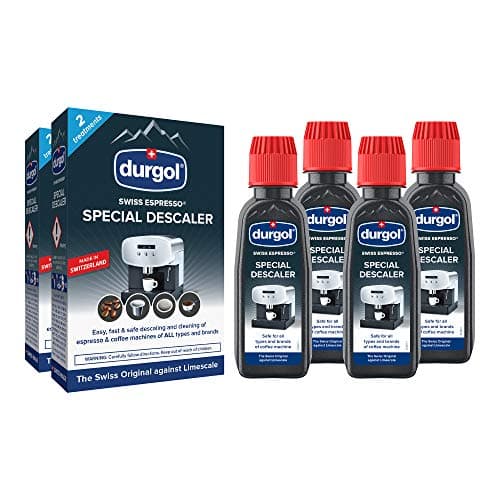
Durgol Durgol Swiss Espresso Descaler & Decalcifier (4-count)
Durgol Swiss Espresso Descaler & Decalcifier (4-count)

The descaler to buy if you want scale gone fast and gone completely. Durgol Swiss Espresso is built on sulfamic acid rather than the milder citric or lactic acids most rivals use, and that makes it the most aggressive scale-dissolver here — the manufacturer says it works with no separate reaction or soak time, and owners of heavily scaled machines back that up. It is a universal liquid that suits any brand of espresso machine, it is food-safe and rinses clean with no lingering smell, and it comes as pre-portioned single-use bottles so there is no measuring. You pay a little more per descale than a bulk budget bottle, and the strong acid is the one here you most want to rinse thoroughly, but for pure descaling power this is the pick.

Best overall descaler
8.6
$31.95Amazon
02
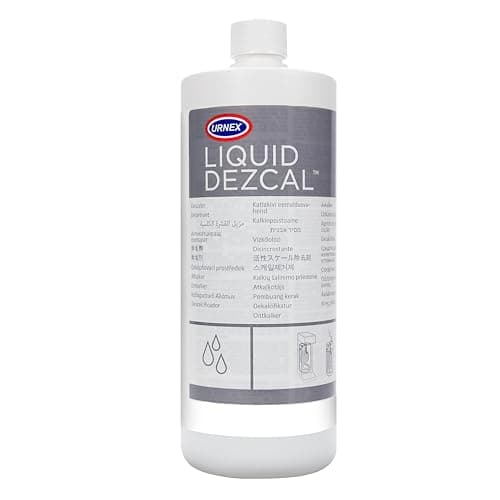
Urnex Urnex Liquid Dezcal Activated Descaling Solution (33.6 oz, 8 uses)
Urnex Liquid Dezcal Activated Descaling Solution (33.6 oz, 8 uses)

The barista-shelf standard, in the pour-and-go liquid form. Dezcal is a citric-acid-based activated descaler that Urnex builds for exactly this job — it strips scale off boilers and heating elements, it is biodegradable, phosphate-free and odorless, and it rinses away thoroughly rather than leaving the smell and taste vinegar does. The big 33.6-ounce bottle covers eight descales, which is roughly two years for a typical home machine, so the per-descale cost is low. It is the safe, universal, no-drama choice: if Durgol is the specialist, Dezcal is the sensible everyday descaler most home setups settle on.

Best universal value
8.4
$17.99Amazon
03
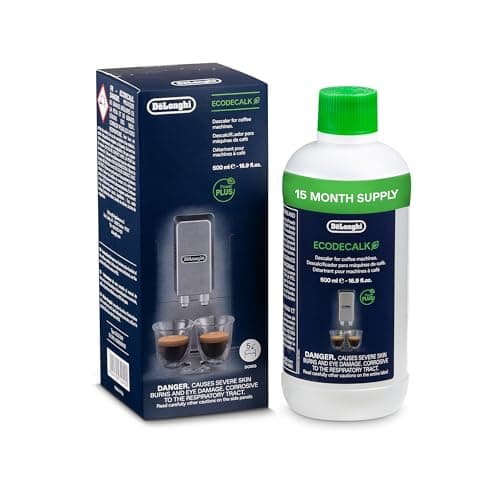
De'Longhi De'Longhi EcoDecalk Universal Descaler (16.9 oz)
De'Longhi EcoDecalk Universal Descaler (16.9 oz)

The gentle, low-odor descaler that suits a super-automatic best. EcoDecalk is a plant-derived lactic-acid formula that De'Longhi recommends across its own machines, so it is the no-argument choice for warranty peace of mind on a Magnifica or a bean-to-cup — but it is genuinely universal and works on most pump and pod machines too. The 500 ml bottle holds five doses at 100 ml each, you pour one into the tank and let the machine run its descale cycle, and the eco-friendly formula keeps the smell down. It is the least harsh option here, which is exactly what you want on a plastic-heavy automatic you descale on a schedule.

Best for super-automatics
8.2
$18.99Amazon
04
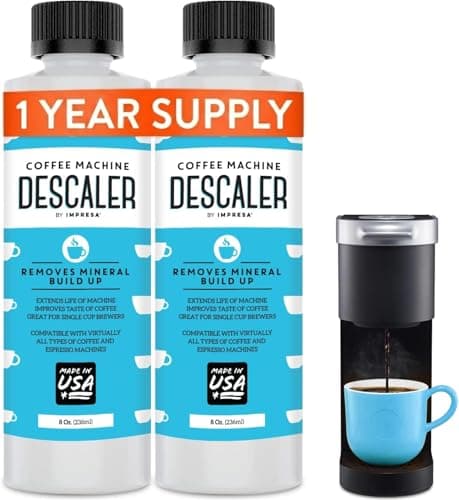
Impresa IMPRESA Coffee Machine Descaler (2-pack, universal)
IMPRESA Coffee Machine Descaler (2-pack, universal)

The cheap universal that punches above its price. Impresa is a made-in-USA liquid built on a citric-and-sulfamic-acid blend, so it is a touch stronger than a pure-citric budget descaler while still being safe and food-grade. The two-pack of 8-ounce bottles gives you four descales at four ounces a session — Impresa calls it a year's supply, and for a household descaling every few months that is about right. It works on essentially any machine: espresso, pod, drip, kettle. It is not fussy and it is not fancy, but it descales properly for very little money, which is exactly what a budget pick should do.

Best budget buy
7.8
$13.59Amazon
05
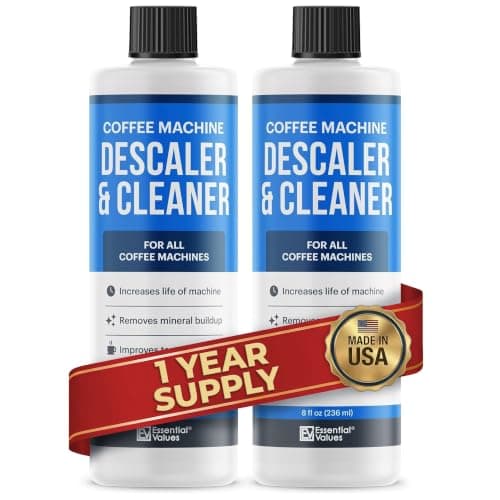
Essential Values Essential Values Universal Descaling Solution (4 uses)
Essential Values Universal Descaling Solution (4 uses)

The other honest budget universal, built on concentrated citric acid and made in the USA. Essential Values sells this as a four-use bottle that works across De'Longhi, Keurig, Breville, Nespresso and basically any automatic coffee maker or espresso machine, which makes it a sensible one-bottle answer for a mixed-machine household. It is milder than the sulfamic options and short on the published testing detail the name brands offer, but it descales cleanly, rinses without a smell, and costs very little. If the Impresa is sold out or you just prefer a straight citric-acid formula, this does the same budget job.

Best value multipack
7.4
$13.99Amazon
06
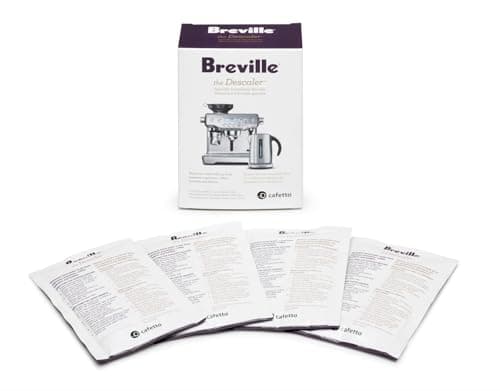
Breville Breville BES007 the Descaler for Espresso Machines (4-pack)
Breville BES007 the Descaler for Espresso Machines (4-pack)

The brand-specific pick, for Breville owners who want zero warranty ambiguity. Breville's own descaler is a powder in four single-dose sachets built on a malic, sulfamic and citric acid blend, GMO-free and biodegradable, and designed around Breville espresso machines, coffee makers and kettles. If your Barista-series machine flashes a descale prompt, this is the fluid Breville expects you to reach for — pre-measured, no guesswork, and unimpeachable if anything ever goes to warranty. You pay a premium for a small four-pack versus a universal bottle, and there is nothing here a universal descaler could not also do, but it removes all doubt for a Breville household.

Best for Breville machines
7.2
$14.95Amazon

#ad · Live prices from the Amazon Product API, as of Jul 30, 2026. Where we have no verified live price, we show none — a gap beats a number that has rotted.

In detail

The picks, in full

01
Durgol Durgol Swiss Espresso Descaler & Decalcifier (4-count)

Best overall descaler

Durgol Swiss Espresso Descaler & Decalcifier (4-count)

Sulfamic-acid liquid formulaUniversal (all machine brands)4 single-use bottles (4 descales)Fast-acting, food-safe, rinses clean
8.6/10

The descaler to buy if you want scale gone fast and gone completely. Durgol Swiss Espresso is built on sulfamic acid rather than the milder citric or lactic acids most rivals use, and that makes it the most aggressive scale-dissolver here — the manufacturer says it works with no separate reaction or soak time, and owners of heavily scaled machines back that up. It is a universal liquid that suits any brand of espresso machine, it is food-safe and rinses clean with no lingering smell, and it comes as pre-portioned single-use bottles so there is no measuring. You pay a little more per descale than a bulk budget bottle, and the strong acid is the one here you most want to rinse thoroughly, but for pure descaling power this is the pick.

Effectiveness
10
Ease of use
9
Compatibility
9
Value
7
Safety
8

Pros

  • Sulfamic-acid formula is more aggressive on hard, set-in scale than the citric and lactic acids most descalers use
  • Manufacturer states no separate reaction time is needed — it goes to work immediately, which owners of scaled machines notice
  • Universal liquid works on any brand of espresso machine, super-automatic, pod machine or drip brewer
  • Pre-portioned single-use bottles mean zero measuring or mixing
  • Food-safe and rinses away cleanly with no vinegar-style smell or aftertaste

Cons

  • Costs more per descale than a big budget bottle, so it is effectiveness over outright value
  • The strongest acid here is also the one you most want to rinse thoroughly and never leave sitting longer than directed
  • Single-use bottles produce a little more packaging than one large refill bottle

Don't buy this if…

you only ever run soft or filtered water and rarely see scale, or you want the lowest possible cost per descale — a gentler citric-acid universal will do the job for less.

Durgol is the descaler a lot of espresso technicians reach for, and the reason is the acid. Most consumer descalers use citric or lactic acid because they are cheap, mild and food-grade; Durgol uses sulfamic acid, which is a stronger descaling acid that pulls off calcium scale faster and more completely. On a machine that has been run on hard water for a year or two without descaling — the kind with a heating element you could scrape — that extra strength is the difference between one pass and three.

The trade is simply respect for a stronger chemical: rinse it out properly, do not exceed the contact time your machine's manual gives, and it is completely safe and food-approved. Because it comes as single-use bottles you are never guessing at a dose, which makes it genuinely easy to live with despite being the most powerful option on the page. If you are on hard water and want the surest, fastest descale, start here.

$31.95View on Amazon

$36.6213% off

Price as of Jul 30, 2026. Prices change — Amazon's at checkout is the one that counts.

#ad · we may earn a commission from this link to Durgol Swiss Espresso Descaler & Decalcifier (4-count)

02
Urnex Urnex Liquid Dezcal Activated Descaling Solution (33.6 oz, 8 uses)

Best universal value

Urnex Liquid Dezcal Activated Descaling Solution (33.6 oz, 8 uses)

Citric-acid activated liquid33.6 oz bottle (8 uses)Universal — coffee & espresso machinesBiodegradable, phosphate-free, rinses clean
8.4/10

The barista-shelf standard, in the pour-and-go liquid form. Dezcal is a citric-acid-based activated descaler that Urnex builds for exactly this job — it strips scale off boilers and heating elements, it is biodegradable, phosphate-free and odorless, and it rinses away thoroughly rather than leaving the smell and taste vinegar does. The big 33.6-ounce bottle covers eight descales, which is roughly two years for a typical home machine, so the per-descale cost is low. It is the safe, universal, no-drama choice: if Durgol is the specialist, Dezcal is the sensible everyday descaler most home setups settle on.

Effectiveness
9
Ease of use
7
Compatibility
9
Value
8
Safety
9

Pros

  • The reference descaler cafes and technicians trust, in an easy pour-a-dose liquid
  • Citric-acid formula is food-grade, biodegradable, phosphate-free and odorless
  • Rinses out thoroughly, unlike vinegar which lingers as smell and taste for days
  • One large bottle covers eight descales — a very low cost per descale for a home user
  • Universal across espresso machines, super-automatics, pod machines, drip brewers and kettles

Cons

  • You measure a dose per descale rather than emptying a pre-portioned single-use bottle
  • Citric acid is gentler than sulfamic, so a badly scaled machine may need a second pass
  • A large bottle is more than a light, soft-water user will get through before it is worth restocking

Don't buy this if…

your machine's manual mandates its own branded descaler for warranty, or you specifically want the strongest possible scale remover — Durgol's sulfamic acid works harder on heavy buildup.

Urnex is the name behind Cafiza, the backflush detergent half of cafes clean with, and Dezcal is its descaling counterpart. The "activated" label just means it works quickly once dissolved; the chemistry underneath is citric acid, which is the most common food-safe descaling acid and the reason Dezcal is safe on the aluminium, brass and stainless parts inside a home machine. It is the descaler we would hand almost anyone who is not fighting years of neglected scale.

Dezcal also comes as a powder and in single-dose packets, so if you would rather store a small jar than a big liquid bottle, the same formula is available in those formats. We picked the liquid here because it pours straight into a super-automatic's descale cycle with no dissolving step, but any Dezcal format does the same job.

$17.99View on Amazon

Price as of Jul 30, 2026. Prices change — Amazon's at checkout is the one that counts.

#ad · we may earn a commission from this link to Urnex Liquid Dezcal Activated Descaling Solution (33.6 oz, 8 uses)

03
De'Longhi De'Longhi EcoDecalk Universal Descaler (16.9 oz)

Best for super-automatics

De'Longhi EcoDecalk Universal Descaler (16.9 oz)

Lactic-acid (plant-derived) liquid500 ml / 16.9 oz (5 uses)Universal; De'Longhi-recommendedEco-friendly, low odor
8.2/10

The gentle, low-odor descaler that suits a super-automatic best. EcoDecalk is a plant-derived lactic-acid formula that De'Longhi recommends across its own machines, so it is the no-argument choice for warranty peace of mind on a Magnifica or a bean-to-cup — but it is genuinely universal and works on most pump and pod machines too. The 500 ml bottle holds five doses at 100 ml each, you pour one into the tank and let the machine run its descale cycle, and the eco-friendly formula keeps the smell down. It is the least harsh option here, which is exactly what you want on a plastic-heavy automatic you descale on a schedule.

Effectiveness
8
Ease of use
9
Compatibility
8
Value
7
Safety
9

Pros

  • Plant-based lactic-acid formula is the gentlest, lowest-odor descaler here — kind to seals and plastic tanks
  • The descaler De'Longhi recommends for its own machines, so it removes any warranty doubt on a bean-to-cup
  • Pre-measured 100 ml dose pours straight into an automatic descale cycle with no mixing
  • Universal — works on most other pump, pod and super-automatic machines, not just De'Longhi
  • Eco-friendly, readily biodegradable formulation

Cons

  • Lactic acid is milder than citric or sulfamic, so it is slower on heavy, set-in scale
  • Five doses per bottle is a shorter supply than a big universal bottle for the price
  • Positioned around De'Longhi, so buyers of other brands sometimes overlook that it is universal

Don't buy this if…

your machine is badly scaled from years on hard water, or you want the most descales per dollar — a stronger acid clears heavy buildup faster and a bulk bottle costs less per use.

A super-automatic is the machine that reminds you to descale whether you feel like it or not, and it is also the machine where a gentle descaler earns its keep — there is a lot of plastic tubing and a lot of seals in a bean-to-cup, and lactic acid is the mildest common descaling acid. EcoDecalk is what De'Longhi ships you toward for its own range, and using the manufacturer-recommended fluid is the simplest way to keep a warranty clean. If you own a Magnifica, a Philips LatteGo or any other automatic, this is the safe default.

$18.99View on Amazon

$19.955% off

Price as of Jul 30, 2026. Prices change — Amazon's at checkout is the one that counts.

#ad · we may earn a commission from this link to De'Longhi EcoDecalk Universal Descaler (16.9 oz)

04
Impresa IMPRESA Coffee Machine Descaler (2-pack, universal)

Best budget buy

IMPRESA Coffee Machine Descaler (2-pack, universal)

Citric + sulfamic-acid liquid2 x 8 oz bottles (4 descales)Universal, all machine typesMade in USA
7.8/10

The cheap universal that punches above its price. Impresa is a made-in-USA liquid built on a citric-and-sulfamic-acid blend, so it is a touch stronger than a pure-citric budget descaler while still being safe and food-grade. The two-pack of 8-ounce bottles gives you four descales at four ounces a session — Impresa calls it a year's supply, and for a household descaling every few months that is about right. It works on essentially any machine: espresso, pod, drip, kettle. It is not fussy and it is not fancy, but it descales properly for very little money, which is exactly what a budget pick should do.

Effectiveness
7
Ease of use
7
Compatibility
9
Value
9
Safety
7

Pros

  • Very low cost per descale — the budget pick that still descales properly
  • Citric-and-sulfamic blend is a little more aggressive than pure-citric budget rivals
  • Universal across espresso, pod, drip and kettle — one bottle covers the whole kitchen
  • Made in the USA, food-safe, and rinses clean without a vinegar smell
  • Two-pack lasts a typical household about a year

Cons

  • You measure a four-ounce dose per session rather than pouring a single-use bottle
  • Generic universal formula with less published detail than the big-name descalers
  • Not brand-recommended, so a warranty that mandates a specific descaler will not accept it

Don't buy this if…

your machine's manual requires its own branded descaler, or you want the reassurance of a barista-standard name — a Dezcal or a manufacturer descaler buys that for a little more.

$13.59View on Amazon

$15.9915% off

Price as of Jul 30, 2026. Prices change — Amazon's at checkout is the one that counts.

#ad · we may earn a commission from this link to IMPRESA Coffee Machine Descaler (2-pack, universal)

05
Essential Values Essential Values Universal Descaling Solution (4 uses)

Best value multipack

Essential Values Universal Descaling Solution (4 uses)

Concentrated citric-acid liquid4 descaling usesUniversal — drip, pod & espressoMade in USA
7.4/10

The other honest budget universal, built on concentrated citric acid and made in the USA. Essential Values sells this as a four-use bottle that works across De'Longhi, Keurig, Breville, Nespresso and basically any automatic coffee maker or espresso machine, which makes it a sensible one-bottle answer for a mixed-machine household. It is milder than the sulfamic options and short on the published testing detail the name brands offer, but it descales cleanly, rinses without a smell, and costs very little. If the Impresa is sold out or you just prefer a straight citric-acid formula, this does the same budget job.

Effectiveness
7
Ease of use
7
Compatibility
8
Value
8
Safety
7

Pros

  • Straight food-grade citric acid — mild, safe and easy to rinse
  • Explicitly universal across De'Longhi, Keurig, Breville, Nespresso and other automatics
  • Four uses per bottle at a low price makes for a strong cost per descale
  • Made in the USA and free of the smell and residue vinegar leaves behind
  • A tidy one-bottle solution for a kitchen with more than one coffee machine

Cons

  • Pure citric acid is gentle, so heavy scale can need a longer soak or a second run
  • Marketed pod-and-drip-first, so espresso owners sometimes overlook it
  • Thin published formulation detail compared with Urnex or Durgol

Don't buy this if…

you are clearing heavy, neglected scale, or you want a manufacturer-recommended fluid for a warranty — a stronger acid or a branded descaler fits those better.

$13.99View on Amazon

Price as of Jul 30, 2026. Prices change — Amazon's at checkout is the one that counts.

#ad · we may earn a commission from this link to Essential Values Universal Descaling Solution (4 uses)

06
Breville Breville BES007 the Descaler for Espresso Machines (4-pack)

Best for Breville machines

Breville BES007 the Descaler for Espresso Machines (4-pack)

Malic/sulfamic/citric-acid powder4 single-dose sachets (4 descales)Made for Breville machines & kettlesGMO-free, biodegradable
7.2/10

The brand-specific pick, for Breville owners who want zero warranty ambiguity. Breville's own descaler is a powder in four single-dose sachets built on a malic, sulfamic and citric acid blend, GMO-free and biodegradable, and designed around Breville espresso machines, coffee makers and kettles. If your Barista-series machine flashes a descale prompt, this is the fluid Breville expects you to reach for — pre-measured, no guesswork, and unimpeachable if anything ever goes to warranty. You pay a premium for a small four-pack versus a universal bottle, and there is nothing here a universal descaler could not also do, but it removes all doubt for a Breville household.

Effectiveness
8
Ease of use
9
Compatibility
6
Value
6
Safety
7

Pros

  • Breville's own descaler — the no-argument answer to a Barista-series descale prompt
  • Pre-measured single-dose sachets mean zero mixing or guessing at a dose
  • Malic, sulfamic and citric acid blend descales effectively
  • GMO-free and biodegradable formulation
  • Removes any warranty ambiguity for a Breville owner

Cons

  • Small four-pack costs more per descale than a big universal bottle
  • Branded for Breville, so it is the least versatile pick if you own other machines
  • Nothing it does that a good universal descaler could not also do on a Breville

Don't buy this if…

you do not own a Breville, or you want the lowest cost per descale — a universal descaler works on a Breville just as well and covers your other machines too.

$14.95View on Amazon

Price as of Jul 30, 2026. Prices change — Amazon's at checkout is the one that counts.

#ad · we may earn a commission from this link to Breville BES007 the Descaler for Espresso Machines (4-pack)

How we picked

A descaler has exactly one job — dissolve mineral scale out of the boiler and water path without harming the machine — so we ranked these on how well they do that and how easy they are to live with, on five criteria.

  1. Effectiveness at dissolving scale.This is the whole point, so we weighted it most, using each product's published acid and formulation and the aggregated experience of owners descaling real machines. Sulfamic acid works harder than citric, which works harder than lactic — strength earns marks, but so does being effective without being harsh.
  2. Ease of use.A pre-portioned single-use bottle or sachet you pour and forget beats a bottle you measure a dose from — especially for a chore people put off. Anything that drops straight into a machine's automatic descale cycle scored well.
  3. Compatibility. A universal formula that works on every machine in the kitchen is worth more than one tied to a single brand. We noted where a product is brand-recommended and where your manual might insist on its own.
  4. Value. Cost per descale, not sticker price. A big bottle that covers eight descales beats a small pack you rebuy, and we said so plainly.
  5. Safety. Food-safe, rinses clean, and gentle enough on seals, gaskets and aluminium not to do harm. This is where the vinegar problem lives, and we cover it below.

What we did not test

We did not run these descalers through a scaled boiler in a lab — we have no lab, and we will never pretend otherwise. There is no measured scale weight here, no timed dissolve test, no before-and-after of a heating element. Our scores are compiled from published manufacturer and retailer information — the acid used, the dose, the stated compatibility — and the aggregated reports of owners who descale on a schedule, exactly as our methodology describes. Treat them as an informed buying steer, not a laboratory result.

Descaling vs cleaning — not the same job

This trips almost everyone up, so it is worth being blunt. Descaling deals with water: the calcium and magnesium in your tap water precipitate out as hard scale inside the boiler and on the heating element every time the machine heats up. You remove it with an acid descaler— everything on this page — run through the water tank. Cleaning deals with coffee: the oils and fine grounds that build up on the group head, shower screen and portafilter every time you pull a shot. You remove those by backflushing with a detergent tablet in a blind basket, and by brushing. A descaler will not clear coffee oils, and a backflush cleaner will not touch scale. They are two chores, two products, two schedules. This page is only the scale half; the oil half lives in our espresso cleaning kits roundup, and a well-kept machine owns something from each.

Liquid vs powder

Both work; the difference is convenience and storage. A liquiddescaler — Durgol, Dezcal liquid, EcoDecalk, Impresa, Essential Values — pours straight in with no dissolving step, which is why it suits a super-automatic's descale cycle so well. A single-use liquid bottle also removes any guessing at a dose. A powder— the Breville sachets, or Dezcal in its powder form — is more compact to store and often cheaper per use, but you dissolve it in water first and want it fully dissolved before it goes near the machine. For most home espresso setups a pre-portioned liquid or sachet is the least-friction choice, and friction is what makes people skip descaling. Buy the format you will actually use on schedule.

Universal vs brand-specific

Most machines are perfectly happy with a universaldescaler like Durgol, Dezcal or a budget citric bottle — the acid does not care what badge is on the boiler. The honest caveat is warranty: some machines, particularly super-automatics and bean-to-cup models, specify their own branded descaler in the manual and can technically void a warranty if you use another. That is the entire case for the De'Longhi-recommended EcoDecalk and the Breville BES007: not that they descale better, but that they remove all doubt on a machine that counts your descales and prompts you. If your machine's manual is happy with a universal descaler — most semi-automatics are — buy the universal and save the money. If it names a brand, follow it while the warranty is live.

Which acid? Lactic, citric, sulfamic

Descalers are just food-safe acids in water, and the acid tells you how they behave. Lactic acid(EcoDecalk) is the mildest and lowest-odor — gentlest on seals and plastic, best for automatics, but slower on heavy scale. Citric acid (Dezcal, Essential Values, and part of most blends) is the middle ground and the most common: food-grade, cheap, effective, and what most owners use for routine descaling. Sulfamic acid(Durgol, and part of the Impresa and Breville blends) is the strongest of the three — it clears set-in scale fastest, at the cost of being the one you most want to dose correctly and rinse thoroughly. All three are safe when used as directed; the choice is really mild-and-gentle versus fast-and-strong, matched to how scaled your machine is and how soft your water runs.

How much, and how often

Dosing is whatever the bottle and your machine's manual say — a single-use bottle or sachet takes the guesswork out, and a measured liquid is typically a set number of ounces or millilitres diluted into the tank. Run it through on the machine's descale cycle if it has one, or as a manual soak-and-flush if it does not, and then — this part is not optional — run two or three full tanks of fresh water through to rinse every trace of acid out before you pull another shot.

Frequency depends entirely on your water.Soft or filtered water might need a descale only a couple of times a year; hard water can need it every month or two, and a super-automatic will simply tell you with a descale light once it has counted enough brews. The single biggest thing you can do to descale less often is put softer water in the tank — a water filter, or filtered or bottled low-mineral water, dramatically slows how fast scale forms in the first place. When in doubt, descale a little more often rather than less: scale is far easier to prevent than to remove once it has set hard. Keeping beans fresh in a good canister and the machine descaled on schedule are the two cheapest things that keep home espresso tasting right.

Can I just use vinegar?

You will see this advice everywhere, so here is the honest answer: vinegar doesdescale — acetic acid dissolves calcium scale, that part is real chemistry — but a purpose-made descaler is the safer buy, and not by a little. Three problems. First, vinegar is a weak descaler that works slowly and often needs repeating where a proper acid clears the scale in one pass. Second, it rinses badly and leaves a smell and a sour taste in the machine that can haunt your coffee for days. Third, and most important, acetic acid is harsh on the rubber seals and gaskets inside the machine and can attack an aluminium boiler— common in older and budget machines — causing real damage. A bottle of real descaler costs about the same as a bag of decent beans, dissolves scale properly, rinses clean and is formulated to be safe on the metals and seals your machine is built from. It works, but it is a false economy: there is no good reason to gamble a boiler to save a couple of dollars.

Which descaler fits you

  • Want scale gone fastest, on hard water?Durgol Swiss Espresso — sulfamic acid, the most aggressive descaler here, pre-portioned and food-safe.
  • Want the safe, universal everyday descaler?Urnex Liquid Dezcal — barista-standard citric acid, eight descales a bottle, low cost per use.
  • Own a super-automatic or bean-to-cup?De'Longhi EcoDecalk — gentle plant-based lactic acid, brand-recommended, pours into the descale cycle.
  • Want it done for the least money?Impresa — a citric-and-sulfamic universal that descales properly for very little.
  • Prefer a straight citric-acid budget bottle?Essential Values — made-in-USA universal, four uses, mild and easy to rinse.
  • Own a Breville and want zero warranty doubt?Breville BES007 — the manufacturer's own single-dose sachets.

For most people the honest answer is one universal bottle — a Dezcal, an Impresa, an Essential Values — that lasts a year, plus filtered water in the tank so you reach for it less often. Pair it with a backflush cleaner from our cleaning kits roundup and you have both maintenance jobs covered, and our accessories starter kit shows where they both fit among the gear that actually matters. When it is time to actually run one, the how-to-descale guide walks you through it step by step.
How we picked

We did not lab-test this gear

Everyone in this category says they tested twenty machines. We have not pulled shots on every product here, and we say so. What we did instead: compiled the published specifications, cross-checked the manufacturer manuals, computed the running cost (wattage to energy, grams-per-shot to cost-per-cup), weighed aggregated owner reports, and scored each product against a published rubric. The scores are judgments from documented research — not measurements we took, because we do not have a test lab and we will not pretend we do. Where hands-on time would tell you more than a spec sheet, we flag it. Where a number came from someone else's work, we name them in Sources.

Questions

Frequently asked

What does descaling actually do, and is it different from cleaning?
Yes, they are two different chores. Descalinguses an acid solution to dissolve mineral scale (limescale) that your water leaves inside the boiler, heating element and water lines — that is what every product on this page does. Cleaning uses a detergent to remove coffee oils from the group head and shower screen, which you do by backflushing and brushing. A descaler will not touch coffee oils and a backflush cleaner will not touch scale, so a well-kept machine needs both.
Can I descale my espresso machine with vinegar?
You can, but we would not. Vinegar does dissolve scale chemically, but it is a weak, slow descaler that rinses badly and leaves a smell and sour taste for days. More importantly, its acetic acid is harsh on rubber seals and gaskets and can attack an aluminium boiler, which is common in older and budget machines. A purpose-made descaler costs only a few dollars, dissolves scale far more effectively, rinses clean, and is formulated to be safe on the metals and seals inside a machine. It is a false economy to risk the boiler to save the price of a proper descaler.
Liquid or powder descaler — does it matter?
Not for how well it works — both dissolve scale the same way once they are in the water. The difference is convenience. A liquid, especially a single-use bottle, pours straight in with no mixing, which is why it suits a super-automatic's descale cycle so well. A powder or sachet stores more compactly and is often cheaper per use, but you dissolve it in water first. Buy whichever format you will actually use on schedule; a descale you skip because it was fiddly does nothing for your machine.
Do I have to use my machine's own branded descaler?
Usually no — most machines are fine with a universal descaler like Urnex Dezcal or Durgol, and the acid does not care what brand the boiler is. The exception is warranty: some machines, especially super-automatics and bean-to-cup models, specify their own descaler in the manual and can technically void the warranty if you use another. So check your manual. If it names a brand — De'Longhi's EcoDecalk, Breville's BES007 — follow it while the warranty is live; if it is happy with a universal, save the money.
How often should I descale?
It depends entirely on your water. Soft or filtered water might need a descale a couple of times a year; hard water can need it every month or two, and a super-automatic will flash a descale prompt once it has counted enough brews. The single biggest thing that stretches the interval is putting softer water in the tank — a filter or filtered water dramatically slows how fast scale forms. When in doubt, descale a little more often rather than less, because scale is far easier to prevent than to remove once it sets hard.
Are these descalers safe — is citric acid enough?
All of them are food-safe acids in water, used and rinsed as directed. Citric acid (Dezcal, Essential Values) is mild, food-grade and plenty for routine descaling; lactic acid (EcoDecalk) is gentler still and kind to seals; sulfamic acid (Durgol) is the strongest and clears heavy scale fastest, so it is the one you most want to dose correctly and rinse well. Whatever you use, always run two or three tanks of fresh water through afterwards to flush every trace of acid before your next shot.

Keep reading

Receipts

Sources

We do not run a testing lab, and we do not pretend to. Where a measured number came from someone else's work, we name them and link them. Where we could not verify something, we say so on the page rather than quietly leaving it out. Read our full method.