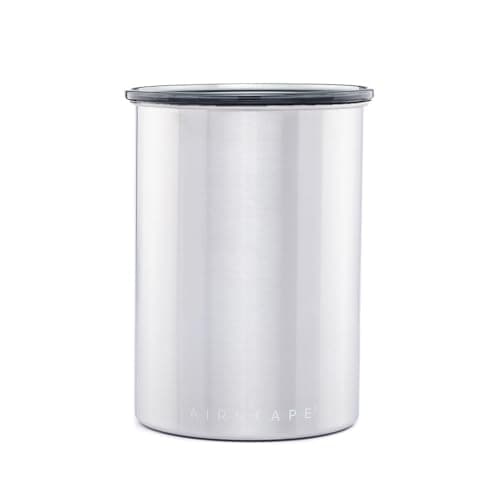
Roasted coffee does not spoil so much as fade, and it fades faster than almost anyone expects. The moment beans leave the roaster they are being attacked on two fronts. The first is oxidation: oxygen in the air reacts with the aromatic oils that carry most of coffee's flavor, and within a couple of weeks a lively, fruity bag turns flat, papery and dull. The second is off-gassing — fresh-roasted beans are packed with carbon dioxide from roasting, and they slowly vent it for days afterward. A good canister cannot stop time, but it can shut out the two things you actually control at home: air and light. Keep those out, use the beans within a few weeks, and you drink most of what you paid for instead of watching it evaporate on the counter.
That leaves a canister two jobs, and there are two philosophies for the first one. The older idea is to push the air out: a vacuum canister pumps a genuine low-pressure vacuum above the beans, and a plunger-lid design presses a movable inner lid straight down onto the coffee so there is barely any headroom left to hold stale air. The newer idea flips it — a one-way CO2 valvelets the gas that fresh beans are still venting escape outward while a rubber flap stops oxygen coming back in. Neither is a gimmick, but they solve different problems: a vacuum or plunger fights the oxygen that's already sitting in the jar, while a valve is built for beans still off-gassing in their first days off roast. The second job is simpler and every canister here does it — an opaque or tinted body keeps light off the beans, since UV degrades the oils just as surely as oxygen does.
One thing worth settling before you spend anything: buy whole beans and grind them fresh. Ground coffee has hundreds of times the surface area of whole beans exposed to air, so it goes stale in days rather than weeks — no canister rescues that. Storing whole beans and grinding to order with a good espresso grinder does more for the cup than any container ever will; the canister just protects what the beans start with. And resist the popular advice to keep your daily canister in the fridge or freezer. For beans you open every morning, the repeated warming and cooling pulls condensation onto cold beans, and moisture is a fresh enemy you were trying to avoid — cool, dark and dry on the counter beats cold and damp. Freezing has a place for long-term storage of unopened, sealed portions, but not for the jar you dip into daily.
How we picked
Every canister here is a real, currently-purchasable coffee storage container you can buy in the US, and every capacity and mechanism below is taken from the maker's own listing. We ranked on five things, in this order.
- Air seal. The whole job of a canister is to keep oxygen away from the oils that carry flavor. We weighed how each one does it — a pumped vacuum, a plunger that removes headroom, or a plain airtight lid — and how completely it shuts air out.
- Freshness features. Beyond a basic seal: a one-way CO2 valve for fresh-roasted beans, a date tracker so you know how long a bag has been open, and how well the body blocks light. These are what separate a coffee canister from any old jar.
- Build and materials. Stainless steel and glass last longer and keep light out better than plastic, and a solid lid mechanism is the part most likely to wear. We favored materials that survive daily use for years.
- Ease of use. Whether the seal is automatic, one press, a few twists or a plunger you have to remember — and small touches like a see-through level or an included scoop. The best seal is the one you will actually bother to close every time.
- Value. Not simply the lowest price, but what you get for it — capacity, materials, a valve or a vacuum — against what you actually need to keep a bag fresh.
We did not lab-test these canisters; we do not run a lab. The scores are editorial judgments built from published manufacturer specs and aggregated owner reports, and our methodology pagespells out exactly how. Specifications come from the makers' own product pages, listed in Sources.
Vacuum vs one-way valve: which do you need?
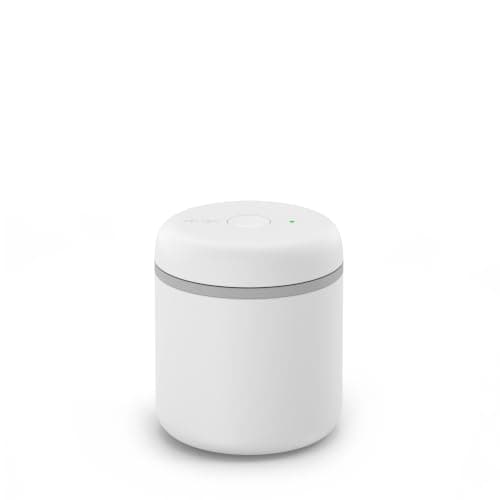
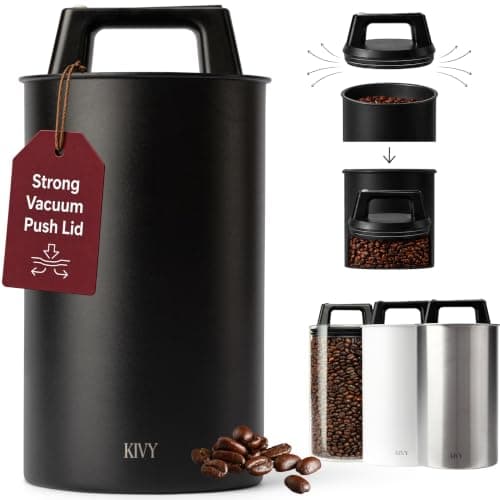
This is the single decision that should steer your choice, and it comes down to how fresh your beans are when they reach the jar. A vacuum or plunger canister removes oxygen that is already in the container — it pumps or presses the air out and keeps a low-oxygen space above the beans. That is exactly what you want for beans that are past their first week off roast, or for the last third of a bag that has been open a while, because by then the coffee has stopped venting gas and the only thing left to fight is the air sitting on top of it. The Fellow Atmos jars, the KIVY and the Airscape all work this way.
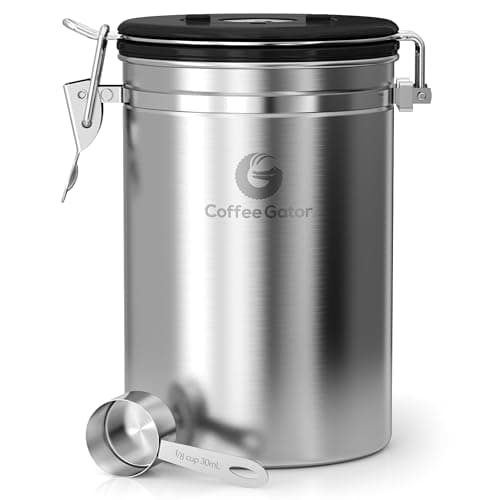
A one-way CO2 valve vents gas outward without letting oxygen back in. Fresh-roasted beans keep off-gassing carbon dioxide for days, and in a fully sealed jar that gas builds pressure; a valve lets it escape while the rubber flap blocks the return of air. That makes a valve canister, like the Coffee Gator, the better match for beans you buy a few days off roast and burn through quickly. If you mostly buy beans that are already a couple of weeks old by the time you open them, the vacuum approach earns its keep; if you buy fresh and fast, the valve does. There is no universally correct answer — only the one that matches how you shop.
Size it to your habit
Buy for roughly one to two weeks of beans, not for the biggest jar you can find. This is the mistake that quietly undoes a good canister: a large container kept half-full is half air, and all that headroom is oxygen sitting against the coffee no matter how well the lid seals. A canister sized so it is mostly full for most of its life keeps far less air near the beans. If you drink a couple of shots a day, a jar in the six-ounce to one-pound range is plenty; only buy the big 0.7L or 22 oz options if you genuinely get through that much coffee before it would go stale anyway. When in doubt, smaller and fuller beats bigger and emptier.
Steel vs glass
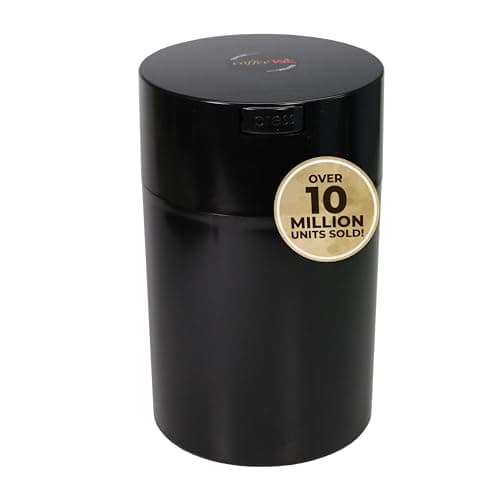
Both are good materials and the choice is a genuine trade-off. Opaque stainless steel blocks light completely, which matters because UV degrades coffee oils just as oxygen does — the downside is you cannot see how much is left without opening the lid. Glass lets you see the level at a glance and never picks up odors, but it lets light straight through, so a glass canister has to live in a cupboard or well away from direct sun to be as protective as steel. Translucent plastic, like the budget Coffeevac, sits in between: you can see the level, but it lets light in and needs the same cupboard treatment. If your jar lives on an open, sunny shelf, choose steel; if it lives in a shaded corner or a cabinet and you like seeing your beans, glass is fine.
What we would skip
Freezing or fridging your daily-use canister. For the jar you open every morning, repeated cold-and-warm cycling pulls condensation onto the beans, and moisture stales coffee fast. Long-term freezing of sealed, unopened portions is a real technique, but not for the container you dip into daily — keep that one cool, dark and dry on the counter instead. And skip the giant "cereal" or pantry containers with a flip clip and a thin gasket. They look the part and hold a lot, but their seals are made to keep cereal crunchy, not to keep oxygen off delicate coffee oils, and a huge one is usually mostly air anyway. A properly airtight coffee-specific jar, sized to your habit, does far more than a big kitchen canister ever will.
Which coffee canister fits you
- Want the whole problem solved in one jar? The Airscape — a plunger that removes headroom, a one-way valve, and a light-blocking steel body.
- Want a genuine, satisfying vacuum and a shelf piece? The Fellow Atmos 0.4L — just size it to a small, fast-moving stash.
- Buy beans fresh off roast? The Coffee Gator, with its one-way CO2 valve and date-tracker dial.
- On a tight budget? The Coffeevac — a proper airtight seal for very little, kept in a cupboard away from light.
- Want the vacuum idea without the premium? The KIVY, a one-press stainless vacuum jar that punches above its price.
- Never want to think about the seal again? The electric Atmos, which re-vacuums itself every time you close it.
Whichever you land on, remember the order of operations. A canister protects freshness — it does not create it. Start with fresh, whole espresso beans, grind them to order with a good grinder, and let the jar do the last job of keeping oxygen and light off what you have not used yet. A canister sits alongside the tamper, scale and grinder in a well-set-up accessories starter kit — quiet, cheap and easy to overlook, but the difference between the last shot of a bag tasting like the first and tasting like cardboard.