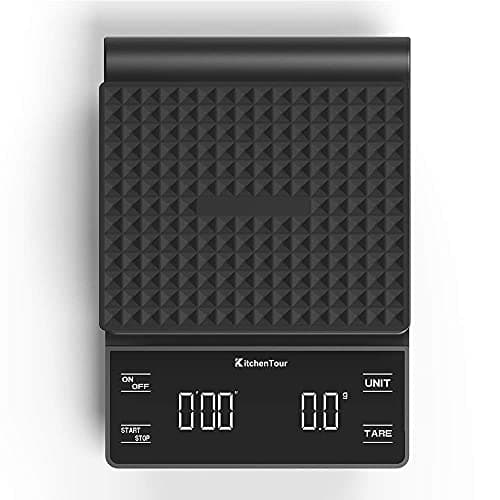
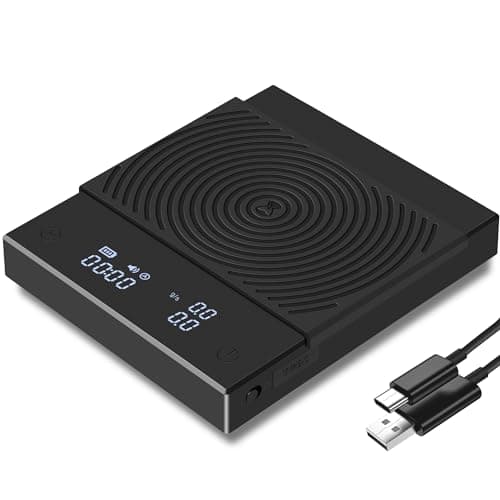
Espresso is the one coffee method that is really a recipe: a dose of ground coffee in grams, a shot weight in grams out, over a number of seconds. Change any one of those three and the cup changes with it — which means the cheapest, highest-leverage upgrade in home espresso is not a better machine or a fancier tamper, it is a scale with a timer sitting under the portafilter. You cannot repeat a shot you never measured, and eyeballing the cup is how most people spend months wondering why yesterday's espresso was great and today's is sour.
Here is the part the big-box kitchen-scale listings will not tell you. For espresso, only two specs really decide whether a scale is any good. It needs 0.1 gram resolution, because the gap between a 1:2 and a 1:2.5 ratio is only a couple of grams and a plain 1-gram scale rounds that away — you literally cannot see the difference you are trying to control. And it needs a footprint small enough to fit under the portafilter or on the drip tray. A big kitchen scale fails that second test: it will not slide under the group, and many of them are also slow to settle, updating half a second behind the pour when a shot only runs 25 to 30 seconds. Response speed is the quiet third factor, and it is why a dedicated shot scale beats a general-purpose one even when both claim the same resolution.
All six scales below read to 0.1 gram and were chosen because they either fit under a portafilter or are honest about being a pour-over scale that also does espresso. If you are still learning the recipe itself, read how to pull an espresso shot first — the scale is the tool that makes that guide repeatable. And if you are assembling a whole setup from scratch, the accessories starter kit puts the scale in context with the tamper and distribution tool it works alongside.
How we picked
Every scale here is a real, currently-purchasable coffee scale with a built-in timer that reads to 0.1 gram, at least in the espresso weight range. We ranked on five criteria, in this order.
- 0.1 gram resolution. This is non-negotiable for espresso. The difference between a good ratio and a slightly-off one is a couple of grams, and a scale that reads in whole grams cannot show it. Where a scale only holds 0.1g in part of its range, we say so and mark it down.
- A footprint that fits under the portafilter. The scale has to live on the drip tray with a cup on top of it. A slim, small-footprint shot scale wins here; a tall 3kg kitchen scale is a compromise you accept in exchange for capacity.
- A timer, ideally auto-start. Espresso is weight and time together, so a scale that shows both at once removes a second gadget. Timers that start when the first drops hit the cup beat ones you have to press mid-shot.
- Response speed. A shot runs 25 to 30 seconds, so a scale that lags half a second behind the pour is guessing at the finish line. Faster settling is the quiet reason a dedicated shot scale beats a general one.
- Power and durability. USB-C rechargeable bodies, water resistance and a wipe-clean surface are worth real money on a device that lives next to steam and spills. Battery-only scales are not disqualified, but they lose points.
We did not lab-test these scales against a set of calibration weights; the scores above come from published manufacturer specifications and aggregated owner reports, and our methodology page spells out exactly how we judged accuracy, size fit and value without a lab.
The specs that actually matter for espresso
0.1 gram resolution. A typical shot is around 18 grams of coffee out to roughly 36 grams of espresso. Dialing that ratio in a tenth of a gram at a time is the entire point of the scale, and it is the first spec to check before anything else on the box.
Response speed. Weight has to update in real time as the shot pours, or you overshoot your target yield. This is where cheap general-purpose scales quietly fall down: they average and settle slowly, so the number you stop on is already stale.
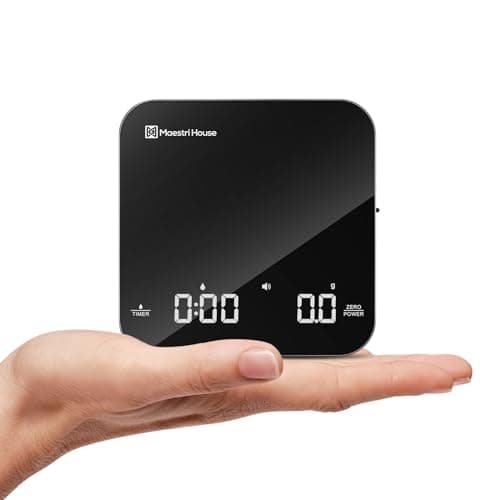
Footprint under the portafilter. Measure the gap between your drip tray and the group before you buy. A 26mm-thin Timemore or a sub-one-inch Maestri House clears most machines; a 3kg scale with a tall cup on it may not. If it does not fit, it will not get used.
The timer. A built-in timer lets you judge weight and time in one glance. Auto-start is the convenience upgrade; a manual button still works but asks you to reach into a running shot. Either beats squinting at a phone stopwatch.
Water resistance. Scales live in a wet zone. A silicone cover or a wipe-clean sealed body is the difference between a scale that survives a few years and one that dies when a puck-screen rinse finds its way inside.
Do you need flow-rate or an app?
Flow-rate — a live readout of how many grams per second are pouring — is a genuinely useful feature and the reason the Timemore tops this list, because it turns dialing in from after-the-fact guessing into real-time feedback. But it is a nice-to-have, not an essential: plenty of people pull excellent, repeatable shots with weight and time alone. The same is true of Bluetooth apps that graph and log every shot. They are fun and they help you spot trends, but they add cost, a phone dependency and one more thing to charge, and none of them make the espresso itself better. Buy the resolution, the fit and the timer first; treat flow-rate and apps as upgrades you add once the basics are covered. Your grind matters far more than your telemetry — read espresso grind size before you spend extra on a smart scale.
What we would skip
Whole-gram "coffee" scales. Anything that reads in 1-gram or 5-gram steps is a kitchen scale wearing a coffee label; it cannot show the ratio you are trying to control. Oversized scales for an espresso-only setup. If you never brew filter, a 3kg scale is capacity you pay for in footprint and never use — a slim shot scale is the better buy. Bundled machine scales. A cheap flat scale thrown in with a machine or grinder deal is rarely 0.1g and rarely fits under the group; weigh it against a dedicated pick before you settle. And resolution stepping in the fine print: a scale that advertises 0.1g and 3kg but only holds 0.1g up to 500g is fine for a shot and misleading about the rest.
Which scale fits you
- Want the best all-round espresso scale? Timemore Black Mirror Basic 2 — 0.1g, a timer and live flow-rate, thin enough to fit under most portafilters.
- Want the smallest true under-portafilter fit for less? Maestri House S2, with its auto-start timer and 4.1-inch footprint.
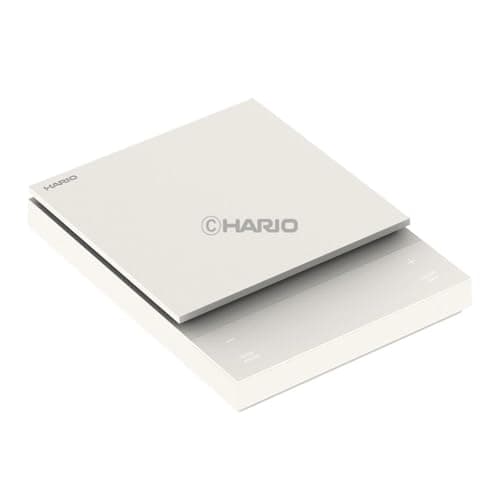
- Brew pour-over as well and want a name you trust? Hario Polaris, with a brew-ratio readout and V60-maker pedigree.
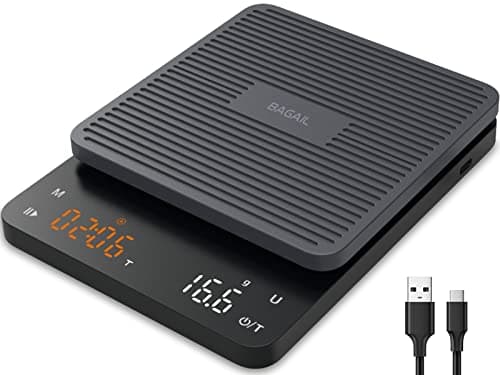
- Want rechargeable and versatile on a budget? BAGAIL, which charges over USB and covers beans, brewers and shots.
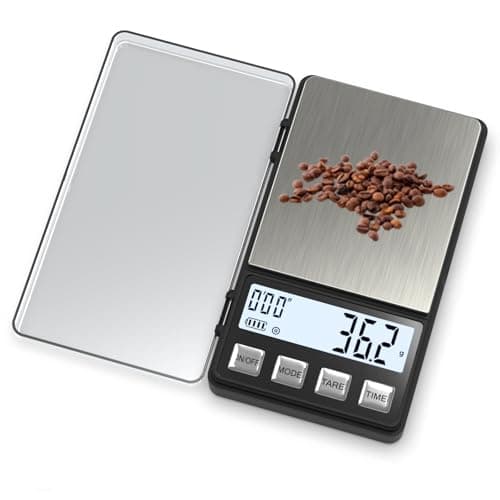
- Want the tiniest, cheapest dedicated shot scale? Weightman, if the 1000g ceiling is no problem.
- Want big capacity for the least money? KitchenTour, as long as you can live with 0.1g only in the low range.
Whichever you pick, the scale is one leg of a three-legged stool. Pair it with a grinder that holds its setting — see the best grinders for espresso — and the technique in how to pull an espresso shot. A precise scale in front of a bad grind still makes bad espresso; it just measures it accurately.
How we picked
We did not lab-test this gear
Everyone in this category says they tested twenty machines. We have not pulled shots on every product here, and we say so. What we did instead: compiled the published specifications, cross-checked the manufacturer manuals, computed the running cost (wattage to energy, grams-per-shot to cost-per-cup), weighed aggregated owner reports, and scored each product against a published rubric. The scores are judgments from documented research — not measurements we took, because we do not have a test lab and we will not pretend we do. Where hands-on time would tell you more than a spec sheet, we flag it. Where a number came from someone else's work, we name them in Sources.