Skip to content
Portafilter Co

Machines · Espresso Machines

The best espresso setup under $500

Not just a machine: the whole kit. A Breville Bambino, a hand grinder that can genuinely grind for espresso, and the four small parts that decide whether the shots are good — with the budget split the way it should be.

By Stephen V.Updated How we pick
#ad

We earn a commission when you buy through our Amazon links, at no extra cost to you. It never changes a verdict, and we say so when the cheaper product is the better buy. How this works.

If you have $500 for everything, buy the Breville Bambino (BES450) and a KINGrinder K6 hand grinder, then spend what is left on a precision basket, a calibrated tamper, a WDT tool and a cheap scale with a timer. That is the setup on this page, and it is for the person starting from zero who wants shots that are actually good rather than a bigger machine that makes mediocre coffee. The Bambino heats in about three seconds, steams milk properly, and leaves enough of the budget for a grinder — which is the part that decides how your coffee tastes.

The mistake almost everyone makes with $500 is spending $450 of it on the machine. It is an understandable mistake: the machine is the thing on the counter, the thing with reviews, the thing that looks like espresso. But espresso is ground coffee compressed into a puck and asked to resist nine bars of water evenly, and the tool that controls that is the grinder, not the pump. A $450 machine fed by a $40 blade grinder makes sour, gushing, unfixable shots. A $250 machine fed by a real burr grinder makes espresso you would pay for in a cafe. Our do you need a grinder for espresso guide makes the case at length; this page just acts on it.

The split we would use, in rough proportions: about half the budget on the machine, a fifth to a quarter on the grinder, and the remainder — it is less than you think — on four small items that each fix a specific failure. A single-wall precision basket replaces the pressurized one that fakes crema. A calibrated tamper stops you guessing at pressure. A WDT tool breaks up the clumps that cause channeling. A scale with a timer turns "that one tasted good" into a recipe you can repeat. Live prices for all six picks are in the table below, stamped with the date they were checked; the total moves with the market, so treat the table as the authority rather than any number in this paragraph.

One honest alternative before the picks. If $500 is a hard ceiling and you would rather put more of it into the grinder, swap the Bambino for the De'Longhi Stilosaand buy a better grinder with the difference. The Stilosa is a real 51mm pump machine for about a fifth of the budget; its steam wand is weak and its thermal stability is nothing like the Bambino's, but the shots can be good, and "cheap machine, good grinder" beats the reverse every time. What we would not do is buy a bean-to-cup super-automatic at this price. There is not one worth owning, and the ones that exist grind, dose and tamp badly inside one sealed box you cannot improve.

The short answer

Quick picks

#ProductBest forScorePrice
01
Breville Breville Bambino (BES450)
Breville Bambino (BES450)

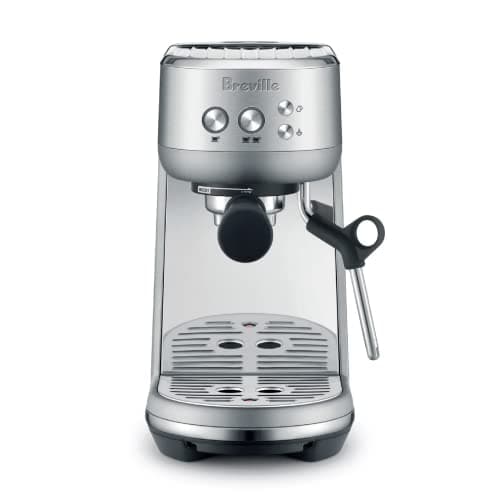
The machine to build a $500 setup around, because of what it does not take: it leaves enough budget for a grinder. ThermoJet heats it in about three seconds from cold, so there is no warm-up ritual and no temperature-surfing; the 54mm portafilter takes a real single-wall basket; the steam wand is a proper pressurised wand that textures milk for a flat white rather than frothing it into bubbles. It has no built-in grinder, which is the point — an external grinder you chose beats a cramped internal one you did not.

The machine in the kit
8.8
$249.95Amazon
02
KINGrinder KINGrinder K6
KINGrinder K6

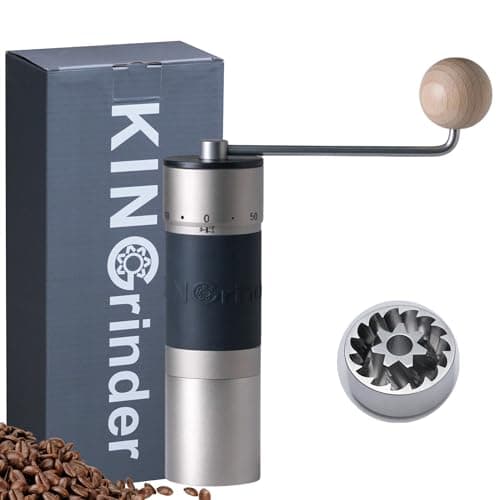
The grinder that makes this budget work. An external numbered dial with steps fine enough to dial espresso in properly, stainless burrs that hold a setting, and a price that leaves the rest of the kit affordable. It is a hand grinder, so an 18g espresso dose costs you 40-60 seconds of cranking — that is the trade for grind quality you would otherwise pay three times as much for in an electric.

The grinder in the kit
7.6
$109.00Amazon
03
IMS IMS Precision Filter Basket for Breville 54mm (18-22g)
IMS Precision Filter Basket for Breville 54mm (18-22g)

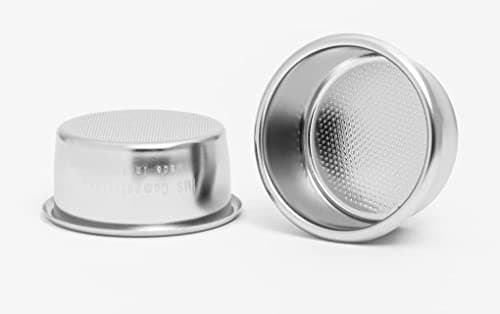
The cheapest meaningful upgrade in the kit and the one most people skip. The Bambino's stock basket is pressurized — it forces the shot through a single small hole to manufacture crema, which flattens the difference between good coffee and bad. A single-wall IMS basket removes that crutch and lets the grinder and your puck prep decide the cup. Only fit it once the K6 is in the house; a single-wall basket with coarse grind just gushes.

The basket upgrade
7.6
$16.88Amazon
04
Feilair Feilair 54mm Tamper
Feilair 54mm Tamper

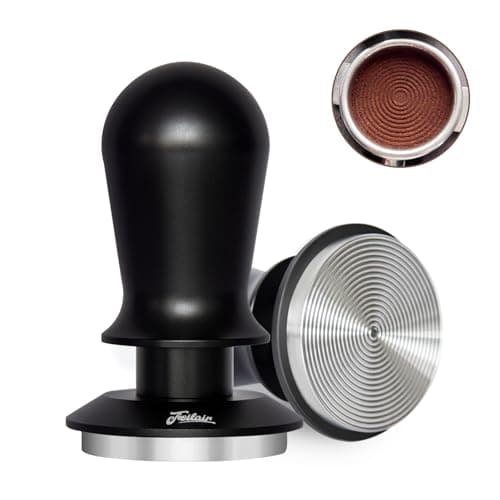
A calibrated 54mm tamper for a fraction of the budget, and it removes a variable you cannot otherwise control. The spring bottoms out at a consistent pressure, so every puck gets the same compression whether you are awake or not. The plastic tamper in the Bambino box is the wrong diameter for a single-wall basket and gives you no feedback at all.

Repeatable tamping
8.0
$29.99Amazon
05
Normcore Normcore WDT Tool V3
Normcore WDT Tool V3

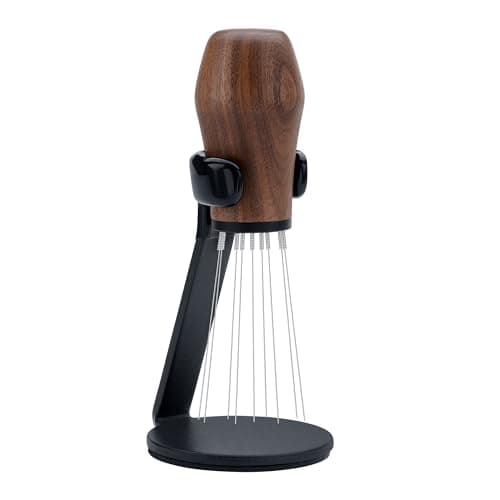
The cheapest fix for the most common beginner failure. Freshly ground coffee clumps; water finds the gap between clumps and punches through it, giving you a fast, thin, sour shot. Stirring the dose with nine fine needles for ten seconds breaks the clumps and the channel with them. Buy it at the same time as the single-wall basket — the basket creates the problem this solves.

Fixing channeling
8.2
$32.69Amazon
06
Weightman WEIGHTMAN Espresso Scale with Timer (1000g x 0.1g)
WEIGHTMAN Espresso Scale with Timer (1000g x 0.1g)

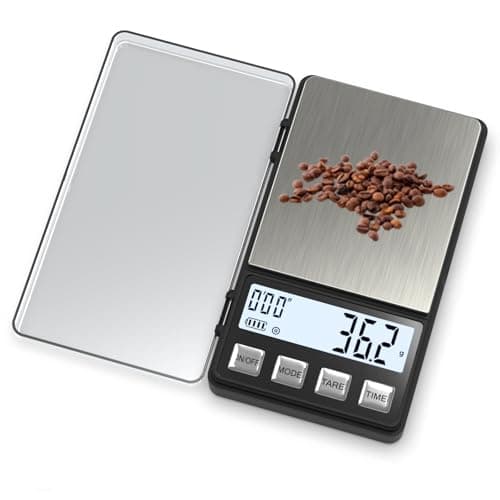
The part that turns the other five into a recipe. 0.1g resolution, a built-in timer, and small enough to sit under a compact machine's portafilter. Espresso is grams in, grams out, over seconds — without a scale you are not dialling in, you are guessing, and this is the cheapest item on the page.

Making it repeatable
7.4
$13.99Amazon

#ad · Live prices from the Amazon Product API, as of October 5, 2026. Where we have no verified live price, we show none — a gap beats a number that has rotted.

In detail

The picks, in full

01
Breville Breville Bambino (BES450)

The machine in the kit

Breville Bambino (BES450)

ThermoJet heater3s heat-up54mm portafilterAuto shot volumes
8.8/10

The machine to build a $500 setup around, because of what it does not take: it leaves enough budget for a grinder. ThermoJet heats it in about three seconds from cold, so there is no warm-up ritual and no temperature-surfing; the 54mm portafilter takes a real single-wall basket; the steam wand is a proper pressurised wand that textures milk for a flat white rather than frothing it into bubbles. It has no built-in grinder, which is the point — an external grinder you chose beats a cramped internal one you did not.

Shot quality ceiling
8
Milk steaming
8
Speed to first shot
10
Upgrade path
9
Value in a kit
9

Pros

  • Heats in about three seconds — the lowest-friction machine at any price
  • Steams milk properly, which most sub-$300 machines do not
  • 54mm basket size has the deepest aftermarket of any entry format
  • Leaves room in a $500 budget for a grinder that can actually grind for espresso

Cons

  • No pressure gauge, so diagnosing a bad shot is by taste and flow, not by reading a needle
  • Small drip tray, and a plastic tamper in the box you will replace
  • Single boiler: brew, then steam, in sequence

Don't buy this if…

…you want a machine that grinds for you. That is the Barista Express family, and at this budget the built-in grinder comes out of the grinder budget, not out of thin air.

In a whole-setup budget the Bambino's virtue is restraint. It does the two things a machine must do — hold brew temperature and texture milk — and spends nothing on a screen, a bean hopper or a dosing display. Three seconds to ready means you will actually pull a shot on a Tuesday morning, which is the difference between a machine that improves your coffee and a machine that becomes a kettle.

Two practical notes for this kit. The portafilter is 54mm, so the basket, tamper and any dosing funnel you add later are all 54mm parts — check the portafilter size chart by brand if you substitute a different machine. And the Bambino ships with a pressurized dual-wall basket; swapping it for the single-wall IMS basket below is the single biggest change in this whole list, but only once the grinder is in place. Full detail in our Bambino review.

$249.95View on Amazon

$299.9517% off

Price as of October 5, 2026. Prices change — Amazon's at checkout is the one that counts.

#ad · we may earn a commission from this link to Breville Bambino (BES450)

02
KINGrinder KINGrinder K6

The grinder in the kit

KINGrinder K6

External numbered dialStainless burrsManual / handEspresso-capable
7.6/10

The grinder that makes this budget work. An external numbered dial with steps fine enough to dial espresso in properly, stainless burrs that hold a setting, and a price that leaves the rest of the kit affordable. It is a hand grinder, so an 18g espresso dose costs you 40-60 seconds of cranking — that is the trade for grind quality you would otherwise pay three times as much for in an electric.

Espresso grind quality
8
Adjustment precision
8
Build
8
Workflow speed
5
Value
9

Pros

  • External numbered dial means you can return to a known espresso setting exactly
  • Grind quality at espresso fineness that budget electrics cannot match
  • No power, no retention worth worrying about, no noise at 6am
  • Leaves the machine and the small parts inside a $500 total

Cons

  • You are the motor: 40-60 seconds of cranking per double shot
  • Grinding for a full carafe of filter coffee is genuinely tiring
  • No dosing display or timer — weigh beans in with the scale below

Don't buy this if…

…you make four or five drinks a morning for a household. At that volume the cranking stops being charming by week two and an electric grinder is worth the budget reshuffle.

Hand grinders are the quiet arbitrage of budget espresso. Burr geometry and alignment cost money; motors, housings and hoppers also cost money. Remove the motor and the same budget buys markedly better burrs, which is why a K6 out-grinds electrics at its own price and holds up against ones well above it. The external dial matters more than the burr spec for a beginner: espresso lives in a narrow band, and a numbered dial lets you write "setting 48" on a note and come back to it.

If cranking is a deal-breaker, the honest electric alternative at this budget is the Baratza Encore ESP — but it costs about twice as much, which pushes the machine down to the Stilosa. We compare the two philosophies in hand vs electric grinders, and rank the hand field in best hand grinders.

$109.00View on Amazon

Price as of October 5, 2026. Prices change — Amazon's at checkout is the one that counts.

#ad · we may earn a commission from this link to KINGrinder K6

03
IMS IMS Precision Filter Basket for Breville 54mm (18-22g)

The basket upgrade

IMS Precision Filter Basket for Breville 54mm (18-22g)

53.3-54mm (Breville) diameter18-22g dose rangeFits Barista Express / Pro / Bambino / Impress / InfuserDoes not fit the Breville JET
7.6/10

The cheapest meaningful upgrade in the kit and the one most people skip. The Bambino's stock basket is pressurized — it forces the shot through a single small hole to manufacture crema, which flattens the difference between good coffee and bad. A single-wall IMS basket removes that crutch and lets the grinder and your puck prep decide the cup. Only fit it once the K6 is in the house; a single-wall basket with coarse grind just gushes.

Extraction evenness
8
Build precision
8
Fit at 54mm
8
Value
9
Beginner forgiveness
5

Pros

  • Italian precision perforation — even flow across the whole puck
  • Takes the pressurized basket's ceiling off the setup entirely
  • Costs a few percent of the budget for the largest jump in shot quality per dollar
  • Fits the whole 54mm Breville family, so it survives a machine upgrade

Cons

  • Unforgiving: it exposes bad grind and sloppy distribution instead of hiding them
  • 18-22g is a wide dose range — start at 18g and work from there
  • Not compatible with the Breville JET format

Don't buy this if…

…you are grinding pre-ground supermarket coffee. Stay on the stock pressurized basket until you own the grinder; this part assumes it.

A pressurized basket has one tiny exit hole and a chamber behind it, so it builds back-pressure regardless of how well the coffee is ground. That is genuinely useful if you are using supermarket pre-ground — and a hard ceiling once you are not. The single-wall basket hands control back to you: grind, dose, distribution and tamp now decide the shot, which is exactly what the rest of this kit is for. More on the difference in pressurized vs unpressurized baskets, and the wider field in best precision baskets.

$16.88View on Amazon

$23.6929% off

Price as of October 5, 2026. Prices change — Amazon's at checkout is the one that counts.

#ad · we may earn a commission from this link to IMS Precision Filter Basket for Breville 54mm (18-22g)

04
Feilair Feilair 54mm Tamper

Repeatable tamping

Feilair 54mm Tamper

54mm baseTriple-spring calibratedStainless steelFor Breville
8.0/10

A calibrated 54mm tamper for a fraction of the budget, and it removes a variable you cannot otherwise control. The spring bottoms out at a consistent pressure, so every puck gets the same compression whether you are awake or not. The plastic tamper in the Bambino box is the wrong diameter for a single-wall basket and gives you no feedback at all.

Consistency
8
Fit at 54mm
8
Build
7
Value
9

Pros

  • Calibrated spring removes tamp pressure as a variable for beginners
  • Correct 54mm diameter — no un-tamped ring at the basket wall
  • Stainless base, flat finish, cheap
  • Works on every 54mm Breville, not just the Bambino

Cons

  • Spring-loaded tampers feel vague next to a good flat tamper once you know what you are doing
  • Fit tolerance is good, not Normcore-good
  • No stand included

Don't buy this if…

…you already own a flat 53.3mm tamper you level by feel. Calibration helps most in the first six months.

Tamping is the step beginners worry about most and the one that matters least once it is consistent — which is the whole argument for a calibrated tamper. Level and repeatable beats hard. If you would rather buy once and never think about it again, the 54mm accessories page ranks the Normcore 53.3mm V4 as the better tamper, at roughly twice the price; in a $500 whole-kit budget, this one is the right call.

$29.99View on Amazon

Price as of October 5, 2026. Prices change — Amazon's at checkout is the one that counts.

#ad · we may earn a commission from this link to Feilair 54mm Tamper

05
Normcore Normcore WDT Tool V3

Fixing channeling

Normcore WDT Tool V3

9 fine needlesWeighted standFits a 58mm doseWood-topped handle
8.2/10

The cheapest fix for the most common beginner failure. Freshly ground coffee clumps; water finds the gap between clumps and punches through it, giving you a fast, thin, sour shot. Stirring the dose with nine fine needles for ten seconds breaks the clumps and the channel with them. Buy it at the same time as the single-wall basket — the basket creates the problem this solves.

Shot consistency gain
9
Build
8
Value
9
Workflow cost
7

Pros

  • Biggest shot-consistency improvement per dollar in the whole kit
  • Works at any basket diameter — the needles stir the dose, they do not fit the basket
  • Weighted stand keeps the needles off the counter
  • Ten seconds of work per shot

Cons

  • Needles bend if you treat them roughly
  • Adds a step to every shot
  • Looks like the most sceptic-baiting tool in espresso and is in fact the most useful

Don't buy this if…

…you are staying on a pressurized basket, where channeling is largely masked by the basket itself.

If you only read one line on this page: a WDT tool fixes more bad shots than a machine upgrade would. The mechanism is in how to fix channeling, the routine is in espresso puck prep, and the field is ranked in best WDT tools.

$32.69View on Amazon

Price as of October 5, 2026. Prices change — Amazon's at checkout is the one that counts.

#ad · we may earn a commission from this link to Normcore WDT Tool V3

06
Weightman WEIGHTMAN Espresso Scale with Timer (1000g x 0.1g)

Making it repeatable

WEIGHTMAN Espresso Scale with Timer (1000g x 0.1g)

0.1g precision1000g capacityBuilt-in timerUltra-compact (2 x 3.8 x 0.7 in)
7.4/10

The part that turns the other five into a recipe. 0.1g resolution, a built-in timer, and small enough to sit under a compact machine's portafilter. Espresso is grams in, grams out, over seconds — without a scale you are not dialling in, you are guessing, and this is the cheapest item on the page.

Accuracy for espresso
7
Size under the group
9
Features
5
Value
9

Pros

  • 0.1g and a timer — everything espresso actually needs
  • Fits under the portafilter on a compact machine, which bigger scales often do not
  • Costs about three percent of the budget
  • Also weighs beans in, so dose is controlled at both ends

Cons

  • No auto-tare, no flow-rate display, no app
  • Not waterproof — keep it out of the drip path
  • Slower to settle than a Timemore or Acaia

Don't buy this if…

…you want a scale that starts its own timer when the first drop lands. That is a different budget; see the scales roundup.

The recipe to start with: 18g in, about 36g out, in 25-30 seconds. Change one variable at a time, taste, and adjust the grind — finer if it runs fast and tastes sour, coarser if it runs slow and tastes bitter. That loop is how to dial in espresso, and it is impossible without the scale. Better scales are ranked in best espresso scales.

$13.99View on Amazon

Price as of October 5, 2026. Prices change — Amazon's at checkout is the one that counts.

#ad · we may earn a commission from this link to WEIGHTMAN Espresso Scale with Timer (1000g x 0.1g)

How to split a $500 espresso budget

The allocation below is the point of this page. The exact dollar figures move — use the live prices in the table above — but the proportions should not. What separates a setup that gets used for years from one that gets sold on marketplace in March is almost never the machine.

Part of the kitShare of budgetWhat it buys youWhat happens if you skimp
MachineAbout halfStable brew temperature and milk you can textureTemperature swings, bubbly milk, shots you cannot diagnose
GrinderA fifth to a quarterGrind fine and consistent enough to resist nine bars evenlySour, gushing shots no machine can rescue
BasketA few percentRemoves the pressurized basket's ceilingFake crema, flat-tasting coffee, no progress
TamperA few percentOne less variable, every single shotRandom tamp pressure, random results
WDT toolA few percentBreaks clumps; the standard fix for channelingSpraying, fast shots and an unexplained sour cup
Scale with timerA few percentTurns a good accident into a repeatable recipeYou cannot dial in, because you are not measuring

The specs that matter, side by side

Everything in this table comes from the manufacturers' own published specifications for the exact listings linked above — not from measurements we took.

PickKey specFit / formatRole in the kit
Breville BambinoThermoJet, ~3s heat-up, 15-bar pump54mm portafilterMachine
KINGrinder K6Stainless conical burrs, external numbered dialHand grinderGrinder
IMS Breville basket18-22g, single wall, precision perforation53.3-54mm BrevilleBasket upgrade
Feilair tamperTriple-spring calibrated, stainless54mm baseTamp consistency
Normcore WDT V39 needles, weighted standAny diameterDistribution
WEIGHTMAN scale0.1g / 1000g, timer2 x 3.8 x 0.7 inMeasurement

The order to buy in, if you cannot buy it all at once

Machine and grinder together, first — they are a pair, and a machine without a grinder cannot make espresso. Then the scale, because it costs almost nothing and makes everything else measurable. Then the basket and the WDT tool together, in that order, because the single-wall basket is what makes distribution matter. The tamper last: the plastic one in the box is bad but it works, and it is the only item here whose absence does not cap the setup.

What is deliberately not in this kit: a milk pitcher (any cheap 12oz stainless jug is fine at this level — see best milk pitchers), a knock box (your bin works), a bottomless portafilter (a brilliant diagnostic, a want not a need), and a dosing funnel. If the budget stretches past $500, our espresso starter kit page is the next layer, and best espresso machines under $500 is where to look if you decide the machine should take more of the money after all.

Where this setup runs out of road

Two places, honestly. The first is milk volume: the Bambino is a single boiler, so brewing and steaming happen in sequence and making four cappuccinos in a row is slow. The second is the hand grinder — it is a genuinely good grinder and a genuinely slow one. If either of those is your daily reality, the right next step is not a better machine; it is an electric grinder first, and a double boiler much later. Our machines under $1,000 page covers what the next tier actually buys, and single vs double boiler explains the steaming limit in detail.

How we picked

We did not lab-test this gear

Everyone in this category says they tested twenty machines. We have not pulled shots on every product here, and we say so. What we did instead: compiled the published specifications, cross-checked the manufacturer manuals, computed the running cost (wattage to energy, grams-per-shot to cost-per-cup), weighed aggregated owner reports, and scored each product against a published rubric. The scores are judgments from documented research — not measurements we took, because we do not have a test lab and we will not pretend we do. Where hands-on time would tell you more than a spec sheet, we flag it. Where a number came from someone else's work, we name them in Sources.
Questions

Frequently asked

What is the best espresso setup under $500?
A Breville Bambino with a KINGrinder K6 hand grinder, plus a single-wall IMS 54mm basket, a calibrated 54mm tamper, a WDT distribution tool and a 0.1g scale with a timer. That combination puts about half the budget in the machine and the rest where it changes the cup. Live prices are in the table above, dated.
Should I buy a cheaper machine and a better grinder?
If you are choosing between a $450 machine with a $50 grinder and a $250 machine with a $150 grinder, take the second every time. The grinder sets the ceiling on how even your extraction can be, and nothing downstream can raise it. The De'Longhi Stilosa is the machine we would drop to if you want to push more of the budget into grinding.
Can I use an electric grinder in a $500 setup?
Yes, but something has to give. A Baratza Encore ESP is roughly double the K6, which puts the machine down at Stilosa level to stay under $500. That is a legitimate trade if cranking by hand is not for you — see hand vs electric grinders and best grinders under $200.
Do I really need the basket, tamper, WDT tool and scale?
The scale and the basket, yes — they are cheap and they change the cup. The WDT tool is the best few dollars in espresso if you are on a single-wall basket. The tamper is the one you can defer: the plastic tamper in the Bambino box is poor, but it will pull a shot while you save.
Is a bean-to-cup machine a better use of $500?
No. Super-automatics at this price grind, dose and tamp inside one sealed box, and they do all three indifferently — you get convenience plus a hard ceiling with no upgrade path. If you want one-touch coffee rather than espresso as a hobby, buy a good drip machine and a kettle instead, and spend less.
What does this setup not include?
A milk pitcher, a knock box, a bottomless portafilter, a dosing funnel and beans. The pitcher is the only one we would buy in month one; any cheap 12oz stainless jug works. Beans matter more than any accessory here — buy fresh, roasted within the last few weeks.

Keep reading

Same gear, other pages

We cover this gear elsewhere too

Receipts

Sources

We do not run a testing lab, and we do not pretend to. Where a measured number came from someone else's work, we name them and link them. Where we could not verify something, we say so on the page rather than quietly leaving it out. Read our full method.