Skip to content
Portafilter Co

Machines · Espresso Machines

Breville Bambino vs De'Longhi Dedica: which compact espresso machine wins?

Two small machines that fit tight counters — but they are not in the same class. The Bambino brings PID temperature, near-instant ThermoJet heat-up and a real steam wand for latte art; the Dedica is the cheaper, marginally slimmer budget pick. Here is exactly what the price gap buys and who each one is for.

By Stephen V.Updated How we pick
#ad

We earn a commission when you buy through our Amazon links, at no extra cost to you. It never changes a verdict, and we say so when the cheaper product is the better buy. How this works.

The Breville Bambino and the De'Longhi Dedica Deluxe get cross-shopped constantly because they look like the same idea: a small, counter-friendly espresso machine with a pump, a fast heater and a milk wand, no built-in grinder, at a price a first-time buyer can stomach. Both are compact, both are 15-bar pump machines, and both need a separate grinder to make good coffee. But they are not in the same class, and the gap is not about footprint — it is about the milk, the temperature control and how far each machine can grow. The Dedica is a genuinely good budget machine; the Bambino is an entry-level enthusiast machine that happens to be small. The price difference is real but modest, and this page is about whether it is worth it for you.

The Bambino is the more capable machine in almost every way that affects the cup and the milk. Its ThermoJet heater reaches brew temperature in about three seconds and holds it with digital PID temperature control, so shots are more consistent than a thermoblock budget machine can manage. It has a real 54mm bare steam wandthat textures proper microfoam — the kind you can actually pour latte art with — and it ships with single-wall (non-pressurized) baskets in the box, plus the wider 54mm accessory ecosystem to grow into. The Dedica counters with a lower price and a body that is a hair slimmer, and it is no slouch: a fast thermoblock, two programmable buttons, and the ability to take non-pressurized baskets of its own. Our full Bambino review goes deeper on the machine that wins most of these categories.

So the decision comes down to one honest question: do you want the cheapest compact machine that makes real espresso, or the small machine with the highest ceiling for milk drinks and consistency? If you drink mostly straight shots on a tight budget, the Dedica is plenty. If you want latte art, steadier temperature and a machine you will not outgrow in a year, the Bambino is worth the step up. This page walks through steam, heating, baskets, size and price, then tells you who each one is for — and, because neither has a grinder, why you should read do you need a grinder for espresso before you spend a dollar on either. Both appear in our best machines for beginners.

The short answer

Quick picks

#ProductBest forScorePrice
01
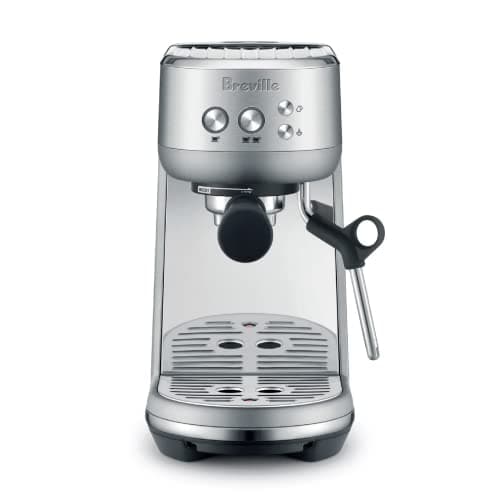
Breville Breville Bambino (BES450)
Breville Bambino (BES450)

The better machine for anyone who wants to make real espresso and grow into the hobby. The Bambino's ThermoJet heater is ready in about three seconds and holds temperature with a PID, so shots are more consistent than any thermoblock budget machine; its 54mm bare steam wand actually textures microfoam for latte art; and it ships with single-wall non-pressurized baskets plus the wide 54mm accessory ecosystem. It costs more than the Dedica and is a hair wider, and like the Dedica it has no grinder. But the premium over the De'Longhi is modest, and it buys a meaningfully higher ceiling on milk, temperature and upgrades. For most people who want to keep improving, this is the compact machine to buy.

Best for shot quality, steam & growth
8.2
$299.95Amazon
02
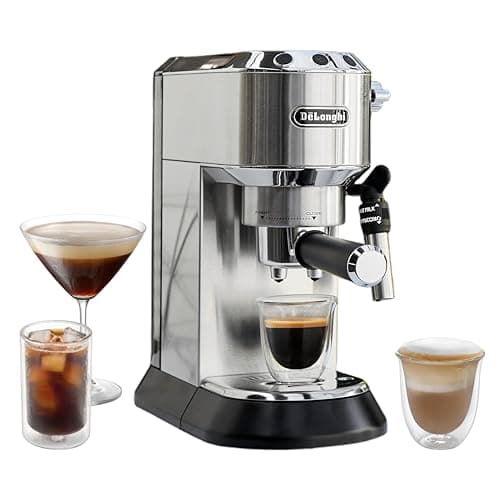
De'Longhi De'Longhi Dedica Deluxe (EC685)
De'Longhi Dedica Deluxe (EC685)

The better machine if price and the slimmest possible footprint are your priorities. At about 5.9 inches wide the Dedica is a hair narrower than the Bambino, it costs less, and it still makes genuinely good espresso from a fast thermoblock with two programmable buttons. It can even take non-pressurized baskets in its 51mm portafilter, so it grows past the starter shot. What you give up against the Bambino is real: no PID, so temperature drifts a little more; a frothing-aid wand instead of a bare steam wand, so no latte art; and the narrower 51mm accessory world. Buy it to save money and counter space, or if you drink mostly straight espresso — but know the Bambino's ceiling is higher for a modest step up.

Best for price & slim footprint
7.0
$229.99Amazon

#ad · Live prices from the Amazon Product API, as of Jul 30, 2026. Where we have no verified live price, we show none — a gap beats a number that has rotted.

In detail

The picks, in full

01
Breville Breville Bambino (BES450)

Best for shot quality, steam & growth

Breville Bambino (BES450)

ThermoJet heater, ~3s heat-upDigital PID temperature control54mm portafilter, single-wall baskets includedReal bare steam wand for latte art
8.2/10

The better machine for anyone who wants to make real espresso and grow into the hobby. The Bambino's ThermoJet heater is ready in about three seconds and holds temperature with a PID, so shots are more consistent than any thermoblock budget machine; its 54mm bare steam wand actually textures microfoam for latte art; and it ships with single-wall non-pressurized baskets plus the wide 54mm accessory ecosystem. It costs more than the Dedica and is a hair wider, and like the Dedica it has no grinder. But the premium over the De'Longhi is modest, and it buys a meaningfully higher ceiling on milk, temperature and upgrades. For most people who want to keep improving, this is the compact machine to buy.

Shot quality
8
Temp control
8
Steam power
8
Ease of use
9
Build
7
Value
9

Pros

  • Near-instant ThermoJet heat-up — ready in about three seconds, no waiting
  • PID digital temperature control keeps shots more consistent than a thermoblock
  • Real 54mm bare steam wand textures microfoam you can pour latte art with
  • Ships with single-wall (non-pressurized) baskets and low-pressure pre-infusion
  • Wide 54mm accessory ecosystem to grow into, in a still-compact stainless body

Cons

  • Costs more than the Dedica, and it is a hair wider on the counter
  • Single boiler means a brief pause between brewing and steaming
  • No built-in grinder, so you still must budget for one
  • 54mm is well supported but not the 58mm enthusiast standard

Don't buy this if…

your hard constraint is the lowest price or the very slimmest possible footprint, and you drink mostly straight espresso — the cheaper, marginally slimmer Dedica makes a good shot and saves money for the grinder.

$299.95View on Amazon

Price as of Jul 30, 2026. Prices change — Amazon's at checkout is the one that counts.

#ad · we may earn a commission from this link to Breville Bambino (BES450)

02
De'Longhi De'Longhi Dedica Deluxe (EC685)

Best for price & slim footprint

De'Longhi Dedica Deluxe (EC685)

~5.9 in wide — a hair slimmer15-bar pump, thermoblock heater51mm portafilter, takes non-pressurized basketsTwo programmable brew buttons
7.0/10

The better machine if price and the slimmest possible footprint are your priorities. At about 5.9 inches wide the Dedica is a hair narrower than the Bambino, it costs less, and it still makes genuinely good espresso from a fast thermoblock with two programmable buttons. It can even take non-pressurized baskets in its 51mm portafilter, so it grows past the starter shot. What you give up against the Bambino is real: no PID, so temperature drifts a little more; a frothing-aid wand instead of a bare steam wand, so no latte art; and the narrower 51mm accessory world. Buy it to save money and counter space, or if you drink mostly straight espresso — but know the Bambino's ceiling is higher for a modest step up.

Shot quality
7
Temp control
7
Steam power
6
Ease of use
8
Build
6
Value
8

Pros

  • Cheaper than the Bambino while still making genuinely good espresso
  • A hair slimmer at about 5.9 inches wide — the slimmest of the two
  • Fast thermoblock heat-up and simple two-button operation
  • Can accept non-pressurized 51mm baskets, so it grows past the starter shot

Cons

  • No PID — thermoblock temperature drifts more shot-to-shot than the Bambino
  • Frothing-aid wand will not pour the microfoam the Bambino's bare wand can
  • Ships with pressurized baskets that mask grind quality until you swap them
  • 51mm format has a narrower accessory world than 54mm
  • Plastic-heavy build and no grinder in the box

Don't buy this if…

you want latte art, steadier temperature or a machine you will not outgrow — the Bambino's bare steam wand, PID control and 54mm ecosystem are worth the modest premium for anyone serious about improving.

$229.99View on Amazon

$249.008% off

Price as of Jul 30, 2026. Prices change — Amazon's at checkout is the one that counts.

#ad · we may earn a commission from this link to De'Longhi Dedica Deluxe (EC685)

The core difference: steam and the milk ceiling

If you drink lattes, cappuccinos or flat whites, this is the section that decides the purchase. The Bambino has a real bare steam wandwith genuine steam pressure — Breville rates it around 266°F — and it textures the glossy microfoam you need to actually pour latte art and dial in a drink's mouthfeel. It is powerful for a machine this small, and it is the single biggest reason the Bambino punches above its size. The Dedica's wand is a frothing aid: an adjustable sleeve that injects air to make foam easily. It is forgiving and fine for a beginner cappuccino, but it gives you little control over texture and will not pour art. That is the honest ceiling of the budget De'Longhi — not the shot, the milk. If milk drinks are central to why you want a machine, the Bambino is the clear answer, and its wand is the feature you are really paying the premium for.

Heating and temperature: ThermoJet and PID vs thermoblock

Both machines heat fast, but the Bambino heats faster and holds steadier. Its ThermoJetsystem reaches brew temperature in about three seconds — effectively no wait — where the Dedica's thermoblock takes a little under a minute. More important than speed is stability: the Bambino uses digital PID temperature controlto hold the brew temperature precisely shot to shot, while the Dedica's thermoblock drifts more, which shows up as more variation in how your shots taste from one to the next. For a beginner, steadier temperature is quietly forgiving — it removes one of the variables you would otherwise be chasing. The Bambino also runs a low-pressure pre-infusionbefore the 9-bar extraction, gently saturating the puck for a more even shot. None of this makes the Dedica bad; it makes the Bambino more consistent, which is exactly what you want while you are still learning what "right" tastes like. Our how to pull an espresso shot guide is the recipe either machine needs you to follow.

Baskets and the 54mm ecosystem

Out of the box, the Bambino is ready for better coffee sooner. It ships with single-wall (non-pressurized) baskets— the kind that reward good grinding and reflect your technique — alongside dual-wall pressurized ones for your first shots. The Dedica ships with pressurized baskets that force crema regardless of grind, and while it cantake non-pressurized 51mm baskets, that is an upgrade you buy and fit yourself later. Just as important is the format: the Bambino's 54mm portafilter has a broad accessory world — tampers, distribution tools, precision baskets and bottomless portafilters are all easy to find — while the Dedica's 51mm format is more limited. If you expect to add a proper tamper or a WDT tool down the line, the 54mm ecosystem gives you more room to do it. Our guide to pressurized vs non-pressurized baskets explains why the basket, more than almost anything, gates how good your shots can get.

Footprint and price: where the Dedica answers back

This is the Dedica's territory. It is built to be slim, at about 5.9 inches wide, and the Bambino is a hair wider at roughly 6.3 inches — both are among the smallest real espresso machines you can buy, but if width is your absolute constraint, the Dedica edges it. And it is cheaper. The gap is modest rather than huge, but at this end of the market every dollar you do not spend on the machine is a dollar you can spend on the grinder, which matters more (see the next section). So the honest read is: the Dedica wins footprint by a small margin and wins price by a real one, while the Bambino wins essentially everything about the coffee and the milk. If your kitchen genuinely cannot spare the extra half-inch, or your budget genuinely cannot stretch, the Dedica is a legitimate, non-compromised choice. Otherwise the Bambino's advantages are worth the step up.

Neither has a grinder — spend accordingly

Both machines have no built-in grinder, and the grinder decides more of your cup than the choice between these two does. This reframes the budget: do not stretch for the more expensive machine and then feed it cheaply ground coffee, because a Dedica with a good grinder beats a Bambino with a bad one. A balanced setup — a capable machine plus a real burr grinder — is the goal, and if the Bambino's premium would force you to skimp on the grinder, buy the Dedica and put the savings into grinding instead. Spend it on a proper unit from our best grinders for espresso, and read do you need a grinder for espresso before you split the money. The grinder plus a non-pressurized basket is the combination that unlocks either machine.

Which one fits you

  • Buy the Breville Bambino if you want latte art, steadier temperature and a machine you can grow into, and the modest premium does not force you to skimp on the grinder. It is the higher-ceiling machine and our pick for most people, reviewed in full in our Bambino review.
  • Buy the De'Longhi Dedica if price or the very slimmest footprint is your hard constraint, you drink mostly straight espresso, and you would rather put the savings straight into a grinder. It still makes genuinely good coffee.
  • Consider the Stilosa instead ifeven the Dedica is a stretch — the cheaper De'Longhi Stilosa is the lowest-cost way to try espresso, with a lower ceiling. All of these sit in our best machines under $500.

What we did not test

We have not run either machine on a bench for months, and we do not claim to. This comparison compiles Breville's published specifications for the Bambino (BES450) — the ThermoJet heat-up, the PID temperature control, the 54mm brew system, the steam wand and the single-wall baskets — and De'Longhi's specifications for the Dedica Deluxe (EC685M) — the 15-bar pump, the thermoblock, the programmable buttons and the 51mm portafilter — and weighs aggregated owner reports against our scoring rubric. Every spec cited comes from the makers' own materials, listed in Sources. Where hands-on time would tell you more than a spec sheet — exactly how the Bambino's wand behaves under a full milk load, how much the Dedica's thermoblock drifts over a session, how each build ages — we say so rather than invent a figure. Prices are never quoted from memory; the live price for each machine renders from our pipeline with the date it was checked.
How we picked

We did not lab-test this gear

Everyone in this category says they tested twenty machines. We have not pulled shots on every product here, and we say so. What we did instead: compiled the published specifications, cross-checked the manufacturer manuals, computed the running cost (wattage to energy, grams-per-shot to cost-per-cup), weighed aggregated owner reports, and scored each product against a published rubric. The scores are judgments from documented research — not measurements we took, because we do not have a test lab and we will not pretend we do. Where hands-on time would tell you more than a spec sheet, we flag it. Where a number came from someone else's work, we name them in Sources.

Questions

Frequently asked

What is the difference between the Breville Bambino and the De'Longhi Dedica?
The Bambino is the higher-ceiling machine: ThermoJet heat-up in about three seconds, PID temperature control for consistent shots, a real 54mm bare steam wand that pours latte art, and single-wall baskets in the box. The Dedica is cheaper and a hair slimmer (about 5.9 inches wide), uses a thermoblock with two programmable buttons, and has a frothing-aid wand and a 51mm portafilter that can take non-pressurized baskets. Both are 15-bar pump machines with no grinder. The Bambino wins the coffee and the milk; the Dedica wins price and footprint. Our Bambino review covers the winner in depth.
Is the Breville Bambino worth more than the De'Longhi Dedica?
For most people who want to keep improving, yes. The premium is modest and it buys a real steam wand for latte art, steadier PID temperature and the wider 54mm ecosystem — a meaningfully higher ceiling. The Dedica is the smarter buy only if price or the slimmest footprint is a hard constraint, or if you drink mostly straight espresso. Just do not stretch for the Bambino and then skimp on the grinder, which matters more than the gap between the machines.
Can the Dedica pour latte art like the Bambino?
Not really. The Bambino has a bare steam wand with real steam pressure that textures the glossy microfoam latte art needs. The Dedica uses a frothing-aid wand that makes airy foam easily but gives you little control over texture, so it is fine for a beginner cappuccino but will not let you pour hearts and rosettas. If latte art is a goal, the Bambino's wand is the single biggest reason to choose it.
Which is smaller, the Bambino or the Dedica?
The Dedica is a hair slimmer — about 5.9 inches wide versus roughly 6.3 inches for the Bambino — so if width is your absolute constraint, the Dedica edges it. But both are among the smallest real espresso machines you can buy, and the difference is small. Most kitchens that fit one will fit the other, so let steam, temperature and price decide rather than the half-inch. Both are ranked in our best machines for beginners.
Do the Bambino and Dedica both need a separate grinder?
Yes — neither has a built-in grinder, so both need a separate burr grinder for good espresso. Pre-ground coffee is too stale and uneven and is the main reason budget shots disappoint. Because the grinder decides more of your cup than the machine does, budget for it first: if the Bambino's price would force a cheap grinder, buy the Dedica and put the savings into grinding. See our best grinders for espresso and do you need a grinder for espresso.

Keep reading

Receipts

Sources

We do not run a testing lab, and we do not pretend to. Where a measured number came from someone else's work, we name them and link them. Where we could not verify something, we say so on the page rather than quietly leaving it out. Read our full method.