Skip to content
Portafilter Co

Machines · Espresso Machines

De'Longhi Stilosa (EC260) review: the cheapest real way into espresso

The Stilosa is the entry-level pump machine that gives you your first honest taste of espresso for less than a nice dinner out. Here is what its forgiving pressurized basket is really doing, why it has a low ceiling, and who should start one rung higher.

By Stephen V.Updated How we pick
#ad

We earn a commission when you buy through our Amazon links, at no extra cost to you. It never changes a verdict, and we say so when the cheaper product is the better buy. How this works.

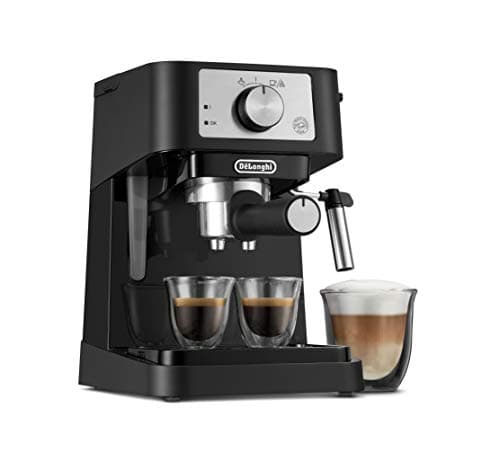
The De'Longhi Stilosa (EC260) is the cheapest genuine espresso machine worth buying — a real 15-bar pump, a metal portafilter, a pressurized basketand a panarello steam wand packed into a compact body that costs less than a nice dinner out. It is not a pod machine and not a steam-toy; it pulls a shot the same basic way a machine ten times its price does. For a lot of people it is the entry ticket — the way you find out whether home espresso is a hobby you want, before you spend real money on it.

The thing that makes it so approachable is also the thing to be honest about: the basket. The Stilosa ships with a pressurized(double-walled) portafilter basket, which builds its own back-pressure behind a single small hole. That means it forces a thick, crema-topped shot out of almost any coffee — a cheap grind, supermarket pre-ground, even an ESEpod — without the precise grind and dose a "real" basket demands. That is genuinely forgiving for a beginner. But the crema it produces is partly manufactured by the basket, not proof of a well-extracted shot, and once you understand that you understand almost everything about where this machine shines and where it stops.

So the Stilosa is a great first taste of espresso and a poor long-term home. It sits at the very bottom of our best espresso machines under $200 field and earns a place among the best machines for beginnerson price and simplicity alone — but if you already know espresso is your thing, the honest advice is to start one rung up with something like the Breville Bambino, which gives you real temperature control and a proper steam wand for not a lot more. This review is about being clear-eyed on exactly what the cheapest door into espresso does and does not buy you.

01
De'Longhi De'Longhi Stilosa (EC260)

Cheapest genuine first espresso machine

De'Longhi Stilosa (EC260)

15-bar pump, stainless steel boilerPressurized single & double baskets (+ ESE pods)Panarello-style manual steam wand33.8oz removable tank, ~1100W, compact
5.8/10

The cheapest honest way into real espresso. The Stilosa is a genuine 15-bar pump machine with a pressurized portafilter and a panarello steam wand in a compact stainless-trimmed body, and it costs less than most people spend on a weekly coffee habit in a month. Its pressurized baskets are forgiving by design — they build their own back-pressure, so even pre-ground coffee pulls a drinkable, crema-topped shot without a good grinder — which is exactly what makes it a great first taste of espresso. The catch is that same forgiveness: the crema is partly manufactured, there is no temperature control at all, and the panarello wand froths more than it textures, so the ceiling is low. Buy it to find out whether espresso is your hobby, not to master it — and if you already know it is, start one rung higher.

Value
9
Espresso quality
5
Milk steaming
4
Ease of use
7
Build quality
6
Upgrade ceiling
4

Pros

  • The cheapest genuine 15-bar pump espresso machine worth buying — a real brewer, not a pod or steam toy
  • Pressurized baskets are forgiving: they pull a drinkable, crema-topped shot from pre-ground coffee or a modest grinder, so you can start without a good grinder
  • Simple all-manual controls and a small, light body make it a low-stakes, easy first machine on any counter
  • Stainless steel boiler and a metal portafilter under the budget plastics
  • Comes with the basics to start pulling shots — portafilter with single and double filters, tamper, and a two-level cup holder for taller cups
  • Cheap enough that outgrowing it does not sting

Cons

  • The pressurized (double-walled) basket manufactures crema with back-pressure, so it flatters any grind and hides extraction quality — the crema is not evidence of a good shot
  • No PID and no temperature control of any kind, with a small boiler, so brew temperature is neither stable nor adjustable — the real ceiling on shot quality
  • The panarello steam wand injects air for quick froth but gives you little control over microfoam, so latte art is effectively off the table
  • A lot of plastic in the body and a light chassis; it feels like the budget machine it is
  • Almost no upgrade path on the machine itself — you outgrow it by buying a different machine, not by improving this one
  • Small tank and single boiler mean you brew and then steam one at a time, with a wait in between

Don't buy this if…

you already know you want to chase cafe-quality shots and latte art, or you are buying a good grinder to pair with it — the pressurized basket and fixed brew temperature will cap what that grinder can show you, and you will be shopping for a better machine within a year. In that case start one rung up with something like the Breville Bambino, or save toward a machine from our best-under-$500 list.

Mechanically the Stilosa does the real thing. A 15-bar vibratory pump pushes water through a metal portafilter locked into the group, over a stainless steel boiler, exactly like a machine many times its price. That matters, because plenty of "espresso makers" at this money are steam-pressure gadgets or pod systems that can never hit the roughly 9 bars of brewing pressure espresso actually needs. The Stilosa can, and that is why it is the floor of a real espresso setup rather than a novelty.

What it does not have is any way to control the two variables that separate a good shot from a lucky one: temperature and the grind's effect on flow. There is no PID, no temperature readout, no adjustment — the boiler heats and you pull when the ready light says so. And because the basket is pressurized, the machine masks your grind rather than responding to it. Both facts point the same way: the Stilosa is superb at making espresso easy and mediocre at making it great. That is the right trade for a first machine and the wrong one for a second, which is the whole story of who should buy it.

$149.95View on Amazon

Price as of Jul 30, 2026. Prices change — Amazon's at checkout is the one that counts.

#ad · we may earn a commission from this link to De'Longhi Stilosa (EC260)

The pressurized basket: forgiving, and a little bit of a fake

The single most important thing to understand about the Stilosa is its basket. A normal (unpressurized) espresso basket is a plain metal cup with dozens of tiny holes; the coffee puck itself is what creates resistance, so you need a good, even grind and a proper tamp or the shot gushes or chokes. The Stilosa instead ships with a pressurized, double-walled basket that hides a single pinhole behind a second wall. Water pools behind that wall, builds pressure, and is forced out through the pinhole in a thin, aerated jet. The result is a thick layer of foam on top of the shot that lookslike crema no matter what coffee you used — a supermarket bag, a cheap grinder, even a pod. For a beginner that is a genuine gift: you get a drinkable, good-looking espresso on day one without owning a proper grinderor knowing how to dial a shot. It is also, honestly, a bit of a trick — that crema is produced by the basket's back-pressure, not by a well-extracted puck, so it tells you almost nothing about whether the shot underneath actually tastes good. Our pressurized vs unpressurized baskets guide walks through exactly what the double wall is doing and why it flatters your coffee.

No temperature control — the real ceiling

The forgiving basket gets the attention, but the harder limit is temperature. The Stilosa has no PID and no temperature control of any kind: the boiler heats to a fixed set point, a ready light comes on, and you pull. There is no way to see the brew temperature, no way to adjust it, and with a small single boiler it can drift as you work. Temperature is one of the biggest levers on how a shot tastes — too cool reads sour, too hot reads bitter— and on the Stilosa you simply do not have that lever. This is the difference you feel most when you step up to a machine like the Breville Bambino, which uses a fast thermocoil with digital temperature control to hit a consistent brew temperature shot after shot. On the Stilosa you take the temperature you are given. For a first taste that is fine; for someone who has learned to taste the difference, it is the wall you eventually hit.

The panarello wand: froth, not microfoam

The Stilosa's steam wand is a panarello— a sleeved frothing wand that pulls in air through a side hole to whip milk into foam quickly and forgivingly. It will make a warm, foamy milk for a cappuccino, and for a lot of buyers that is plenty. What it will not do is give you the glossy, paint-like microfoamthat a bare steam tip lets you make once you learn to steam milk by hand — the panarello adds air on its own terms, so you get froth rather than the tight, pourable texture latte art needs. If milk drinks are the main event for you, know that this wand is the weakest part of the machine and one of the first things a step-up model improves. It is a fine way to make a passable cappuccino and a poor way to learn to pour a rosetta.

Do you actually need a grinder for it?

Here is where the pressurized basket pays off in an unexpected way: because the basket manufactures its own pressure, the Stilosa runs happily on pre-ground espresso or an ESE pod, so you can genuinely start with no grinder at all. That makes it one of the few real espresso machines where the honest answer to "do you need a grinder?" is "not to begin with." The flip side is the part people get wrong: pairing the Stilosa with an expensivegrinder is largely wasted money, because the pressurized basket hides most of what a great grind would give you. If you want to invest in grinding, do it when you move to a machine with an unpressurized basket — then a unit from our best grinders under $200starts to matter. On the Stilosa specifically, a modest grinder or good pre-ground is the sensible spend. The one upgrade worth considering is swapping in an unpressurized basket, and even then only if you are also willing to add a proper grinder — the two only make sense together.

Build, size and living with it

The Stilosa is small and light — roughly 11 inches tall, 8 inches wide and 13 inches deep, under ten pounds — so it fits anywhere and is easy to tuck away, which is a real plus for a first machine in a small kitchen. Under the stainless trim there is a lot of plastic and a metal portafilter, and it feels like the budget machine it is: fine, not reassuringly solid. The tank is a modest 33.8oz and removable, the drip tray comes out, and there is a two-level cup holder and an included tamper. With one small single boiler you brew first and steam second with a short wait between, so it is a make-one-drink-at-a-time machine, not a back-to-back cappuccino station. None of that is a dealbreaker at this price — it is simply the shape of what "entry-level" buys.

How long before you outgrow it

Be realistic about the timeline. If espresso turns into a hobby, the Stilosa is a machine you use happily for a season and then start bumping into: you will want to taste your grind through the shot, control temperature, and pour real microfoam, and the Stilosa can do none of those things. There is almost no way to improve the machine itself — you outgrow it by buying a different one. That is not a knock so much as the point: it is cheap enough that using it for six months to learn whether you care, then moving on, is a perfectly good outcome. If you already know you care, you can skip that step and start with a machine that grows with you — the Bambino is the natural next rung, and the wider field lives in our best under $200 and best for beginners roundups.

Who it is for

  • Buy the Stilosa if you want the cheapest genuine way to find out whether home espresso is for you, you are happy to start with pre-ground or a modest grinder, and a good-enough cappuccino from a simple machine is a win. It is the lowest-risk door into the hobby.
  • Buy it as a gift or a dorm/office machine ifthe recipient is espresso-curious but unproven — it delivers the experience without the spend, and nobody feels bad if it gets outgrown.
  • Step up to the Breville Bambino instead ifyou already know espresso is your thing and want real temperature control and a proper steam wand from day one — it costs more but has a far higher ceiling.
  • Skip it entirely ifyour goal is cafe-quality shots and latte art, or you are buying a serious grinder to go with it — the pressurized basket and fixed temperature will cap the whole setup, and your money is better aimed at a machine from our under-$200 or best-under-$500 lists.

What we did not test

We have not run this machine for months on a bench, and we do not claim to have. This review compiles De'Longhi's published specifications for the Stilosa (EC260), cross-checks them against major retailer listings, and weighs aggregated owner reports against our scoring rubric. The 15-bar pump, the stainless steel boiler, the pressurized single and double baskets with ESE-pod compatibility, the panarello steam wand and the compact dimensions all come from De'Longhi's materials and retailers, listed in Sources. Where hands-on time would tell you more than a spec sheet — exactly how much the fixed brew temperature drifts across back-to-back shots, how the plastics hold up after a couple of years of daily use — we say so rather than invent a figure. What is not in doubt, and does not need a bench to confirm, is the mechanism: a pressurized basket manufactures crema and a panarello froths rather than textures, and those two facts define the machine.
How we picked

We did not lab-test this gear

Everyone in this category says they tested twenty machines. We have not pulled shots on every product here, and we say so. What we did instead: compiled the published specifications, cross-checked the manufacturer manuals, computed the running cost (wattage to energy, grams-per-shot to cost-per-cup), weighed aggregated owner reports, and scored each product against a published rubric. The scores are judgments from documented research — not measurements we took, because we do not have a test lab and we will not pretend we do. Where hands-on time would tell you more than a spec sheet, we flag it. Where a number came from someone else's work, we name them in Sources.

Questions

Frequently asked

Is the De'Longhi Stilosa worth it?
Yes, as a first machine on a budget. The Stilosa is the cheapest genuine 15-bar pump espresso machine worth buying, and its forgiving pressurized basket lets you pull a drinkable, crema-topped shot without a good grinder — a great, low-risk first taste of espresso. It is not worth it if you already know you want cafe-quality shots and latte art, because it has no temperature control and a weak panarello steam wand, so the ceiling is low. In that case step up to something like the Breville Bambino or shop our best machines for beginners.
Why does the Stilosa's crema look so good if the shots aren't great?
Because the crema is partly manufactured by the basket, not by the coffee. The Stilosa uses a pressurized(double-walled) basket that forces water out through a single pinhole, which aerates the shot into a thick foam regardless of your grind, dose or tamp. It looks like crema but it is not evidence of a well-extracted shot — you would get similar-looking foam from cheap pre-ground coffee. Our pressurized vs unpressurized baskets guide explains exactly what the double wall is doing.
Do I need a grinder for the De'Longhi Stilosa?
No, not to start — and that is one of its selling points. Because the pressurized basket builds its own pressure, the Stilosa runs fine on pre-ground espresso or ESE pods, so you can begin with no grinder at all. Just do not pair it with an expensive grinder, because the pressurized basket hides most of what a great grind would give you. Save the grinder money until you move to a machine with an unpressurized basket; more on the trade-off in do you need a grinder for espresso, and our picks in best grinders under $200.
Can you make a good latte or cappuccino on the Stilosa?
You can make a decent, foamy cappuccino, but not cafe-quality microfoam. The Stilosa's steam wand is a panarello — a sleeved wand that pulls in air to froth milk quickly and forgivingly. It produces warm, airy foam that works for a cappuccino, but it does not give you the tight, glossy microfoam that latte art needs, because it adds air on its own terms rather than letting you control the texture. If milk drinks are the main reason you want a machine, the panarello wand is the weakest part of the Stilosa and one of the first things a step-up model improves.
How does the Stilosa compare to the Breville Bambino?
They are two different tiers. The Stilosa is the cheapest genuine pump machine — forgiving pressurized basket, no temperature control, panarello wand — and it is about finding out whether you like espresso. The Breville Bambino costs meaningfully more but adds real digital temperature control, a fast heat-up and a proper steam wand you can learn to texture milk with, so it has a far higher ceiling and grows with you. If you are testing the waters, the Stilosa; if you already know espresso is your hobby, the Bambino is the smarter first buy. See both in context in our best espresso machines under $200.
How long will the Stilosa last before I outgrow it?
Expect to outgrow it in months, not years, if espresso becomes a hobby — and that is fine. The machine works reliably for basic espresso and cappuccino, but its fixed brew temperature, pressurized basket and panarello wand cap how much better your coffee can get, and there is almost no way to upgrade the machine itself. Most enthusiastic owners use it to learn the ropes, then move to a machine with temperature control and an unpressurized basket. Because it is so cheap, using it as a stepping stone and then passing it on is a perfectly good outcome rather than wasted money.

Keep reading

Receipts

Sources

We do not run a testing lab, and we do not pretend to. Where a measured number came from someone else's work, we name them and link them. Where we could not verify something, we say so on the page rather than quietly leaving it out. Read our full method.