Skip to content
Portafilter Co

Machines · Espresso Machines

The best espresso machines under $200

Under $200 buys a real pump machine that pulls a shot and steams a little milk, but almost always with a pressurized basket that caps quality — so the smartest money goes on a burr grinder, not the machine.

By Stephen V.Updated How we pick
#ad

We earn a commission when you buy through our Amazon links, at no extra cost to you. It never changes a verdict, and we say so when the cheaper product is the better buy. How this works.

At this price, espresso is real but humble, and it helps to say so plainly. Under two hundred dollars you get a genuine pump machine — one that forces hot water through a puck of coffee at pressure, pulls a small shot with a layer of crema, and steams enough milk for a cappuccino. What you do not get is cafe-grade results out of the box. Almost every machine in this band ships with a pressurized, dual-wall basket: a clever bit of hardware that forces crema through a tiny hole so the shot looks right even when the grind is wrong. It forgives a bad grinder, which is exactly why beginners like it, and it caps how good the coffee can ever get, which is exactly why enthusiasts move on from it. Treat a machine at this price as an honest entry into espresso, not a shortcut to the cup you get at a good coffee bar.

That leads straight to the single most useful thing a budget buyer can hear: the grinder matters more than the machine. Espresso lives or dies on grind consistency, and no pump, no matter how many bars it advertises, can fix coffee that was ground unevenly. If your total budget is fixed, buy less machine than you were planning to and put the difference into a burr grinder — a cheap machine with a good grinder beats an expensive machine with a bad one, every single time. That is not a slogan; it is the mechanism. A consistent grind is what lets water pass through the whole puck evenly, and even flow is what separates a sweet, balanced shot from a sour, gushing one. Before you spend a dollar on a machine, read do you need a grinder for espresso and skim our best grinders for espresso and best grinders under $200 — that is where the money you save here should go.

One idea underpins the whole page, so it is worth understanding now: pressurized versus non-pressurized baskets. A non-pressurized (single-wall) basket has hundreds of tiny holes and demands a good, even grind; get it right and it rewards you with real, textured espresso, and get it wrong and the shot fails obviously so you learn. A pressurized (dual-wall) basket adds a second wall with one small exit, artificially building the back-pressure that makes crema, so almost any grind produces a passable-looking shot. Nearly everything at this price ships pressurized-only, which is honest to acknowledge: it is a training-wheels design that flatters cheap grinders and limits the ceiling. If you can stretch your budget, the machines on our best under $500 list open up non-pressurized baskets and real steam, and our best for beginners roundup maps out the sensible next step up. If under two hundred is the budget, though, the six machines below are the ones worth your attention.

The short answer

Quick picks

#ProductBest forScorePrice
01
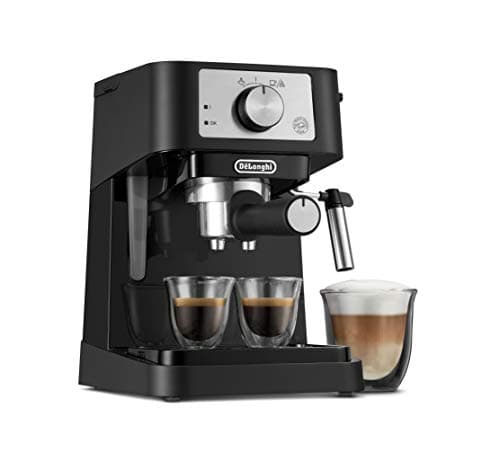
De'Longhi De'Longhi Stilosa Compact Espresso Machine (EC260)
De'Longhi Stilosa Compact Espresso Machine (EC260)

The safest way into espresso for most people. De'Longhi has been making entry-level machines longer than most of its budget rivals have existed, and the Stilosa reflects that: a simple, reliable 15-bar pump in a compact, stainless-accented body that pulls a respectable shot once you pair it with a real grinder. The steam side is its weak point — the manual panarello wand froths milk rather than texturing it properly, and the build leans plasticky — but for the money nothing here is more trustworthy.

Best overall under $200
6.8
$149.95Amazon
02
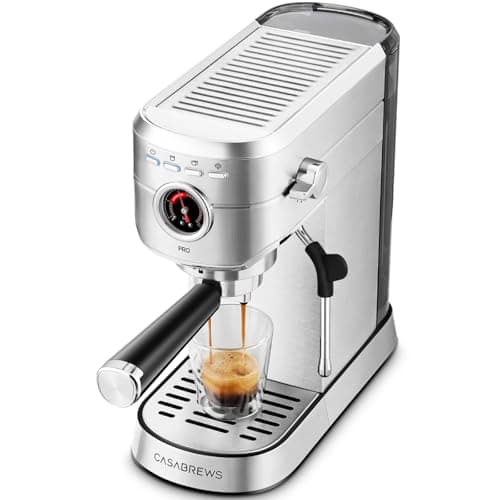
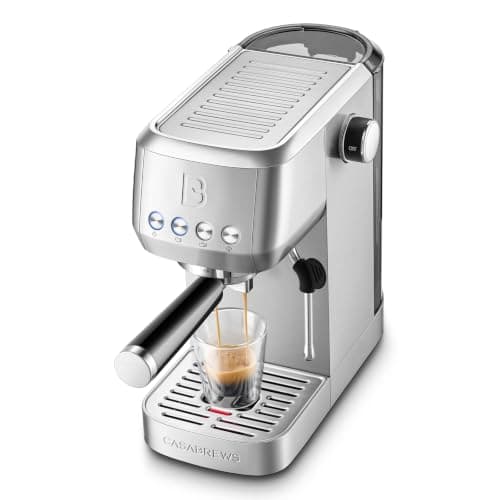
CASABREWS CASABREWS 3700 Essential Espresso Machine
CASABREWS 3700 Essential Espresso Machine

The value champion of the band, and the model that shows why CASABREWS has quietly taken over the cheap end of the shelf. It pairs an all-stainless look with a real, if basic, steam wand and a 20-bar pump for less than almost anything else that steams milk at all. The catches are a small boiler that makes you wait between pulling a shot and steaming, a pressurized basket like everything here, and a newer brand whose long-term durability is simply less proven than De'Longhi's.

Best under $100
6.6
$99.99Amazon
03
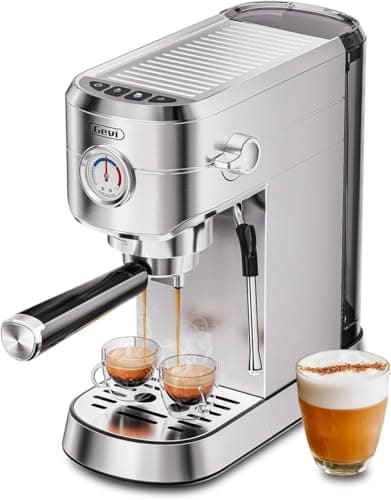
Gevi Gevi 20-Bar Compact Espresso Machine
Gevi 20-Bar Compact Espresso Machine

The budget pick aimed squarely at cappuccino and latte drinkers. Gevi builds this one around a steam wand and milk frothing rather than pure shot quality, in a compact, inexpensive package that suits a small kitchen. Be realistic about the steam, though: it is weak next to a proper machine, the basket is pressurized, and the build is light — this is a cheerful entry into milk drinks, not a latte-art machine.

Best for milk drinks on a budget
6.4
$126.99Amazon
04
CASABREWS CASABREWS 5418 PRO Espresso Machine
CASABREWS 5418 PRO Espresso Machine

A small step up inside the CASABREWS range for people who hate waiting. Its headline is a fast-heating system that reaches brew temperature quicker than the cheaper models, wrapped in the same stainless styling and 20-bar pump. It is still a pressurized-basket entry machine, though, so you are paying more for faster heat-up and modest polish rather than a fundamentally better shot — and the same newer-brand caveat applies.

Best fast-heating step-up
6.2
$161.99Amazon
05
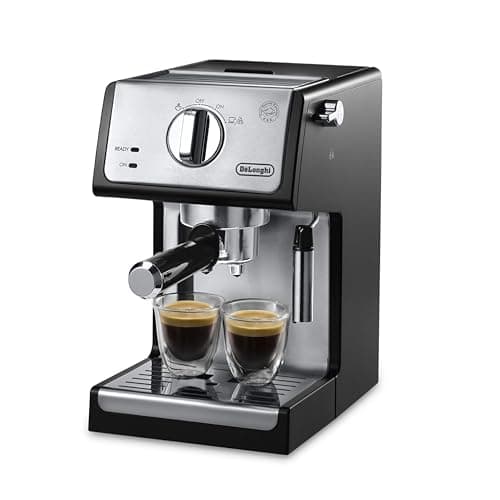
De'Longhi De'Longhi 15-Bar Compact Pump Espresso Machine
De'Longhi 15-Bar Compact Pump Espresso Machine

The alternative De'Longhi for buyers who want the brand but a slightly different mix. It runs the familiar 15-bar pump, adds a milk frother, and De'Longhi highlights temperature control among its features, all in a compact body. It overlaps the Stilosa heavily and carries the same limitations — a pressurized basket and entry-grade steam — so treat it as a close sibling to compare on price and looks rather than a clear upgrade.

Best second De'Longhi option
6.0
$179.95Amazon
06
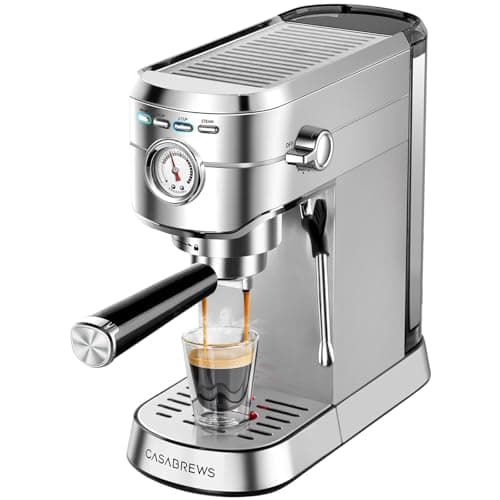
CASABREWS CASABREWS CM5418 Compact Espresso Machine
CASABREWS CM5418 Compact Espresso Machine

The pick when counter space is the constraint. This CASABREWS is notably slim, so it slides into gaps the others will not, while keeping the 20-bar pump, stainless look and a steam wand. Its trade-offs are a small water tank you will refill often and the honest truth that the CASABREWS models on this list are more alike than different — buy this one specifically because it is the most compact, not because it makes better coffee than its siblings.

Best small footprint
5.8
$118.99Amazon

#ad · Live prices from the Amazon Product API, as of Jul 26, 2026. Where we have no verified live price, we show none — a gap beats a number that has rotted.

In detail

The picks, in full

01
De'Longhi De'Longhi Stilosa Compact Espresso Machine (EC260)

Best overall under $200

De'Longhi Stilosa Compact Espresso Machine (EC260)

15-bar pumpManual panarello wandPressurized basketsCompact, stainless accents
6.8/10

The safest way into espresso for most people. De'Longhi has been making entry-level machines longer than most of its budget rivals have existed, and the Stilosa reflects that: a simple, reliable 15-bar pump in a compact, stainless-accented body that pulls a respectable shot once you pair it with a real grinder. The steam side is its weak point — the manual panarello wand froths milk rather than texturing it properly, and the build leans plasticky — but for the money nothing here is more trustworthy.

Shot quality
6
Steam power
5
Build
7
Ease of use
8
Value
8

Pros

  • From an established maker with a long entry-level track record
  • Simple, manual 15-bar operation that is easy to understand and live with
  • Compact, stainless-accented body fits almost any counter
  • Pulls a genuinely decent shot once paired with a real burr grinder

Cons

  • Ships with pressurized (dual-wall) baskets only, which cap ultimate quality
  • Manual panarello wand froths milk crudely rather than texturing it
  • Plasticky in places next to metal-bodied machines

Don't buy this if…

you already know you want to learn latte art and non-pressurized baskets — a machine with a real steam wand and a little more budget, like the picks on our under-$500 list, will grow with you further.

$149.95View on Amazon

Price as of Jul 26, 2026. Prices change — Amazon's at checkout is the one that counts.

#ad · we may earn a commission from this link to De'Longhi Stilosa Compact Espresso Machine (EC260)

02
CASABREWS CASABREWS 3700 Essential Espresso Machine

Best under $100

CASABREWS 3700 Essential Espresso Machine

20-bar pumpReal (basic) steam wandStainless steel bodySingle small boiler
6.6/10

The value champion of the band, and the model that shows why CASABREWS has quietly taken over the cheap end of the shelf. It pairs an all-stainless look with a real, if basic, steam wand and a 20-bar pump for less than almost anything else that steams milk at all. The catches are a small boiler that makes you wait between pulling a shot and steaming, a pressurized basket like everything here, and a newer brand whose long-term durability is simply less proven than De'Longhi's.

Shot quality
6
Steam power
6
Build
6
Ease of use
7
Value
8

Pros

  • Remarkable value — a steaming espresso machine near the bottom of the band
  • All-stainless exterior looks a class above its cost
  • A real steam wand, not just a plastic frothing aid
  • One of the most popular budget sellers, so help and spares are easy to find

Cons

  • Pressurized basket masks grind quality like the rest of this list
  • Small boiler means a wait between brewing and steaming
  • Newer brand with a shorter durability track record

Don't buy this if…

you want a maker with a decade-long entry-level reputation behind it — the De'Longhi models here trade a little value for a longer track record.

$99.99View on Amazon

$109.999% off

Price as of Jul 26, 2026. Prices change — Amazon's at checkout is the one that counts.

#ad · we may earn a commission from this link to CASABREWS 3700 Essential Espresso Machine

03
Gevi Gevi 20-Bar Compact Espresso Machine

Best for milk drinks on a budget

Gevi 20-Bar Compact Espresso Machine

20-bar pumpSteam wand for milkCompact footprintPressurized basket
6.4/10

The budget pick aimed squarely at cappuccino and latte drinkers. Gevi builds this one around a steam wand and milk frothing rather than pure shot quality, in a compact, inexpensive package that suits a small kitchen. Be realistic about the steam, though: it is weak next to a proper machine, the basket is pressurized, and the build is light — this is a cheerful entry into milk drinks, not a latte-art machine.

Shot quality
6
Steam power
6
Build
5
Ease of use
7
Value
8

Pros

  • Designed around milk drinks — cappuccino and latte are the target
  • Small footprint fits a cramped counter
  • Among the cheapest ways to get a steam wand at all
  • Straightforward to operate as a first machine

Cons

  • Steam is weak compared with a real espresso machine
  • Pressurized basket forgives grind but caps shot quality
  • Light build that feels its price

Don't buy this if…

you care most about the espresso itself rather than the milk on top — the De'Longhi Stilosa or the CASABREWS 3700 put a little more into the shot.

$126.99View on Amazon

$139.999% off

Price as of Jul 26, 2026. Prices change — Amazon's at checkout is the one that counts.

#ad · we may earn a commission from this link to Gevi 20-Bar Compact Espresso Machine

04
CASABREWS CASABREWS 5418 PRO Espresso Machine

Best fast-heating step-up

CASABREWS 5418 PRO Espresso Machine

20-bar pumpFast-heating systemStainless steel bodySteam wand
6.2/10

A small step up inside the CASABREWS range for people who hate waiting. Its headline is a fast-heating system that reaches brew temperature quicker than the cheaper models, wrapped in the same stainless styling and 20-bar pump. It is still a pressurized-basket entry machine, though, so you are paying more for faster heat-up and modest polish rather than a fundamentally better shot — and the same newer-brand caveat applies.

Shot quality
6
Steam power
6
Build
6
Ease of use
7
Value
6

Pros

  • Fast-heating system gets you to a shot with less waiting
  • Same clean stainless look as the rest of the CASABREWS line
  • A modest, sensible step up without leaving the price band
  • Steam wand included for milk drinks

Cons

  • Still a pressurized-basket machine — the quality ceiling is unchanged
  • You pay more for faster heat-up than for better coffee
  • Newer brand, so longevity is less proven than the De'Longhi options

Don't buy this if…

your budget is tight and heat-up speed is not a dealbreaker — the cheaper CASABREWS 3700 Essential makes very similar coffee for less.

$161.99View on Amazon

$199.9919% off

Price as of Jul 26, 2026. Prices change — Amazon's at checkout is the one that counts.

#ad · we may earn a commission from this link to CASABREWS 5418 PRO Espresso Machine

05
De'Longhi De'Longhi 15-Bar Compact Pump Espresso Machine

Best second De'Longhi option

De'Longhi 15-Bar Compact Pump Espresso Machine

15-bar pumpMilk frotherTemperature control (per maker)Compact body
6.0/10

The alternative De'Longhi for buyers who want the brand but a slightly different mix. It runs the familiar 15-bar pump, adds a milk frother, and De'Longhi highlights temperature control among its features, all in a compact body. It overlaps the Stilosa heavily and carries the same limitations — a pressurized basket and entry-grade steam — so treat it as a close sibling to compare on price and looks rather than a clear upgrade.

Shot quality
6
Steam power
5
Build
6
Ease of use
7
Value
6

Pros

  • Trusted De'Longhi engineering and support behind it
  • Milk frother included for cappuccino and latte
  • De'Longhi lists temperature control among its features
  • Compact enough for a small counter

Cons

  • Pressurized basket, same as the rest of this list
  • Entry-grade steam that froths more than it textures
  • Overlaps the Stilosa closely, so gains over it are marginal

Don't buy this if…

the Stilosa is cheaper where you are shopping — the two are close enough that price and looks should decide between them.

$179.95View on Amazon

Price as of Jul 26, 2026. Prices change — Amazon's at checkout is the one that counts.

#ad · we may earn a commission from this link to De'Longhi 15-Bar Compact Pump Espresso Machine

06
CASABREWS CASABREWS CM5418 Compact Espresso Machine

Best small footprint

CASABREWS CM5418 Compact Espresso Machine

20-bar pumpNotably slim footprintStainless steel bodySteam wand
5.8/10

The pick when counter space is the constraint. This CASABREWS is notably slim, so it slides into gaps the others will not, while keeping the 20-bar pump, stainless look and a steam wand. Its trade-offs are a small water tank you will refill often and the honest truth that the CASABREWS models on this list are more alike than different — buy this one specifically because it is the most compact, not because it makes better coffee than its siblings.

Shot quality
6
Steam power
5
Build
5
Ease of use
7
Value
6

Pros

  • One of the slimmest machines here — ideal for tight counters
  • Keeps a steam wand and stainless styling despite the small size
  • Simple to operate as a first machine
  • Easy to tuck away when it is not in use

Cons

  • Small water tank means frequent refills
  • Pressurized basket, like the rest of the list
  • Barely different in the cup from the other CASABREWS models

Don't buy this if…

you have the counter room — the CASABREWS 3700 Essential gives you the same coffee with a slightly roomier tank for less.

$118.99View on Amazon

$139.9915% off

Price as of Jul 26, 2026. Prices change — Amazon's at checkout is the one that counts.

#ad · we may earn a commission from this link to CASABREWS CM5418 Compact Espresso Machine

How we picked

Every machine here is a real, currently-purchasable espresso machine you can buy in the US for under two hundred dollars, and every spec below is taken from the maker's own listing. Because this is a tight, homogeneous price band — one where most machines share the same basic recipe — we ranked on five things, in this order.

  1. Shot quality. How good the espresso can actually be, given that almost every machine here uses a pressurized basket. We weighted the fundamentals — pump, basket, temperature stability — over marketing numbers, and were honest that the ceiling is similar across the band.
  2. Steam power. Whether the wand can texture milk for a cappuccino or only froth it into stiff bubbles. Real, usable steam is rare at this price, so machines with a proper wand scored above ones with a plastic frothing aid.
  3. Build. Materials, boiler behavior and how solid the machine feels. Stainless bodies and established engineering scored higher than light, plasticky ones.
  4. Ease of use. How quickly it heats, how simple the controls are, and how forgiving it is for a first-time user still learning to dose and tamp.
  5. Value. Not the lowest sticker price, but what you get for it — a real steam wand, a trustworthy brand, a compact footprint — versus what you actually need.

We did not lab-test these machines; we do not run a lab. The scores are editorial judgments built from published manufacturer specs and aggregated owner reports, and our methodology pagespells out exactly how. Specifications come from the makers' own product pages, listed in Sources. Where a maker advertises a headline figure like "20 bar," we treat it as marketing, not a quality metric — more on that below.

What under $200 actually gets you

It is worth being blunt about the ceiling, because it is the same ceiling for nearly every machine on this page. Under two hundred dollars you get a working pump machine that pulls a single or double shot and steams a small amount of milk. You do not get PID temperature control, a heavy commercial-style group, a fast recovery between brewing and steaming, or a non-pressurized basket. Boilers are small, so you wait; wands are basic, so milk texture is crude; and bodies lean on plastic to hit the price. None of that makes these machines bad — plenty of people make coffee they enjoy every morning on exactly this gear — but it does mean the espresso is entry-level by design. The honest framing is that you are buying a way to learn the craft and find out whether you love it, not a machine that will satisfy you once you do. That is why the smartest budget plan is to spend as little as you comfortably can on the machine and steer the rest toward the grinder.

Pressurized vs non-pressurized baskets

This is the single most important thing to understand before you buy, because it explains almost everything about this price band. The basket is the little metal cup inside the portafilter that holds the coffee, and it comes in two kinds. A non-pressurized (single-wall) basket has hundreds of fine holes and lets the coffee itself create the resistance the pump pushes against. It demands a good, even grind, and it rewards one with genuine, textured espresso — but it punishes a bad grind with sour, channeling, spraying shots. A pressurized (dual-wall) basket hides a second wall with a single tiny exit behind the visible holes, artificially generating the back-pressure that produces crema. The result is that almost any grind — even a cheap blade-ground or pre-ground coffee — yields a shot that looks respectable, with a foamy crema on top.

The catch, and the reason enthusiasts leave these baskets behind, is that the crema is manufactured by the hardware rather than extracted from the coffee, so the flavor plateaus quickly. Nearly every machine on this page ships pressurized-only, which is exactly why they are forgiving for beginners and exactly why they cap quality. It is a training-wheels design: perfect for someone who does not yet own a good grinder, frustrating for someone who does and wants to taste the difference. If a machine offers optional non-pressurized baskets, that is a genuine plus — it means the machine can grow with you once your grind improves.

Spend the difference on a grinder

This is the core thesis of the whole site, and it matters more here than anywhere. On a fixed budget, a modest machine paired with a real burr grinder will out-brew a fancier machine fed by a cheap blade grinder or pre-ground coffee — reliably, and by a wide margin. The reason is mechanical, not aesthetic: espresso needs a fine, uniform grind so that water meets even resistance across the whole puck. A burr grinder crushes beans to a consistent size between two abrasive surfaces; a blade grinder chops them into a random mix of dust and boulders that water races around and channels through. No pump pressure, and certainly no advertised bar rating, fixes that. So if you are deciding between a nicer machine on this list and the cheapest one plus a grinder, take the grinder every time. Start with our best grinders for espresso, or the best grinders under $200 if budget is tight, and read do you need a grinder for espresso for the full case. A pressurized basket lets you get away with a cheaper grinder for a while; a good grinder is what lets you eventually escape the pressurized basket.

What we would skip

All-in-one pod hybrids. Machines that promise to do pods and ground espresso from the same body usually do neither well, and a pod system is a different product with different economics — if you want convenience, buy a dedicated one, not a compromise. Anything with no real steam wand, if you drink milk drinks. Some budget machines skip the wand or fit a purely cosmetic frothing aid; if cappuccino and latte are the point, that is a dealbreaker, so confirm there is an actual steam wand. "20 bar" as a selling point.The pressure number splashed across these boxes — 15 bar, 19 bar, 20 bar — is the pump's maximum, not what reaches your coffee. Proper espresso is extracted at around nine bars; more than that is marketing, and the machine (or its pressurized basket) throttles the rest away. A higher bar number does not mean better espresso, and choosing between these machines on that figure is a mistake. If you find yourself weighing bar ratings, step back and read how to choose an espresso machine instead — it walks through the specs that actually change the cup.

Which machine fits you

  • Want the safest all-round pick from a trusted brand?De'Longhi Stilosa (EC260) — simple, reliable and the easiest one to recommend to most people.
  • Spending as little as possible while still steaming milk? CASABREWS 3700 Essential — the value champion, with a real steam wand near the bottom of the band.
  • Mostly making cappuccinos and lattes? Gevi 20-Bar — built around milk drinks, just keep expectations for the steam realistic.
  • Hate waiting for the machine to heat up? CASABREWS 5418 PRO — the same recipe with a faster-heating system.
  • Want a De'Longhi but a slightly different mix?The De'Longhi 15-bar compact pump — a close sibling to the Stilosa; let price and looks decide.
  • Fighting for counter space? CASABREWS CM5418 — the slimmest here, chosen for its footprint, not for better coffee.

Whichever you land on, remember the order of operations, because it is what actually makes the coffee better: sort the grinder and fresh beans first, keep the machine spend modest, and treat everything on this page as an honest starting line rather than a finish. When you are ready to move past the pressurized basket, our best under $500 and best for beginners roundups are the natural next step.
How we picked

We did not lab-test this gear

Everyone in this category says they tested twenty machines. We have not pulled shots on every product here, and we say so. What we did instead: compiled the published specifications, cross-checked the manufacturer manuals, computed the running cost (wattage to energy, grams-per-shot to cost-per-cup), weighed aggregated owner reports, and scored each product against a published rubric. The scores are judgments from documented research — not measurements we took, because we do not have a test lab and we will not pretend we do. Where hands-on time would tell you more than a spec sheet, we flag it. Where a number came from someone else's work, we name them in Sources.

Questions

Frequently asked

Can you make good espresso under $200?
You can make genuinely enjoyable espresso under two hundred dollars, but "good" comes with a caveat. A budget pump machine will pull a real shot with crema and steam a little milk, and paired with a decent burr grinder that is enough to make coffee you look forward to. What it will not do is match a cafe, because nearly every machine at this price uses a pressurized basket that manufactures crema and caps how good the shot can get. The biggest lever you control is the grind — a cheap machine with a good grinder beats an expensive one with a bad grinder — so put your effort and any spare budget there.
Are cheap espresso machines worth it?
They are worth it if you understand what you are buying: an honest entry into espresso, not a shortcut to cafe-grade coffee. For someone learning the craft, finding out whether they enjoy the ritual, or making the occasional milk drink at home, a budget machine in this band is good value and low risk. For someone who already knows they are serious and wants to grow, it is often a false economy, because you will likely want to upgrade within a year or two. The honest test is whether you are dipping a toe in or diving in — dipping a toe, buy cheap; diving in, spend a little more and skip the upgrade.
Do you need a grinder for a budget espresso machine?
Yes, and it is the most important part of the setup. Pre-ground coffee goes stale fast and is rarely ground fine or evenly enough for espresso, so even a forgiving pressurized basket produces a flat, sour shot with it. A burr grinder — not a blade grinder — gives you the consistent, fine grind that espresso needs, and it does more for the cup than any machine upgrade at this price. If your budget is fixed, buy less machine and put the difference into the grinder; start with the best grinders under $200 and the case in do you need a grinder for espresso.
What does bar pressure mean on espresso machines?
A bar is a unit of pressure, and the number on the box — 15 bar, 19 bar, 20 bar — is the maximum pressure the pump can produce, not the pressure that reaches your coffee. Proper espresso is extracted at around nine bars, and that is what actually matters; anything above it is throttled away by the machine or its pressurized basket. Manufacturers advertise big bar numbers because they sound impressive, but a 20-bar machine does not make better espresso than a 15-bar one for that reason. Ignore the bar rating when choosing between the machines here and look at the basket, the steam wand and the build instead.
Is De'Longhi or CASABREWS better?
It depends on what you value. De'Longhi is the established name, with a long entry-level track record, dependable engineering and easy-to-find support and parts — the safer pick if longevity and a known brand matter to you. CASABREWS is a newer brand that has taken over the cheap end by offering more on paper for the money, often with an all-stainless look and a real steam wand at prices De'Longhi does not quite match — the better pick if value and features per dollar are what you are after. Both make similar entry-level espresso through pressurized baskets, so neither will out-brew the other dramatically; choose De'Longhi for the track record, CASABREWS for the value.

Keep reading

Receipts

Sources

We do not run a testing lab, and we do not pretend to. Where a measured number came from someone else's work, we name them and link them. Where we could not verify something, we say so on the page rather than quietly leaving it out. Read our full method.