Skip to content
Portafilter Co

Machines · Espresso Machines

De'Longhi Dedica vs Stilosa: which budget espresso machine should you buy?

The two De'Longhi machines every first-time buyer cross-shops. Both are 15-bar pump machines with a frothing wand and no grinder — but the Dedica adds programmable buttons, faster heating and a real upgrade path, while the Stilosa is cheaper and simpler. Here is exactly who each one is for.

By Stephen V.Updated How we pick
#ad

We earn a commission when you buy through our Amazon links, at no extra cost to you. It never changes a verdict, and we say so when the cheaper product is the better buy. How this works.

The De'Longhi Dedica Deluxe and the De'Longhi Stilosa are the two machines almost every budget-minded first-time buyer ends up choosing between, and they are more alike than the price gap suggests. Both are 15-bar pump machines that heat their own water, pull a shot through a portafilter and froth milk with a wand; both ship with the forgiving pressurized baskets that generate crema regardless of grind; and, crucially, neither has a built-in grinder, so both need a separate burr grinder to make good espresso. The espresso itself, straight out of the box, is closer than you would think. The question is what the Dedica's premium actually buys — and whether you will use it.

The short version: the Dedica Deluxe is the more refined, more capable of the two. It heats from a thermoblock and is ready in well under a minute; it has two programmable buttonsfor single and double shots rather than a switch you hold; it is built to be genuinely slim; and — the difference that matters most long-term — its 51mm portafilter can accept non-pressurized baskets, so once you have a grinder it grows into a shot that reflects your coffee. The Stilosa is the cheaper, simpler machine: fully manual, pressurized-only, and the lowest-cost honest way to find out whether you even like making espresso. If you want the deeper single-machine reads, our Stilosa reviewand the buyer's case for the slim pick both go further than this head-to-head.

So the decision is narrow and honest. Do you want the absolute cheapest way in, or are you happy to spend a little more for programmable convenience and a machine that can grow past the starter shot? Answer that and the winner is obvious. This page walks through the heating, the buttons, the baskets and the milk, then tells you who each machine is for. And whichever you pick, read do you need a grinder for espresso first — because a good grinder changes the cup on either machine more than the gap between them does.

The short answer

Quick picks

#ProductBest forScorePrice
01
De'Longhi De'Longhi Dedica Deluxe (EC685)
De'Longhi Dedica Deluxe (EC685)

The one to buy if you want a budget machine that grows. The Dedica heats from a thermoblock in well under a minute, has two programmable buttons for single and double shots, and is built to be genuinely slim. The deciding advantage over the Stilosa is that its 51mm portafilter can take non-pressurized baskets — so paired with a decent grinder it graduates from the fake crema of a pressurized starter shot to espresso that actually reflects your coffee. It costs more than the Stilosa and still has a modest frothing wand rather than a real steam wand, and there is no grinder in the box. But for anyone who thinks they will stick with espresso, the extra spend buys convenience today and a ceiling you can actually climb toward.

Best of the two to grow into
7.0
$229.99Amazon
02
De'Longhi De'Longhi Stilosa (EC260)
De'Longhi Stilosa (EC260)

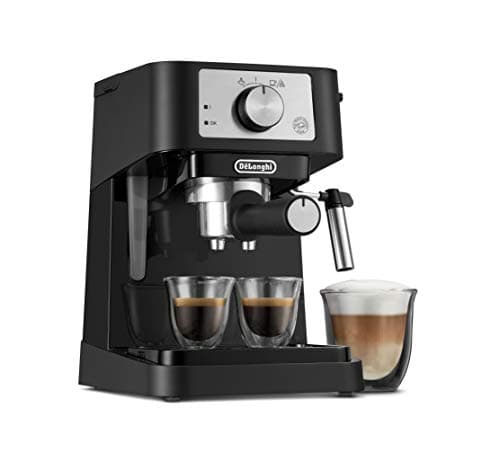
The cheapest honest way to find out if you like making espresso. The Stilosa is a basic 15-bar pump machine — fully manual, so you start and stop the shot yourself — and paired with a decent grinder it makes a genuinely good cup for the price of a few bags of beans. What you give up against the Dedica is the programmable buttons, the faster and steadier thermoblock convenience, and the option to fit non-pressurized baskets: the Stilosa sticks with the pressurized baskets it ships with, so its ceiling is lower and fixed. The build is mostly plastic and the wand is basic. But the ceiling being low is exactly the point — if you are not sure you will stick with espresso, this is the lowest-risk bet there is, and it leaves almost your whole budget for the grinder that matters.

Best lowest-cost starter
6.2
$149.95Amazon

#ad · Live prices from the Amazon Product API, as of Jul 30, 2026. Where we have no verified live price, we show none — a gap beats a number that has rotted.

In detail

The picks, in full

01
De'Longhi De'Longhi Dedica Deluxe (EC685)

Best of the two to grow into

De'Longhi Dedica Deluxe (EC685)

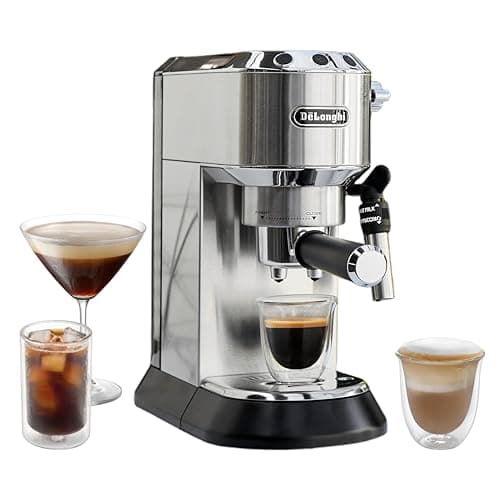
15-bar pump, thermoblock heaterTwo programmable brew buttons51mm portafilter, takes non-pressurized baskets~5.9 in wide, adjustable frother
7.0/10

The one to buy if you want a budget machine that grows. The Dedica heats from a thermoblock in well under a minute, has two programmable buttons for single and double shots, and is built to be genuinely slim. The deciding advantage over the Stilosa is that its 51mm portafilter can take non-pressurized baskets — so paired with a decent grinder it graduates from the fake crema of a pressurized starter shot to espresso that actually reflects your coffee. It costs more than the Stilosa and still has a modest frothing wand rather than a real steam wand, and there is no grinder in the box. But for anyone who thinks they will stick with espresso, the extra spend buys convenience today and a ceiling you can actually climb toward.

Shot quality
7
Temp control
7
Steam power
6
Ease of use
8
Build
6
Value
8

Pros

  • Can accept non-pressurized 51mm baskets — a real upgrade path the Stilosa lacks
  • Two programmable buttons auto-stop single and double shots for repeatable daily use
  • Fast thermoblock heat-up — ready to brew in well under a minute
  • Purpose-built slim body at about 5.9 inches wide with a more refined finish
  • Adjustable frother is a touch more capable than the Stilosa's basic wand

Cons

  • Costs meaningfully more than the Stilosa for a similar shot out of the box
  • Frothing-aid wand still will not pour the microfoam needed for latte art
  • Plastic-heavy build and a 51mm format with a limited accessory world
  • No built-in grinder — you must budget for one to see its best
  • Thermoblock temperature drifts more shot-to-shot than a PID machine

Don't buy this if…

you want the lowest possible cost of entry and do not care about programmable buttons or swapping to non-pressurized baskets — the cheaper Stilosa makes a similar starter shot, and the savings buy more grinder.

$229.99View on Amazon

$249.008% off

Price as of Jul 30, 2026. Prices change — Amazon's at checkout is the one that counts.

#ad · we may earn a commission from this link to De'Longhi Dedica Deluxe (EC685)

02
De'Longhi De'Longhi Stilosa (EC260)

Best lowest-cost starter

De'Longhi Stilosa (EC260)

15-bar pump, stainless steel boilerFully manual — you start/stop the shotPressurized baskets, basic frother wandTamper included, ~1 L tank
6.2/10

The cheapest honest way to find out if you like making espresso. The Stilosa is a basic 15-bar pump machine — fully manual, so you start and stop the shot yourself — and paired with a decent grinder it makes a genuinely good cup for the price of a few bags of beans. What you give up against the Dedica is the programmable buttons, the faster and steadier thermoblock convenience, and the option to fit non-pressurized baskets: the Stilosa sticks with the pressurized baskets it ships with, so its ceiling is lower and fixed. The build is mostly plastic and the wand is basic. But the ceiling being low is exactly the point — if you are not sure you will stick with espresso, this is the lowest-risk bet there is, and it leaves almost your whole budget for the grinder that matters.

Shot quality
6
Temp control
5
Steam power
5
Ease of use
8
Build
5
Value
8

Pros

  • By far the lowest cost of entry into real espresso
  • Simple and fully manual — easy to understand and learn the fundamentals on
  • Leaves almost your entire budget for a good grinder
  • Compact and light with a tamper included in the box
  • Genuinely good shots once paired with a proper grinder

Cons

  • No programmable buttons — you time and stop every shot by hand
  • Sticks with pressurized baskets, so it cannot grow the way the Dedica can
  • Mostly plastic build and a basic frothing wand
  • Thermoblock temperature stability is modest at this price
  • Most people outgrow it within a year or two

Don't buy this if…

you already think you will stick with espresso — the Dedica's programmable buttons and non-pressurized upgrade path are worth the modest step up, and you will skip the machine you would otherwise want in a year.

$149.95View on Amazon

Price as of Jul 30, 2026. Prices change — Amazon's at checkout is the one that counts.

#ad · we may earn a commission from this link to De'Longhi Stilosa (EC260)

The real differences, in plain terms

Strip away the styling and there are three differences that actually matter between these two. First, the buttons: the Dedica has two programmable buttons that auto-stop a single and a double shot, while the Stilosa is fully manual— you start the pump and stop it yourself, watching the cup and the clock. Second, the heating and feel: both use a thermoblock, but the Dedica is the more polished machine to live with day to day and is purpose-built to be slim, at about 5.9 inches wide. Third, and most important, the baskets: the Dedica's 51mm portafilter can take non-pressurized baskets, while the Stilosa sticks with the pressurized ones it ships with. Everything else — the 15-bar pump, the modest frothing wand, the lack of a grinder — is essentially shared. So you are not choosing between two different espresso experiences; you are choosing between a fixed floor and a machine with a little room to climb.

Heating, buttons and daily use

Both machines heat with a thermoblock rather than a slow tank boiler, so both are ready to brew shortly after you switch them on and both move quickly from brewing to steaming. Where they diverge is convenience. On the Dedica you press a button and the machine pours a pre-set single or double and stops on its own, which makes a rushed morning repeatable and hands-off. On the Stilosa you are the timer: you flip the switch, watch the shot, and cut it yourself. That is not a flaw — plenty of people prefer the control, and it teaches you to actually watch your extraction — but it is a different daily rhythm, and if you want to press one button and walk to the fridge for milk, the Dedica is the one that does that. Temperature stability on both is good rather than great; a thermoblock at this price drifts more than the PID heater in a machine like the Breville Bambino, so neither De'Longhi is the machine to buy if rock-steady temperature is your priority.

The upgrade path: pressurized vs non-pressurized baskets

This is the difference that should decide the purchase for anyone who thinks they will stay in the hobby. Both machines ship with pressurized(dual-wall) baskets, which force the coffee through a small hole under pressure and produce crema and a drinkable shot no matter how roughly you ground or tamped. They are training wheels — forgiving, but they also hide your grind and your technique, so you cannot really improve while you use them. The Dedica's 51mm portafilter can accept non-pressurizedbaskets; the Stilosa is designed around its pressurized ones. That means the Dedica has somewhere to go: pair it with a real grinder, swap in a non-pressurized basket, and the machine starts rewarding good coffee and punishing bad, which is exactly how you get better. The Stilosa's ceiling is lower and fixed. Our guide to pressurized vs non-pressurized baskets explains why this matters more than almost any other spec at this price, and how to pull an espresso shot is the recipe you graduate into.

Steam and milk: honestly, a wash

If milk drinks are central to why you want a machine, temper your expectations of both. Neither the Dedica nor the Stilosa has a bare professional steam wand; both use a frothing aid— a sleeve that injects air to make foam easily. The Dedica's adjustable frother is a touch more flexible than the Stilosa's basic wand, but the difference is small, and neither will produce the glossy microfoam you need to actually pour latte art. Both make a perfectly good foamy cappuccino for a beginner; neither is a latte-art machine. If pouring hearts and rosettas is the dream, that is the single clearest reason to skip both De'Longhis and step up to a machine with a real wand — the milk system, not the shot, is where budget machines are most limited.

The grinder matters more than either machine

Here is the truth that reframes the whole comparison: neither machine has a grinder, and the grinder decides more of your cup than the choice between these two does. A Stilosa with a good burr grinder will beat a Dedica fed cheaply ground coffee, and vice versa — the grinder is the lever. If your total budget is fixed, that is actually an argument for the cheaper Stilosa: buy it, and put every dollar you saved into a proper unit from our best grinders for espresso or the tighter picks in best grinders under $200. If your budget can absorb the Dedica and a good grinder both, the Dedica's non-pressurized capability means the two upgrades compound — grinder plus non-pressurized basket is the combination that unlocks what either machine can do. Read do you need a grinder for espresso before you split the budget.

Which De'Longhi fits you

  • Buy the Dedica Deluxe if you think you will stick with espresso, you want programmable one-button shots, and you like that it can graduate to non-pressurized baskets. It is the smarter long-term spend and the one that grows with you.
  • Buy the Stilosa if you want the lowest-risk, lowest-cost way to try espresso, you do not mind timing the shot yourself, and you would rather put the savings straight into a grinder. The full Stilosa review makes the budget case in detail.
  • Step past both ifyou want real steam power for latte art and PID temperature control — the Breville Bambino is a modest jump for a much higher ceiling, and all three appear in our best machines for beginners.

What we did not test

We have not run either machine on a bench for months, and we do not claim to. This comparison compiles De'Longhi's published specifications for the EC685M Dedica and the EC260 Stilosa — the 15-bar pumps, the thermoblock heating, the Dedica's programmable buttons and non-pressurized capability, the frothing wands and the tanks — and weighs aggregated owner reports against our scoring rubric. Every spec cited comes from De'Longhi's own materials, listed in Sources. Where hands-on time would tell you more than a spec sheet — exactly how much each thermoblock drifts over a session, how the two frothers compare on plant milks, how the plastic parts age — we say so rather than invent a figure. Prices are never quoted from memory; the live price for each machine renders from our pipeline with the date it was checked.
How we picked

We did not lab-test this gear

Everyone in this category says they tested twenty machines. We have not pulled shots on every product here, and we say so. What we did instead: compiled the published specifications, cross-checked the manufacturer manuals, computed the running cost (wattage to energy, grams-per-shot to cost-per-cup), weighed aggregated owner reports, and scored each product against a published rubric. The scores are judgments from documented research — not measurements we took, because we do not have a test lab and we will not pretend we do. Where hands-on time would tell you more than a spec sheet, we flag it. Where a number came from someone else's work, we name them in Sources.

Questions

Frequently asked

What is the difference between the De'Longhi Dedica and the Stilosa?
Three things: buttons, heating convenience and baskets. The Dedica has two programmable buttons that auto-stop single and double shots, a more polished purpose-built slim body, and — most importantly — a 51mm portafilter that can take non-pressurized baskets. The Stilosa is fully manual (you start and stop the shot yourself) and sticks with pressurized baskets. Both are 15-bar pump machines with a frothing wand and no grinder, so out of the box the shot is similar; the Dedica just has more convenience and a real upgrade path. Our basket guide explains why that path matters.
Is the Dedica worth the extra money over the Stilosa?
If you think you will stick with espresso, yes. The Dedica's programmable buttons make daily use easier, and its ability to take non-pressurized baskets means it can grow into a much better shot once you add a grinder — something the Stilosa cannot do. If you just want to find out whether you like making espresso at the lowest possible cost, the Stilosa is the sensible bet and the savings buy more grinder. Both are ranked in our best machines under $500.
Do either the Dedica or Stilosa come with a grinder?
No — neither has a built-in grinder, so both need a separate burr grinder for good espresso. This is not optional: pre-ground coffee is too stale and uneven for espresso and is the main reason budget shots disappoint. The upside is that both are cheap enough to leave most of your budget for the grinder, which changes the cup more than the choice between the two machines. See our best grinders for espresso.
Can the Stilosa take non-pressurized baskets like the Dedica?
In practice, no — the Stilosa is designed around the pressurized (dual-wall) baskets it ships with, which force crema regardless of grind. The Dedica's 51mm portafilter can accept non-pressurized baskets, which is its main advantage: once you have a real grinder, a non-pressurized basket lets the machine reflect your coffee and technique. That upgrade path is the single biggest reason to choose the Dedica over the Stilosa if you plan to keep improving.
Which is better for a complete beginner, the Dedica or the Stilosa?
Both are beginner-friendly, so it comes down to budget and intent. The Stilosa is the lowest-risk way to try espresso and teaches you to watch the shot because you stop it yourself. The Dedica is friendlier day to day thanks to its programmable buttons and gives you room to grow with non-pressurized baskets. If you are fairly sure you will enjoy the hobby, start on the Dedica; if you are testing the waters, the Stilosa is the smart first step. Either way, a grinder and good beans improve your results more than the machine gap does.

Keep reading

Receipts

Sources

We do not run a testing lab, and we do not pretend to. Where a measured number came from someone else's work, we name them and link them. Where we could not verify something, we say so on the page rather than quietly leaving it out. Read our full method.