A super-automatic espresso machine is a grinder, a brew unit and a milk frother in one box, controlled by one button. You put in whole beans and water; it grinds, doses, tamps, brews and ejects the puck, and on most models it textures milk on its own too. The trade is simple and worth stating up front: you give up almost all control over the shot in exchange for a latte in ninety seconds with no skill, no dialing in, and no second appliance. If that trade sounds good to you, this is the right page. If it makes you wince, you want a manual machine and a separate grinder instead.
The honest framing most roundups skip: a super-automatic will not out-brew a good manual machine paired with a good grinder. Its built-in grinder is small, its brew unit uses a fixed dose and a fixed tamp, and its shot is tuned to be acceptable with every bean rather than excellent with one. What it will do — reliably, every morning, for someone who does not want a hobby — is make a genuinely good cappuccino faster than you could froth milk by hand. That is a real product, and for a lot of households it is the right one. We ranked these on the four things that actually differ between them: the grinder and how finely it adjusts, the milk system and how long it takes to clean, whether the brew group comes out for maintenance, and what it costs to keep running.
The short answer
Quick picks
| # | Product | Best for | Score | Price |
|---|
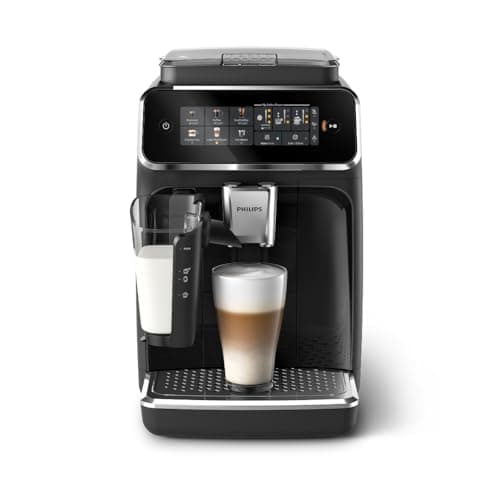
| 01 | Philips 3300 Series LatteGo (EP3341/50)The best bean-to-cup machine for most people, mostly because of the milk system. LatteGo is two plastic parts with no tubes at all — it rinses under a tap in seconds or goes in the dishwasher — and that single design decision is what determines whether you still use a super-automatic six months in. | Best overall | | $489.79·Amazon |
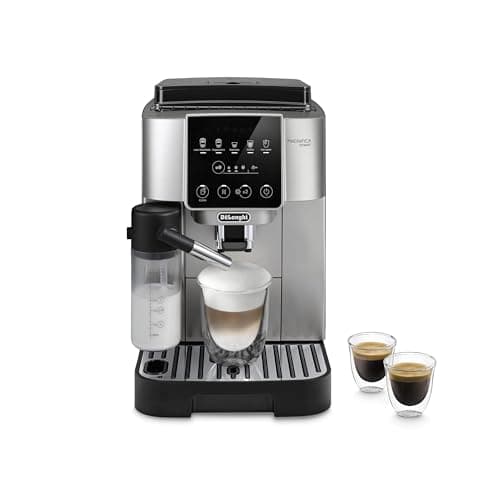
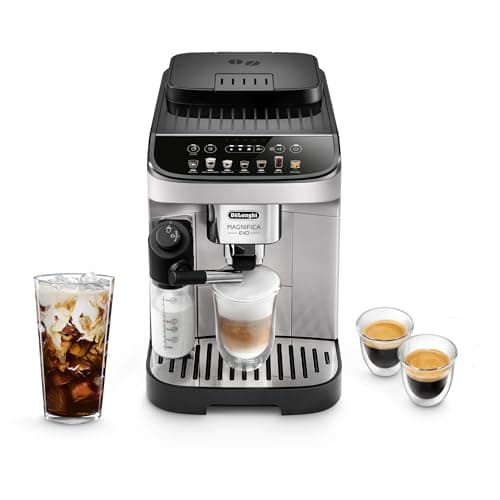
| 02 | De'Longhi Magnifica Evo with LatteCrema (ECAM29084SB)The one to buy if milk drinks are the whole reason you want the machine. LatteCrema is a refrigerator-storable carafe that textures dairy and plant milks properly, and the Evo gives you seven dedicated one-touch buttons rather than a menu to scroll. | Best for milk drinks | | $749.99·Amazon |
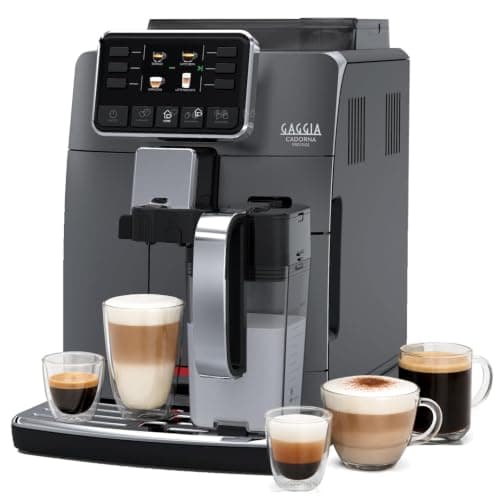
| 03 | Gaggia Cadorna PrestigeThe machine for a household where nobody drinks the same thing. Fifteen one-touch drinks, four saved user profiles, an integrated milk carafe and — the part enthusiasts care about — a brew group that pulls out for cleaning, which is the difference between a machine you can maintain and one you send away. | Best for a mixed household | | $999.99·Amazon |
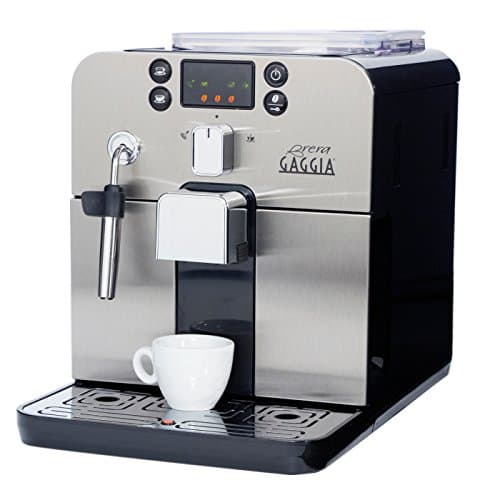
| 04 | Gaggia BreraThe compact, serviceable, slightly old-school choice — and the only machine here that hands the milk back to you. It grinds and brews automatically but froths through a pannarello steam wand you operate yourself, which is a fair bit more control than a carafe gives you. | Best compact pick | | $499.00·Amazon |
| 05 | De'Longhi Magnifica Start (auto frother)The simplest machine here, and simplicity is the point. Five one-touch recipes, an automatic frother and almost nothing to configure — the right pick for someone who wants the appliance to disappear into the routine rather than become a thing they manage. | Best simple one-touch | | $799.99·Amazon |
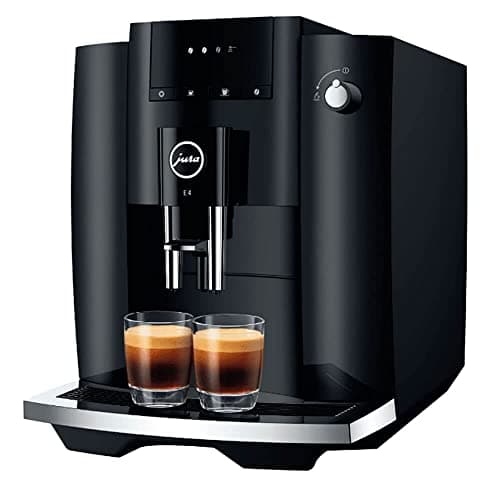
| 06 | Jura E4The specialist. The E4 has no milk system at all — it is built purely for black coffee and espresso, and it spends the whole budget on the brewing instead. Jura's Pulse Extraction Process pushes water through the puck in bursts to lengthen the extraction, which is a genuinely different approach to short drinks. | Best for black coffee | | $1,269.99·Amazon |
#ad · Live prices from the Amazon Product API, as of Jul 20, 2026. Where we have no verified live price, we show none — a gap beats a number that has rotted.
In detail
The picks, in full
Best overall
Philips 3300 Series LatteGo (EP3341/50)
12-step ceramic burrsLatteGo 2-part milk system6 one-touch drinksAquaClean: up to 5,000 cups
The best bean-to-cup machine for most people, mostly because of the milk system. LatteGo is two plastic parts with no tubes at all — it rinses under a tap in seconds or goes in the dishwasher — and that single design decision is what determines whether you still use a super-automatic six months in.
- Shot quality
- 7
- Milk system
- 9
- Grinder
- 8
- Ease of cleaning
- 9
- Build
- 7
- Value
- 9
Pros
- +LatteGo milk system has no tubes and cleans in about 10 seconds, per Philips
- +Hard-wearing ceramic burrs with 12 grind steps — more adjustment than most rivals at the price
- +AquaClean filter is rated for up to 5,000 cups before descaling is needed
- +SilentBrew is Quiet Mark certified and rated 40% quieter than earlier Philips models
- +Usually the cheapest full-feature machine here, which is why it is our top pick
Cons
- −Automatic milk only — there is no manual steam wand, so latte art is off the table
- −Six drinks is a shorter menu than the Gaggia Cadorna's fifteen
- −The touch display is menu-driven; adjusting strength and volume takes a few presses
Don't buy this if…
…you want to texture milk yourself with a steam wand — a super-automatic's frother is automatic by design, and the Gaggia Brera's pannarello wand is the only hands-on option in this roundup.
Best for milk drinks
De'Longhi Magnifica Evo with LatteCrema (ECAM29084SB)
13 grind settingsLatteCrema carafe frother7 one-touch drinksAuto-clean cycle
The one to buy if milk drinks are the whole reason you want the machine. LatteCrema is a refrigerator-storable carafe that textures dairy and plant milks properly, and the Evo gives you seven dedicated one-touch buttons rather than a menu to scroll.
- Shot quality
- 7
- Milk system
- 9
- Grinder
- 8
- Ease of cleaning
- 7
- Build
- 8
- Value
- 7
Pros
- +LatteCrema textures milk alternatives (oat, almond, soy) as well as dairy, per De'Longhi
- +The carafe lifts off and goes straight into the fridge between drinks
- +13 grind settings on the built-in conical burr grinder — the finest adjustment here
- +Dedicated buttons per drink instead of a menu tree; genuinely a one-touch machine
- +Grounds are compacted into a dry puck, so emptying the bin is not a mess
Cons
- −The milk carafe is one more bulky thing to wash and find fridge space for
- −Costs meaningfully more than the Philips 3300 for a similar result in the cup
- −Espresso is good rather than great — a manual machine plus a real grinder still beats it
Don't buy this if…
…you drink your coffee black. The whole premium here is the milk carafe, and the Jura E4 or a cheaper machine makes the same espresso for less.
Best for a mixed household
Gaggia Cadorna Prestige
15 one-touch drinks4 user profilesRemovable brew group0.6L milk carafe
The machine for a household where nobody drinks the same thing. Fifteen one-touch drinks, four saved user profiles, an integrated milk carafe and — the part enthusiasts care about — a brew group that pulls out for cleaning, which is the difference between a machine you can maintain and one you send away.
- Shot quality
- 8
- Milk system
- 8
- Grinder
- 8
- Ease of cleaning
- 8
- Build
- 8
- Value
- 6
Pros
- +Removable brew group — you can rinse the part that does the work, which most sealed machines will not let you do
- +Fifteen drinks including ristretto, flat white, cortado and over-ice coffee
- +Four user profiles, so each person's strength and volume settings stick
- +100% ceramic burrs, a 1.5L front-access tank and a dishwasher-safe milk carafe
Cons
- −The most expensive machine here apart from the Jura — check the live price before you commit
- −Biggest footprint in this roundup — measure your counter and cabinet clearance first
- −Fifteen drinks means a real menu to learn; it is not a two-button machine
Don't buy this if…
…one or two people drink one or two drinks. You would be paying for profiles and a fifteen-item menu you will never open — the Philips 3300 does the same core job for far less.
Best compact pick
Gaggia Brera
12.4 in wideCeramic burrs, 5 settingsRemovable brew groupPannarello steam wand
The compact, serviceable, slightly old-school choice — and the only machine here that hands the milk back to you. It grinds and brews automatically but froths through a pannarello steam wand you operate yourself, which is a fair bit more control than a carafe gives you.
- Shot quality
- 7
- Milk system
- 6
- Grinder
- 6
- Ease of cleaning
- 8
- Build
- 8
- Value
- 7
Pros
- +About 12.4 inches wide with front-loading tank and dreg drawer — it slides under cabinets
- +Removable brew group for rinsing, same serviceability advantage as the Cadorna
- +100% ceramic burrs and three programmable strength settings
- +A manual pannarello wand means you decide when the milk is done, not the machine
- +Made in Italy and long enough on the market that parts and guides are easy to find
Cons
- −Only 5 grind settings — the coarsest adjustment in this roundup
- −The pannarello is a frothing aid, not a bare steam wand; it makes foam, not latte art
- −A 40 oz tank means refilling more often than the Cadorna's 1.5L
- −An older design, and it looks and feels it next to the Philips
Don't buy this if…
…you want the machine to make the whole cappuccino while you walk away — the Brera stops after the espresso and hands you the milk jug.
Best simple one-touch
De'Longhi Magnifica Start (auto frother)
Built-in grinderAutomatic milk frother5 one-touch recipesDishwasher-safe parts
The simplest machine here, and simplicity is the point. Five one-touch recipes, an automatic frother and almost nothing to configure — the right pick for someone who wants the appliance to disappear into the routine rather than become a thing they manage.
- Shot quality
- 7
- Milk system
- 7
- Grinder
- 7
- Ease of cleaning
- 8
- Build
- 7
- Value
- 6
Pros
- +Short, legible control panel — five recipes and no menu tree to learn
- +Automatic frother handles the milk without a separate carafe to store
- +Removable, dishwasher-safe parts keep the daily cleanup to a minute
- +De'Longhi's most widely stocked bean-to-cup, so it is rarely hard to find
Cons
- −Five drinks is the shortest menu here — no cortado, flat white or saved profiles
- −Frequently priced at or above machines that do considerably more
- −Least customisation of any machine in this roundup
Don't buy this if…
…you want to tune strength, volume and temperature per drink. This machine is deliberately not that, and the Cadorna Prestige is.
Best for black coffee
Jura E4
P.E.P. pulse extractionProfessional Aroma grinder5-16 g variable chamberNo milk system
The specialist. The E4 has no milk system at all — it is built purely for black coffee and espresso, and it spends the whole budget on the brewing instead. Jura's Pulse Extraction Process pushes water through the puck in bursts to lengthen the extraction, which is a genuinely different approach to short drinks.
- Shot quality
- 9
- Milk system
- 2
- Grinder
- 8
- Ease of cleaning
- 8
- Build
- 9
- Value
- 5
Pros
- +Pulse Extraction Process is aimed squarely at ristretto and espresso quality, not menu count
- +Variable brewing chamber takes 5-16 g of coffee, so short and long drinks get a real dose change
- +64 oz water tank — the largest here, and Clearyl filtration is built in
- +Swiss build and a coffee-only design with far fewer parts to fail than a milk machine
Cons
- −No milk frothing whatsoever — you cannot make a cappuccino or latte on this machine
- −Costs roughly two to three times the Philips 3300 for fewer functions
- −The 10 oz bean hopper is small for a machine at this price
Don't buy this if…
…anyone in the house drinks milk coffee. That is not a nitpick — the E4 physically cannot make one, and every other machine on this page can.
How we picked
Every machine on this page is a true super-automatic: whole beans in, finished drink out, with the grinder and brew unit inside the same body. We started from what is actually purchasable in the US right now and ranked on four criteria, in this order.
- The milk system, and how long it takes to clean.This is the criterion that decides whether the machine gets used. Every automatic frother is a milk-wetted surface that has to be cleaned daily, and the designs differ enormously: Philips' LatteGo is two parts with no tubes, De'Longhi's LatteCrema and Gaggia's carafe are self-contained jugs that go in the fridge, and the Gaggia Brera hands the job back to you with a steam wand. A milk system that takes five minutes to strip down is the reason super-automatics end up in cupboards.
- The grinder and its adjustment range.A super-automatic's built-in grinder is the only grinder you get, so the number of steps matters more than usual. The Magnifica Evo's 13 settings and the Philips' 12 give you room to correct a shot that runs too fast or too slow; the Brera's 5 do not, really.
- Whether the brew group comes out.The brew group is the moving assembly that doses, tamps and ejects the puck, and it accumulates coffee oils. Gaggia's Brera and Cadorna Prestige let you remove it and rinse it under a tap. Machines that seal it in are fine until they are not, and then it is a service visit.
- What it costs to keep running.Descaling schedule, water filters, and whether the machine nags you into buying branded consumables. Philips' AquaClean claim of up to 5,000 cups between descales is the strongest number any manufacturer here publishes.
We did not lab-test these machines — the section below the picks says exactly what we did instead, and our methodology pagepublishes the rubric. Specs come from the manufacturers' own product pages, listed in Sources.
Super-automatic vs a machine and a grinder
The comparison people actually need is not between these six machines — it is between this whole category and the alternative. For roughly the price of the Philips 3300 you could buy a Breville Bambino and a very good espresso grinder, and that setup will make a better shot. It will also ask you for about four minutes and a small amount of skill every time, and it will need dialing in whenever you change beans.
So the decision is genuinely about you, not about the gear. Buy a super-automatic if you want coffee rather than a hobby, if more than one person in the house makes drinks, or if the realistic alternative is not making espresso at all. Buy a separate machine and grinder if you find the process interesting, if you care about the difference between a good shot and a great one, or if you want to make latte art. Our how to choose an espresso machine guide walks through that fork in more depth, and the Breville vs De'Longhi comparison covers the manual side.
What beans to put in it
One thing that trips up new super-automatic owners: do not use oily, very dark roasted beans. The oil coats the grinder chute and the hopper and eventually causes jams, and almost every manufacturer warns against it in the manual. Medium roasts are the safe default and they suit these machines' gentler extraction anyway — our espresso bean picks flag which are and are not safe for a bean-to-cup hopper. Also: never put flavoured or sugar-coated beans in one. The sugar caramelises inside the grinder and that damage is not covered.
Which one is right for you
- Want the best all-round machine for the money? The Philips 3300 LatteGo.
- Drink mostly lattes and cappuccinos? The Magnifica Evo with LatteCrema.
- Four people, four different drinks? The Gaggia Cadorna Prestige.
- Tight counter, and you want to froth milk yourself? The Gaggia Brera.
- Want as few decisions as possible? The Magnifica Start.
- Only ever drink it black? The Jura E4.
How we picked
We did not lab-test this gear
Everyone in this category says they tested twenty machines. We have not pulled shots on every product here, and we say so. What we did instead: compiled the published specifications, cross-checked the manufacturer manuals, computed the running cost (wattage to energy, grams-per-shot to cost-per-cup), weighed aggregated owner reports, and scored each product against a published rubric. The scores are judgments from documented research — not measurements we took, because we do not have a test lab and we will not pretend we do. Where hands-on time would tell you more than a spec sheet, we flag it. Where a number came from someone else's work, we name them in Sources.
Questions
Frequently asked
What is a super-automatic espresso machine?+
A machine that contains the grinder, the brew unit and (usually) the milk frother in one body. You load whole beans and water, press one button, and it grinds, doses, tamps, brews, ejects the spent puck and froths the milk without you touching anything. The trade-off is control: dose, tamp pressure and shot timing are all decided by the machine.
Is a super-automatic as good as a manual espresso machine?+
No, not in the cup. A manual machine paired with a proper
burr grinder will make a better shot for the same money, because you control the dose, the grind and the shot time. A super-automatic wins on speed, consistency for multiple users, and the fact that it requires no skill at all. Pick the one that matches how you actually want to spend your mornings.
How much should I spend on a bean-to-cup machine?+
Real super-automatics from established brands start in the mid-hundreds and run into the low thousands. Below that range you are usually looking at a machine with a token grinder and a plastic brew path. Above roughly the $1,000 mark you are mostly buying more drink presets, saved user profiles and better cabinetry rather than a better espresso. Check the live price in each buy button — this category discounts heavily and unpredictably.
Which super-automatic milk system is easiest to clean?+
Philips' LatteGo is the standout on this specific point: it is two plastic parts with no internal tubes, and Philips rates the clean-up at around 10 seconds under a tap. Carafe systems like De'Longhi's LatteCrema and Gaggia's milk carafe are close behind and have the advantage of going straight into the fridge with the milk still in them. Any system with narrow silicone tubing is the one to avoid.
Can you use pre-ground coffee in a super-automatic?+
Most have a small bypass chute for a single dose of pre-ground, usually intended for decaf so you do not have to empty the hopper. It works, but it defeats the point of the machine and pre-ground coffee is stale for espresso purposes within days of opening. Use whole beans in the hopper and save the bypass for the occasional decaf.
Do super-automatics need descaling?+
Yes, all of them, and skipping it is the most common way these machines die. How often depends on your water hardness and whether the machine takes a filter — Philips claims up to 5,000 cups between descales when you keep an AquaClean filter fitted. Using filtered water from the start is the cheapest maintenance decision you can make, and it matters more here than on a manual machine because the internal plumbing is longer and you cannot get at it.
Do I still need a separate grinder?+
No — that is the main practical argument for the category. The built-in grinder handles espresso duty, which is why a bean-to-cup machine that looks expensive next to a
manual machine is often closer on total cost than it first appears. If you also brew pour over or French press, though, the built-in grinder will not help you there — it only grinds into its own brew unit.
Receipts
Sources
We do not run a testing lab, and we do not pretend to. Where a measured number came from someone else's work, we name them and link them. Where we could not verify something, we say so on the page rather than quietly leaving it out. Read our full method.