Skip to content
Portafilter Co

Machines · Espresso Machines

Philips 3300 vs De'Longhi Magnifica Evo: which super-automatic should you buy?

The two best-selling bean-to-cup super-autos, cross-shopped constantly. Both grind, brew and froth on one touch, so the decision comes down to the milk system, how you clean it, and the drink menu. Here is which one wins for you.

By Stephen V.Updated How we pick
#ad

We earn a commission when you buy through our Amazon links, at no extra cost to you. It never changes a verdict, and we say so when the cheaper product is the better buy. How this works.

The Philips 3300 Series LatteGo and the De'Longhi Magnifica Evo with LatteCrema are the two machines almost every first-time bean-to-cup buyer ends up comparing. Both are one-touch super-automatics: you load whole beans and water, press a button, and the machine grinds, doses, tamps, brews and froths milk on its own, so a cappuccino takes about ninety seconds and no skill at all. Both make espresso that is genuinely good rather than great — that is simply what a sealed, fixed-dose brew group does, and it is true of every machine in this class. Because the espresso is so close, the decision between them is not really about the shot. It is about the milk system, how much cleaning it asks of you, and the drink menu.

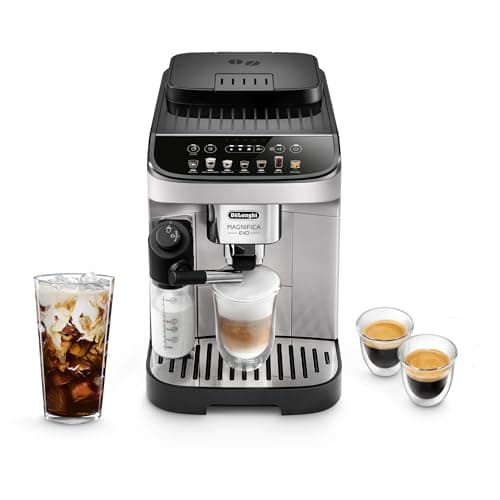
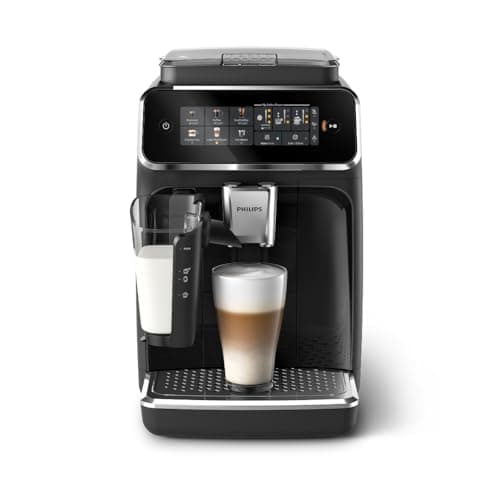
The Philips 3300 leads with LatteGo, a two-piece milk carafe with no tubes and no internal channels at all. You clip it on, it froths, and when you are done you split the two parts and rinse them under the tap in seconds or drop them in the dishwasher. It grinds with a cool-running ceramic burr grinder across twelve steps, makes six one-touch drinksincluding iced options, and uses Philips' AquaClean filter rated for up to five thousand cups between descales. The De'Longhi Magnifica Evo answers with LatteCrema, a sealed milk carafe that textures dairy and plant milks and lifts off into the fridge between drinks. It offers thirteen grind settings, seven one-touch drinkson dedicated buttons, and — the feature the Philips lacks — a removable brew group you can pull out and rinse by hand.

So this is a comparison of two different philosophies of "easy." Philips makes the daily milk cleanup as close to nothing as anyone has managed; De'Longhi gives you a richer, more versatile milk carafe and lets you service the brew group yourself. Neither is a wrong answer, and both are fixtures in our best super-automatic machines roundup, where the Philips is our overall value pick. This page settles which one fits your kitchen. Each is also reviewed in full — the Philips 3300 LatteGo review and the Magnifica Evo review— if you want the deeper single-machine read after this head-to-head.

The short answer

Quick picks

#ProductBest forScorePrice
01
Philips Philips 3300 Series LatteGo (EP3341/50)
Philips 3300 Series LatteGo (EP3341/50)

The one to buy if effortless milk cleanup is the priority — and for most people it should be, because the milk system is what decides whether a bean-to-cup machine is still in daily use six months on. LatteGo is two clip-together parts with no tubes and no internal channels, so it rinses under the tap in seconds or goes in the dishwasher, and that removes the exact friction that makes people abandon these machines. Add a cool-running ceramic burr grinder with twelve steps and an AquaClean filter rated for up to five thousand cups, and you get the lowest-maintenance machine of the pair at the lower price. The honest limits: good-not-great espresso, a shorter six-drink menu with no saved user profiles, and a sealed brew group that does not pull out for hand-cleaning.

Best value and easiest cleaning
8.2
$489.99Amazon
02
De'Longhi De'Longhi Magnifica Evo with LatteCrema (ECAM29084SB)
De'Longhi Magnifica Evo with LatteCrema (ECAM29084SB)

The one to buy if the milk carafe and hands-on serviceability matter more than the last dollar. LatteCrema textures dairy and plant milks — oat, almond, soy — and lifts off into the fridge between drinks, and De'Longhi gives you seven dedicated one-touch buttons rather than a menu to scroll. Crucially, its brew group pulls out so you can rinse it by hand, which the sealed Philips does not allow. The espresso is good rather than great, same as any super-automatic, and the carafe is more parts to wash than LatteGo's two — but as a milk-first everyday machine with 13 grind settings and real serviceability, it earns its place. It just usually costs more than the Philips for a very similar cup.

Best milk carafe and serviceability
7.7
$749.95Amazon

#ad · Live prices from the Amazon Product API, as of Jul 30, 2026. Where we have no verified live price, we show none — a gap beats a number that has rotted.

In detail

The picks, in full

01
Philips Philips 3300 Series LatteGo (EP3341/50)

Best value and easiest cleaning

Philips 3300 Series LatteGo (EP3341/50)

LatteGo 2-part milk carafe, no tubesCeramic burrs, 12 grind steps6 one-touch drinks incl. icedAquaClean: up to 5,000 cups
8.2/10

The one to buy if effortless milk cleanup is the priority — and for most people it should be, because the milk system is what decides whether a bean-to-cup machine is still in daily use six months on. LatteGo is two clip-together parts with no tubes and no internal channels, so it rinses under the tap in seconds or goes in the dishwasher, and that removes the exact friction that makes people abandon these machines. Add a cool-running ceramic burr grinder with twelve steps and an AquaClean filter rated for up to five thousand cups, and you get the lowest-maintenance machine of the pair at the lower price. The honest limits: good-not-great espresso, a shorter six-drink menu with no saved user profiles, and a sealed brew group that does not pull out for hand-cleaning.

Shot quality
7
Milk system
9
Grinder
8
Ease of cleaning
9
Drinks & presets
7
Value
9

Pros

  • LatteGo is a two-piece carafe with no tubes or internal channels — it rinses under the tap in seconds and both parts are dishwasher-safe
  • Cool-running ceramic burr grinder with 12 steps that wears slowly and does not scorch the grounds
  • AquaClean filter rated for up to 5,000 cups before descaling keeps routine maintenance low
  • Generally the cheaper of the two — our overall value pick among super-automatics
  • SilentBrew runs noticeably quieter than most bean-to-cup machines

Cons

  • Espresso is good rather than great — a fixed dose and fixed tamp tuned to be acceptable with any bean
  • The brew group is sealed and does not remove, so you cannot rinse it by hand the way you can on the De'Longhi
  • Shorter drink menu (six) and no saved user profiles for each person's strength and length
  • Menu-driven touch display means changing strength or volume takes a few presses rather than a dial

Don't buy this if…

you want to pull the brew group out and rinse it by hand, want the widest drink menu, or specifically want a carafe that textures plant milks — the Magnifica Evo answers all three, at a higher price.

$489.99View on Amazon

$899.9946% off

Price as of Jul 30, 2026. Prices change — Amazon's at checkout is the one that counts.

#ad · we may earn a commission from this link to Philips 3300 Series LatteGo (EP3341/50)

02
De'Longhi De'Longhi Magnifica Evo with LatteCrema (ECAM29084SB)

Best milk carafe and serviceability

De'Longhi Magnifica Evo with LatteCrema (ECAM29084SB)

LatteCrema fridge-storable carafe13 grind settings, conical burrs7 one-touch drinks, dedicated buttonsRemovable brew group + dry-puck bin
7.7/10

The one to buy if the milk carafe and hands-on serviceability matter more than the last dollar. LatteCrema textures dairy and plant milks — oat, almond, soy — and lifts off into the fridge between drinks, and De'Longhi gives you seven dedicated one-touch buttons rather than a menu to scroll. Crucially, its brew group pulls out so you can rinse it by hand, which the sealed Philips does not allow. The espresso is good rather than great, same as any super-automatic, and the carafe is more parts to wash than LatteGo's two — but as a milk-first everyday machine with 13 grind settings and real serviceability, it earns its place. It just usually costs more than the Philips for a very similar cup.

Shot quality
7
Milk system
9
Grinder
8
Ease of cleaning
7
Drinks & presets
8
Value
7

Pros

  • LatteCrema textures plant milks (oat, almond, soy) as well as dairy, per De'Longhi
  • The milk carafe lifts off and goes straight into the fridge between drinks, so nothing sits out
  • Removable brew group pulls out for hand-rinsing — the deep-clean the sealed Philips cannot do
  • 13 grind settings on the built-in conical burr grinder — the finer end of super-automatic adjustment
  • Seven one-touch drinks on dedicated buttons, plus a compacted dry puck that empties tidily

Cons

  • Espresso is good rather than great, and no better than the cheaper Philips in the cup
  • The LatteCrema carafe is more parts to wash than LatteGo's two, and needs fridge space
  • Usually costs meaningfully more than the Philips 3300 for a very similar shot
  • No AquaClean-style long-interval filter — you descale on the machine's schedule

Don't buy this if…

you want the simplest possible milk cleanup and the lowest price — LatteGo's two tube-free parts are less to wash than the LatteCrema carafe, and the Philips is usually cheaper for a near-identical espresso.

$749.95View on Amazon

$899.9517% off

Price as of Jul 30, 2026. Prices change — Amazon's at checkout is the one that counts.

#ad · we may earn a commission from this link to De'Longhi Magnifica Evo with LatteCrema (ECAM29084SB)

The milk system: LatteGo vs LatteCrema

On a super-automatic, the milk system is the part that decides whether you keep using the machine, so start here. Both of these are good, but they are good in different ways. LatteGois Philips' answer to the thing everyone hates about automatic frothers: the tube. Most milk systems draw milk up a thin tube, through a chamber and out a spout, and every one of those hidden surfaces has to be flushed or it sours — which is why so many bean-to-cup machines end up making black coffee only. LatteGo removes the tube entirely. It is two clip-together parts with an open, wide channel; milk runs down it, air is whipped in, and when you are done you split the halves and rinse them in seconds. It is the easiest milk cleanup in the category, full stop.

LatteCrematakes a different tack. It is a sealed carafe that draws and textures milk into the cup, and its two advantages are versatility and storage: De'Longhi states it textures plant milks — oat, almond, soy — as well as dairy, and the whole carafe lifts off and goes into the fridge between drinks, so the milk stays cold and nothing sits out on the counter. The trade is that a carafe is inherently more parts to clean than LatteGo's two tube-free pieces. If your priority is the least possible washing-up, LatteGo wins clearly. If you drink oat-milk lattes or like the fridge-storage convenience, LatteCrema is the more capable milk system despite the extra cleaning. Neither produces true latte-art microfoam — for that you want a manual wand and a proper pitcher— but for hands-off milk drinks both are genuinely good.

Cleaning and serviceability: the sealed vs removable brew group

This is the trade that runs in the opposite direction, and it is the most important thing most comparisons miss. The Philips 3300 has a sealed brew group: it cleans the coffee path with automatic rinse cycles, but you cannot pull the brew unit out to rinse it by hand. The De'Longhi Magnifica Evo has a removable brew group that slides out so you can rinse it under the tap and see exactly what is going on inside. So the two machines split the cleaning honors: LatteGo makes the daily milkcleanup easier, while the Magnifica's removable brew group makes the deep coffee-pathcleaning easier. Which matters more depends on who you are. If you want to set-and-forget and never think about the internals, the Philips' automatic-everything approach is fine and its AquaClean filter stretches descaling intervals to as much as five thousand cups. If you are the kind of owner who wants to service every part yourself — and who trusts a machine more when you can see it is clean — the De'Longhi's pull-out brew group is a real, lasting advantage.

The grinder and the shot

Both grind fresh for every cup, and both make good-not-great espresso — that is the honest ceiling on any super-automatic, because a fixed dose and a fixed tamp are tuned to be acceptable with any bean rather than exceptional with one. The grinders differ in the details. The Philips uses ceramic burrs across twelve steps; ceramic runs cool so it does not scorch the grounds and wears slowly, which keeps the grind consistent for years. The De'Longhi offers thirteen grind settings on a conical burr grinder, the finer end of adjustment at this level, which lets you dial strength a little more precisely to your beans. Neither will out-brew a decent manual machine paired with a dedicated espresso grinder, and neither is trying to. One caveat that applies to both: keep oily dark roasts and flavored beans out of the hopper, because they gum up the grinder and the chute over time and are the most common way these machines get damaged. Medium roasts are the safe choice for either.

Drinks, presets and daily use

The Magnifica Evo has a slightly broader everyday menu: seven one-touch drinks on dedicated buttons, so the drink you want is usually a single press rather than a scroll. The Philips 3300 makes six one-touch drinksincluding iced options through a menu-driven touch display, and — a real limitation for a shared household — it does not store saved user profiles, so two people with different strength preferences reset the dial each morning. Neither machine is a super-automatic that automates the puck-prep of a semi-auto or replaces the control of a manual machine; both are firmly one-touch bean-to-cup. If you are still weighing whether a super-automatic is even the right category for you, our semi-automatic vs super-automatic guide lays out which kind of machine suits which kind of morning, and how to choose an espresso machine covers the bigger decision.

What we did not test

We have not run either machine on a bench for months, and we do not claim to. This comparison compiles Philips' and De'Longhi's published specifications, cross-checks the milk-system, grinder, brew-group and filter claims against each maker's own documentation, and weighs aggregated owner reports against our scoring rubric. The two-part LatteGo design, the ceramic twelve-step grinder and the up-to-5,000-cup AquaClean rating on the Philips, and the fridge-storable LatteCrema carafe, the thirteen grind settings and the removable brew group on the De'Longhi, all come from the manufacturers' materials, listed in Sources. Where hands-on time would tell you more than a spec sheet — exactly how each milk texture compares, how each grinder holds its setting over months — we say so rather than invent a figure. Prices are never quoted from memory; the live price renders from our pipeline with the date it was checked.

Which one is right for you

  • Buy the Philips 3300 LatteGo if you want the easiest daily milk cleanup, the lower price and a cool-running ceramic grinder, and you are happy to let the machine clean its own sealed brew group. It is our overall value pick among super-automatics and the one we point most people toward first.
  • Buy the De'Longhi Magnifica Evo if you want a carafe that textures oat and other plant milks, you like storing the milk in the fridge between drinks, and you want to pull the brew group out to clean it by hand. It is the more versatile and more serviceable machine, usually at a higher price.
  • Consider neither ifyou want to steam milk yourself and control the shot — a manual machine like the Breville Bambino plus a dedicated grinder makes better espresso for similar money, if you will do a little more work for it.

Both machines are honest recommendations for the same buyer — someone who wants good, hands-off coffee with real milk drinks and minimal fuss. The Philips wins on price and daily simplicity; the De'Longhi wins on milk versatility and serviceability. See where each sits against the wider field in our best super-automatic machines roundup.
How we picked

We did not lab-test this gear

Everyone in this category says they tested twenty machines. We have not pulled shots on every product here, and we say so. What we did instead: compiled the published specifications, cross-checked the manufacturer manuals, computed the running cost (wattage to energy, grams-per-shot to cost-per-cup), weighed aggregated owner reports, and scored each product against a published rubric. The scores are judgments from documented research — not measurements we took, because we do not have a test lab and we will not pretend we do. Where hands-on time would tell you more than a spec sheet, we flag it. Where a number came from someone else's work, we name them in Sources.

Questions

Frequently asked

What is the main difference between the Philips 3300 and the De'Longhi Magnifica Evo?
The milk system and the brew group. The Philips 3300's LatteGois a two-part carafe with no tubes that rinses in seconds, but its brew group is sealed. The De'Longhi's LatteCrema carafe textures plant milks and stores in the fridge, and its brew group pulls out for hand-cleaning. Both make good-not-great espresso and both grind fresh for every cup, so the decision is really about cleaning and milk versatility, not the shot. Each is reviewed in full in our Philips 3300 review and Magnifica Evo review.
Which is easier to clean, LatteGo or LatteCrema?
For the daily milk cleanup, LatteGo is easier: it is two tube-free parts you rinse under the tap in seconds or put in the dishwasher, where the LatteCrema carafe is more parts to wash. But the De'Longhi has a removable brew groupyou can pull out and rinse by hand, which the sealed Philips does not allow — so the Philips is easier for milk and the De'Longhi is easier for the deep coffee-path cleaning. Which matters more depends on whether you would rather never think about the internals or be able to service them yourself.
Do either of these make good espresso?
Both make good espresso rather than great espresso, and that is true of super-automatics generally. Each uses a small built-in grinder with a fixed dose and a fixed tamp, tuned to be reliably acceptable with any bean rather than dialed in for one. For hands-off, every-morning coffee both are genuinely good; if you want a cafe-grade shot you can fuss over, a manual machine paired with a dedicated grinder will go further than either.
Can the Philips 3300 or the Magnifica Evo froth oat milk?
De'Longhi explicitly states the LatteCrema carafe textures plant milks — oat, almond and soy — as well as dairy, so the Magnifica Evo is the safer choice if plant milk is your everyday. LatteGo froths dairy well and handles many plant milks too, though barista-formulated oat milk textures best on any machine. If plant-milk performance is a priority, the Magnifica Evo is the one built around it.
Which has more drink options?
The De'Longhi Magnifica Evo has a slightly broader everyday menu — seven one-touch drinks on dedicated buttons — while the Philips 3300 makes six one-touch drinks including iced options through a touch display. The bigger practical gap is that the Philips does not save per-person user profiles, so a two-preference household resets the settings each morning. If a longer menu and dedicated buttons matter, the De'Longhi edges it; both sit in our super-automatic roundup.
Which should I buy?
Buy the Philips 3300 LatteGo if you want the easiest daily milk cleanup and the lower price — it is our overall value pick. Buy the De'Longhi Magnifica Evo if you want a carafe that textures plant milks, fridge storage between drinks, and a removable brew group you can clean by hand. They make very similar espresso, so choose on the milk system and cleaning approach that fits your kitchen, not on the shot.

Keep reading

Receipts

Sources

We do not run a testing lab, and we do not pretend to. Where a measured number came from someone else's work, we name them and link them. Where we could not verify something, we say so on the page rather than quietly leaving it out. Read our full method.