Skip to content
Portafilter Co

Machines · Espresso Machines

Semi-automatic vs super-automatic espresso: which suits your mornings?

This is not a spec-sheet fight. It is a choice about how you want to spend the ten minutes after you wake up: a hands-on shot you build yourself, or a latte the machine makes at one touch. Here is the honest trade, either way.

By Stephen V.Updated How we pick
#ad

We earn a commission when you buy through our Amazon links, at no extra cost to you. It never changes a verdict, and we say so when the cheaper product is the better buy. How this works.

Semi-automatic and super-automatic espresso machines are not two grades of the same thing, where one is the cheap version and the other the upgrade. They are two different answers to a single question: how much of the coffee-making do you actually want to do? A semi-automatic hands you the controls — you grind, dose, tamp, pull the shot and texture the milk — so the result rises and falls with your skill and your beans. A super-automatic takes all of that away and does it for you from whole beans at the press of one button, the same way every single time. Neither is better. They are aimed at different mornings.

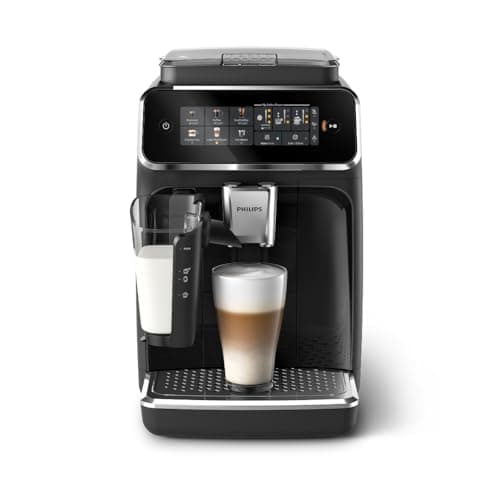
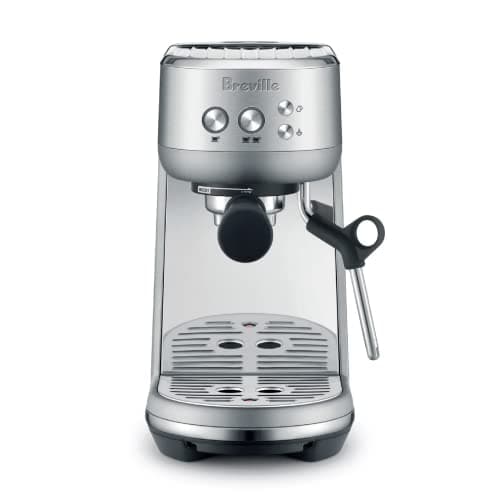
To make the trade concrete we are comparing the flagship of each type from our reviews. On the semi-automatic side, the Breville Bambino (BES450)— a small, fast, honest machine with a manual steam wand and real non-pressurized baskets, which crucially does not include a grinder, so you buy one separately. On the super-automatic side, the Philips 3300 Series LatteGo (EP3341/50) — a bean-to-cup that grinds, doses, brews and froths on its own, with the whole process sealed inside a brew group you never open. Both are excellent at what they set out to do. The only wrong choice is buying the one that does not match how you want to spend your time.

Read the verdicts and the scores below with that in mind. The overalls come out close, and they are supposed to — each machine wins the metrics that matter to its kind of buyer and loses the ones that matter to the other. If you find yourself drawn to the metrics one machine wins, that is your answer.

The short answer

Quick picks

#ProductBest forScorePrice
01
Breville Breville Bambino Espresso Machine (BES450)
Breville Bambino Espresso Machine (BES450)

The semi-automatic side of the choice, and the one to pick if the making matters as much as the drinking. You control the grind, the dose and the yield, so the ceiling on a single great shot is higher than any sealed bean-to-cup can reach, and a manual steam wand puts real latte art on the table. The honest catch sits right in the box: there is no grinder, so you budget for a proper burr grinder on top, and you supply a few minutes and some technique every morning. Choose it if you want to learn, tinker, and taste the difference your own hands make.

Best for control and shot ceiling
8.0
$299.95Amazon
02
Philips Philips 3300 Series LatteGo (EP3341/50)
Philips 3300 Series LatteGo (EP3341/50)

The super-automatic side of the choice, and the one to pick if you want the cup and not the craft. It grinds, doses, brews and froths from whole beans at a single touch, with total shot-to-shot consistency and no skill required, and the LatteGo carafe is two plastic parts that rinse in seconds, which is what decides whether you still use a bean-to-cup six months in. The trade is a lower ceiling and a brew group sealed inside the machine that you never open. You give up control over the shot in exchange for a latte that is the same every morning, whether you are awake or not.

Best for one-touch consistency
7.6
$499.99Amazon

#ad · Live prices from the Amazon Product API, as of Jul 27, 2026. Where we have no verified live price, we show none — a gap beats a number that has rotted.

In detail

The picks, in full

01
Breville Breville Bambino Espresso Machine (BES450)

Best for control and shot ceiling

Breville Bambino Espresso Machine (BES450)

ThermoJet: ~3-second heat-up54mm portafilter, 15-bar pumpManual steam wand + auto-purgeTiny footprint (~7.7 in wide)
8.0/10

The semi-automatic side of the choice, and the one to pick if the making matters as much as the drinking. You control the grind, the dose and the yield, so the ceiling on a single great shot is higher than any sealed bean-to-cup can reach, and a manual steam wand puts real latte art on the table. The honest catch sits right in the box: there is no grinder, so you budget for a proper burr grinder on top, and you supply a few minutes and some technique every morning. Choose it if you want to learn, tinker, and taste the difference your own hands make.

Shot ceiling
9
Consistency
7
Convenience
6
Control
10
Value
8

Pros

  • You control grind, dose and yield, so the ceiling on a single great shot is higher than any bean-to-cup
  • Real single-wall baskets and a manual steam wand put cafe-style extraction and latte art within reach
  • Near-instant ThermoJet heat-up and a footprint about the size of a paperback
  • The making is part of the pleasure; you taste the difference your technique makes

Cons

  • No grinder in the box, so you must budget for a separate burr grinder to get good shots
  • Asks a few minutes and some skill every morning; the cup is only as good as your dial-in
  • Manual steam wand means milk texturing is a skill to learn, not a button to press

Don't buy this if…

you want coffee without a hobby, or you are not willing to buy and dial in a separate grinder. A super-automatic like the Philips does all of that for you and asks nothing back.

$299.95View on Amazon

Price as of Jul 27, 2026. Prices change — Amazon's at checkout is the one that counts.

#ad · we may earn a commission from this link to Breville Bambino Espresso Machine (BES450)

02
Philips Philips 3300 Series LatteGo (EP3341/50)

Best for one-touch consistency

Philips 3300 Series LatteGo (EP3341/50)

12-step ceramic burrsLatteGo 2-part milk system6 one-touch drinksAquaClean: up to 5,000 cups
7.6/10

The super-automatic side of the choice, and the one to pick if you want the cup and not the craft. It grinds, doses, brews and froths from whole beans at a single touch, with total shot-to-shot consistency and no skill required, and the LatteGo carafe is two plastic parts that rinse in seconds, which is what decides whether you still use a bean-to-cup six months in. The trade is a lower ceiling and a brew group sealed inside the machine that you never open. You give up control over the shot in exchange for a latte that is the same every morning, whether you are awake or not.

Shot ceiling
7
Consistency
9
Convenience
10
Control
4
Value
8

Pros

  • Grinds, doses, brews and froths at one touch from whole beans; no skill and no second appliance to buy
  • Total shot-to-shot consistency; the cup is the same whether you are paying attention or not
  • LatteGo is two plastic parts with no tubes, so the milk system rinses in about 10 seconds, per Philips
  • Ceramic burrs with 12 grind steps and an AquaClean filter rated up to 5,000 cups between descales, per Philips

Cons

  • A sealed brew group you cannot open hides the process and limits what you can service yourself
  • Fixed dose and tamp put a lower ceiling on the shot than a dialed-in semi-automatic
  • Automatic milk only; there is no steam wand, so latte art is off the table

Don't buy this if…

you want to chase the best possible shot, learn to pull espresso, or texture your own milk for latte art. A semi-automatic and a real grinder give you the control a sealed machine never can.

$499.99View on Amazon

$899.9944% off

Price as of Jul 27, 2026. Prices change — Amazon's at checkout is the one that counts.

#ad · we may earn a commission from this link to Philips 3300 Series LatteGo (EP3341/50)

The real question is how you want to spend your mornings

Every spec below rolls up into one decision, and it is not really about coffee at all — it is about time and temperament. Picture the ten minutes after you wake up. On a semi-automatic, you grind fresh beans, weigh the dose, tamp, lock in the portafilter, watch the shot run and stop it on the yield you want, then steam the milk yourself. It is a small ritual, and for a certain person it is the best part of the day. On a super-automatic, you press one button and walk away, and ninety seconds later there is a cappuccino. If the first picture sounds like a pleasure, buy the semi-automatic. If it sounds like a chore you would resent by Wednesday, buy the super-automatic. That instinct is a more reliable guide than any score.

What the semi-automatic gives you, and asks for

The reason a semi-automatic can beat a bean-to-cup in the cup is control. You set the grind, the dose (how many grams of coffee) and the yield (how many grams come out), and those three variables are most of what separates a flat, sour or bitter shot from a balanced, sweet one. The Bambino also ships with real single-wall baskets and a manual steam wand, so a genuinely good barista can push it to cafe-adjacent results and pour latte art. That ceiling is real, and no sealed machine reaches it. The price of the ceiling is honest: espresso lives or dies on grind consistency, and the Bambino has no grinder, so you must pair it with a proper burr grinder for espresso— skipping that step wastes the machine entirely. You also supply the few minutes and the practice. For the first week your shots will be worse than a super-automatic's; a month in, if you care, they will be better.

What the super-automatic gives you, and hides

The super-automatic makes the opposite bargain. The Philips 3300 grinds from whole beans, doses and tamps to a fixed recipe, brews, and textures milk through the LatteGo carafe, all from one touch, and it does it identically every time. There is no dial-in, no skill floor, and no second appliance to buy because the grinder is inside. That consistency and convenience are the whole point, and they are worth a lot to a household that wants coffee rather than a hobby. What you give up is hidden inside the word "sealed." The brew group does the actual work of pressing and extracting, and on the Philips it stays inside the machine — you cannot pull it out, watch it, or tune the dose and tamp it uses. The shot is engineered to be acceptable with any bean rather than excellent with one, which is exactly why it is so dependable and exactly why its ceiling is lower. If you want the machine to be a black box that just works, that is a feature, not a flaw. The whole category is covered in our best super-automatic machines roundup.

The scores are close on purpose

The overalls land near each other — the Bambino a touch ahead on our rubric, the Philips just behind — and that is the honest result, not a fudge. Look at where each one wins. The semi-automatic takes control and shot ceiling by a wide margin, because those are its reason to exist. The super-automatic takes convenience and consistency just as decisively, for the same reason. They tie on value, because each delivers a lot for what it is. A single blended number cannot tell you which to buy; the shape of the wins can. Weight the two metrics that describe your morning and the choice makes itself.

What we did not test

We have not run these two machines side by side on a bench for months, and we will not pretend otherwise. These verdicts and scores compile Breville's and Philips's published specifications, cross-check the manuals, and weigh how each workflow behaves against our scoring rubric — they are documented judgments, not lab measurements. Our methodology explains exactly how we judge and what the scores do and do not mean.

Which one is right for you

  • Buy the semi-automatic (the Bambino) ifyou want the highest possible shot quality, you enjoy the ritual, you want to learn to steam milk and pour latte art, and you are happy to buy and dial in a separate grinder. It rewards attention with a better cup than any bean-to-cup can make — see the full Bambino review.
  • Buy the super-automatic (the Philips 3300) ifyou want a genuinely good latte at one touch, the same every morning, with no skill, no dial-in and no second appliance, and you are happy to trade the ceiling for that. It is coffee without the hobby — see the full Philips 3300 review, or the wider one-touch field in the super-automatic roundup.

Plenty of coffee-obsessed households own one of each — the super-automatic for a weekday the moment you wake up, the semi-automatic for a slow weekend shot you actually fuss over. If you can only own one, do not let the spec sheet decide. Decide how you want to spend your mornings, and buy the machine that fits.
How we picked

We did not lab-test this gear

Everyone in this category says they tested twenty machines. We have not pulled shots on every product here, and we say so. What we did instead: compiled the published specifications, cross-checked the manufacturer manuals, computed the running cost (wattage to energy, grams-per-shot to cost-per-cup), weighed aggregated owner reports, and scored each product against a published rubric. The scores are judgments from documented research — not measurements we took, because we do not have a test lab and we will not pretend we do. Where hands-on time would tell you more than a spec sheet, we flag it. Where a number came from someone else's work, we name them in Sources.

Questions

Frequently asked

What is the difference between a semi-automatic and a super-automatic espresso machine?
A semi-automatic (like the Bambino) leaves the coffee-making to you: you grind, dose, tamp, pull the shot and texture the milk by hand, so the cup depends on your skill and beans. A super-automatic (like the Philips 3300) does all of that from whole beans at one touch, the same every time, with the grinder built in. The semi-automatic offers control and a higher ceiling; the super-automatic offers consistency and convenience. See our super-automatic roundup for the hands-off options.
Does a semi-automatic make better espresso than a super-automatic?
It can, in the right hands. Because you control the grind, dose and yield and can use non-pressurized baskets, a dialed-in semi-automatic reaches a higher ceiling than a sealed bean-to-cup, which brews to a fixed recipe engineered to be acceptable with any bean. But 'can' is doing real work in that sentence. A beginner's first month of shots on a semi-automatic will often be worse than a super-automatic's, which are consistently good from day one. The semi-automatic wins on peak quality; the super-automatic wins on floor quality and reliability.
Do I need to buy a grinder for a semi-automatic machine?
Yes, and you should budget for it before you buy the machine. The Bambino has no grinder, and espresso is more sensitive to grind than to almost anything else, so pairing it with a cheap blade grinder wastes it entirely. A proper burr grinder is non-negotiable — see our best grinders for espresso. A super-automatic like the Philips has the grinder built in, which is a large part of why it costs and clutters less as a single appliance.
Is a super-automatic worth it, or is it a waste of money for serious coffee?
It is worth it for the right buyer and a waste for the wrong one. If you want a genuinely good latte at one touch every morning with no skill and no fuss, a super-automatic is exactly the product for you, and its consistency is a real feature, not a compromise. If you want to chase the best possible shot, learn to pull espresso and pour latte art, it will frustrate you, because the sealed brew group and fixed recipe put a ceiling on what you can do. Match the machine to whether you want coffee or a hobby.
Can you make latte art on a super-automatic espresso machine?
Not really. Latte art needs finely textured microfoam that you pour by hand, and a super-automatic like the Philips 3300 uses an automatic milk system that dispenses foam straight into the cup rather than a steam wand you control. If pouring rosettas and hearts is part of the appeal, you want a semi-automatic with a manual steam wand, like the Bambino, plus a little practice. If you just want a good, foamy cappuccino with zero effort, the automatic system does that well.

Keep reading

Receipts

Sources

We do not run a testing lab, and we do not pretend to. Where a measured number came from someone else's work, we name them and link them. Where we could not verify something, we say so on the page rather than quietly leaving it out. Read our full method.