Skip to content
Portafilter Co

Machines · Espresso Machines

Breville Bambino vs Gaggia Classic Evo Pro: which should you buy?

The two machines nearly every first-serious espresso buyer cross-shops — one built for near-instant convenience, one built to be opened, modified and kept for years. Here is the honest split on who each is for.

By Stephen V.Updated How we pick
#ad

We earn a commission when you buy through our Amazon links, at no extra cost to you. It never changes a verdict, and we say so when the cheaper product is the better buy. How this works.

If you are buying your first real espresso machine, these are the two names you keep landing on — and they are not the same kind of machine at all. The Breville Bambino is the modern answer: a tiny, plastic-bodied box with a ThermoJet heater that is ready in seconds, a 54mm portafilter and enough automation to forgive a beginner. The Gaggia Classic Evo Pro is the old answer, kept alive because it works: a single piece of stainless steel around a brass boiler, a genuine commercial 58mm portafilter, a steam wand you have to learn, and a design built to be unscrewed, serviced and modified for a decade. Neither is better. They are two philosophies, and the right one depends on whether you want a machine that gets out of your way or a machine you can grow into.

We have not put these two on a bench side by side — this is compiled from the published Breville and Gaggia specifications and the large body of aggregated owner reports for each machine, which is enough to tell you honestly where each one wins. If you have already narrowed things to the Breville and want the deep dive, read our full Breville Bambino review. And before you spend a cent on either: the single biggest mistake first-time buyers make is pouring the budget into the machine and pairing it with a bad grinder. Espresso lives or dies on the grind, so start with a grinder built for espresso— neither of these machines includes one.

The short answer

Quick picks

#ProductBest forScorePrice
01
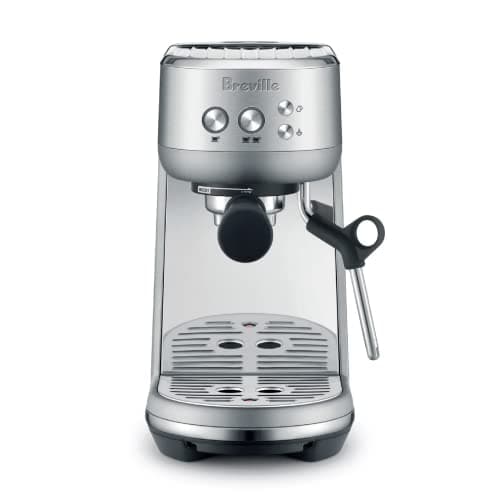
Breville Breville Bambino Espresso Machine (BES450)
Breville Bambino Espresso Machine (BES450)

The machine to buy if you want espresso with the least friction. Breville's ThermoJet heater brings it up to temperature in a few seconds, the auto-purge and pre-set shot buttons take the guesswork out, and it is small enough to fit almost any counter. You trade an all-out hobby machine for one that is genuinely forgiving and near-instant — if convenience is the point, nothing at this level does it better.

Best for convenience & small kitchens
7.0
$299.95Amazon
02
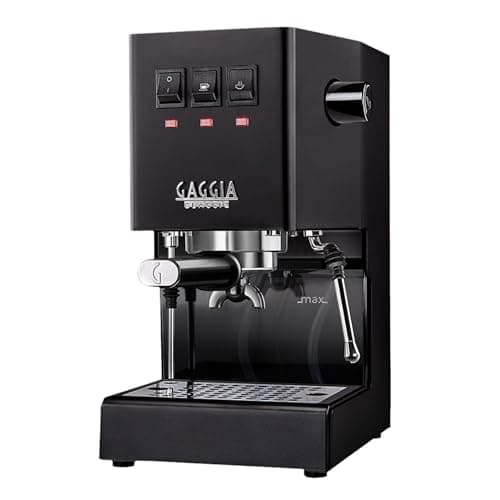
Gaggia Gaggia Classic Evo Pro
Gaggia Classic Evo Pro

The machine to buy if you want a hobby you can grow into and keep. A single-piece stainless body over a lead-free brass boiler, a real commercial 58mm portafilter, and a steam wand with genuine power — it asks more of you (there is no PID, so you learn to temperature surf) but it rewards you with control, a huge accessory world and a design famous for being serviced and modified for years. This is a machine you keep, not replace.

Best to grow into & modify
7.6
$501.21Amazon

#ad · Live prices from the Amazon Product API, as of Jul 26, 2026. Where we have no verified live price, we show none — a gap beats a number that has rotted.

In detail

The picks, in full

01
Breville Breville Bambino Espresso Machine (BES450)

Best for convenience & small kitchens

Breville Bambino Espresso Machine (BES450)

ThermoJet ~3s heat-up54mm portafilter, 15-bar pumpManual steam wand + auto-purgeTiny footprint
7.0/10

The machine to buy if you want espresso with the least friction. Breville's ThermoJet heater brings it up to temperature in a few seconds, the auto-purge and pre-set shot buttons take the guesswork out, and it is small enough to fit almost any counter. You trade an all-out hobby machine for one that is genuinely forgiving and near-instant — if convenience is the point, nothing at this level does it better.

Speed & convenience
9
Ease & forgiveness
9
Steam & milk control
6
Build & repairability
6
Upgradability & accessories
5

Pros

  • Ready to pull a shot in seconds — genuinely near-instant from cold
  • One of the smallest footprints of any real espresso machine
  • Forgiving for a beginner: pre-set volumes and auto-purge reduce the fiddling
  • Manual steam wand still lets you learn real milk texturing, not just froth
  • Light, tidy and quiet enough for a small kitchen or apartment

Cons

  • Plastic body — it feels like an appliance, not a heirloom machine
  • 54mm portafilter has a much smaller accessory world than the 58mm standard
  • Little to modify and not designed to be owner-serviced or repaired
  • Small single-boiler system means shot-then-steam waits, not simultaneous

Don't buy this if…

you want a machine to tinker with, repair and keep for a decade, or you want access to the full 58mm accessory ecosystem — that is exactly what the Gaggia is for.

The Bambino's whole argument is time and space. The ThermoJet system heats water on demand rather than keeping a boiler hot, so it wakes up in seconds instead of the several minutes a traditional boiler needs — if you make one or two coffees and leave, that is the difference between an easy habit and a chore. The footprint is tiny, the shot buttons give you a repeatable starting point, and the wand purges itself so you are not chasing steam residue. It is not a toy: you still pull a real shot and steam real milk with your own hand.

What you give up is depth. The body is plastic, the portafilter is 54mm rather than the commercial 58mm, and the machine is not built to be opened, tuned or repaired at home. For a lot of people that is exactly the right trade — they want good espresso, not a project. If that is you, it earns its place on our best espresso machines for beginners shortlist.

$299.95View on Amazon

Price as of Jul 26, 2026. Prices change — Amazon's at checkout is the one that counts.

#ad · we may earn a commission from this link to Breville Bambino Espresso Machine (BES450)

02
Gaggia Gaggia Classic Evo Pro

Best to grow into & modify

Gaggia Classic Evo Pro

58mm commercial portafilterLead-free brass boiler1,425 W, 72 oz tank15-bar Ulka pump
7.6/10

The machine to buy if you want a hobby you can grow into and keep. A single-piece stainless body over a lead-free brass boiler, a real commercial 58mm portafilter, and a steam wand with genuine power — it asks more of you (there is no PID, so you learn to temperature surf) but it rewards you with control, a huge accessory world and a design famous for being serviced and modified for years. This is a machine you keep, not replace.

Speed & convenience
6
Ease & forgiveness
6
Steam & milk control
8
Build & repairability
9
Upgradability & accessories
9

Pros

  • Genuine commercial 58mm portafilter — opens the whole accessory world
  • Single-piece stainless body over a brass boiler; built like real equipment
  • Designed to be opened, serviced and repaired — parts are widely available
  • One of the largest mod communities in home espresso (PID kits and more)
  • Powerful steam wand gives real control over milk once you learn it

Cons

  • No PID — you learn to temperature surf to hit a consistent shot
  • Longer heat-up than the Bambino; the brass boiler has to come up to temp
  • The stock two-hole steam tip has a learning curve for beginners
  • Heavier and larger on the counter, and still needs a separate grinder

Don't buy this if…

you want espresso in seconds with the least possible fuss and the smallest possible machine — the Bambino is the more forgiving, near-instant choice.

The Classic Evo Pro is the machine people mean when they say “buy once.” The body is a single fold of stainless steel, the boiler is lead-free brass, and almost every part is documented, sold and swappable — which is why the same design has been kept running and modified by owners for a very long time. The 58mm portafilter is the real commercial standard, so precision baskets, tampers and bottomless portafilters all fit without adapters.

The catch is that it asks you to learn. There is no PID controlling brew temperature, so owners “temperature surf” — timing the shot against the heating cycle to land in the right window — and the stock two-hole steam tip takes practice. That is not a flaw so much as the point: this is a machine for the person who wants a lever to pull on, and it sits comfortably on our best manual espresso machines list.

$501.21View on Amazon

Price as of Jul 26, 2026. Prices change — Amazon's at checkout is the one that counts.

#ad · we may earn a commission from this link to Gaggia Classic Evo Pro

The head-to-head, point by point

Heat-up and convenience:the Bambino wins outright. Its ThermoJet heater is ready in seconds where the Gaggia's brass boiler needs real warm-up time, and the Bambino's pre-set shot volumes and auto-purge make the daily routine close to push-button. If you make one coffee and dash, that gap matters more than anything else on this page. Steam wand and milk:the Gaggia takes it once you have put in the practice — its commercial-style wand has more power and control for latte-art-grade microfoam, while the Bambino's wand is friendlier for a beginner but less capable at the top end. The Gaggia's stock two-hole tip is the part most owners learn on (and many later swap).

Portafilter size and accessories:this is the quiet deciding factor. The Gaggia uses a genuine 58mm commercial portafilter, so the entire aftermarket — precision baskets, quality tampers, distribution tools and bottomless portafilters — fits it directly. The Bambino's 54mm size works well but lives in a smaller, Breville-centric accessory world. Build and repairability:the Gaggia is the clear winner — a stainless body over a brass boiler, documented parts, and one of the biggest DIY-repair and modification communities in home espresso, versus the Bambino's plastic-bodied, not-meant-to-be-opened design. Price: the two land close enough that cost should not be the tie-breaker; decide on philosophy, not a few dollars, and if budget is the frame, our best espresso machines under $500 puts both in context.

Which should you buy

  • Buy the Breville Bambino ifyou want espresso with the least friction, you have a small kitchen or want the smallest possible machine, and you would rather it just worked than have a project to tinker with. It is the near-instant, forgiving, hands-off choice — and our pick for most first-time buyers.
  • Buy the Gaggia Classic Evo Pro if you want a hobby machine to grow into, you like the idea of opening it up, modifying it and repairing it, and you want the 58mm accessory world and a steam wand with real headroom. It is the buy-once, keep-for-years choice for the person who wants to learn the craft.

Both of these need a grinder — budget for it

Neither machine includes a grinder, and this is the point people skip to their cost. A great espresso machine fed pre-ground or blade-ground coffee makes mediocre espresso; a modest machine fed a fresh, even grind makes very good espresso. Whichever of these you choose, plan to spend on a grinder built for espressobefore you spend up on the machine — it is the single biggest lever on the cup. We have not run these two side by side on a bench; the verdicts and scores here are compiled from the published Breville and Gaggia specifications and aggregated owner reports, and our methodology explains exactly how we judge and what we do and do not test.

How we picked

We did not lab-test this gear

Everyone in this category says they tested twenty machines. We have not pulled shots on every product here, and we say so. What we did instead: compiled the published specifications, cross-checked the manufacturer manuals, computed the running cost (wattage to energy, grams-per-shot to cost-per-cup), weighed aggregated owner reports, and scored each product against a published rubric. The scores are judgments from documented research — not measurements we took, because we do not have a test lab and we will not pretend we do. Where hands-on time would tell you more than a spec sheet, we flag it. Where a number came from someone else's work, we name them in Sources.

Questions

Frequently asked

Is the Gaggia Classic better than the Breville Bambino?
Neither is better outright — they are built for different owners. The Gaggia Classic Evo Pro is better if you want a serviceable, modifiable, 58mm machine to grow into and keep for years, with more steam control once you learn it. The Breville Bambino is better if you want near-instant heat-up, the smallest footprint and the most forgiving, hands-off routine. Decide on which philosophy fits you, not on a single winner.
Which is better for beginners?
The Breville Bambino is the easier starting point. Its ThermoJet heater is ready in seconds, its pre-set shot buttons give a repeatable baseline, and its auto-purge steam wand reduces the fiddling — so a beginner gets a good shot sooner. The Gaggia is very learnable too, but it asks you to temperature surf and to master a more powerful steam wand. If your priority is a gentle learning curve, start with the Bambino — see our best machines for beginners.
Does the Gaggia Classic have a PID?
No. The Gaggia Classic Evo Pro does not ship with a PID temperature controller, so owners 'temperature surf' — timing the shot against the boiler's heating cycle to land in the right brew-temperature window. It is a learnable technique and part of why the machine appeals to hobbyists, but if you want set-and-forget temperature stability out of the box, that is a point in the Bambino's favor. A PID is one of the most popular aftermarket mods for the Gaggia precisely because the machine is so easy to open and modify.
What size portafilter does each use?
The Gaggia Classic Evo Pro uses a genuine 58mm commercial portafilter, which is the standard on professional machines and opens up the full accessory world — precision baskets, quality tampers, distribution tools and bottomless portafilters all fit directly. The Breville Bambino uses a 54mm portafilter, which works well but has a smaller, more Breville-specific accessory selection. If aftermarket accessories and upgrades matter to you, the 58mm Gaggia has the advantage.
Do either include a grinder?
No — neither the Breville Bambino nor the Gaggia Classic Evo Pro includes a grinder, and you should budget for one separately. Espresso is more sensitive to grind quality than almost anything else, so pairing either machine with a good espresso grinder matters more than the choice between them. Start with our best grinders for espresso before you decide how much to spend on the machine.

Keep reading

Receipts

Sources

We do not run a testing lab, and we do not pretend to. Where a measured number came from someone else's work, we name them and link them. Where we could not verify something, we say so on the page rather than quietly leaving it out. Read our full method.