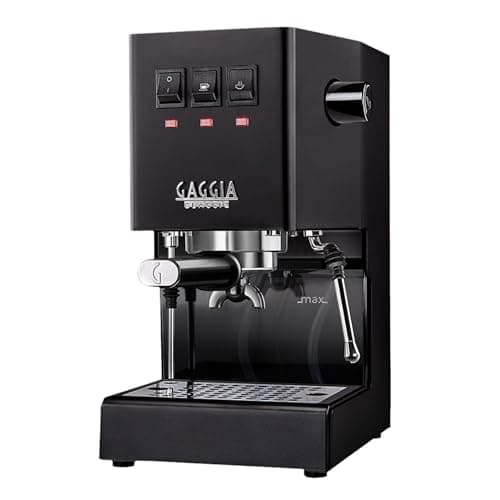
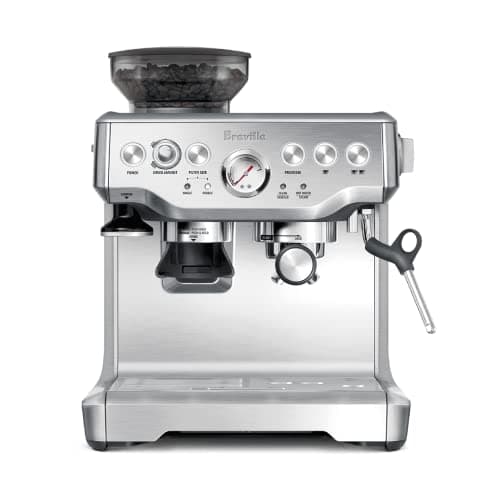
These two machines are cross-shopped constantly, and it is a strange comparison because they are barely the same kind of purchase. The Breville Barista Express is an all-in-one: a conical burr grinder, a 54mm brew system and a manual steam wand in one body, so whole beans go in the top and a finished drink comes out with nothing else on the counter. The Gaggia Classic Evo Pro is the opposite idea — a bare, serviceable 58mm machine with no grinder at all, designed to be the center of a setup you assemble yourself. Choosing between them is really choosing between two philosophies of home espresso.
The Barista Expressis the best-selling all-in-one for a reason: it folds the whole workflow — grind, dose, tamp, brew and steam — into one stainless body, and a front pressure gauge reads your extraction so you can see when a shot runs too fast. You buy one thing and you are pulling espresso the same afternoon. The Gaggia Classic Evo Pro hands you a genuine 58mm commercial portafilter, a lead-free brass boiler and a single-piece 17-gauge stainless body meant to be opened and modified for years — but no grinder, no on-screen guidance, and a learning curve you are expected to climb.
So the real question is not “which machine is better,” it is “do you want a finished appliance or a platform?” If you want to be making real milk drinks this week with one purchase, the Express is built for you. If you would rather buy a bombproof brewer, pair it with a dedicated espresso grinder, and grow into it, the Gaggia is the more rewarding long game. Both appear in our best espresso machines under $1,000 roundup, and the sections below break the decision down point by point.
The real decision: one box, or a machine plus a grinder
Strip everything else away and this is the choice. The Barista Express is a complete workflowin one purchase — grinder, brew system and steam wand — so the price you see is close to the price you pay to start pulling shots. The Gaggia is a machine only. A semi-automatic can extract only what the grind gives it, so on the Gaggia a good grinder is not optional; it is half the setup. That means the honest way to compare them is not machine-to-machine but Express-in-a-box against Gaggia-plus-a-grinder. Once you add the grinder the Gaggia needs, the two land far closer on total cost than the sticker suggests — and what you get for the Gaggia route is a better grinder you chose yourself and a machine built to last. If you have never owned an espresso setup, read do you need a grinder for espresso before you decide, because that single question drives the whole comparison.
Grinder: built in vs bought separately
The Express's built-in conical burr grinder is genuinely good and hugely convenient: it doses on demand straight into the 54mm portafilter, so you go from whole beans to a packed basket in seconds with nothing else to buy. The trade-off is that it is a fixed part of the machine. It grinds fine espresso well but it is good rather than great, especially on light roasts, and you cannot upgrade it without replacing the whole machine. The Gaggia takes the opposite bet: it ships with no grinder at all, which sounds like a drawback until you realize it means the single most important component of espresso is yours to choose. Pair it with a capable standalone espresso grinderand you can out-grind the Express comfortably — and when you want to level up in two years, you swap the grinder, not the machine.
54mm convenience vs the 58mm ecosystem
The Express uses a 54mm portafilter — wider than the cheap 51mm baskets, but narrower than the commercial 58mm. It works well, but it locks you into Breville-sized baskets and tampers. The Gaggia carries a genuine 58mm commercial portafilter, the same diameter used behind most cafe counters, which quietly unlocks an entire ecosystem of standard, cafe-grade parts: precision baskets, competition tampers, distribution tools and a bottomless portafilter that shows you exactly where a puck is channeling. That 58mm standard is the biggest reason enthusiasts keep steering learners toward the Gaggia: it is the cheapest way to buy into the parts everyone else uses, and it never boxes you in as you improve.
Ease, speed and the daily routine
For a beginner, the Express is friendlier every single morning. The grinder is right there, the pressure gauge tells you what your shot is doing, and there is nothing to temperature-surf. The Gaggia asks more of you: with no factory PID you time the heat-ready light to catch the right brew window, the two-hole steam wand gives you a jet of steam and expects you to texture the milk yourself, and its single boiler makes you wait between pulling a shot and steaming. None of that is a defect — it is the semi-automatic deal, and thousands of people brew superb espresso this way — but it is real friction the Express mostly removes. On steam and milk the two are closer than you would think: both are single-boiler machines with a manual wand, so both reward the same practice, and neither is a milk-drinks-for-a-crowd machine.
Which should most first buyers choose?
For most first buyers, we recommend the Barista Express— and that is why it is our primary pick here. If you are new to espresso, want one purchase, and would rather learn on a machine that grinds for you and shows you the shot, the Express gets you to a genuinely good milk drink faster and with less to assemble or troubleshoot. It is the lower-risk start. Choose the Gaggia Classic Evo Proinstead if you already know you want to go deep: if a genuine 58mm portafilter, a machine you can service and mod for a decade, and the freedom to pick and later upgrade your own grinder matter more to you than convenience out of the gate. Neither is a wrong answer — they are two honest routes to the same espresso, one finished and one open-ended. If you are torn between the Gaggia and a different small all-in-one, our Breville Bambino vs Gaggia Classic comparison covers the other version of this same one-box-versus-platform question, and the Rancilio Silvia vs Barista Express matchup takes the platform argument up a tier.
What we did not test
We have not run either machine on a bench for months, and we do not claim to have. This comparison compiles Breville's and Gaggia's published specifications, cross-checks the component and materials claims against the manufacturer and authorized-retailer documentation, and weighs aggregated owner reports and the long, well-documented Gaggia modding record against our scoring rubric. Portafilter sizes, boiler and body materials, grinder type, heating and pressure figures come from the makers' own materials, listed in Sources. Where hands-on time would tell you more than a spec sheet — exactly how the Express's built-in grinder compares shot to shot with a given standalone grinder, or how forgiving the Gaggia's temperature-surf window feels day to day — we say so rather than invent a number. Our scores are judgments from that documented research, not lab measurements; we do not have a lab, and our methodology says exactly that.
Which one fits you
- Buy the Barista Express if you want one machine that does everything, you are new to espresso, and you would rather start pulling shots this week than assemble a setup and learn temperature surfing. It is the safer, faster start for most people.
- Buy the Gaggia Classic Evo Pro if you want a genuine 58mm machine you can service and mod for years, and you are happy to add a separate grinder and learn technique to unlock a higher ceiling. It is the platform, not the appliance.
- Consider the reviews before you commit — the full Barista Express review and the Gaggia Classic Evo Pro review go deeper on each machine's limits.