Skip to content
Portafilter Co

Machines · Espresso Machines

Breville Barista Express vs Barista Touch: is the touchscreen worth the jump?

Two all-in-ones from the same Breville Barista line, built on the same grinder and the same 54mm brew system. One asks you to dial and steam by hand; the other adds a color touchscreen and textures the milk for you. Here is whether the automation is worth the premium.

By Stephen V.Updated How we pick
#ad

We earn a commission when you buy through our Amazon links, at no extra cost to you. It never changes a verdict, and we say so when the cheaper product is the better buy. How this works.

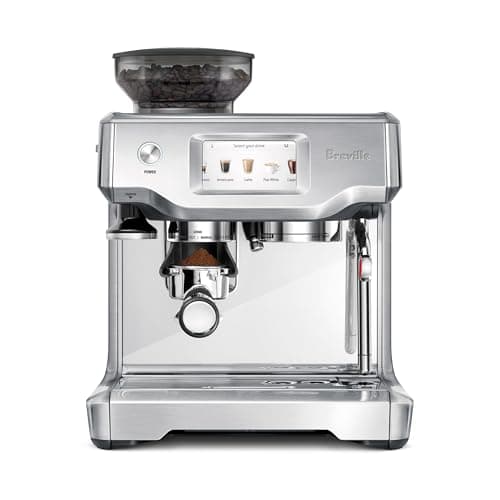
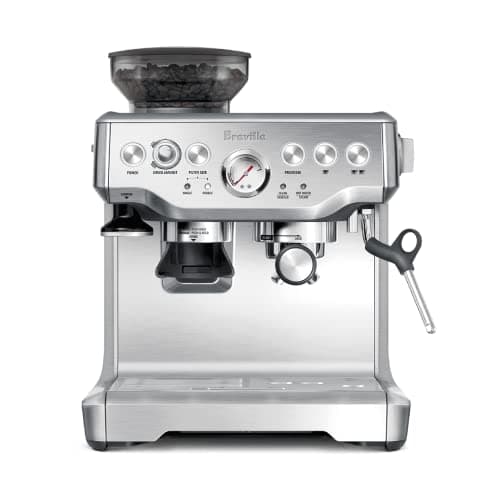
The Breville Barista Express and Barista Touch are the same machine at heart and two very different mornings in practice. Both are all-in-ones from Breville's Barista line — a conical burr grinder, a 54mm brew system and a steam wand folded into one stainless body, so you go from whole beans to a finished milk drink without a separate grinder on the counter. What separates them sits on the outside: the Express hands you a manual steam wand and an analog pressure gauge and asks you to dial and steam by hand, while the Touch adds a color touchscreen and an automatic wand that textures the milk for you. The whole decision is whether that screen and that automation are worth the jump.

Start with what they share, because it is most of the machine and it is the part that decides the cup. Both grind fresh straight into the portafilter, both brew through the same 54mm system, and both make genuinely good espresso from the proven Breville brew logic. Neither is a better brewer than the other in any way you will taste — the shot is not where the extra money goes. Read each machine in full in our Breville Barista Express review and our Breville Barista Touch review, and note that both sit near the top of our best espresso machines with a built-in grinder roundup for exactly that reason: the all-in-one convenience is the draw, and it is identical across the two.

The difference is entirely in how you interact with the machine. The Express is the manual, mechanical version: you texture milk yourself at a bare steam wand — the single hardest skill in home espresso — and you read your extraction off an analog needle. The Touch takes both of those jobs and automates them. Its wand carries a temperature probe: you choose a milk temperature and a foam level on the screen, drop the wand into the pitcher, and it heats and textures the milk hands-free, then stops on its own. The screen replaces the needle with numbers, preset drinks and on-screen coaching. That is the whole trade — the Express teaches you a craft, the Touch hands you a result — and everything below is about which of those two relationships with espresso you actually want. If you are cross-shopping the middle of the line too, the Barista Pro sits between them, and our Barista Pro vs Barista Touch comparison covers that step.

The short answer

Quick picks

#ProductBest forScorePrice
01
Breville Breville Barista Express (BES870XL)
Breville Barista Express (BES870XL)

The all-in-one to buy if you would rather keep the money and steam the milk yourself. The Express folds the whole workflow - grind, dose, tamp, brew and steam - into one body, and it hands you a manual steam wand and a front pressure gauge that teach you the craft by hand rather than doing it for you. Against the Touch you give up the color screen and the automatic milk, the ThermoCoil warm-up takes a few minutes, and you read an analog needle instead of on-screen coaching. But the shot in the cup is essentially the same, this is the most proven all-in-one there is, and every dollar you do not spend on the touchscreen buys beans, a scale or a better grinder that move your coffee further than automation does. If steaming milk by hand appeals rather than intimidates, this is the smarter spend.

Best all-in-one value if you steam by hand
8.2
$679.94Amazon
02
Breville Breville Barista Touch (BES880BSS)
Breville Barista Touch (BES880BSS)

The all-in-one to buy if the milk is the part you want handled for you. Its automatic steam wand textures milk hands-free to a temperature and foam level you set on a color touchscreen, so there is no wand technique to learn and the microfoam is the same every morning; the screen also stores a preset cafe menu and guides grind, dose and shot, which makes this the gentlest first machine in the Barista line. What it does not do is pull a dramatically better shot than the cheaper Express - same 54mm brew system, same style of integrated grinder - so you are paying a real premium for the automation and the screen, not a different espresso. The built-in grinder is still below a good standalone unit, and a touchscreen is one more electronic part that can eventually fail. Buy it for hands-free milk, not for a better cup.

Best all-in-one for hands-free milk
8.2
$938.00Amazon

#ad · Live prices from the Amazon Product API, as of Jul 30, 2026. Where we have no verified live price, we show none — a gap beats a number that has rotted.

In detail

The picks, in full

01
Breville Breville Barista Express (BES870XL)

Best all-in-one value if you steam by hand

Breville Barista Express (BES870XL)

Integrated conical burr grinderThermoCoil heating (few-minute warm-up)54mm portafilter, manual steam wandAnalog pressure gauge
8.2/10

The all-in-one to buy if you would rather keep the money and steam the milk yourself. The Express folds the whole workflow - grind, dose, tamp, brew and steam - into one body, and it hands you a manual steam wand and a front pressure gauge that teach you the craft by hand rather than doing it for you. Against the Touch you give up the color screen and the automatic milk, the ThermoCoil warm-up takes a few minutes, and you read an analog needle instead of on-screen coaching. But the shot in the cup is essentially the same, this is the most proven all-in-one there is, and every dollar you do not spend on the touchscreen buys beans, a scale or a better grinder that move your coffee further than automation does. If steaming milk by hand appeals rather than intimidates, this is the smarter spend.

Espresso quality
8
Steaming & milk texturing
7
Ease of use
9
Build & reliability
8
All-in-one convenience
9
Value
8

Pros

  • Genuinely all-in-one — grinds, doses, tamps, brews and steams from one body
  • Built-in conical burr grinder means no separate grinder or counter space
  • Manual steam wand teaches real milk texturing you control by hand
  • Front pressure gauge gives live feedback so you can see and fix a bad shot
  • 54mm portafilter is a real step up from cheap 51mm pressurized-only setups
  • The most proven, best-supported all-in-one, with abundant owner knowledge online

Cons

  • ThermoCoil warms up in a few minutes rather than instantly
  • Slightly less thermally stable than the ThermoJet in the Barista Pro
  • Large footprint — it is a grinder and a machine in one body
  • Built-in grinder is good but a dedicated espresso grinder is better
  • Pressurized vs single-wall basket choice trips up new owners
  • Manual steam wand has a learning curve if you have never textured milk

Don't buy this if…

you want the milk textured for you hands-free and a guided color touchscreen walking you through each drink. That is exactly what the Barista Touch adds, and if learning to steam milk is the part that puts you off home espresso, paying the Touch premium is the honest fix - not the manual-wand Express.

$679.94View on Amazon

Price as of Jul 30, 2026. Prices change — Amazon's at checkout is the one that counts.

#ad · we may earn a commission from this link to Breville Barista Express (BES870XL)

02
Breville Breville Barista Touch (BES880BSS)

Best all-in-one for hands-free milk

Breville Barista Touch (BES880BSS)

Automatic hands-free milk texturingColor touchscreen with drink presetsIntegrated conical burr grinder54mm portafilter, 15-bar pump
8.2/10

The all-in-one to buy if the milk is the part you want handled for you. Its automatic steam wand textures milk hands-free to a temperature and foam level you set on a color touchscreen, so there is no wand technique to learn and the microfoam is the same every morning; the screen also stores a preset cafe menu and guides grind, dose and shot, which makes this the gentlest first machine in the Barista line. What it does not do is pull a dramatically better shot than the cheaper Express - same 54mm brew system, same style of integrated grinder - so you are paying a real premium for the automation and the screen, not a different espresso. The built-in grinder is still below a good standalone unit, and a touchscreen is one more electronic part that can eventually fail. Buy it for hands-free milk, not for a better cup.

Milk automation
9
Interface
9
Grinder
8
Espresso quality
8
Ease of use
9
Value
6

Pros

  • Automatic steam wand textures milk hands-free to a set temperature and texture — the easiest milk of any Barista machine
  • Color touchscreen guides each drink and stores a preset cafe menu, the gentlest learning curve in the line
  • Same grind-to-cup convenience with the conical burr grinder built in
  • Large 67oz water tank means fewer refills than a compact machine
  • Genuinely good espresso from the proven 54mm Breville brew system

Cons

  • Espresso is very close to the cheaper Barista Express and Barista Pro — the upgrade is the milk automation and the screen, not the cup
  • The most expensive machine in the Barista line by a clear margin
  • Automatic milk texturing trades away the fine control a manual wand gives you once you learn latte art
  • Large footprint — the built-in grinder, hopper and screen need real counter depth and cabinet clearance
  • A touchscreen is one more electronic part that can fail, and repairs out of warranty are not cheap
  • Built-in grinder is convenient but a dedicated grinder still grinds better

Don't buy this if…

you actively want to learn to steam milk by hand for latte art, or you are watching the budget. The manual-wand Barista Express pulls a near-identical shot for meaningfully less, and the money saved buys a scale and better beans that improve the cup more than the screen does.

$938.00View on Amazon

$999.956% off

Price as of Jul 30, 2026. Prices change — Amazon's at checkout is the one that counts.

#ad · we may earn a commission from this link to Breville Barista Touch (BES880BSS)

The automatic milk wand: what the Touch really adds

Almost the entire premium of the Barista Touch comes down to one feature, so it is worth being precise about it. On the Express you steam milk yourself: you angle the pitcher against a bare jet of steam, listen for the paper-tearing hiss that means you are drawing air in, and stop before the milk scalds. It is a genuine skill, and it is the part of home espresso that beginners find hardest and abandon most often. The Touch replaces that skill with a setting. Its wand has a temperature probe on it; you pick a target milk temperature and a foam level on the screen, drop the wand into the pitcher, and the machine draws air into the milk, rolls it into microfoam and cuts off when it reaches your target. You do not hold the pitcher or judge anything by ear, and because the temperature is measured rather than guessed, it is very hard to burn the milk. The honest trade is control: a manual wand, once mastered, pours tighter microfoam and real latte art, while the automatic wand hands you a consistent, fixed result. So the Touch is right for someone who wants the drink; the Express is right for someone who wants the craft.

The touchscreen vs the analog gauge

The second upgrade is the interface. The Express reads your extraction on an analog pressure gauge — a needle you learn to interpret — while the Touch puts a full color touchscreen in its place, with a menu of preset cafe drinks and on-screen prompts that walk you through grind, dose and shot. For a first-time user that guidance genuinely flattens the learning curve: instead of reading a needle, you read numbers, change one thing, and see what happens. It does not brew a better shot than the Express can with a little know-how, and experienced owners lean on it less over time, but as a way to make the whole machine approachable it is real convenience rather than decoration. The one honest caveat runs the other way: a touchscreen is an electronic component that can eventually fail, where an analog gauge largely cannot, and an out-of-warranty screen repair is not cheap. That is the quiet cost of the friendlier interface, and it is worth weighing if you plan to keep the machine for many years.

Same grinder, same cup — so which do you buy?

Here is the part the marketing will not lead with, and it is the crux of the decision: the Express and the Touch pull very similar espresso. They share the same 54mm brew system and the same style of integrated conical burr grinder, so the shot in the cup is not where the extra money goes — the screen and the automatic milk are. That makes the choice refreshingly clear. Buy the Barista Express if you are happy to steam milk by hand or actively want to learn to, and you would rather put the savings toward beans, a scale or a better grinder; it makes the same cup for meaningfully less. Buy the Barista Touchif hands-free milk and a guided screen are worth a premium to you, and steaming milk yourself is the part that has been putting you off home espresso. If you are on the fence, the Barista Pro is the middle path — it adds the Express's near-instant heat-up and an LCD guide but keeps a manual wand, and our Barista Pro vs Barista Touch comparison weighs whether the automatic milk is worth stepping up one more rung.

The grinder is the ceiling — and how we score

One thing is true of both machines and it decides your cup more than the screen ever will: the built-in grinder is good, but it is not the equal of a good standalone unit, and you cannot upgrade it on its own. For medium and dark roasts the integrated grinder is all most people will ever need, and its convenience is the whole reason to buy an all-in-one. But the pickier your beans get — very fresh, light-roast single origins especially — the more a dedicated grinder pulls ahead, because the grind, not the machine, is what most limits an espresso shot. If grind quality is your priority, the honest path is a compact grinderless machine paired with a standalone unit from our best grinders for espresso; the grinder is fully half the setup either way. And to be clear about how we reached these verdicts: we did not bench-test either machine. Our methodologyexplains how we score from Breville's published specifications, decoded manuals and aggregated owner reports rather than from lab measurements we did not take.

How we picked

We did not lab-test this gear

Everyone in this category says they tested twenty machines. We have not pulled shots on every product here, and we say so. What we did instead: compiled the published specifications, cross-checked the manufacturer manuals, computed the running cost (wattage to energy, grams-per-shot to cost-per-cup), weighed aggregated owner reports, and scored each product against a published rubric. The scores are judgments from documented research — not measurements we took, because we do not have a test lab and we will not pretend we do. Where hands-on time would tell you more than a spec sheet, we flag it. Where a number came from someone else's work, we name them in Sources.
Questions

Frequently asked

Does the Barista Touch make better espresso than the Barista Express?
No. The espresso is essentially the same. Both machines share the same 54mm brew system and the same style of integrated conical burr grinder, so with the same beans, grind and dose the shot in the cup is very close. The Touch adds a color touchscreen and an automatic hands-free milk wand — it does not upgrade the coffee. Buy the Touch for the automation, not for a better cup, and see both ranked in our best machines with a built-in grinder roundup.
Is the touchscreen worth the extra money?
It depends on the milk. The touchscreen's real value is that it comes paired with the automatic steam wand: if steaming milk by hand is the part that intimidates you, the Touch does it for you and the screen guides every drink, which is worth a premium to a lot of buyers. If you are happy to learn the manual wand and read an analog gauge, the screen is a convenience you can skip, and the Barista Express pulls the same shot for less.
Do both machines have a built-in grinder?
Yes. Both the Express and the Touch are all-in-ones with the same style of integrated conical burr grinder that grinds fresh straight into the portafilter, so neither needs a separate grinder to get started. The trade-off is the same on both: a machine grinder cannot match a good dedicated unit and you cannot upgrade it on its own. If grind quality matters most to you, see our best grinders for espresso.
Which heats up faster, the Express or the Touch?
The Express uses Breville's ThermoCoil heater, which takes a few minutes to come up to temperature. Breville's published materials disagree on the exact heater and warm-up figure for the BES880 Touch, so we deliberately do not quote a specific heat-up time for it and do not lean on speed as a deciding factor between these two. In daily use, warm-up is a minor habit on either machine - switch it on, weigh your beans, and it is ready by the time you are. If near-instant readiness is a priority, the Barista Pro with its ThermoJet heater is the machine built around that.
Should I get the Express, the Touch, or the Barista Pro?
All three pull very similar espresso, so it comes down to the interface and the milk. Get the Barista Express if you want the best value and are happy to steam milk by hand at a manual wand. Get the Barista Touchif you want the milk textured for you hands-free and a guided touchscreen. The Barista Pro sits in the middle — near-instant heat-up and an LCD guide, but still a manual wand — and our Barista Pro vs Barista Touch comparison covers whether the automatic milk is worth the top rung.

Keep reading

Receipts

Sources

We do not run a testing lab, and we do not pretend to. Where a measured number came from someone else's work, we name them and link them. Where we could not verify something, we say so on the page rather than quietly leaving it out. Read our full method.