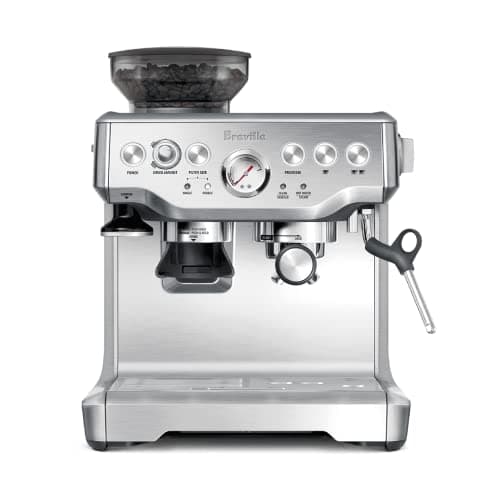
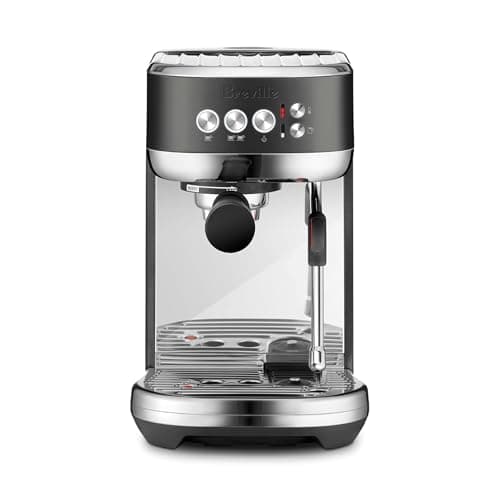
The Breville Bambino Plus and the Barista Express are both Breville, both make genuinely good espresso, and both are aimed at someone building their first serious home setup — but they split on the single most consequential decision in that build: whether the grinder lives inside the machine or beside it. The Bambino Plus is a compact brew-and-steam machine about the width of a paperback that grinds nothing; you pair it with a separate burr grinder. The Barista Express folds a conical burr grinder into its body, so one box does everything from whole beans to a finished milk drink. Same brand, same cup quality in the end, two very different footprints and two very different shopping lists.
That grinder question drags the rest of the decision with it. Building the grinder into the Express buys you real convenience: one appliance, nothing else to research or find room for, and fresh grounds dosed straight into the portafilter. It also makes the Express a large machine — a grinder and a machine in one body — running a manual steam wand and a ThermoCoil heater that wants a few minutes to warm up. Read it in full in our Breville Barista Express review, and note that it is the same trade the base Bambino makes against the Express, which we cover in Barista Express vs Bambino.
Leaving the grinder out is what lets the Bambino Plus be so small and so quick — ThermoJet heat-up in about three seconds and a footprint that hides in a corner — and the Plus spends that saved space on the feature the Express does not have: an automatic steam wand that textures milk hands-free to a temperature and foam level you set. So you are really choosing between one-box simplicity and a two-box setup that is smaller, faster and frothes the milk for you, but asks you to buy and house a grinder. Read the compact machine in full in our Breville Bambino Plus review; this page is about which of the two setups belongs on your counter.
One box or two: the grinder decides the setup
Everything about this comparison flows from one choice: is the grinder inside the machine or beside it? The Barista Express builds a conical burr grinder into its body, so a single purchase takes you from whole beans to a dosed portafilter with nothing else on the counter — the convenience is genuine, and for a lot of first-time buyers it is the whole appeal. The Bambino Plus grinds nothing; it is a brew-and-steam machine that assumes you will pair it with a separate espresso grinder. That sounds like a disadvantage, but it cuts both ways. A good standalone grinder out-grinds any unit small enough to fit inside a machine, so the two-box route generally makes better espresso for the same total spend, and it lets you upgrade the grinder later without replacing the machine. The Express route is tidier and simpler; the Bambino Plus route is more capable and more flexible. Neither is wrong — they are optimized for different priorities.
Milk and heat-up: where the Bambino Plus pulls ahead
The two machines are not equal on features, and this is where the compact one wins. The Bambino Plus has an automatic steam wand: a temperature probe reads the milk, you pick a temperature and a foam level, and the machine textures the milk hands-free and stops on its own, so a beginner gets consistent microfoam with no wand technique to learn. The Barista Express uses a manual steam wand— more control and real latte art once you master it, but the single hardest beginner skill to acquire. On heat-up the gap is just as clear: the Plus uses ThermoJet and is ready in about three seconds, while the Express's ThermoCoil wants a few minutes to come up to temperature. So on milk automation and speed the smaller, cheaper machine is actually the more advanced of the two — the Express spends its size and its price on the built-in grinder instead, not on the wand or the heater.
Footprint and total setup — which do you buy?
Weigh the whole setup, not just the machine, because that is what lands on your counter. The Barista Express is one large box, but it is the only box: measure for a tall all-in-one with a bean hopper on top and clearance under your cabinets, and you are done. The Bambino Plus is a tiny box, but it needs a second box next to it — a grinder — so the honest comparison is Express-alone against Bambino-Plus-plus-grinder. Even so, a small machine and a compact grinder side by side can take less depth than one tall all-in-one, and the pair makes better coffee. So the recommendation is clean. Buy the Barista Express if you want the simplest possible shopping list and one appliance that does everything, and you are happy to steam milk by hand and wait a few minutes for warm-up. Buy the Bambino Plus if you want hands-free milk, near-instant heat-up and the better long-term espresso setup, and you do not mind owning and housing a separate grinder. See where the Express ranks among the one-box options in our best espresso machines with a built-in grinder roundup.
The grinder is half the setup — and how we score
Whichever way you lean, the grinder decides your cup more than any other single thing, and it is worth being blunt about that. On the Bambino Plus it is a literal separate purchase you must budget for from the start — a cheap blade grinder throws away most of what you paid for the machine — so read our best grinders for espresso before you spend a cent, because a good burr grinder is genuinely half the setup. On the Barista Express the grinder is built in and good for most roasts, but it is still not the equal of a dedicated unit, and you cannot upgrade it on its own; the pickier your beans get, the more that ceiling shows. As for how we reached these verdicts: we did not bench-test either machine. Our methodologyexplains how we score from Breville's published specifications, decoded manuals and aggregated owner reports rather than from lab measurements we did not take.
How we picked
We did not lab-test this gear
Everyone in this category says they tested twenty machines. We have not pulled shots on every product here, and we say so. What we did instead: compiled the published specifications, cross-checked the manufacturer manuals, computed the running cost (wattage to energy, grams-per-shot to cost-per-cup), weighed aggregated owner reports, and scored each product against a published rubric. The scores are judgments from documented research — not measurements we took, because we do not have a test lab and we will not pretend we do. Where hands-on time would tell you more than a spec sheet, we flag it. Where a number came from someone else's work, we name them in Sources.