Skip to content
Portafilter Co

Machines · Espresso Machines

Rancilio Silvia vs Breville Barista Express: which should you buy?

A commercial-grade 58mm single boiler with no grinder, against an all-in-one that grinds, brews and steams from one box. This is the build-a-setup-around-it versus everything-in-one-purchase decision, decided.

By Stephen V.Updated How we pick
#ad

We earn a commission when you buy through our Amazon links, at no extra cost to you. It never changes a verdict, and we say so when the cheaper product is the better buy. How this works.

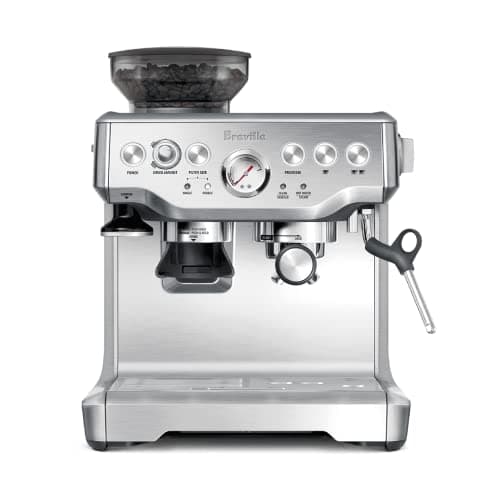
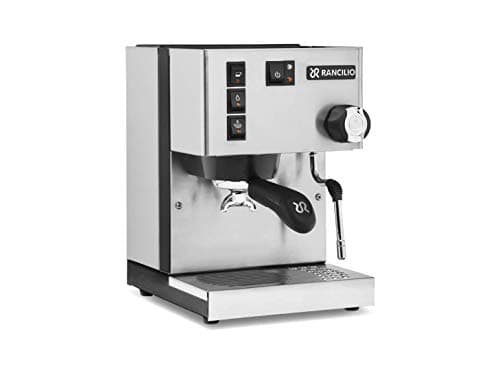
These two machines answer the same question — “how do I make cafe-quality espresso at home?” — in almost opposite ways. The Rancilio Silvia is a bare, commercial-grade single boiler: a heavy chromed-brass group head, an insulated brass boiler and a genuine 58mm portafilter in a stainless body meant to be serviced and kept for a decade, with no grinder and no hand-holding. The Breville Barista Express is an all-in-one that folds a conical burr grinder, a 54mm brew system and a manual steam wand into a single body, so whole beans go in the top and a finished drink comes out. One is a brewer you build a setup around; the other is the setup, in one box.

The Silviais the machine enthusiasts reach for when they want to explain what “built like a cafe machine” means in a home kitchen. Its brass mass makes it a thermal rock once warm, its 58mm group opens the whole world of commercial portafilter accessories, and it is famously happy to accept the single most popular home-espresso upgrade, a bolt-on PID. The Barista Express is the best-selling all-in-one for a reason: it removes every barrier between you and a milk drink, with a built-in grinder and a front pressure gauge that reads your shot as it pulls. You buy one thing and you are brewing that afternoon.

So the decision is not really about which pulls a better shot — both can pull an excellent one. It is about whether you want to assemble and learn a permanent setup, or start immediately with everything included. If you want a bombproof brewer to build around, pair the Silvia with a dedicated espresso grinder and grow into it. If you want the shortest, simplest path from beans to a latte, the Express is built for exactly that. Both sit in our best espresso machines under $1,000 roundup, and the sections below settle it.

The short answer

Quick picks

#ProductBest forScorePrice
01
Rancilio Rancilio Silvia
Rancilio Silvia

The pick if you want a bombproof brewer to build a permanent setup around. The Silvia takes commercial parts from Rancilio's cafe machines — a chromed brass group head in constant contact with an insulated brass boiler, a genuine 58mm portafilter and a full-motion stainless steam wand — and puts them in a home-sized body built to be serviced and modded for years. Against the Express its advantages are build, thermal stability and ceiling: once the brass is warmed through it is a thermal rock, and it is one of the most PID-friendly machines ever made. But it includes nothing you don't buy: no grinder, no on-screen guidance, a commercial wand that takes practice, a single boiler that makes you wait between brewing and steaming, and a long warm-up. It is a project you keep, not a plug-and-play.

Best bombproof brewer to build around
7.0
$995.00Amazon
02
Breville Breville Barista Express (BES870XL)
Breville Barista Express (BES870XL)

The pick if you want everything in one purchase and the shortest path to a real milk drink. The Barista Express folds a conical burr grinder, a 54mm brew system and a manual steam wand into one body, so whole beans go in the hopper and a hand-textured latte comes out with nothing else on the counter — and the front pressure gauge shows a beginner exactly what a shot is doing. Against the Silvia it wins decisively on completeness and ease: the grinder is included, warm-up is a few minutes rather than a long thermal soak, and there is no temperature surfing to learn. What you give up is the Silvia's commercial brass build, its 58mm ecosystem and its higher ceiling. For most first buyers, being brewing this week beats a ceiling you may take years to reach.

Best all-in-one to start on
8.0
$679.94Amazon

#ad · Live prices from the Amazon Product API, as of Jul 30, 2026. Where we have no verified live price, we show none — a gap beats a number that has rotted.

In detail

The picks, in full

01
Rancilio Rancilio Silvia

Best bombproof brewer to build around

Rancilio Silvia

Commercial chromed-brass group head0.3 L insulated brass boiler58mm portafilter, full-motion steam wand2 L pour-over reservoir, single-piece steel body
7.0/10

The pick if you want a bombproof brewer to build a permanent setup around. The Silvia takes commercial parts from Rancilio's cafe machines — a chromed brass group head in constant contact with an insulated brass boiler, a genuine 58mm portafilter and a full-motion stainless steam wand — and puts them in a home-sized body built to be serviced and modded for years. Against the Express its advantages are build, thermal stability and ceiling: once the brass is warmed through it is a thermal rock, and it is one of the most PID-friendly machines ever made. But it includes nothing you don't buy: no grinder, no on-screen guidance, a commercial wand that takes practice, a single boiler that makes you wait between brewing and steaming, and a long warm-up. It is a project you keep, not a plug-and-play.

Out-of-box completeness
4
Ease of use
5
Espresso ceiling & control
9
Steam & milk
8
Build & serviceability
10
Value as a full setup
6

Pros

  • Commercial chromed-brass group head in constant contact with the boiler — thermal mass that keeps shot temperature rock-steady once warm
  • Genuine 58mm commercial portafilter, so every cafe-grade basket, tamper, funnel and bottomless portafilter simply fits
  • Insulated brass boiler and single-piece stainless body built to be repaired, not binned — these machines run a decade and beyond
  • Powerful full-motion stainless steam wand that textures proper microfoam once you learn it
  • One of the most PID-friendly machines ever made — you choose and later upgrade your own grinder too

Cons

  • No grinder in the box, and on a machine this capable the grinder matters as much as the machine — a real added cost
  • No factory PID: you temperature-surf the heat-ready light, or budget for an aftermarket PID kit on top
  • Needs a long warm-up before the brass is thermally stable — this is not a grab-and-go machine
  • The small 0.3 L single boiler means a real wait between pulling a shot and steaming milk
  • Costs meaningfully more than the Express once you factor the machine alone, before the grinder it still needs

Don't buy this if…

you want to be making milk drinks this week with one purchase and no learning curve. The Silvia is a bare platform that expects a separate grinder, a long warm-up and patience at the wand; if convenience is the priority, the all-in-one Barista Express is the smarter start.

$995.00View on Amazon

Price as of Jul 30, 2026. Prices change — Amazon's at checkout is the one that counts.

#ad · we may earn a commission from this link to Rancilio Silvia

02
Breville Breville Barista Express (BES870XL)

Best all-in-one to start on

Breville Barista Express (BES870XL)

Integrated conical burr grinder (16 settings)ThermoCoil heating with PID, 9-bar extraction54mm portafilter, manual steam wandAnalog pressure gauge, pre-infusion
8.0/10

The pick if you want everything in one purchase and the shortest path to a real milk drink. The Barista Express folds a conical burr grinder, a 54mm brew system and a manual steam wand into one body, so whole beans go in the hopper and a hand-textured latte comes out with nothing else on the counter — and the front pressure gauge shows a beginner exactly what a shot is doing. Against the Silvia it wins decisively on completeness and ease: the grinder is included, warm-up is a few minutes rather than a long thermal soak, and there is no temperature surfing to learn. What you give up is the Silvia's commercial brass build, its 58mm ecosystem and its higher ceiling. For most first buyers, being brewing this week beats a ceiling you may take years to reach.

Out-of-box completeness
10
Ease of use
9
Espresso ceiling & control
6
Steam & milk
7
Build & serviceability
7
Value as a full setup
9

Pros

  • Genuinely all-in-one — grinds, doses, brews and steams from one body, no separate grinder needed
  • Front pressure gauge gives live feedback so a beginner can see and fix a bad shot
  • Built-in conical burr grinder doses straight into the 54mm portafilter — beans to basket in seconds
  • Warms up in a few minutes and needs no temperature surfing, unlike the brass-mass Silvia
  • The most proven, best-supported all-in-one, with abundant owner knowledge online

Cons

  • 54mm baskets are not the cafe-standard 58mm, so the accessory ecosystem is narrower
  • Built-in grinder is good but a dedicated espresso grinder is better, and you cannot upgrade it alone
  • Lighter thermoblock heating lacks the brass thermal mass that makes the Silvia so stable
  • Large footprint — it is a grinder and a machine in one body
  • More electronics than the Silvia means less you can service yourself over a very long life

Don't buy this if…

you want a machine you can service and mod for a decade, a genuine 58mm commercial portafilter, and the commercial brass thermal stability of a benchmark single boiler — that is the Silvia's whole case, and a separates setup will outgrow the Express's built-in grinder.

$679.94View on Amazon

Price as of Jul 30, 2026. Prices change — Amazon's at checkout is the one that counts.

#ad · we may earn a commission from this link to Breville Barista Express (BES870XL)

The real decision: build a setup, or buy it in one box

Everything else follows from this. The Barista Express is a complete workflowin one purchase — grinder, brew system and steam wand — so you start pulling shots the day it arrives. The Silvia is a brewer only, and a superb one, but it is the centre of a setup you assemble: a good grinder is not optional on a single boiler, because the machine can only extract what the grind gives it. So the honest comparison is not machine-to-machine but Express-in-a-box against Silvia-plus-a-grinder — and the Silvia route also asks for patience, a long warm-up and a bit of technique before it rewards you. If you have never owned a setup, read do you need a grinder for espresso first; that question drives the whole decision.

Build and the long game: commercial brass vs consumer all-in-one

This is where the Silvia earns its reputation. Its group head is a heavy chunk of chromed brass bolted straight to an insulated brass boiler, so the metal that receives your portafilter is heated by the same water that brews the shot — and brass holds heat far better than the lighter thermoblock assembly in the Express. That thermal mass is why a warmed-up Silvia is unusually stable shot to shot, and why owners keep these machines running for a decade with cheap, widely stocked parts. The Express is well built for a consumer appliance, but it is an appliance: more electronics, a built-in grinder you cannot service or upgrade alone, and a design meant to be used rather than opened. If you value a machine you can maintain and mod for years, the Silvia is in a different class; if you just want something dependable that works out of the box, the Express is more than enough.

The 58mm ecosystem vs 54mm convenience

The Silvia carries a genuine 58mm portafilter, the diameter used behind most cafe counters, which unlocks an entire ecosystem of standard, cafe-grade parts: precision baskets, competition tampers, distribution tools and a bottomless portafilter that shows you exactly where a puck is channeling. The Express's 54mm is perfectly capable but locks you into Breville-sized baskets and tampers. For a first shot the difference is minor; for anyone who wants to keep tuning and upgrading, the 58mm standard is the more open path — and it is the same argument that makes the Silvia a platform you grow into rather than a machine you eventually outgrow.

Ease, warm-up and steam

Day to day, the Express is the easier machine by a wide margin. The grinder is built in, the gauge tells you what your shot is doing, warm-up is a few minutes, and there is no temperature surfing to learn. The Silvia asks for more: a long warm-up before the brass is truly stable, the heat-ready-light timing that stands in for a factory PID, and a commercial full-motion steam wand that gives you a strong jet of steam and expects you to texture the milk yourself. On steam the Silvia is the stronger tool once you can drive it — more power and a better wand — but both are single boilers, so both make you wait between brewing and steaming, and neither is built for making drinks for a crowd back to back.

Which should most first buyers choose?

For most first buyers, we recommend the Barista Express— and that is why it is our primary pick here. If you are new to espresso and want one purchase that grinds, brews and steams with a gauge to guide you, the Express gets you to a genuinely good milk drink this week with far less to assemble, warm up or troubleshoot. It is the lower-risk, faster start. Choose the Rancilio Silviainstead if you already know you want to build a permanent, serviceable setup around a commercial-grade brewer: if a genuine 58mm portafilter, brass thermal stability, a bolt-on PID path and a machine you keep for a decade matter more to you than convenience out of the gate, the Silvia is the more rewarding long game — provided you budget for the grinder it needs. If you are weighing the Silvia against its obvious rival, our Rancilio Silvia vs Gaggia Classic comparison covers the two 58mm single boilers head to head, and the Barista Express vs Gaggia Classic matchup takes the all-in-one against the cheaper platform.

What we did not test

We have not run either machine on a bench for months, and we do not claim to have. This comparison compiles Rancilio's and Breville's published specifications, cross-checks the component and materials claims against the manufacturer and authorized-retailer documentation, and weighs aggregated owner reports and the long, well-documented Silvia modding record against our scoring rubric. The group-head and boiler materials, portafilter sizes, reservoir capacity, grinder type and heating figures come from the makers' own materials, listed in Sources. Where hands-on time would tell you more than a spec sheet — exactly how long the Silvia's warm-up needs to feel truly stable, or how the Express's built-in grinder compares shot to shot with a given standalone grinder — we say so rather than invent a number. Our scores are judgments from that documented research, not lab measurements; we do not have a lab, and our methodology says exactly that.

Which one fits you

  • Buy the Barista Express if you want one machine that does everything, you are new to espresso, and you would rather start brewing this week than assemble a setup, learn temperature surfing and wait out a long warm-up.
  • Buy the Rancilio Silvia if you want a commercial-grade 58mm brewer you can service and mod for a decade, and you are happy to add a separate grinder and learn technique to unlock its ceiling and brass thermal stability.
  • Consider the reviews before you commit — the full Rancilio Silvia review and the Barista Express review go deeper on each machine's limits.
How we picked

We did not lab-test this gear

Everyone in this category says they tested twenty machines. We have not pulled shots on every product here, and we say so. What we did instead: compiled the published specifications, cross-checked the manufacturer manuals, computed the running cost (wattage to energy, grams-per-shot to cost-per-cup), weighed aggregated owner reports, and scored each product against a published rubric. The scores are judgments from documented research — not measurements we took, because we do not have a test lab and we will not pretend we do. Where hands-on time would tell you more than a spec sheet, we flag it. Where a number came from someone else's work, we name them in Sources.

Questions

Frequently asked

Is the Rancilio Silvia or the Barista Express better for a beginner?
The Barista Express is the friendlier first machine for most beginners: the grinder is built in, the pressure gauge shows you what a shot is doing, warm-up is quick, and there is no temperature surfing to learn. The Silvia is better for a beginner who specifically wants to build a permanent, upgradeable setup and is willing to add a separate grinder, wait out a long warm-up and learn technique. Start with the Express for ease, the Silvia for the long game.
Does the Rancilio Silvia come with a grinder?
No. The Silvia is sold as the machine only, so you must budget for a grinder separately — and on a single boiler the grinder matters as much as the machine, because the shot is only as good as the grind feeding it. That is the core difference from the Barista Express, which has a conical burr grinder built in. Plan the Silvia as a machine-plus-grinder purchase and read our best grinders for espresso first.
Does the Silvia really pull better espresso than the Barista Express?
With the right grinder and a bit of technique, the Silvia has the higher ceiling: its commercial brass group is a thermal rock once warm, its 58mm ecosystem is more open, and it accepts a PID for cafe-steady temperature. But that ceiling only shows up after you add a good grinder and learn to drive the machine. Out of the box, with its built-in grinder and gauge, the Express gets a beginner to a consistently good shot much faster. The Silvia rewards effort; the Express rewards none.
Which is cheaper once you add everything you need?
The Barista Express is usually the cheaper complete setup, because the grinder is included, so its price is close to your all-in cost to start. The Silvia costs meaningfully more as a machine and still needs a separate grinder on top, which pushes the total into prosumer money. What that buys is commercial brass build, a 58mm ecosystem and a machine you can service for a decade, so many owners see it as long-term value rather than a cheap entry.
Do both machines need a long warm-up?
Not equally. The Barista Express warms up in a few minutes and is ready to brew soon after. The Silvia's heavy brass group and boiler are exactly what make it so stable, but that thermal mass takes real time to come fully up to temperature — many owners give it well beyond the point the light first turns on, and some fit a timer so it is ready when they are. If you want a grab-and-go machine, that difference matters; both appear in our best machines under $1,000.

Keep reading

Receipts

Sources

We do not run a testing lab, and we do not pretend to. Where a measured number came from someone else's work, we name them and link them. Where we could not verify something, we say so on the page rather than quietly leaving it out. Read our full method.