Jura sells a dozen home machines in the US and they all look, at a glance, like the same Swiss box with a different number on it. They are not — but the differences that matter are not the ones the marketing leads with. Every Jura here shares the same fundamentals: a 15-bar high-performance pump, the Pulse Extraction Process (P.E.P.) that pushes water through the puck in bursts rather than one continuous flow, a variable brewing unit that changes the dose for short and long drinks, and a ceramic-burr Professional Aroma Grinder. What actually separates a $1,199 ENA 4 from a $3,299 S8 is three things: how many drinks it makes, whether it does milk and how automatically it cleans up afterwards, and how much coffee and water it holds before you have to refill it. This roundup ranks six by who each one is for, because the Jura most people should buy is neither the cheapest nor the most expensive.
One thing to be clear about before you spend anything, because this site is named after the part Jura does not have: no Jura in this roundup has a portafilter.These are all bean-to-cup super-automatics. You pour beans in the top, press a button, and a drink appears. There is no basket to fill, no puck to tamp, no shot to dial in — and no way to override the machine when it gets a coffee wrong. That is the whole trade, and it is a legitimate one: for a household that wants an excellent black coffee at 6am with no technique and no ritual, it is the right answer. If you are not sure which side of that line you are on, settle it with our semi-automatic vs super-automatic guide before you read another spec.
The second honest thread is price. Jura starts where most brands stop. The cheapest machine here costs more than a Breville Barista Express and roughly seven or eight times a De'Longhi Stilosa. You are paying for Swiss build, ceramic burrs, a brewing process nobody else uses, and a machine that independent owners routinely report running for the better part of a decade. You are not paying for a better espresso than a good manual machine and a good grindercan pull — nothing in this lineup will beat that. If the ceiling of the cup is what you care about most, the money is better spent elsewhere; if never thinking about the cup again is what you care about most, read on.
How the Jura lineup actually breaks down
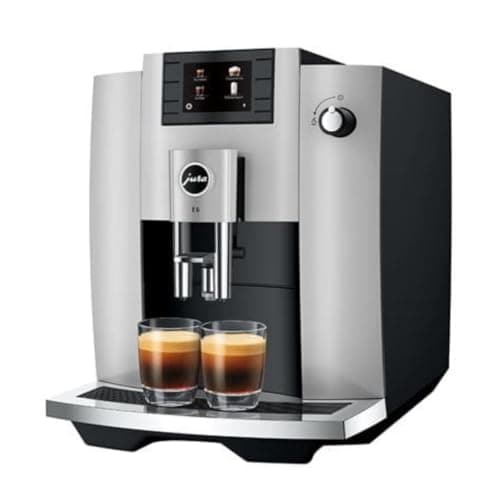
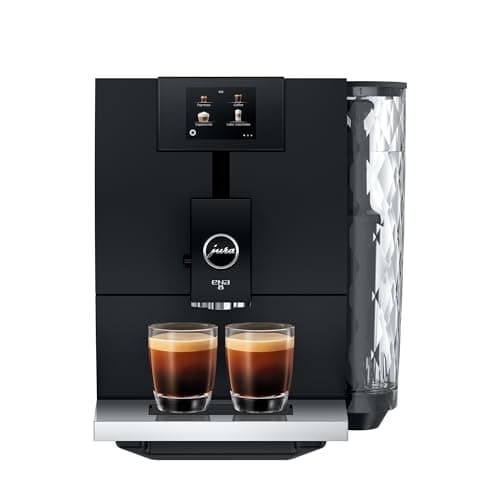
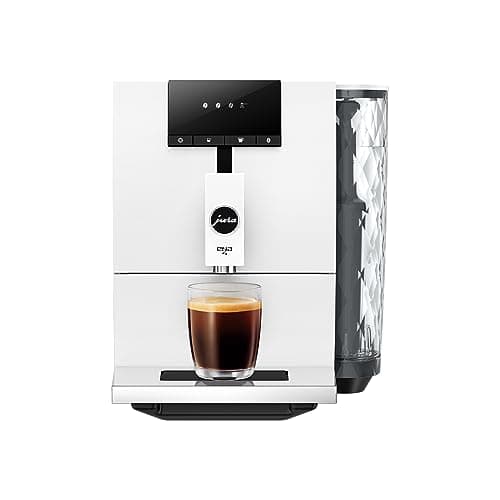
Jura's US home range runs ENA 4, ENA 8, C3, C9, E4, E6, E8, S8, J8 twin, J10 twin, Z10 and the GIGA 10. Ignore the letters and there are really three bodies. The compact ENA machinesare 10.7 inches wide with a 37 oz tank and a 4.4 oz bean hopper — small in every sense, including how often you refill them. The full-size E-line and S8 share a body about 11 inches wide with a 64 oz tank and a 9.9 oz hopper, which is the difference between a machine that serves a household and one that serves a person. Above those sit the J, Z and GIGA flagships, which add things like cold-brew extraction and twin grinders at prices well past everything on this page; they are outside the scope of a buying guide for most homes, so we have not ranked them here rather than pad the list.
The three specs that actually decide which Jura you buy
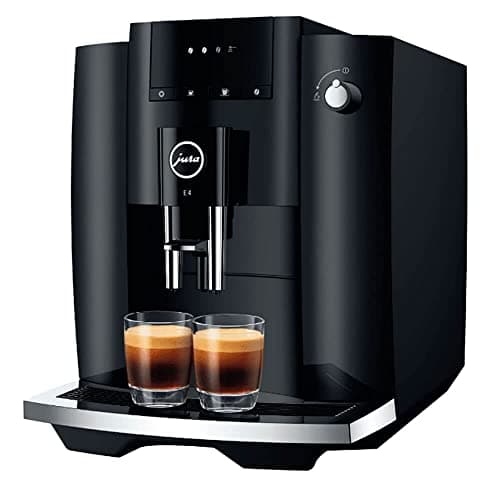
One: the milk system.This is the biggest fork. The ENA 4 and E4 have no milk system at all — they make black coffee, full stop, and a milk household would need a separate frother. The E6 and ENA 8 use Jura's HP1 fine-foam spout, which textures milk properly but leaves the daily cleaning to you. The E8 and S8 use HP3, which runs an automaticOne-Touch milk system clean after use. That sounds like a small thing on a spec sheet and it is not: the milk-line clean is the chore that quietly kills people's enthusiasm for bean-to-cup machines, and automating it is a large part of what the step up to the E8 is really for.
Two: the grinder and brewing unit. The E8 and S8 use the P.A.G.2 grinder with seven grind levels and the eighth-generation 3D brewing unit; the E4, E6, ENA 4 and ENA 8 use the earlier Professional Aroma Grinder. The brewing chamber range differs too: the full-size E-line takes 5–16 g, the compact ENAs take 6–10 g. In practice the wider range means a long coffee gets a genuinely larger dose rather than more water through the same puck. Every machine here runs Jura's Pulse Extraction Process, which pushes water through in short bursts to lengthen contact time on short drinks — a real, different approach to the problem a fixed-flow super-automatic has with ristretto and espresso.
Three: capacity.A 4.4 oz bean hopper holds roughly a dozen espressos' worth of beans, and a 37 oz tank empties fast once milk drinks are involved. If two or more people drink coffee, the full-size 64 oz tank and 9.9 oz hopper of the E-line will change your daily experience of the machine more than any drink count on the box. This is the spec buyers most often skip past and most often regret.
What none of them do
No Jura here has a portafilter. There is no basket to fill, no puck to tamp, no bottomless shot to watch, and no way to change the dose, tamp pressure or yield beyond the strength and volume settings the machine offers. The grind adjusts in steps — seven on the P.A.G.2 — and an independent hands-on review of the E8 called that resolution insufficient for anyone used to dialing in by half-gram increments, reporting inconsistent results on lighter roasts. A hands-on review of the ENA 4 made the same complaint from the other direction, describing an adjustment where you have "little to no idea where your grind setting is" while changing it. If you enjoy the process of dialing in a shot, none of these machines will scratch that itch, and a manual machine plus a dedicated espresso grindercosts less and reaches higher in the cup. That is not a knock on Jura — it is what a super-automatic is.
The running costs nobody mentions
Jura's brewing unit is sealed and does not come out. On a Gaggia or Philips super-automatic you can pull the brew group out and rinse it under a tap; on a Jura you cannot, so internal cleaning is done chemically with Jura's own three-phase cleaning tablets, and limescale is managed with CLEARYL Smart+ filter cartridges that the machine detects automatically by RFID. Both are recurring, proprietary purchases for the life of the machine. It is not a dealbreaker — the system is genuinely low-effort day to day, and the automatic rinse cycles do most of the work — but budget for consumables, and know that a neglected brew circuit on a sealed unit is a service-center job rather than a five-minute rinse. Our descaling guide covers the general principle, and the descaling solutions roundup covers what is safe to put through a machine like this.
How we picked
Every machine here is a real, currently-purchasable Jura we confirmed was in stock in the US before featuring it, and every specification — specialty counts, grinder names, brewing unit ranges, tank and hopper capacities, display sizes, dimensions and weights — comes from Jura's own US product pages, listed in the sources below. We did not lab-test these machines; we do not run a lab. The scores are editorial judgments built from published specifications and named independent hands-on reviews, scored against a published methodology, and the E4's scores here are identical to the ones in its full individual review so the two pages cannot disagree. Where a hands-on finding contradicts a marketing claim we say whose finding it is. Prices are never quoted from memory: the live price on each pick renders from our pipeline with the date it was checked, and if it goes stale the number disappears rather than misleads you.
Which Jura is right for you
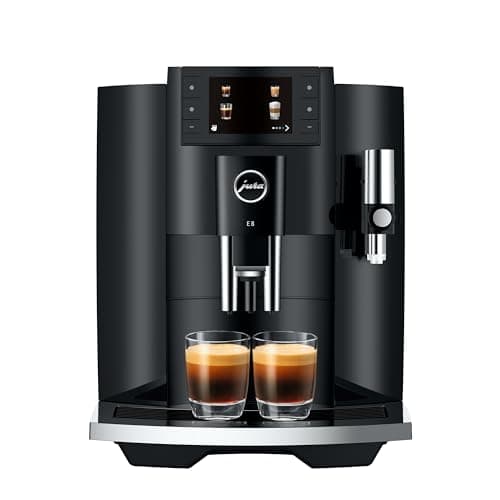
- Want the whole brand in one machine? The E8— the cheapest Jura with the P.A.G.2 grinder, the 3D brewing unit and the self-cleaning HP3 milk system, and our overall pick.
- Want milk drinks without four-figure-plus money? The E6 — full-size capacity, real fine-foam cappuccino, and the best value here.
- Tight on counter space but want lattes? The ENA 8— 15 drinks and a touchscreen in a 10.7-inch body, at the cost of tiny reservoirs.
- Tiny counter, espresso only? The ENA 4— four black drinks, the smallest footprint, and nothing else.
- Black coffee, full-size, no compromises on capacity? The E4 — covered in depth in our Jura E4 review.
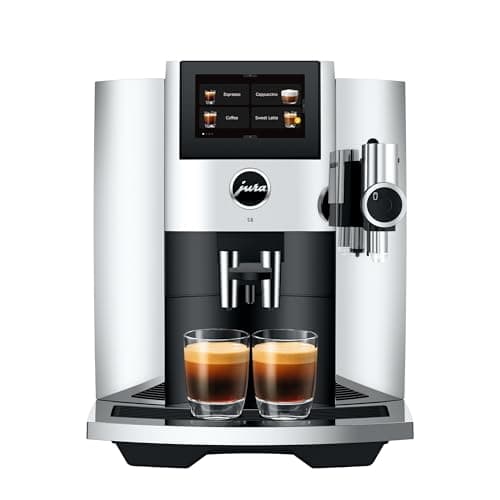
- Want the nicest one and know what it costs? The S8— 27 drinks, a 4.3-inch touchscreen and cup illumination, brewing identically to the E8.
If you are cross-shopping outside the brand, the honest comparisons are these: our best super-automatic espresso machines roundup puts Jura against the De'Longhi, Philips and Gaggia bean-to-cups that cost a fraction as much and do more drinks, and the best De'Longhi and best Breville brand roundups cover the two makers most people consider instead. And if reading this page has convinced you that you would rather make the coffee than press a button, start with the best espresso machines with a portafilter instead — then put the difference into the grinder and some fresh beans, which is where the cup is actually won.