Breville makes more good home espresso machines than any other brand, which is exactly why "the best Breville espresso machine" has no single answer. The right one depends on three questions: do you want the grinder built in or separate, do you want to steam milk by hand or have the machine do it for you, and how much of the process do you want to control? Get those answers straight and the lineup sorts itself out quickly. This roundup ranks the eight machines Breville actually sells today by who each one is for — not by a raw score, and not by price, because the machine most people should buy is neither the cheapest nor the most expensive.
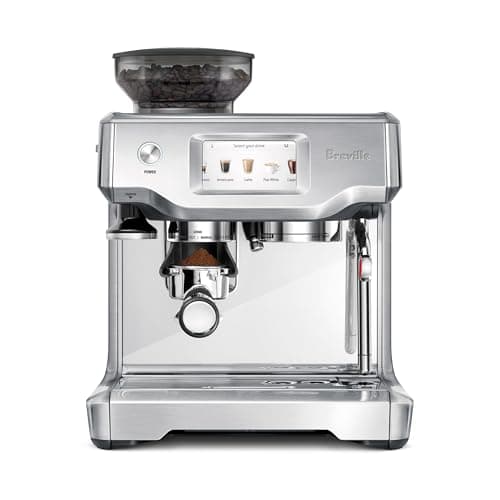
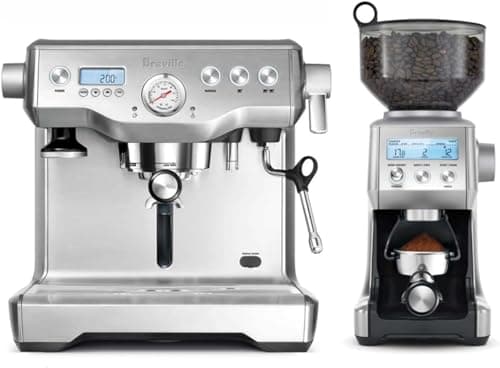
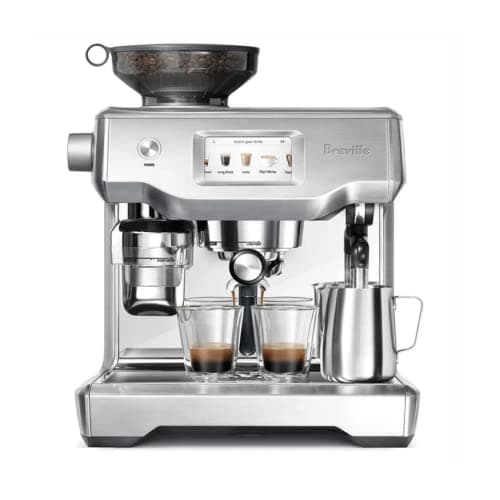
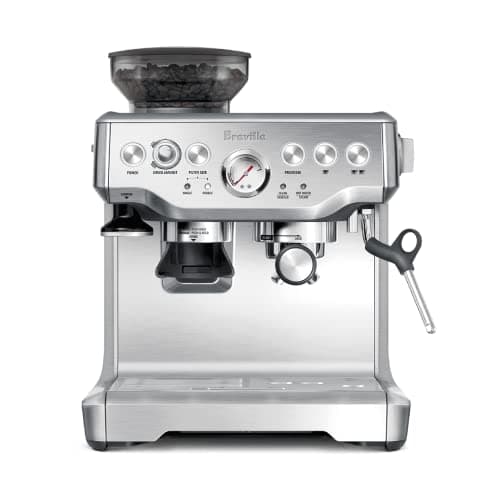
The lineup breaks into three families. The Bambino and Bambino Plus are compact machines with no grinder — you add a separate burr grinder, and in return you get near-instant heat-up in a tiny footprint. The Barista series (Express, Impress, Pro and Touch) are all-in-ones with a conical burr grinder built into the body — one appliance, whole-bean to cup, at the cost of a big footprint and a grinder that is good rather than great. At the top, the Dual Boiler and Oracle Touch are genuine two-boiler machines that brew and steam at the same time — one for enthusiasts who want control, one for people who want cafe results with no ritual. Everything below is a variation on those three ideas.
One theme runs through the whole range: on the Barista machines you are largely paying for heat-up speed, milk automation and a screen — not a dramatically different shot. The Express, Impress, Pro and Touch share the same 54mm brew system and the same built-in grinder, so the espresso in the cup is very close across all four. Knowing that is worth real money, and it shapes the ranking below.
How the Breville lineup actually breaks down
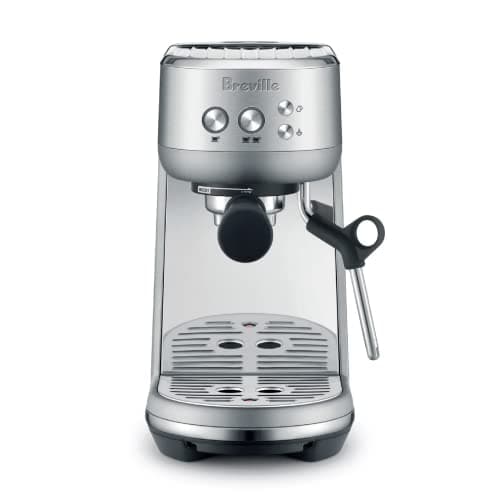
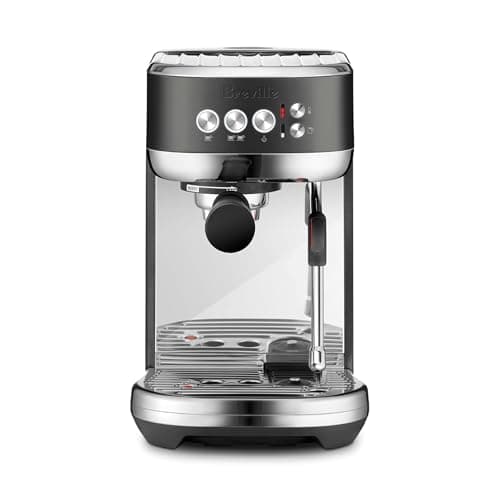
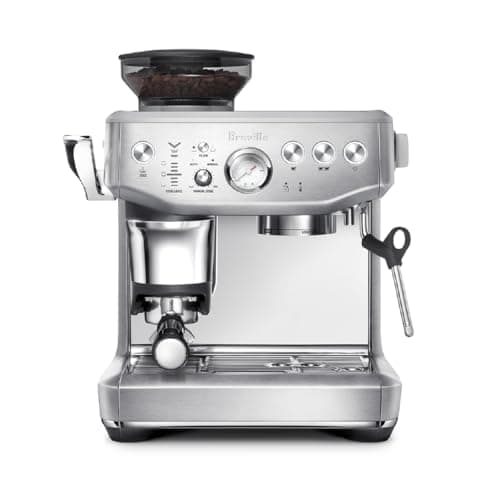
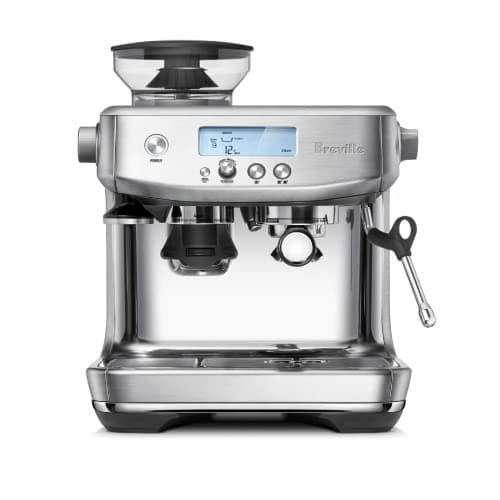
Ignore the model numbers for a moment and the range is simple. The Bambino and Bambino Plus are compact, grinderless machines — you buy a grinder separately, and the only difference between the two is manual versus automatic milk. The four Barista machines (Express, Impress, Pro, Touch) are all-in-ones with a conical burr grinder built into the body; they share the same 54mm brew system, so they make a very similar shot and differ mainly in heat-up speed, puck prep, and how the milk and interface work. The Dual Boiler and Oracle Touch are the enthusiast tier — real two-boiler machines on a 58mm group that brew and steam simultaneously, one hands-on and one fully automated.
ThermoJet vs ThermoCoil: what the heater changes
Breville uses two single-boiler heating systems on these machines, and the difference is heat-up time, not shot quality. ThermoJet (in the Bambino, Bambino Plus and Barista Pro) reaches brew temperature in a few seconds — you can grind and go. ThermoCoil (in the Barista Express and Impress) wants a few minutes of warm-up. Both hold temperature well once hot, so a ThermoCoil machine does not make worse espresso — it just asks you to wait, or to leave it powered on. If a fast morning matters to you, that is the single most useful thing to know before choosing between the otherwise-close Express and Pro; our Barista Express vs Barista Pro comparison drills into exactly that trade.
Do you want the grinder built in?
This is the fork that splits the whole lineup. A built-in grinder (the Barista machines) means one appliance and one purchase — genuinely convenient, and the reason the Barista Express is our top pick for most people. But a machine's built-in grinder is always a compromise against a dedicated one, and grind quality is the biggest lever on the cup. If you already own a good grinder, or you would rather put the money there, the grinderless Bambino paired with a proper burr grinder will out-shoot any of the all-in-ones — and take up less counter space doing it. There is no wrong answer here; there is only which trade fits your kitchen and budget.
Manual vs automatic milk
Three of these machines steam milk for you automatically: the Bambino Plus, the Barista Touch and the Oracle Touch. Automatic milk is the fastest path to a consistent latte with zero practice, and it is worth a premium if you make milk drinks daily and do not want to learn to steam. The trade-off is control: a manual wand (on the Bambino, Barista Express, Impress, Pro and Dual Boiler) rewards a little practice with better texture and the ability to do real latte art. If you are not sure, our how to steam milk guide shows what the skill actually involves — it is less than most people fear.
Which Breville is right for you
- Want one machine that does everything? The Barista Express — our overall pick, and where the whole all-in-one field is ranked in our best machines with a built-in grinder roundup.
- Happy to add a grinder? The Bambino — best value, smallest footprint, near-instant heat-up.
- Small kitchen, want lattes without the technique? The Bambino Plus.
- Want the fastest morning or an on-screen guide? The Barista Pro.
- Want the milk and the drinks automated? The Barista Touch, or the fully hands-free Oracle Touch if budget is no object.
- Ready for an enthusiast machine? The Dual Boiler — a true 58mm dual boiler with a grinder in the box.
Cross-shopping the other brand everyone considers? Our Breville vs De'Longhi comparison settles it, and if you are still deciding on your very first machine, the best espresso machines for beginners roundup puts these Brevilles up against the wider field.
Two current Breville machines are deliberately not ranked above, and it is worth knowing they exist before you spend. The Barista Touch Impress (BES881)pairs the Barista Touch's touchscreen and automatic milk with the Impress assisted 22 lb tamp, on a 54mm portafilter and a 30-setting grinder. The Oracle Jet (BES985)sits above the whole Barista range: a 58mm portafilter taking a 22 g dose, a 45-setting integrated grinder, ThermoJet heating with a heated group head, and Auto MilQ hands-free microfoam with settings for dairy, soy, almond and oat. Both are flagship-priced, and neither changes the advice above for most buyers — but if your budget reaches that far, those are the two to read about next.
How we picked
We did not lab-test this gear
Everyone in this category says they tested twenty machines. We have not pulled shots on every product here, and we say so. What we did instead: compiled the published specifications, cross-checked the manufacturer manuals, computed the running cost (wattage to energy, grams-per-shot to cost-per-cup), weighed aggregated owner reports, and scored each product against a published rubric. The scores are judgments from documented research — not measurements we took, because we do not have a test lab and we will not pretend we do. Where hands-on time would tell you more than a spec sheet, we flag it. Where a number came from someone else's work, we name them in Sources.