A standalone milk frother is the answer to a specific problem: you want a latte or a cappuccino, but the thing you brew coffee with cannot steam milk. That covers a lot of setups — most entry-level pump machines, every moka pot, every hand-pump and lever maker that runs on muscle instead of a boiler, and the millions of drip and pod machines that were never built to touch milk at all. A frother sits next to whatever you already own and does one job: it turns cold milk into warm, aerated foam you can pour over coffee. It is the cheapest way to make a cafe-style milk drink at home, and for a great many people it is the only piece missing.
There are two families here, and they are not close. The cheap end is the handheld battery whisk — a spinning coil on a stick, powered by a couple of AA batteries. It aerates, and that is all it does: it has no heater, so you warm the milk yourself first (a microwave is fine) and then whip air into it for fifteen or twenty seconds by hand. The other family is the electric jug — a small heated pitcher that warms and froths at one touch and then shuts itself off. If you brew with a stovetop moka pot or a manual maker, a jug is the honest upgrade — it does the whole milk step for you.
Here is the part the product pages skip. A standalone frother makes good latte-and-cappuccino milk — warm, sweet, thick with fine bubbles. What it does not make is true steam-wand microfoam, the glossy, paint-like texture a barista pours latte art with. That ceiling is real, and no jug frother crosses it. If pourable microfoam and rosetta hearts are the goal, you want a machine with a wand and a proper milk pitcher, not a frother. If a good flat white at your own kitchen counter is the goal, a frother gets you most of the way there for a fraction of the price.
How we picked
Every frother here is a real, currently-purchasable standalone unit that works next to a coffee maker with no steam wand of its own. We ranked on five things, in this order.
- Does it heat, or only aerate? This is the single biggest split. An electric jug warms and froths in one step; a handheld whisk only whips air into milk you have already heated. That one fact decides most of the ranking.
- Foam quality for real milk drinks. We judged how close each gets to a proper cappuccino or latte head — fine, warm, stable foam — while being honest that none of them reach steam-wand microfoam.
- Ease of use. One-touch-and-walk-away beats stand-here-and-swirl, and auto shut-off beats watching a pitcher. The jugs win this outright; among handhelds, a stand and a comfortable grip matter.
- Versatility and capacity. Hot and cold foam, variable temperature, and how much milk a unit makes at once — a 4-ounce jug and a 21-ounce jug are different tools for different households.
- Build and value. What it is made of, whether the pitcher comes apart to clean, and how much all of that costs relative to what it actually does.
We did not lab-test these frothers — no thermocouples, no foam-density rigs. Our scores are judgments from published manufacturer specifications and aggregated owner reports, and our methodologypage says so plainly. Every spec cited comes from the makers' own product pages, listed in Sources.
Handheld whisk vs electric jug
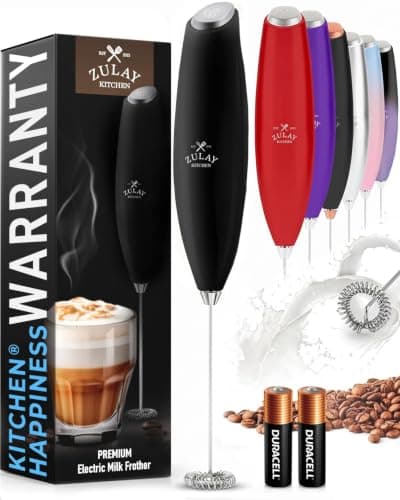
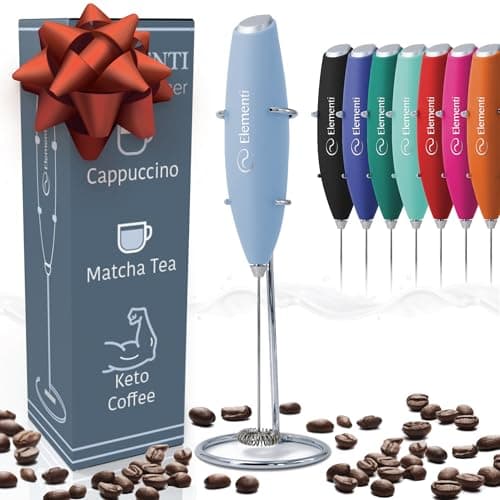
If you take one thing from this page, take this. A handheld battery whisk — the Zulay and Elementi here — is a spinning coil on a stick powered by two AA batteries. It costs very little, stores in a drawer, and froths milk in fifteen to twenty seconds. But it has no heating element. You warm the milk yourself, in a microwave or a pan, and then hold the wand in the jug and swirl. It is perfect for cold foam and for topping up a drink, and it is the cheapest way in.
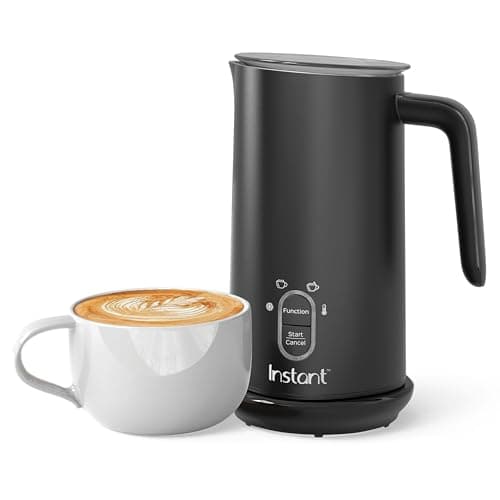
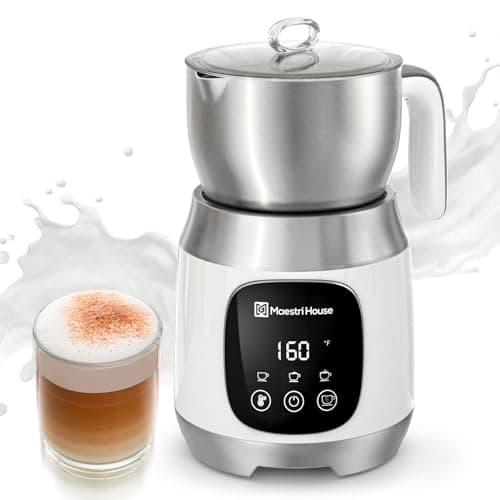
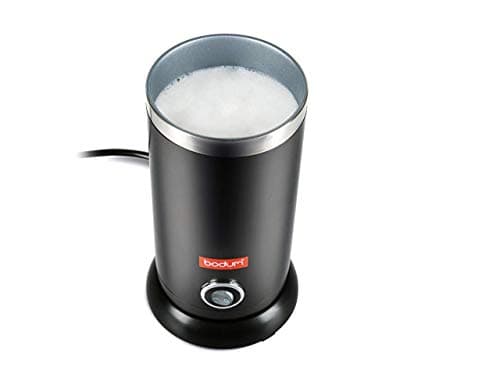
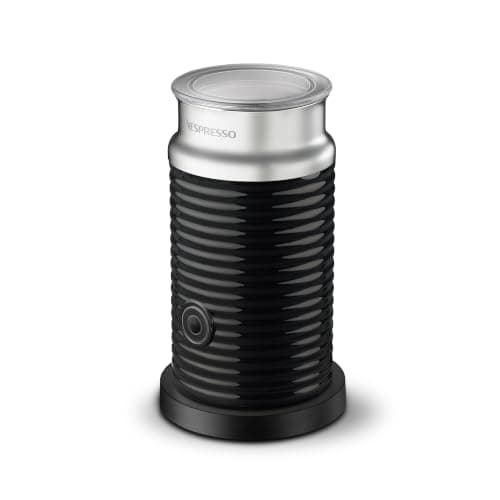
An electric jug — the Nespresso, Instant, Maestri House and Bodum — is a small heated pitcher. You pour in cold milk, press a button, and it heats to a latte temperature and froths at the same time, then shuts off. It costs several times more than a handheld, takes up counter space, and needs a plug, but it does the whole job for you, hands-free. Capacity matters here too: some jugs froth only about four ounces, others heat twenty-one, so match the size to how many drinks you pour. If you brew with a stovetop moka pot or an entry machine with no wand, a jug is the natural partner.
What a standalone frother can and can't do
This is where honesty earns its keep. A good standalone frother makes genuinely nice milk for a latte, cappuccino, flat white, matcha latte or hot chocolate — warm, sweet, and thick with fine bubbles that sit well on top of coffee. For the overwhelming majority of home drinks, that is exactly enough, and it is a world better than cold milk poured over espresso.
What none of them make is true steam-wand microfoam — the dense, glossy, paint-like milk a barista folds into a cup to pour a rosetta or a heart. That texture comes from injecting steam and spinning the milk into a whirlpool, and no jug whisk or battery coil reproduces it. So if latte art is the actual goal, a frother is the wrong tool; you want a machine with a wand and a good milk pitcher to texture in. If a warm, foamy, cafe-style drink at your own counter is the goal, a frother nails it. Be clear which one you are buying before you spend.
What we would skip
Frothers sold on a big pressure or wattage number. Milk foam is not about raw power; a 500W jug and a 600W jug make similar foam, and the number on the box tells you little about the result. Handhelds with a dozen "speeds."A battery whisk spins or it doesn't — extra modes on a stick are marketing. And any frother pitched as making "barista latte art," because, as above, a standalone unit cannot, and a listing that claims it will is one to distrust. Buy the jug or whisk for what it genuinely does, and if latte art is the dream, put the money toward a machine with a real wand and the technique from our accessories pages instead.
Which frother fits you
- Want the whole milk step done for you, one touch? Nespresso Aeroccino 3.
- Want the most flexibility for the least money? Instant 4-in-1 — four modes, bigger pour.
- Want dials, variable temperature and a big batch? Maestri House DualFro 600.
- Want a plain, one-button electric jug? Bodum Bistro.
- Want the cheapest way in, batteries included? Zulay handheld — just remember to heat the milk first.
- Want a budget whisk that stores upright? Elementi handheld with its stand.
Whichever you pick, the milk is only half the drink. Start from good espresso or strong stovetop coffee and fresh beans, froth to a warm, glossy pour, and you have a cafe drink at home. If you later move to a machine with a steam wand, the accessories starter kit covers the pitcher and tools that come next.