Skip to content
Portafilter Co

Machines · Espresso Machines

The best espresso machines with a portafilter

Six machines with a real group head and a handle you load yourself — ranked not by price bracket but by the portafilter platform you are buying into: 51mm, 54mm or 58mm, whether single-wall baskets fit, and how far the accessories go.

By Stephen V.Updated How we pick
#ad

We earn a commission when you buy through our Amazon links, at no extra cost to you. It never changes a verdict, and we say so when the cheaper product is the better buy. How this works.

A portafilter espresso machineis one where you do the coffee part yourself: the machine has a group head, and a handle — the portafilter — holding a metal basket that you fill with ground coffee, tamp level, and twist into place before the pump pushes water through it. That sounds obvious until you shop, because a large share of "espresso machines" sold today have no portafilter at all. Pod and capsule machines take a sealed plastic cartridge. Bean-to-cup super-automatics grind and tamp behind a door you never open. Both make coffee; neither lets you touch it. If you searched for a machine witha portafilter, you have already made the most important decision on this page — and the rest is choosing which portafilter.

That matters more than the badge on the front. The portafilter is where the whole shot is decided: how much coffee you can fit, how evenly water meets the puck, and — the part almost nobody tells first-time buyers — whether the basket inside is pressurized and quietly faking your crema. It also decides what you can buy later. A portafilter has a diameter, and that number (51mm, 53mm, 54mm or 58mm) determines which baskets, tampers, dosing funnels, puck screens and bottomless portafilters will ever fit your machine. Two machines at the same price can leave you with completely different upgrade paths for the next five years.

So this roundup ranks on the portafilter platform, not the price bracket. For each machine we ask three questions in order: what diameter is it, can it take non-pressurized single-wall baskets (the ones that reward good coffee rather than manufacturing crema from a hidden second wall), and how big is the aftermarket world around that size. Then, and only then, the usual things — heat-up, steam, build, price. If the vocabulary here is new, read what is a portafilter and portafilter sizes explained first; they take five minutes and will save you from buying a machine whose accessories you cannot find.

One warning before the picks, because it is the mistake we see most: a portafilter machine is only half a purchase. It has no grinder in it (except the Barista Express below), and espresso is unforgiving about grind — a modest machine fed by a real burr grinder beats an expensive one fed pre-ground coffee, every single time. If your total budget is fixed, buy less machine and put the difference into the grind. Our do you need a grinder for espresso guide makes the full case, and the best grinders for espresso roundup is where that half of the budget should go.

The short answer

Quick picks

#ProductBest forScorePrice
01
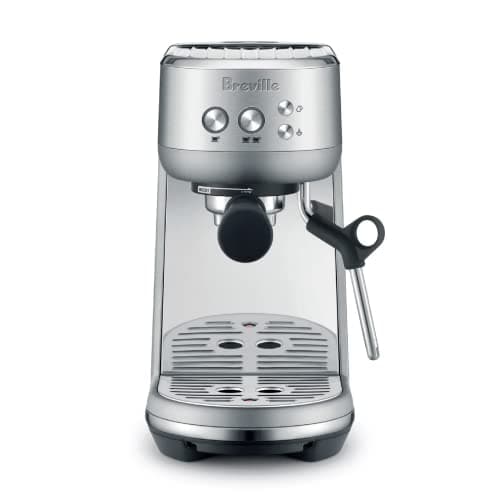
Breville Breville Bambino (BES450)
Breville Bambino (BES450)

The best portafilter platform most people should buy, and the cheapest honest route into Breville's 54mm world. Breville ships it with both 1-cup and 2-cup single wall AND dual wall baskets, which is the detail that matters here: you can start on the forgiving pressurized basket and move to a single-wall basket the day your grinder arrives, without buying anything. Behind that 54mm size sits an enormous aftermarket — bottomless portafilters, precision baskets, dosing funnels, puck screens and tampers are all easy to find and cheap. Add a ThermoJet heater that is at brew temperature in about three seconds, real digital temperature control and a steam wand well above its price class, in a footprint the size of a paperback. The honest trade-offs: no grinder in the box, a single boiler that makes you pause between brewing and steaming, and a 54mm ecosystem that, while huge, is still not the 58mm cafe standard.

Best portafilter machine overall
8.6
$299.95Amazon
02
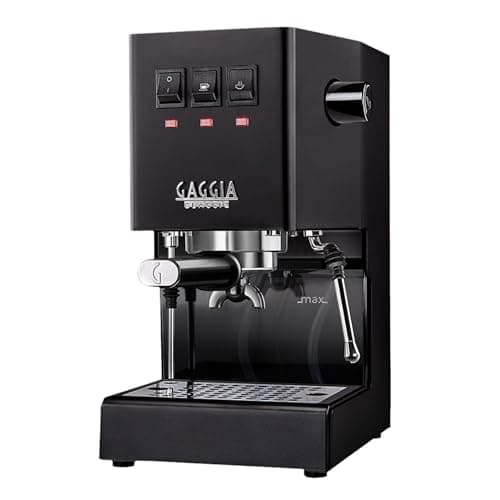
Gaggia Gaggia Classic Evo Pro
Gaggia Classic Evo Pro

The cheapest machine that gives you a genuine 58mm commercial portafilter, which is the whole reason to buy it. 58mm is the size cafes use, so every serious basket, tamper, distribution tool and bottomless portafilter on the market simply fits — no hunting for the one product made in your size. Gaggia ships it with a double-spout stainless commercial portafilter plus a 7g single, a 14g double and a 14g pressurized double basket, so both worlds are in the box. Behind it is a lead-free brass boiler, a single-piece stainless body and the largest parts-and-mods community in home espresso: exploded diagrams, cheap spares, documented PID and OPV upgrades. The costs are real and worth stating plainly — no PID from the factory (you temperature-surf or fit one), no grinder, a two-hole steam wand that rewards practice, and a single boiler that makes you wait between shot and milk.

Best 58mm commercial portafilter
8.5
$499.00Amazon
03
Breville Breville Barista Express (BES870XL)
Breville Barista Express (BES870XL)

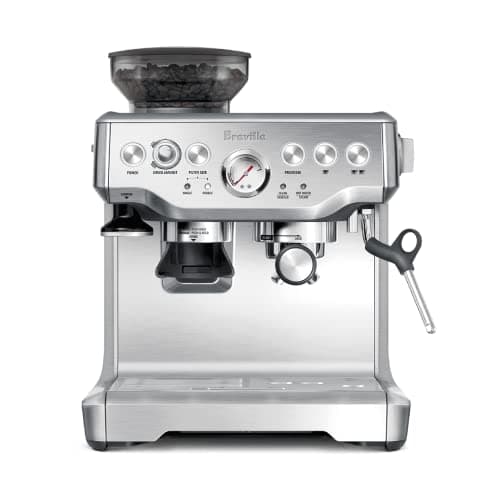
The one machine here that solves the grinder problem in the same box, and the reason it stays the default recommendation. The built-in conical burr grinder doses straight down into the 54mm portafilter held in a cradle, so the workflow is grind, tamp, lock in, pull — no scale, no second appliance, no transferring grounds. Like the Bambino it ships with both single wall and dual wall baskets in 1-cup and 2-cup sizes, so the non-pressurized upgrade is free, and the front pressure gauge gives you live feedback while a shot runs. The trade-offs are inherent: ThermoCoil warms up over a few minutes rather than seconds and is a little less stable than a ThermoJet, the body is bulky because it is two machines in one, and the integrated grinder is good rather than great — a dedicated espresso grinder still out-grinds it.

Best all-in-one with a real portafilter
8.2
$684.99Amazon
04
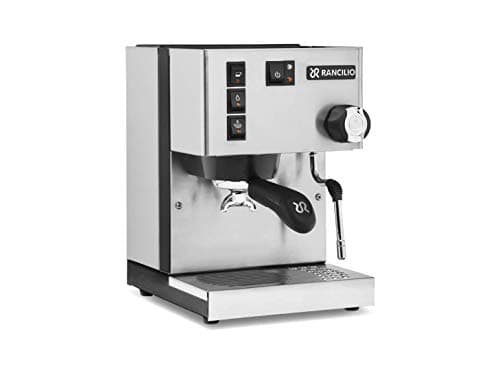
Rancilio Rancilio Silvia
Rancilio Silvia

The portafilter you buy once. The Silvia takes parts from Rancilio's cafe machines — a heavy chromed-brass group head in constant contact with an insulated brass boiler, a genuine 58mm commercial portafilter and a full-motion stainless steam wand — and puts them in a home-sized stainless body designed to be repaired rather than replaced. It ships with commercial single and double baskets, and because the group is standard 58mm, every premium basket, naked portafilter and distribution tool made fits without a thought. Once warmed through, the brass mass makes it a thermal rock. The costs are just as real: no PID from the factory, no grinder, a long warm-up before the brass is stable, a small boiler that makes you wait between brewing and steaming, and a price well above the Gaggia for a broadly similar single-boiler recipe.

Best portafilter to keep for a decade
8.0
$995.00Amazon
05
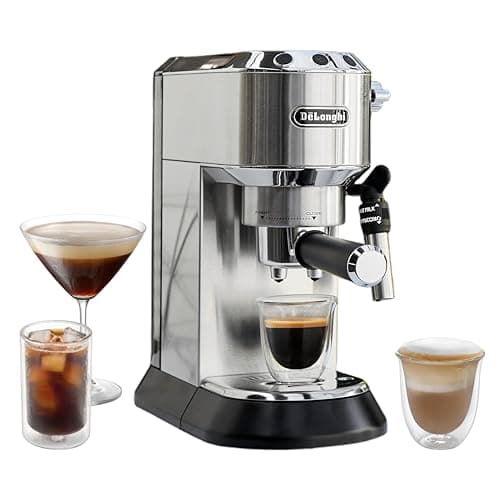
De'Longhi De'Longhi Dedica Deluxe (EC685)
De'Longhi Dedica Deluxe (EC685)

The best 51mm portafilter machine, and the pick when the counter is the hard constraint. At about 5.9 inches wide the Dedica is one of the slimmest real espresso machines sold, it heats fast from a thermoblock, and it runs on two programmable buttons. Crucially — unlike the cheaper Stilosa — its portafilter can be moved off the pressurized basket: single-wall 51mm baskets are widely sold for it, and there is an active aftermarket of 51mm bottomless portafilters made specifically for the EC680/EC685. Be clear-eyed about the caveat, because it is the one buyers hit: a plastic insert in the stock portafilter means many aftermarket baskets will not seat in it, so the usual route is to buy a bottomless portafilter and basket together. What you give up is steam — the frothing aid makes foam, not the microfoam that pours latte art — and a plastic-heavy build.

Best slim 51mm machine
7.0
$249.00Amazon
06
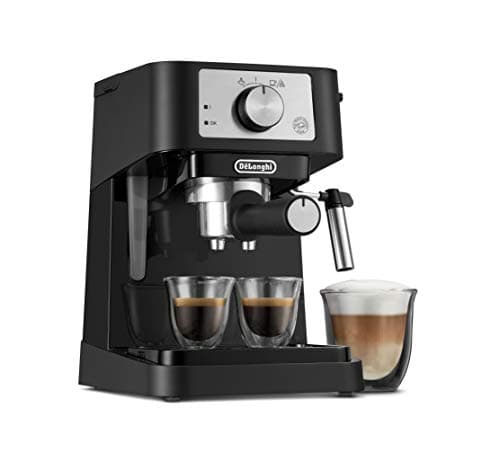
De'Longhi De'Longhi Stilosa (EC260)
De'Longhi Stilosa (EC260)

The cheapest way to hold a portafilter, and honest about what that buys you. The Stilosa is a simple 15-bar pump machine with a metal 51mm portafilter, a manual panarello wand and a tamper in the box, from a maker with a long entry-level track record — and paired with a decent grinder it will genuinely teach you the motions of dosing, tamping and locking in. What it will not do is grow. De'Longhi sells it as a pressurized-basket machine with no single-wall option, so the crema you get comes from the hardware rather than from your coffee, and the ceiling is fixed no matter how good your beans are. The panarello wand froths rather than textures, and the build leans plasticky. Buy it to find out whether you like the ritual for the least money possible — not as the machine you keep.

Cheapest real portafilter
5.8
$99.74Amazon

#ad · Live prices from the Amazon Product API, as of Aug 15, 2026. Where we have no verified live price, we show none — a gap beats a number that has rotted.

In detail

The picks, in full

01
Breville Breville Bambino (BES450)

Best portafilter machine overall

Breville Bambino (BES450)

54mm portafilter, 15-bar pumpSingle wall AND dual wall baskets includedThermoJet heater, ~3s heat-upDigital temperature control (PID)
8.6/10

The best portafilter platform most people should buy, and the cheapest honest route into Breville's 54mm world. Breville ships it with both 1-cup and 2-cup single wall AND dual wall baskets, which is the detail that matters here: you can start on the forgiving pressurized basket and move to a single-wall basket the day your grinder arrives, without buying anything. Behind that 54mm size sits an enormous aftermarket — bottomless portafilters, precision baskets, dosing funnels, puck screens and tampers are all easy to find and cheap. Add a ThermoJet heater that is at brew temperature in about three seconds, real digital temperature control and a steam wand well above its price class, in a footprint the size of a paperback. The honest trade-offs: no grinder in the box, a single boiler that makes you pause between brewing and steaming, and a 54mm ecosystem that, while huge, is still not the 58mm cafe standard.

Shot quality
8
Steam power
7
Speed & heat-up
10
Footprint
10
Value
8

Pros

  • Ships with 1-cup and 2-cup single wall and dual wall baskets, so the non-pressurized upgrade costs nothing
  • 54mm is the second-biggest accessory ecosystem in home espresso — bottomless portafilters, precision baskets and funnels are everywhere
  • At brew temperature in roughly three seconds, so the portafilter workflow never feels like a chore
  • Digital temperature control keeps shot-to-shot temperature steady, which a cheap thermoblock cannot
  • Powerful steam wand for the size, and a footprint that fits a crowded counter

Cons

  • No grinder in the box, and this machine needs a good one more than it needs anything else
  • Single boiler — a short wait switching between brewing and steaming
  • 54mm accessories are plentiful but still a smaller world than the 58mm cafe standard
  • Plastic-and-steel build feels lighter in the hand than a brass-group machine

Don't buy this if…

you want the cafe-standard 58mm portafilter and a machine you can service and mod for a decade — the Gaggia Classic Evo Pro below costs more but buys you a genuinely different, larger platform.

$299.95View on Amazon

Price as of Aug 15, 2026. Prices change — Amazon's at checkout is the one that counts.

#ad · we may earn a commission from this link to Breville Bambino (BES450)

02
Gaggia Gaggia Classic Evo Pro

Best 58mm commercial portafilter

Gaggia Classic Evo Pro

58mm commercial stainless portafilter7g + 14g non-pressurized and 14g pressurized basketsLead-free brass boiler, 15-bar Ulka pump1,425 W, 72 oz tank
8.5/10

The cheapest machine that gives you a genuine 58mm commercial portafilter, which is the whole reason to buy it. 58mm is the size cafes use, so every serious basket, tamper, distribution tool and bottomless portafilter on the market simply fits — no hunting for the one product made in your size. Gaggia ships it with a double-spout stainless commercial portafilter plus a 7g single, a 14g double and a 14g pressurized double basket, so both worlds are in the box. Behind it is a lead-free brass boiler, a single-piece stainless body and the largest parts-and-mods community in home espresso: exploded diagrams, cheap spares, documented PID and OPV upgrades. The costs are real and worth stating plainly — no PID from the factory (you temperature-surf or fit one), no grinder, a two-hole steam wand that rewards practice, and a single boiler that makes you wait between shot and milk.

Espresso capability
9
Build & serviceability
10
Steam & milk
7
Ease of use
6
Upgradeability & mod community
10
Value
9

Pros

  • Genuine 58mm commercial portafilter — the cafe standard, so every premium basket, tamper and bottomless portafilter fits
  • Both non-pressurized and pressurized baskets in the box, plus a two-way diffuser pin to switch behaviour
  • Lead-free brass boiler and single-piece stainless body built to be serviced rather than binned
  • Largest mod and spares community in home espresso — PID kits, OPV springs and bottomless portafilters are all documented
  • Holds its usefulness for years; this is a platform you keep, not an appliance you replace

Cons

  • No PID from the factory — you time the heat light and temperature-surf, or fit an aftermarket controller
  • No grinder in the box, and a 58mm basket is unforgiving of a bad grind
  • Two-hole commercial-style steam wand takes real practice to texture milk well
  • Single small boiler means a genuine wait between pulling a shot and steaming
  • Steeper learning curve than any Breville here — dose, tamp and timing are entirely on you

Don't buy this if…

you want to press a button and walk away with a latte. The Evo Pro rewards learning and tinkering; if convenience matters more than the 58mm ecosystem, the Bambino above will make you happier every morning.

$499.00View on Amazon

Price as of Aug 15, 2026. Prices change — Amazon's at checkout is the one that counts.

#ad · we may earn a commission from this link to Gaggia Classic Evo Pro

03
Breville Breville Barista Express (BES870XL)

Best all-in-one with a real portafilter

Breville Barista Express (BES870XL)

54mm portafilter with dosing cradleIntegrated conical burr grinderSingle wall and dual wall baskets includedThermoCoil heating, analog pressure gauge
8.2/10

The one machine here that solves the grinder problem in the same box, and the reason it stays the default recommendation. The built-in conical burr grinder doses straight down into the 54mm portafilter held in a cradle, so the workflow is grind, tamp, lock in, pull — no scale, no second appliance, no transferring grounds. Like the Bambino it ships with both single wall and dual wall baskets in 1-cup and 2-cup sizes, so the non-pressurized upgrade is free, and the front pressure gauge gives you live feedback while a shot runs. The trade-offs are inherent: ThermoCoil warms up over a few minutes rather than seconds and is a little less stable than a ThermoJet, the body is bulky because it is two machines in one, and the integrated grinder is good rather than great — a dedicated espresso grinder still out-grinds it.

Espresso quality
8
Steaming & milk texturing
7
Ease of use
9
Build & reliability
8
All-in-one convenience
9
Value
8

Pros

  • Grinds directly into the 54mm portafilter, so there is no scale, funnel or second appliance in the workflow
  • Both single wall and dual wall baskets included, in 1-cup and 2-cup sizes
  • Front pressure gauge shows you a bad shot while it is happening, which shortens the learning curve
  • Manual steam wand teaches real milk texturing rather than doing it for you
  • The most proven all-in-one in the category, with abundant owner knowledge and parts online

Cons

  • ThermoCoil warms up over a few minutes and holds temperature a little less tightly than a ThermoJet
  • Large footprint — it is a grinder and a machine sharing one body
  • Built-in grinder is good but a dedicated espresso grinder is better, and you cannot upgrade it separately
  • New owners routinely leave the pressurized basket in and never discover the single-wall one

Don't buy this if…

you already own a real burr grinder, or plan to buy one — then you are paying for a grinder twice, and the Bambino plus your grinder is the better setup for the same money.

$684.99View on Amazon

Price as of Aug 15, 2026. Prices change — Amazon's at checkout is the one that counts.

#ad · we may earn a commission from this link to Breville Barista Express (BES870XL)

04
Rancilio Rancilio Silvia

Best portafilter to keep for a decade

Rancilio Silvia

58mm commercial portafilterCommercial chromed-brass group head0.3 L insulated brass boilerFull-motion stainless steam wand, 2 L tank
8.0/10

The portafilter you buy once. The Silvia takes parts from Rancilio's cafe machines — a heavy chromed-brass group head in constant contact with an insulated brass boiler, a genuine 58mm commercial portafilter and a full-motion stainless steam wand — and puts them in a home-sized stainless body designed to be repaired rather than replaced. It ships with commercial single and double baskets, and because the group is standard 58mm, every premium basket, naked portafilter and distribution tool made fits without a thought. Once warmed through, the brass mass makes it a thermal rock. The costs are just as real: no PID from the factory, no grinder, a long warm-up before the brass is stable, a small boiler that makes you wait between brewing and steaming, and a price well above the Gaggia for a broadly similar single-boiler recipe.

Espresso capability
9
Build & serviceability
10
Steam & milk
8
Ease of use
6
Upgradeability & mod community
9
Value
6

Pros

  • Genuine 58mm commercial portafilter and group, so every cafe-grade basket, tamper, funnel and bottomless portafilter simply fits
  • Chromed-brass group in constant contact with the boiler — the thermal mass that keeps temperature steady once warm
  • Built to be serviced: parts, diagrams and a decade-plus service life are the norm, not the exception
  • Powerful full-motion steam wand that textures proper microfoam once you learn it
  • Designed to be modded, and a bolt-on PID is the best-documented upgrade in home espresso

Cons

  • No PID from the factory — you temperature-surf the ready light or budget for a PID kit on top
  • Needs a long warm-up before the brass is thermally stable; this is not a grab-and-go machine
  • No grinder, and at this level the grinder needs to be a serious one
  • The small 0.3 L boiler means a real wait between pulling a shot and steaming milk
  • Costs meaningfully more than the Gaggia Classic for a similar 58mm single-boiler recipe

Don't buy this if…

you want cheap, fast and forgiving. The Silvia asks for a long warm-up, a good grinder and patience at the wand — if you want the same 58mm platform for less money, buy the Gaggia Classic Evo Pro instead.

$995.00View on Amazon

Price as of Aug 15, 2026. Prices change — Amazon's at checkout is the one that counts.

#ad · we may earn a commission from this link to Rancilio Silvia

05
De'Longhi De'Longhi Dedica Deluxe (EC685)

Best slim 51mm machine

De'Longhi Dedica Deluxe (EC685)

51mm portafilter, about 5.9 in wideTakes single-wall 51mm baskets (bottomless PF usually needed)15-bar pump, fast thermoblock heaterTwo programmable brew buttons
7.0/10

The best 51mm portafilter machine, and the pick when the counter is the hard constraint. At about 5.9 inches wide the Dedica is one of the slimmest real espresso machines sold, it heats fast from a thermoblock, and it runs on two programmable buttons. Crucially — unlike the cheaper Stilosa — its portafilter can be moved off the pressurized basket: single-wall 51mm baskets are widely sold for it, and there is an active aftermarket of 51mm bottomless portafilters made specifically for the EC680/EC685. Be clear-eyed about the caveat, because it is the one buyers hit: a plastic insert in the stock portafilter means many aftermarket baskets will not seat in it, so the usual route is to buy a bottomless portafilter and basket together. What you give up is steam — the frothing aid makes foam, not the microfoam that pours latte art — and a plastic-heavy build.

Shot quality
7
Temp control
7
Steam power
6
Ease of use
8
Build
6
Value
8

Pros

  • One of the slimmest real portafilter machines you can buy — it fits where nothing else will
  • A genuine non-pressurized upgrade path: single-wall 51mm baskets and dedicated bottomless portafilters are widely available
  • Fast thermoblock heat-up, ready to brew in well under a minute
  • Two programmable buttons make single and double shots repeatable day to day
  • Cheap enough to leave most of a starter budget for the grinder that decides the cup

Cons

  • The stock portafilter's plastic insert blocks many aftermarket baskets — most owners end up buying a bottomless portafilter to use them
  • 51mm has a far smaller accessory world than 54mm or 58mm; expect to search for tampers and screens
  • Frothing-aid wand makes foam but not the microfoam needed for latte art
  • Plastic-heavy build that feels its price next to a metal machine
  • Ships pressurized, so out of the box it masks exactly the grind quality you are paying a grinder for

Don't buy this if…

you want to steam milk properly or grow an accessory habit — the Bambino's 54mm ecosystem and much stronger steam wand grow with you far further for a modest step up.

$249.00View on Amazon

Price as of Aug 15, 2026. Prices change — Amazon's at checkout is the one that counts.

#ad · we may earn a commission from this link to De'Longhi Dedica Deluxe (EC685)

06
De'Longhi De'Longhi Stilosa (EC260)

Cheapest real portafilter

De'Longhi Stilosa (EC260)

51mm portafilter, 15-bar pumpPressurized baskets onlyManual panarello steam wandTamper included
5.8/10

The cheapest way to hold a portafilter, and honest about what that buys you. The Stilosa is a simple 15-bar pump machine with a metal 51mm portafilter, a manual panarello wand and a tamper in the box, from a maker with a long entry-level track record — and paired with a decent grinder it will genuinely teach you the motions of dosing, tamping and locking in. What it will not do is grow. De'Longhi sells it as a pressurized-basket machine with no single-wall option, so the crema you get comes from the hardware rather than from your coffee, and the ceiling is fixed no matter how good your beans are. The panarello wand froths rather than textures, and the build leans plasticky. Buy it to find out whether you like the ritual for the least money possible — not as the machine you keep.

Value
9
Espresso quality
5
Milk steaming
4
Ease of use
7
Build quality
6
Upgrade ceiling
4

Pros

  • The lowest-risk way to find out whether you actually enjoy making espresso by hand
  • Simple, manual operation with nothing to learn beyond the basics
  • Leaves almost the entire budget for a grinder, which matters more than this machine does
  • Compact body fits nearly any counter, and a tamper is included

Cons

  • Pressurized baskets only, with no single-wall upgrade path — the crema is manufactured, and the ceiling is fixed
  • Panarello wand froths milk crudely rather than texturing it for latte art
  • Plastic-heavy build and modest temperature stability
  • 51mm accessories are scarce compared with 54mm and 58mm
  • Most buyers outgrow it within a year or two and buy again

Don't buy this if…

you already know espresso is going to stick. The Dedica's non-pressurized path, or the Bambino's baskets and temperature control, will save you buying a second machine within a year.

$99.74View on Amazon

Price as of Aug 15, 2026. Prices change — Amazon's at checkout is the one that counts.

#ad · we may earn a commission from this link to De'Longhi Stilosa (EC260)

Which machines actually have a portafilter — and which do not

Three broad kinds of machine get sold as "espresso machines", and only one of them has a portafilter. Semi-automatic pump machines— every pick on this page — give you a group head and a portafilter: you grind, dose, tamp and lock in, and the machine's job is water at the right pressure and temperature. Pod and capsule machines take a sealed cartridge; there is no basket, nothing to tamp, and no way to use your own coffee. Super-automatic bean-to-cup machinesdo have a brew chamber and a built-in grinder, but it is sealed inside the body — you never see the puck, and you cannot change the dose, the tamp or the basket. That is not a criticism; a super-auto is the right answer for a household that wants a latte in ninety seconds. It just is not what you searched for. Our semi-automatic vs super-automatic guide covers that fork in full, and the best super-automatic machines roundup is there if you decide you want the machine to do it all.

Portafilter size decides what you can buy for the next five years

Every portafilter has a diameter, and it is the single most consequential number on the spec sheet because it is the one you cannot change later. 58mmis the commercial standard used by cafes worldwide (Gaggia Classic, Rancilio Silvia, most prosumer machines) — the largest accessory world by a distance, so any premium basket, tamper, distribution tool or naked portafilter you read about will fit. 54mmis Breville's house size (Bambino, Barista Express, Barista Pro, Barista Touch), and because Breville sells in enormous volume, the 54mm aftermarket is genuinely healthy — second only to 58mm. 51mmis De'Longhi territory (Dedica, Stilosa, La Specialista) plus most budget Amazon brands; it makes perfectly good espresso, but the accessory shelf is thin and you will spend time hunting. And watch for proprietary sizes: the Ninja Luxe Café, for example, uses a 53mm portafilter that effectively locks you into Ninja's own accessories. The full breakdown lives in portafilter sizes explained.

Pressurized vs non-pressurized baskets — the thing nobody tells you

Inside the portafilter sits a basket, and there are two kinds. A pressurized (dual-wall) baskethides a second wall behind the visible holes with a single tiny exit, which forces the coffee through a pinhole and whips up a thick head of foam regardless of how badly the coffee was ground. It is forgiving — which is why cheap machines ship it — but the crema comes from the hardware, not from the coffee, and it caps how good your espresso can ever be. A non-pressurized (single-wall) basket has open holes and no cheat: it makes a beautiful shot from a good grind and a sour, gushing mess from a bad one. That is the point. It is honest feedback, and it is the only way the money you spend on beans and a grinder shows up in the cup.

So the question to ask of any portafilter machine is not "does it come with a basket" but "can it take a single-wall one". The Bambino and the Barista Express include both types in the box, in 1-cup and 2-cup sizes, so the upgrade costs nothing and happens the day your grinder arrives. The Gaggia ships a 7g single, a 14g double and a pressurized double, plus the pin that switches behaviour. The Dedica has a real path to single-wall baskets, though its stock portafilter's plastic insert means most owners buy a 51mm bottomless portafilter to use them. The Stilosa does not have a path at all — it is a pressurized machine, permanently, and you should buy it knowing that. Our pressurized vs unpressurized baskets guide explains the mechanism in full, and precision baskets is where to look once you have made the switch.

The bottomless portafilter, and why the size question comes back

Sooner or later most people who buy a portafilter machine buy a bottomless (naked) portafilter— the spouts are cut away so you watch the shot leave the basket directly. It is the best diagnostic tool in home espresso: channelling, uneven tamping and a badly distributed dose are invisible through a spout and glaringly obvious through a naked one. It is also the moment your portafilter diameter stops being trivia and starts being a shopping constraint. In 58mm you have dozens of options at every price. In 54mm you have plenty. In 51mm you have a handful, mostly model-specific. In a proprietary size you may have one, from the manufacturer, at their price. Our best bottomless portafilters roundup covers what fits what, and bottomless vs spouted explains when the swap is worth it.

How we picked

Every machine here is a real, currently-purchasable model we re-checked against Amazon's live catalogue before publishing, and every specification comes from the manufacturer's own product pages, manuals and retailer listings — never from memory. We did not lab-test these machines; we do not have a lab, and we say so rather than inventing numbers. The scores are editorial judgments built from published specifications and aggregated owner reports against a published methodology, and each machine's scores here are kept identical to its own full review so the two can never disagree. Ranking is by portafilter platform and buyer fit, not by raw score — which is why the Rancilio Silvia sits above the Dedica despite both being excellent at what they do, and why the Stilosa is last despite being the machine many people will actually buy first. Prices are never quoted from memory either: the live number on each pick comes from our price pipeline with the date it was checked, and if it goes stale it disappears rather than misleading you.

Which portafilter machine is right for you

Whichever you land on, the order of operations is the same and it is what actually improves your coffee: pick the portafilter platform you can live with for years, get a real burr grinder and fresh beans before you spend another dollar on the machine, switch to a single-wall basket as soon as the grinder lands, and learn the puck before you buy anything else. If this is your first machine of any kind, our best espresso machines for beginners roundup puts these picks against the wider field, and how to pull an espresso shot is the twenty minutes of reading that makes any of them worth owning.
How we picked

We did not lab-test this gear

Everyone in this category says they tested twenty machines. We have not pulled shots on every product here, and we say so. What we did instead: compiled the published specifications, cross-checked the manufacturer manuals, computed the running cost (wattage to energy, grams-per-shot to cost-per-cup), weighed aggregated owner reports, and scored each product against a published rubric. The scores are judgments from documented research — not measurements we took, because we do not have a test lab and we will not pretend we do. Where hands-on time would tell you more than a spec sheet, we flag it. Where a number came from someone else's work, we name them in Sources.

Questions

Frequently asked

What is a portafilter espresso machine?
It is an espresso machine with a group head and a removable handle — the portafilter — holding a metal basket you fill with ground coffee and tamp before locking it in. You control the dose, the grind and the tamp, which is what makes real espresso possible. Pod and capsule machines have no portafilter at all, and super-automatic bean-to-cup machines hide their brew chamber inside the body where you cannot reach it. Our what is a portafilter guide covers the parts and what each one does.
What size portafilter should I look for?
58mm if you want the cafe standard and the biggest accessory world — that is the Gaggia Classic Evo Pro and the Rancilio Silvia here. 54mm is Breville's size and a genuinely healthy second place, which covers the Bambino and Barista Express. 51mm (De'Longhi Dedica, Stilosa and most budget brands) makes good espresso but leaves you with a thin accessory shelf. Avoid proprietary sizes unless you are happy buying only the manufacturer's parts. See portafilter sizes explained.
Do all espresso machines have a portafilter?
No — and this is the most common shopping surprise. Pod and capsule machines take a sealed cartridge and have no basket to fill. Super-automatic bean-to-cup machines grind, dose, tamp and brew inside a sealed chamber, so there is nothing to remove or tamp. Only semi-automatic (and manual lever) machines give you an actual portafilter. If being able to use your own coffee, change the dose and pull a shot by hand matters to you, check the spec sheet says portafilter before you buy.
Which of these machines takes non-pressurized baskets?
The Breville Bambino and Barista Express both include single-wall (non-pressurized) and dual-wall (pressurized) baskets in 1-cup and 2-cup sizes, so nothing extra is needed. The Gaggia Classic Evo Pro ships a 7g single and 14g double non-pressurized basket plus a pressurized double. The Rancilio Silvia comes with commercial single and double baskets. The De'Longhi Dedica can use single-wall 51mm baskets, but its stock portafilter's plastic insert usually means buying a 51mm bottomless portafilter to fit them. The Stilosa is pressurized only. Full explanation in pressurized vs unpressurized baskets.
What is the cheapest espresso machine with a real portafilter?
Of our picks, the De'Longhi Stilosais the cheapest machine with a genuine portafilter you fill and tamp yourself — but it is pressurized-only, so treat it as a way to try the ritual rather than a machine you keep. The cheapest pick here with a real upgrade path is the Dedica, and the cheapest with a large accessory ecosystem and both basket types included is the Bambino. More options at the bottom of the market are in best espresso machines under $200.
Can I put a bottomless portafilter on any machine?
Only if someone makes one in your machine's size and lug pattern. 58mm machines have the widest choice by far, 54mm Brevilles have plenty, and 51mm De'Longhis have a handful of model-specific options (there are bottomless portafilters made specifically for the EC680/EC685 Dedica, for instance). Proprietary sizes may have none outside the manufacturer. It is worth planning for, because a bottomless portafilter is the single most useful diagnostic upgrade you can make — see best bottomless portafilters.
Do I need a grinder as well as a portafilter machine?
Yes, on every machine here except the Barista Express, which has one built in — and even then a dedicated grinder is better. A portafilter machine is only half the setup: espresso needs a fine, uniform grind so water meets even resistance across the puck, and pre-ground supermarket coffee cannot deliver it. If the budget is fixed, buy the cheaper machine and the better grinder. Start with best grinders for espresso or best grinders under $200.

Keep reading

Receipts

Sources

We do not run a testing lab, and we do not pretend to. Where a measured number came from someone else's work, we name them and link them. Where we could not verify something, we say so on the page rather than quietly leaving it out. Read our full method.