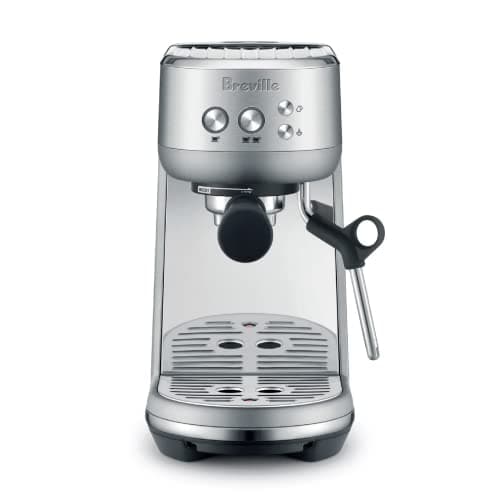
A small kitchen changes the whole question. When counter space is the constraint, the best espresso machine is not the one with the most features — it is the one that makes genuinely good coffee in the least room, and ideally gets out of the way when you are done. Every machine here clears the quality bar for its type; what separates them is footprint. We measured them on width and depth, on the clearance you need above them to lift the water tank or open the lid, and on whether they even need a permanent home on the counter at all. Two of the six do not: they need no plumbing and no outlet, and they pack away in a drawer between uses.
The first thing to do before you buy anything is measure your space honestly, because the number that catches people out is rarely the width on the box. It is the verticalclearance — the room above the machine to lift out and refill a top-loading water tank, or to swing open a portafilter — and the depth once the drip tray and steam wand are accounted for. A machine that fits your counter's footprint but sits under a cabinet with no room to refill it is a daily annoyance you will come to resent. So bring a tape measure to this page: check the width, then the depth, then the height you actually have to work in. The picks below are ordered by how well they solve exactly that problem, from the smallest capable countertop machine to the options that claim no counter at all.
One piece of advice shapes the whole list: in a small kitchen, a compact machine paired with a small separate grinder almost always beats one tall all-in-one. A bean-to-cup machine that grinds, brews and froths in a single body sounds like the space-saving answer, but those machines are large, deep and tall, and they lock you into a built-in grinder that is rarely as good as a real standalone. A slim machine like the Bambino or the Dedica plus a compact grinder takes two small footprints you can arrange to fit your counter — and makes better coffee, because the grinder is the single biggest lever on shot quality. Read best grinders for espresso for compact models that pair well, and if you have no counter to give at all, the manual and portable options in our best manual espresso makers roundup are where this page points you.
How we picked
Every machine here is a real, currently-purchasable maker you can buy in the US, and every spec below is taken from the maker's own listing. Because this page is about space rather than price, we ranked on five things, with footprint weighted first.
- Footprint. Width, depth, and — for the portables — whether the machine needs a permanent home on the counter at all. This is weighted first, which is why the ultra-slim Dedica edges the larger Bambino Plus, and why two no-counter options make the list.
- Shot quality. How good the espresso can actually be for the type of machine, weighing pump, basket and temperature stability over marketing numbers.
- Steam and milk. Whether the machine can texture milk, do it hands-free, or not at all. The two portables have no steam wand, and we score them honestly for it.
- Ease of use. How quickly it is ready, how simple it is to live with day to day, and — for a small kitchen — how easily it tucks away or refills in tight clearance.
- Value. What you get for the money in the context of a small space, not the lowest sticker price.
We did not lab-test these machines; we do not run a lab. The scores are editorial judgments built from published manufacturer specs and aggregated owner reports, and our methodology page spells out exactly how.
How to actually measure your space
Measure three numbers before you buy, in this order. First, width — the easy one, and the figure on the box. Second, depth, once the drip tray sticks out at the front and the steam wand swings at the side; the real depth is usually a couple of inches more than the listed body. Third, and the one that trips people up, vertical clearance— the room above the machine to lift out and refill a top-loading water tank, or to open a lid or hopper. A machine can fit your counter's footprint perfectly and still be miserable to live with if it sits under a cabinet with no room to refill it. On a slim machine like the Dedica or the Bambino this is rarely a problem, but it is worth checking, because the cheapest fix for a cramped kitchen is choosing a machine that refills from the front or side rather than the top. None of these machines needs plumbing, so there is no water line to route — but the two portables go further and need no outlet either, which is the ultimate answer to a clearance problem: no permanent placement at all.
No-counter and no-plumbing options
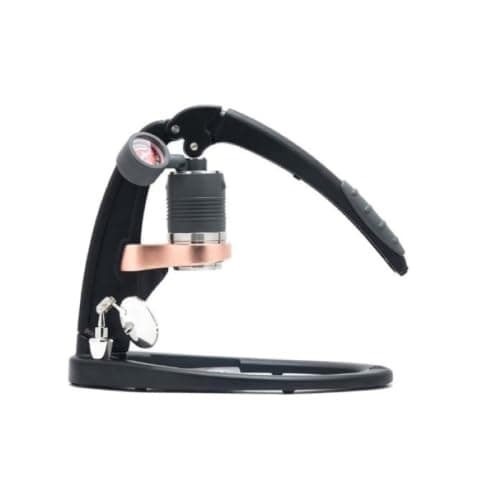
If your problem is not "which slim machine fits" but "I have no counter to give," two picks here solve it differently. The Wacaco Nanopresso is a hand pump that reaches around 18 bar with no electricity and no water line: you bring hot water, work the pump, and it packs down to the size of a small bottle when you are done, so it lives in a drawer or a bag. The Flair PRO 2 is a manual lever press that breaks down and stows away between uses, and makes a genuinely high-ceiling shot for someone willing to do the work. Neither has a steam wand, so milk drinks need a separate frother, and neither is fast — they are one shot at a time. But for a studio, a dorm, an RV or an office, a maker that takes no permanent space and no plumbing is often the smartest answer. We line up every hand-pulled and portable option, with who each is really for, in our best manual espresso makers roundup, and our Wacaco Nanopresso review covers the top portable in depth.
Why compact plus a small grinder beats a tall all-in-one
It is tempting, in a small kitchen, to buy a single bean-to-cup machine that grinds, brews and froths in one body and call the space problem solved. In practice it rarely is. Those machines are large, deep and tall — they need real clearance and real depth — and they lock you into a built-in grinder that is almost never as good as a proper standalone. A slim machine like the Bambino plus a compact grinder is two small footprints you can arrange to fit the counter you have, and it makes better coffee, because the grinder is the single biggest lever on shot quality — more than the machine, every time. So unless a one-touch, hands-off routine is the whole point for you, the space-smart move in a small kitchen is a compact brewer and a compact grinder, not one big box. Start with our best grinders for espresso for models that take up little room, and a small separate tamper finishes a tidy setup.
Which machine fits you
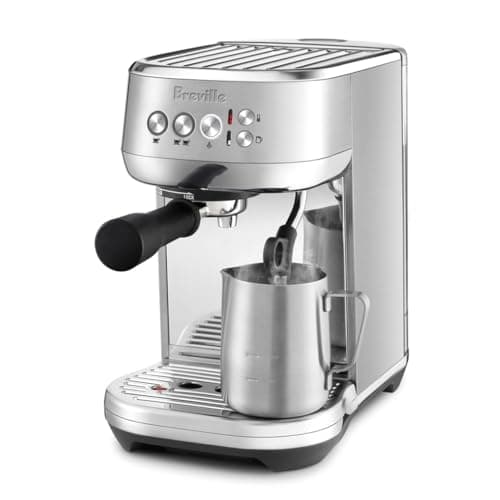
- Want the best coffee in the least counter space? Breville Bambino (BES450) — tiny, fast, temperature-controlled, and our top pick.
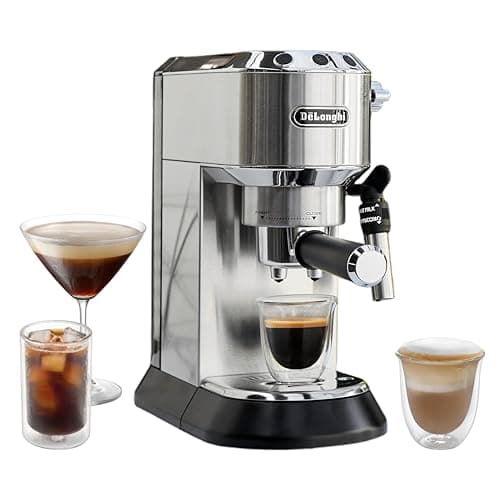
- Fighting for width above all?De'Longhi Dedica Deluxe — the slimmest countertop machine here at about 5.9 inches wide.
- Small kitchen, but milk drinks are the point? Breville Bambino Plus — compact, with an automatic steam wand that froths for you.
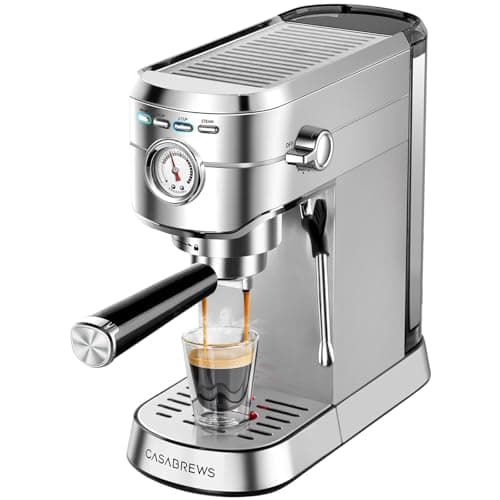
- Slim and cheap is the brief? CASABREWS CM5418 Compact — a budget slim machine that still steams.
- No counter and no plumbing at all? Wacaco Nanopresso — a no-outlet hand pump that packs away in a drawer.
- Want a high-ceiling shot with zero permanent footprint? Flair PRO 2 — a manual lever that breaks down and stows between uses.
Whichever you choose, remember the order of operations: keep the machine footprint small, pair it with a compact grinder and fresh beans, and let the space you save go to a setup you actually enjoy using. If milk drinks matter most, our Breville Bambino Plus review is the companion read; if you have no counter at all, the manual and portable roundup is where to go next.