Skip to content
Portafilter Co

Machines · Espresso Machines

Nespresso vs an espresso machine

A capsule decides your dose, your grind and your coffee before you wake up. Here is exactly what that costs you in the cup, what it buys you in convenience, and the four machines to step up to.

By Stephen V.Updated How we pick
#ad

We earn a commission when you buy through our Amazon links, at no extra cost to you. It never changes a verdict, and we say so when the cheaper product is the better buy. How this works.

If you want better coffee than a capsule, the machine to step up to is the Breville Bambino — it is at brew temperature in seconds, takes a real 54mm portafilter and a single-wall basket, and it is the smallest jump in effort from a pod machine that still gets you genuine espresso. If what you actually love about pods is that a drink appears at the press of one button, do not buy a portafilter machine at all: the De'Longhi Magnifica Evo grinds, brews and textures milk by itself and is the honest pod replacement. The cheapest real step up is the De'Longhi Dedica Deluxe, and if you want to spend roughly what a capsule machine costs, the CASABREWS 3700 is the floor — with caveats we are blunt about below.

Here is the thing almost no comparison of these two says out loud: a capsule machine is not a worse espresso machine. It is a different product. A Nespresso capsule is a sealed portion of pre-ground coffee, and the machine around it exists to pierce it and push hot water through it. That design decision is the whole story — everything people like and everything they eventually find limiting comes from it.

What the capsule decides for you

Four variables govern an espresso shot: how much dry coffee you use, how finely it is ground, how evenly it is distributed in the basket, and the pressure and temperature of the water passing through. On a real machine you control all four — which is both the work and the point. In a capsule system, three of them are fixed at the factory and sealed in foil before the box ships.

The dose is fixed. A capsule holds roughly five to six grams of coffee. A double basket in a 58mm portafilter holds eighteen to twenty. That is not a small difference in strength and body — it is the main reason a pod drink and a cafe double taste like different categories of thing, even before you talk about freshness or grind.

The grind is fixed. It was chosen to work for the average machine with the average water at the average capsule age. You cannot make it finer because your shot ran fast, or coarser because it came out bitter. On a real machine, grind is the single dial you use for everything — how to dial in espresso is entirely about that one adjustment.

The coffee was ground at the factory. Sealing it in foil slows staling dramatically and is a genuinely clever bit of engineering. It does not stop the clock. The reason a fresh bag of beans ground thirty seconds before brewing tastes different is not snobbery; ground coffee loses its volatile aromatics quickly, which is why a shot from fresh beans smells of something specific and a capsule shot smells generically of coffee.

The basket geometry is fixed. There is no portafilter at all, so there is nothing to upgrade: no precision basket, no puck screen, no distribution, no bottomless portafilter to diagnose with. For a site named after the portafilter this is the interesting part — the whole accessory ecosystem that makes home espresso improvable over time simply does not attach to a capsule machine. See what is a portafilter if that is new to you.

What you get in return, honestly

A lot, and anyone who sneers at it is not being straight with you. There is nothing to dial in, nothing to clean beyond a used-capsule bin, no grinder on the counter, no weighing, no milk to learn, and total consistency: drink one and drink one hundred and they taste the same. If you make one coffee a day on the way out of the door, a capsule machine serves that life better than a Gaggia Classic ever will, and it will keep doing it for years.

The two real costs are per-drink price and ceiling. On price, do the arithmetic with your own sleeves rather than ours: take what you pay per capsule, multiply by the drinks you make a day, and multiply by 365. Compare that with a bag of whole beans, which at a typical speciality price works out as cents per double shot, and the annual gap usually covers a decent machine and grinder within a year or two. On ceiling: a capsule system is as good on day one as it will ever be. A portafilter machine gets better as your grinder, your technique and your beans improve, which is either the appeal or the problem depending entirely on the person.

What about Keurig?

Different question, and the answer is firmer. A Keurig K-Cup brewer makes a small cup of drip-style coffee by passing hot water through a pod at low pressure — it is not building espresso pressure and it is not trying to. If you are comparing Keurig against an espresso machine, you are comparing two different drinks; coffee vs espresso explains why they are not interchangeable. Nespresso, whatever its limits, is at least making a pressurised shot.

So which machine replaces your pods?

The useful way to choose is to work out which part of the capsule machine you actually like, because the four picks below map onto four different answers. If you like the speed and the simplicity but want real coffee, the Bambino. If you like that nobody has to learn anything and a latte arrives in ninety seconds, a bean-to-cup super-automatic. If you want the cheapest honest route into espresso, the Dedica. And if you want to spend about what a capsule machine costs and accept the compromises, the CASABREWS. What all four have that no capsule machine does is a portafilter and a dose you choose.

The short answer

Quick picks

#ProductBest forScorePrice
01
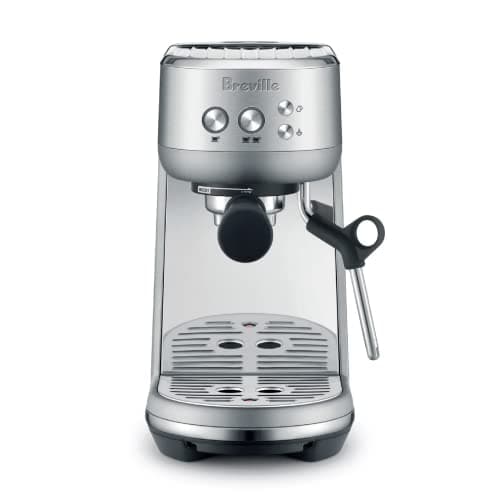
Breville Breville Bambino Espresso Machine (BES450)
Breville Bambino Espresso Machine (BES450)

The smallest jump in effort from a pod machine that still gets you genuine espresso. Breville's ThermoJet heater brings it to brew temperature in a few seconds, which is the single most pod-like quality a real machine can have — no waiting, no warm-up ritual. You get a 54mm portafilter, a single-wall basket, pre-infusion and an automatic steam wand, in a footprint barely wider than a capsule machine. What it does not have is a grinder, so budget for one.

Best overall step up from pods
8.4
$299.95Amazon
02
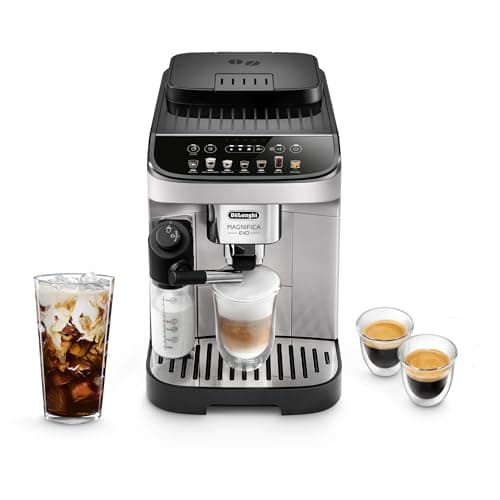
De'Longhi De'Longhi Magnifica Evo with LatteCrema (ECAM29084SB)
De'Longhi Magnifica Evo with LatteCrema (ECAM29084SB)

The honest pod replacement, and the pick if convenience is why you bought capsules in the first place. It grinds whole beans, tamps, brews and textures milk with the LatteCrema carafe, start to finish, on one button — so the drink arrives with the same no-decisions experience as a capsule, from beans you chose and ground seconds earlier. You trade away the portafilter and the ceiling that comes with it, and in exchange you never learn anything.

Best if you want one-button convenience
8.2
$875.00Amazon
03
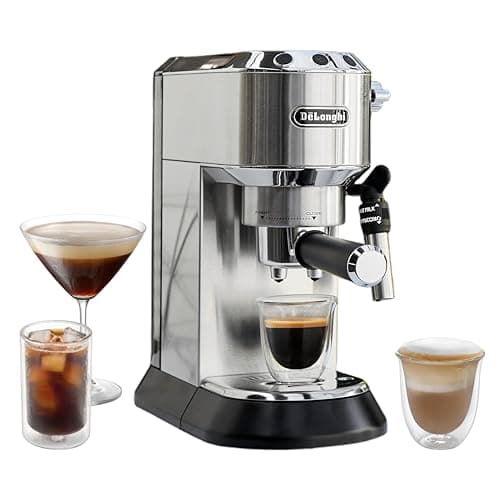
De'Longhi De'Longhi Dedica Deluxe (EC685)
De'Longhi Dedica Deluxe (EC685)

The cheapest route into real espresso that we are happy recommending, and the narrowest machine here at about six inches wide — so it fits where a capsule machine sat with room to spare. It takes a 51mm portafilter, heats in under a minute, and has a manual steam wand you can learn on. The thing to know before you buy: it ships with pressurised dual-wall baskets that fake crema, and the machine only becomes interesting once you put a single-wall basket in it.

Cheapest honest step up
7.8
$249.00Amazon
04
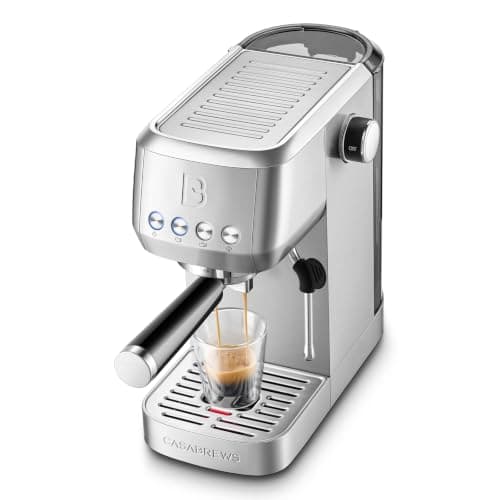
CASABREWS CASABREWS 3700 Essential Espresso Machine
CASABREWS 3700 Essential Espresso Machine

The price-matched option: roughly what a mid-range capsule machine costs, with a portafilter instead of a pod slot. It is a compact pump machine with a steam wand, and for someone who wants to find out whether home espresso is for them without spending real money, it is a legitimate experiment. Be clear about the trade: pressurised baskets, a light build, and a steam wand that is short for a proper pitcher. It is a starting point, not a machine you keep.

Cheapest machine with a portafilter
6.4
$99.99Amazon

#ad · Live prices from the Amazon Product API, as of October 17, 2026. Where we have no verified live price, we show none — a gap beats a number that has rotted.

In detail

The picks, in full

01
Breville Breville Bambino Espresso Machine (BES450)

Best overall step up from pods

Breville Bambino Espresso Machine (BES450)

ThermoJet heater, seconds to brew temp54mm portafilter, single-wall basketAutomatic steam wand with temperature controlCompact footprint, no grinder
8.4/10

The smallest jump in effort from a pod machine that still gets you genuine espresso. Breville's ThermoJet heater brings it to brew temperature in a few seconds, which is the single most pod-like quality a real machine can have — no waiting, no warm-up ritual. You get a 54mm portafilter, a single-wall basket, pre-infusion and an automatic steam wand, in a footprint barely wider than a capsule machine. What it does not have is a grinder, so budget for one.

Shot potential
8
Speed to first drink
9
Ease of transition from pods
8
Footprint
9
Value
8

Pros

  • At brew temperature in seconds, so it fits a pod-shaped morning routine
  • Real 54mm portafilter and single-wall basket, so the shot has a ceiling worth chasing
  • Automatic milk texturing takes the hardest skill off the table while you learn
  • Small enough to replace a capsule machine on the same patch of counter
  • Breville's 54mm accessory ecosystem is deep and cheap

Cons

  • No grinder, and a real espresso grinder is a genuine extra cost
  • 54mm is well supported but narrower than the 58mm commercial standard
  • Small drip tray and a short spout — tall cups are awkward
  • Plastic body on a machine that costs more than many capsule machines

Don't buy this if…

…what you love about pods is that no decisions are required. The Bambino is a real espresso machine and it will ask you for a grind, a dose and a tamp. Buy the Magnifica Evo below instead.

The Bambino is the machine we recommend most often to people leaving capsules, and the reason is the heater. Nearly every complaint about switching from pods to a real machine is about waiting — for warm-up, for the group to settle, for the boiler to recover before steaming. ThermoJet removes most of that. Our full Breville Bambino review covers it properly, and Bambino vs Bambino Plus decides whether the automatic milk jug is worth the step up.

Pair it with a grinder before you buy any accessory — our best grinders for the Breville Bambino page is built around exactly that pairing, and the $500 setup page builds the whole kit around this machine.

$299.95View on Amazon

Price as of October 17, 2026. Prices change — Amazon's at checkout is the one that counts.

#ad · we may earn a commission from this link to Breville Bambino Espresso Machine (BES450)

02
De'Longhi De'Longhi Magnifica Evo with LatteCrema (ECAM29084SB)

Best if you want one-button convenience

De'Longhi Magnifica Evo with LatteCrema (ECAM29084SB)

Bean-to-cup: grinds, tamps and brewsLatteCrema automatic milk carafe13 grind settings, adjustable strengthRemovable brew unit, auto rinse cycles
8.2/10

The honest pod replacement, and the pick if convenience is why you bought capsules in the first place. It grinds whole beans, tamps, brews and textures milk with the LatteCrema carafe, start to finish, on one button — so the drink arrives with the same no-decisions experience as a capsule, from beans you chose and ground seconds earlier. You trade away the portafilter and the ceiling that comes with it, and in exchange you never learn anything.

Convenience
10
Freshness gain over capsules
9
Shot ceiling
6
Milk drinks
9
Value
7

Pros

  • One button from whole beans to a finished milk drink — the genuine pod-convenience answer
  • Freshly ground every cup, which is the single biggest flavour gain over a capsule
  • Automatic milk system means nobody in the house needs to learn to steam
  • Removable brew unit washes by hand, so maintenance is straightforward
  • Per-cup cost drops to the price of beans, which is where the savings actually come from

Cons

  • No portafilter, so there is nothing to upgrade and no shot to improve by technique
  • Super-automatic pucks are smaller and lighter than a real double, which caps body
  • Costs several times a capsule machine up front
  • Milk carafe is another thing to rinse and store in the fridge

Don't buy this if…

…you want to learn espresso. A super-automatic is a very good appliance and a dead end as a craft — if the appeal is the process, buy the Bambino or the Dedica.

We rank this second rather than first only because this is a portafilter site and the Bambino is the better espresso machine. For a household that bought a capsule machine because mornings are chaotic, the Magnifica Evo is very likely the correct purchase, and we would rather say so. Our De'Longhi Magnifica Evo review is the detail, and semi-automatic vs super-automatic is the decision in full. If you are cross-shopping the obvious alternative, see Breville Bambino vs De'Longhi Magnifica.

$875.00View on Amazon

Price as of October 17, 2026. Prices change — Amazon's at checkout is the one that counts.

#ad · we may earn a commission from this link to De'Longhi Magnifica Evo with LatteCrema (ECAM29084SB)

03
De'Longhi De'Longhi Dedica Deluxe (EC685)

Cheapest honest step up

De'Longhi Dedica Deluxe (EC685)

51mm portafilterAbout 6 inches wideThermoblock, under a minute to brew tempManual steam wand
7.8/10

The cheapest route into real espresso that we are happy recommending, and the narrowest machine here at about six inches wide — so it fits where a capsule machine sat with room to spare. It takes a 51mm portafilter, heats in under a minute, and has a manual steam wand you can learn on. The thing to know before you buy: it ships with pressurised dual-wall baskets that fake crema, and the machine only becomes interesting once you put a single-wall basket in it.

Shot potential
6
Footprint
10
Ease of transition from pods
8
Upgrade path
6
Value
9

Pros

  • Genuinely narrow — the easiest machine here to fit into a capsule machine's footprint
  • Real portafilter and a manual wand, so the whole craft is available at the lowest price
  • Quick heat-up, which keeps the routine pod-like
  • 51mm accessories are cheap, and swapping to a single-wall basket transforms it
  • Cheapest machine here with a dose you choose

Cons

  • Ships with pressurised dual-wall baskets, which manufacture crema and cap the shot
  • 51mm has the smallest accessory ecosystem of the three common sizes
  • Small single boiler means waiting between brewing and steaming
  • Thin, light build compared with the metal machines further up the site

Don't buy this if…

…you will not buy a grinder. On a 51mm machine with a dual-wall basket and supermarket pre-ground, a capsule machine honestly makes better coffee — the upgrade only pays once you grind fresh.

The Dedica is the machine that answers "I want to try real espresso without committing a thousand dollars", and it answers it well as long as you also buy a single-wall basket and a grinder. Our De'Longhi Dedica Deluxe review is the full picture, 51mm portafilter accessories is what fits it, and Breville Bambino vs De'Longhi Dedica is the head-to-head against the pick above.

$249.00View on Amazon

Price as of October 17, 2026. Prices change — Amazon's at checkout is the one that counts.

#ad · we may earn a commission from this link to De'Longhi Dedica Deluxe (EC685)

04
CASABREWS CASABREWS 3700 Essential Espresso Machine

Cheapest machine with a portafilter

CASABREWS 3700 Essential Espresso Machine

51mm portafilterCompact pump machineSteam wand for milkPrice comparable to a capsule machine
6.4/10

The price-matched option: roughly what a mid-range capsule machine costs, with a portafilter instead of a pod slot. It is a compact pump machine with a steam wand, and for someone who wants to find out whether home espresso is for them without spending real money, it is a legitimate experiment. Be clear about the trade: pressurised baskets, a light build, and a steam wand that is short for a proper pitcher. It is a starting point, not a machine you keep.

Shot potential
5
Price
10
Build
5
Upgrade path
4
Value as an experiment
8

Pros

  • Costs about what a capsule machine does, so the switch is not a financial decision
  • Has a real portafilter and a dose you choose, which no capsule machine does
  • Steam wand means milk drinks are at least possible
  • Small footprint, mostly-metal exterior at the price
  • A cheap way to find out whether the process appeals before spending properly

Cons

  • Pressurised dual-wall baskets manufacture the crema and cap what the shot can be
  • Steam wand is short, so a full-size pitcher is awkward
  • Light build and owner-reported durability concerns at this price point
  • You will likely want a better machine within a year if you take to espresso

Don't buy this if…

…you already know you want to learn espresso properly. Spending this little twice costs more than spending once on a Dedica or a Bambino, and the ceiling here is genuinely low.

We include this because the honest answer to "what costs the same as my capsule machine but has a portafilter?" should not be silence. It should, however, come with the caveats above. Our CASABREWS CM5418 review goes into what the brand's machines do and do not buy you in detail, and best espresso machines under $200 ranks this whole tier.

$99.99View on Amazon

$109.999% off

Price as of October 17, 2026. Prices change — Amazon's at checkout is the one that counts.

#ad · we may earn a commission from this link to CASABREWS 3700 Essential Espresso Machine

Capsule machine vs portafilter machine, side by side

The left column is structural — it is true of capsule systems generally, not of any one model. The right column describes the four machines above.

What decides the shotCapsule machinePortafilter machine
DoseFixed in the capsule (roughly 5-6 g)You choose it (typically 14-20 g for a double)
GrindFixed at the factoryYour dial, adjusted per bag of beans
FreshnessGround months ago, sealed in foilGround seconds ago, if you own a grinder
BasketNone — nothing to change or upgrade51mm, 54mm or 58mm, with a full accessory ecosystem
MilkSeparate frother or an integrated carafeSteam wand you learn, or an automatic system
Per-drink costPrice of a capsulePrice of the beans you used
ConsistencyTotal, by designYours to earn, then it is repeatable
CeilingDay one is as good as it getsRises with your grinder, technique and beans

The cost arithmetic, with your numbers

We are not going to quote you a capsule price, because it depends on the range you buy and where you buy it. Do it yourself in three steps, because the result is usually the thing that decides the question.

First, take the price of one capsule. Second, multiply by the number of drinks your household makes in a day. Third, multiply by 365. Now price a bag of whole beans you would actually enjoy, divide by the number of 18g doses in it (a 12 oz / 340 g bag gives roughly 18 doubles), and run the same annual multiplication. The gap between those two annual figures is your real budget for a machine and a grinder, and for most two-drinks-a-day households it covers both inside two years. If you make one capsule a day, it probably does not — and that is a perfectly good reason to keep your pod machine.

Three things that surprise people after the switch

The grinder matters more than the machine. This is the most important sentence on the page. Moving from capsules to a real machine without a burr grinder usually makes the coffee worse, because you have replaced factory-ground, foil-sealed coffee with supermarket pre-ground that has been staling in a bag. Budget for the grinder as part of the machine purchase, not as an accessory — do you need a grinder for espresso is the full argument.

The basket in the box is often the wrong one.Cheap machines ship with pressurised "dual wall" baskets, which force the coffee through one small hole to generate a crema-like foam regardless of what you put in. They make bad coffee look right and good coffee taste flat. Pressurized vs unpressurized baskets explains how to tell which you have, and swapping to single-wall is usually under twenty dollars.

There is a learning period, and it is a few weeks, not a few days. Your first shots will be worse than your capsules. That is normal and temporary, and how to pull an espresso shot plus why is my espresso sour or bitter shorten it considerably. If "worse for three weeks" is unacceptable in your household, that is a real argument for the super-automatic route.

Keeping both is a legitimate answer

Plenty of people run a capsule machine for weekday mornings and a portafilter machine for weekends, and there is nothing silly about it. If counter space is the constraint rather than money, our best espresso machines for small kitchens roundup is the page to read, and best portable espresso makers covers the hand-powered makers that need no counter at all.
How we picked

We did not lab-test this gear

Everyone in this category says they tested twenty machines. We have not pulled shots on every product here, and we say so. What we did instead: compiled the published specifications, cross-checked the manufacturer manuals, computed the running cost (wattage to energy, grams-per-shot to cost-per-cup), weighed aggregated owner reports, and scored each product against a published rubric. The scores are judgments from documented research — not measurements we took, because we do not have a test lab and we will not pretend we do. Where hands-on time would tell you more than a spec sheet, we flag it. Where a number came from someone else's work, we name them in Sources.

Questions

Frequently asked

Is Nespresso real espresso?
It is a pressurised coffee shot, so it is far closer to espresso than a K-Cup brewer is. What separates it from a cafe double is the dose — roughly 5-6 g in a capsule against 18-20 g in a double basket — plus a grind fixed at the factory and coffee that was ground months before you drank it. The result is recognisably espresso-like and consistently so; it is not the same drink as a well-pulled double.
Is an espresso machine cheaper than Nespresso in the long run?
Usually, if you make more than one drink a day. Capsules are priced per drink and beans are priced per kilo, so the gap compounds: run your own capsule price times drinks per day times 365 against the same sum for a bag of beans (a 340 g bag is roughly 18 doubles). For most two-drinks-a-day households the annual difference covers a machine and a grinder within two years. For a single daily capsule it often does not.
What is the best espresso machine to upgrade to from Nespresso?
The Breville Bambino, because its ThermoJet heater reaches brew temperature in seconds — which keeps the routine as close to pod-like as a real machine gets — and it takes a real 54mm portafilter with a single-wall basket. If what you liked about pods was that nobody had to learn anything, the De'Longhi Magnifica Evo is the honest answer instead. Live prices for both are in the table above.
Can you put ground coffee in a Nespresso machine?
Not into the machine itself — the brew chamber is built around a sealed capsule. Refillable stainless capsules exist and do work after a fashion, but they put you back in charge of dose and grind without giving you a portafilter, a basket you can upgrade, or the pressure profile of a real machine. If you have reached the point of wanting to grind your own, a cheap portafilter machine is a better use of the same money.
Do I need a grinder if I switch from pods to an espresso machine?
Yes, and this is the mistake that makes people regret switching. Factory-ground capsules are sealed in foil; supermarket pre-ground is not, and it stales within days of opening. Moving to a real machine with pre-ground coffee frequently tastes worse than the capsules did. Budget for a burr grinder up front — our best coffee grinders under $100 page is the cheapest honest starting point.
Nespresso vs Keurig vs espresso machine — what is the difference?
Keurig brews a cup of drip-style coffee through a pod at low pressure. Nespresso makes a small pressurised shot from a sealed capsule. An espresso machine makes a shot from coffee you dose and grind yourself, in a portafilter you can upgrade. Keurig and Nespresso are not competing with each other on the same drink — see coffee vs espresso.

Keep reading

Same gear, other pages

We cover this gear elsewhere too

Receipts

Sources

We do not run a testing lab, and we do not pretend to. Where a measured number came from someone else's work, we name them and link them. Where we could not verify something, we say so on the page rather than quietly leaving it out. Read our full method.