Skip to content
Portafilter Co

Grinders · Coffee Grinders

The best coffee grinders under $100

Under a hundred dollars, a hand grinder buys you better burrs than an electric can — and that is the whole decision. Four grinders worth owning at this price, separated by what you brew.

By Stephen V.Updated How we pick
#ad

We earn a commission when you buy through our Amazon links, at no extra cost to you. It never changes a verdict, and we say so when the cheaper product is the better buy. How this works.

Under a hundred dollars the best coffee grinder for most people is the Timemore Chestnut C3 ESP — a hand grinder with 38mm steel conical burrs and a dial fine enough to reach real espresso grinds, which is something no electric at this price can do. If you only brew filter, the Timemore Chestnut C3S is the same build with stepless adjustment geared coarser and costs less. If you are buying for a bag or a campsite, the 1Zpresso Q2 is smaller than a soda can. And if you will not crank a handle at 6am, the OXO Brew Conical Burr Grinder is the one electric here we are willing to recommend.

This is the price bracket where the most important buying decision in home coffee gets made, and it is not which grinder — it is manual or electric. The reason is arithmetic. A hand grinder has no motor, no gearbox, no timer and no hopper assembly, so nearly the whole budget goes into the burr set and the shaft that holds it steady. An electric grinder at the same money has to pay for all of that hardware first, and the burrs get whatever is left. That is why a $99 hand grinder out-grinds a $99 electric, and why it keeps out-grinding electrics well past the $150 mark.

What to look for under $100. Four things decide whether a cheap grinder is worth owning at all.

Burrs, not blades.A blade grinder is a spice mill: it chops beans into a mixture of dust and boulders, and the dust over-extracts bitter while the boulders under-extract sour in the same cup. No brew method hides this, and espresso exposes it completely. Everything on this page has conical burrs, which crush and shear beans to a set gap so the particles come out at a similar size. If a grinder under a hundred dollars does not say "burr" on the box, it is not a candidate.

Enough adjustment resolution for your brew method. Resolution is how finely you can move the grind, and how much it matters depends entirely on what you make. French press and cold brew are forgiving — a coarse grind that is roughly right tastes fine. Pour over wants more care. Espresso needs the most, because the difference between a 25-second shot and a gusher is a few tens of microns, and a grinder with four usable steps in that zone makes dialing in impossible. This is why the espresso-capable pick leads the page: at this price, espresso fineness is the rare capability, not a given.

A body that holds the burrs still. Burr alignment is what turns a spec into a cup. A plastic body with a long unsupported shaft lets the burr wobble under load, and a wobbling burr produces a wide particle spread no matter what the box claims. All-metal bodies and double-bearing shafts are the reason the Timemore and 1Zpresso grinders here punch above their price.

Honest throughput. A hand grinder is roughly 30 to 45 seconds of cranking for a filter dose and closer to a minute for a fine espresso dose, because espresso is the hardest grind to turn. For one or two drinks a day that is a pleasant ritual. For a household making four milk drinks before work it is a chore you will stop doing, which is when the grinder gets replaced by a bag of pre-ground and the whole setup gets worse. Be truthful with yourself about volume before you buy.

One thing we are not going to do on this page is pretend a sub-$100 grinder competes with a flat-burr machine. It does not. What it does is clear the only bar that matters at the start: it grinds consistently enough that your brew method can actually work. When you are ready to spend more, our best coffee grinders under $200 page picks up exactly where this one stops, and hand vs electric grinders goes deeper into the trade this page turns on.

The short answer

Quick picks

#ProductBest forScorePrice
01
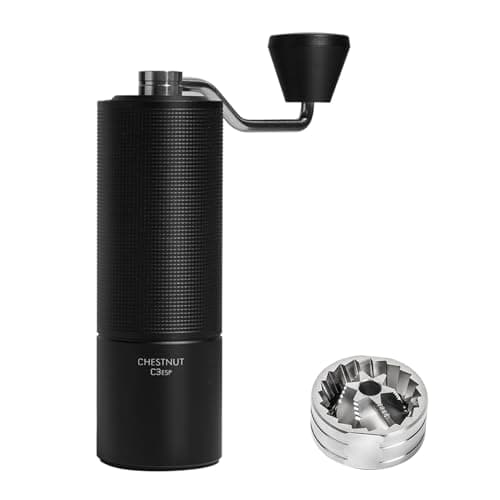
TIMEMORE TIMEMORE Chestnut C3 ESP
TIMEMORE Chestnut C3 ESP

The best grinder under a hundred dollars, and the only one here we would put behind an espresso machine. The C3 ESP is the espresso-geared version of Timemore's standard hand grinder: 38mm S2C stainless conical burrs in an all-metal body, with an external stepped dial at roughly 0.023mm per click and 30 clicks per rotation. That is finer resolution than most electric grinders at three times the money, and it is what lets you move the grind one click, watch the shot time shift a couple of seconds, and converge on a recipe instead of oscillating. It grinds pour over and French press perfectly well too — the gearing is simply biased toward the fine end.

Best overall, and the only espresso-capable pick here
8.6
$99.00Amazon
02
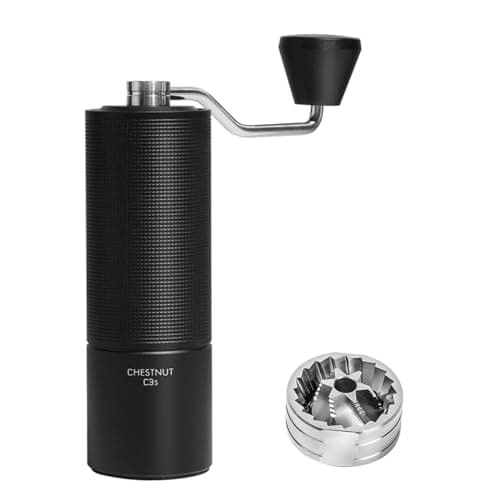
Timemore Timemore Chestnut C3S
Timemore Chestnut C3S

The filter-first version of the pick above, and the better buy if espresso genuinely is not in your future. Same S2C steel burr family and the same all-metal body with no plastic inside, but the adjustment is stepless and the range sits where pour over, drip and French press live. At roughly 530 grams it is light enough to pack, and a 25g capacity covers a single V60 or a small press in one grind. Buy this if your mornings are a Hario and a kettle.

Best for pour over, drip and French press
8.0
$79.00Amazon
03
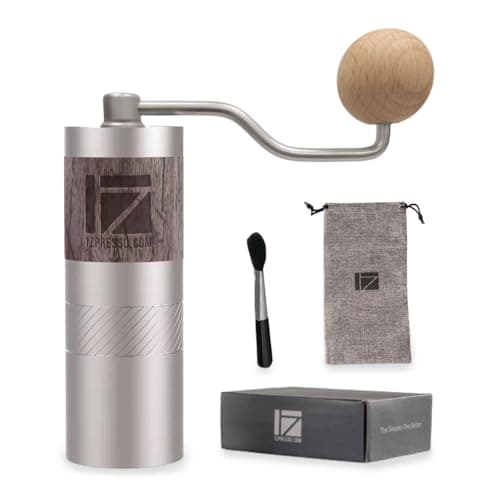
1Zpresso 1Zpresso Q2 Manual Grinder
1Zpresso Q2 Manual Grinder

The travel answer. The Q2 is genuinely pocket-sized — a body smaller than a soda can that fits inside an AeroPress plunger — with heptagonal stainless burrs and a numbered internal dial at 30 clicks per rotation. At about 465 grams with a drawstring pouch, it is the grinder you take on a plane, and it grinds a clean filter cup from a brand with a real reputation. The honest limit is that it leans filter: espresso is possible but not what it is built for.

Best for travel, camping and the office
7.6
$99.00Amazon
04
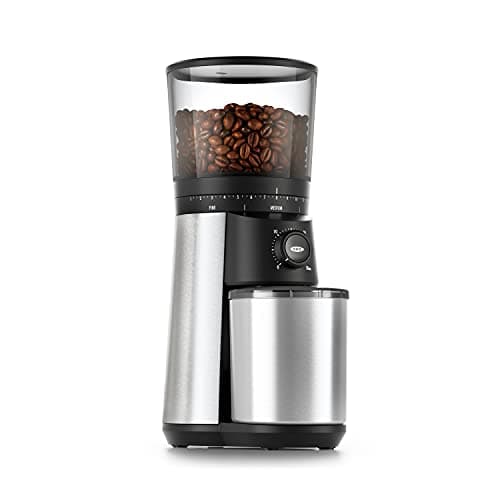
OXO OXO Brew Conical Burr Grinder
OXO Brew Conical Burr Grinder

The one electric grinder we are happy to recommend under a hundred dollars, and the pick for anyone who will not crank a handle on a weekday. Stainless conical burrs, 15 settings plus a micro-adjustment, a 12 oz UV-blocking hopper and a one-touch timer that remembers your last dose — press it and the same amount of coffee lands in the basket every morning without a scale. It cannot grind for espresso and the settings are coarse-stepped, but for a carafe of drip it does the job and takes thirty seconds.

Best electric under $100, for drip and carafe brewing
7.6
$98.99Amazon

#ad · Live prices from the Amazon Product API, as of October 10, 2026. Where we have no verified live price, we show none — a gap beats a number that has rotted.

In detail

The picks, in full

01
TIMEMORE TIMEMORE Chestnut C3 ESP

Best overall, and the only espresso-capable pick here

TIMEMORE Chestnut C3 ESP

38mm S2C stainless conical burrsExternal stepped dial ~0.023mm/click30 clicks per rotationAll-metal body, espresso-capable
8.6/10

The best grinder under a hundred dollars, and the only one here we would put behind an espresso machine. The C3 ESP is the espresso-geared version of Timemore's standard hand grinder: 38mm S2C stainless conical burrs in an all-metal body, with an external stepped dial at roughly 0.023mm per click and 30 clicks per rotation. That is finer resolution than most electric grinders at three times the money, and it is what lets you move the grind one click, watch the shot time shift a couple of seconds, and converge on a recipe instead of oscillating. It grinds pour over and French press perfectly well too — the gearing is simply biased toward the fine end.

Espresso capability
8
Grind quality
8
Adjustment resolution
9
Build
8
Value
10

Pros

  • Reaches genuine espresso fineness, which nothing else at this price reliably does
  • External dial means you can see and repeat a setting without disassembling anything
  • All-metal body with a supported shaft keeps the burrs aligned under load
  • Effectively zero retention, so a grind change lands on the very next dose
  • No outlet, no noise — works in a hotel room or a shared kitchen at 5am

Cons

  • A fine espresso dose is close to a minute of cranking, and it is hard work
  • Stepped rather than stepless, so occasionally the setting you want sits between clicks
  • 25g capacity means a big French press batch is two grinds
  • Biased to the fine end — the C3S below is the better buy if you never pull a shot

Don't buy this if…

…your household makes three or more espresso drinks every morning. The grind quality is not the problem; the labour is. At that volume buy an electric, even if it means spending more than this page's budget.

The specific thing that makes this grinder unusual is the dial position. Most cheap hand grinders hide their adjustment underneath the burr, inside the body, where you count clicks blind and lose your setting the first time you wash it. The C3 ESP puts a numbered dial on the outside, which sounds like a convenience feature and is actually what makes repeatable espresso possible: you can write down "8 clicks from zero for this bag" and return to it exactly.

Paired with a machine, this is the grinder that turns a cheap espresso setup from frustrating into workable. Our best espresso setup under $500 page builds around exactly this logic — spend on the grinder before the machine — and do you need a grinder for espresso covers why pre-ground is a dead end for shots specifically.

The honest comparison at a little more money is the KINGrinder K6, which has larger 48mm burrs and roughly 240 settings at 16 microns a click. If your budget can stretch past this page, that is where the next real step up is — see KINGrinder K6 vs Timemore C3 for the full head-to-head.

$99.00View on Amazon

Price as of October 10, 2026. Prices change — Amazon's at checkout is the one that counts.

#ad · we may earn a commission from this link to TIMEMORE Chestnut C3 ESP

02
Timemore Timemore Chestnut C3S

Best for pour over, drip and French press

Timemore Chestnut C3S

S2C steel burrsStepless adjustment25 g capacityAll-metal body, ~530 g
8.0/10

The filter-first version of the pick above, and the better buy if espresso genuinely is not in your future. Same S2C steel burr family and the same all-metal body with no plastic inside, but the adjustment is stepless and the range sits where pour over, drip and French press live. At roughly 530 grams it is light enough to pack, and a 25g capacity covers a single V60 or a small press in one grind. Buy this if your mornings are a Hario and a kettle.

Filter grind quality
8
Adjustment resolution
7
Build
8
Portability
8
Value
9

Pros

  • Stepless adjustment means no setting is unreachable — useful for dialing a pour over by taste
  • All-metal construction at a price where plastic bodies are normal
  • Light enough to travel with and small enough to store in a drawer
  • Grind quality in the filter range is the equal of electrics costing twice as much
  • Cheapest pick on the page

Cons

  • Stepless with no external numbers means you cannot write a setting down as precisely
  • Not geared for espresso — it will go fine, but dialing shots on it is a fight
  • 25g capacity is one grind per V60, two for a full French press
  • Manual: 30-45 seconds of cranking per filter dose

Don't buy this if…

…espresso is even a maybe. Spend the extra on the C3 ESP above — the gearing is the whole difference, and you cannot retrofit it.

The C3S is the grinder we point people to when they tell us they brew one pour over a day and have been using a blade grinder. The jump in the cup is larger than any other hundred dollars they could spend, because immersion and percolation brewing both depend on particles extracting at roughly the same rate, and a blade grinder guarantees they will not.

Where it lands relative to the electric default is worth being clear about: the Baratza Encore is the long-standing filter recommendation and costs about fifty percent more than this page allows. The Encore wins on convenience and capacity; the C3S is competitive on grind quality in the cup. See best grinders for drip and pour over for the field ranked without a price cap, and coffee-to-water ratio for the recipe side of the same question.

$79.00View on Amazon

Price as of October 10, 2026. Prices change — Amazon's at checkout is the one that counts.

#ad · we may earn a commission from this link to Timemore Chestnut C3S

03
1Zpresso 1Zpresso Q2 Manual Grinder

Best for travel, camping and the office

1Zpresso Q2 Manual Grinder

Heptagonal stainless steel burrsInternal numbered dial, 30 clicks/rotation15-20g single-dose capacity~465g, drawstring pouch
7.6/10

The travel answer. The Q2 is genuinely pocket-sized — a body smaller than a soda can that fits inside an AeroPress plunger — with heptagonal stainless burrs and a numbered internal dial at 30 clicks per rotation. At about 465 grams with a drawstring pouch, it is the grinder you take on a plane, and it grinds a clean filter cup from a brand with a real reputation. The honest limit is that it leans filter: espresso is possible but not what it is built for.

Portability
10
Filter grind quality
8
Adjustment resolution
7
Capacity
5
Value
8

Pros

  • Small enough to nest inside an AeroPress plunger — a complete travel kit in one hand
  • Numbered internal dial means you can return to a setting after cleaning
  • Heptagonal burr geometry grips beans well for its size, so cranking is not slow
  • Lightest pick here at roughly 465g
  • 1Zpresso's burr quality and parts availability are a genuine step above generic brands

Cons

  • 15-20g capacity is strictly single-dose — a big press means multiple grinds
  • Internal dial means you must part the grinder to change the setting
  • Leans filter; espresso is reachable but imprecise
  • Short handle gives less leverage than the full-size grinders here

Don't buy this if…

…it will live on your kitchen counter rather than in a bag. Buy the C3S instead — more capacity, more leverage, usually less money.

The Q2 earns its place by solving a problem the other grinders here cannot: coffee away from home. It nests in an AeroPress, which means a grinder, a brewer and a filter pack occupy about the volume of a water bottle. That is the whole pitch, and it is a good one — see best camping coffee makers and best AeroPress for the rest of that kit, and our 1Zpresso Q2 review for the grinder on its own.

$99.00View on Amazon

Price as of October 10, 2026. Prices change — Amazon's at checkout is the one that counts.

#ad · we may earn a commission from this link to 1Zpresso Q2 Manual Grinder

04
OXO OXO Brew Conical Burr Grinder

Best electric under $100, for drip and carafe brewing

OXO Brew Conical Burr Grinder

Stainless conical burrs15 settings + micro-adjustment12 oz UV-blocking hopperOne-touch timer, remembers last dose
7.6/10

The one electric grinder we are happy to recommend under a hundred dollars, and the pick for anyone who will not crank a handle on a weekday. Stainless conical burrs, 15 settings plus a micro-adjustment, a 12 oz UV-blocking hopper and a one-touch timer that remembers your last dose — press it and the same amount of coffee lands in the basket every morning without a scale. It cannot grind for espresso and the settings are coarse-stepped, but for a carafe of drip it does the job and takes thirty seconds.

Convenience
9
Filter grind quality
7
Adjustment resolution
5
Capacity
9
Value
8

Pros

  • Push-button convenience — no cranking, no weighing, same dose every day
  • Hopper holds three quarters of a pound, which suits a household brewing a carafe
  • Conical burrs, not blades, at a price where blade grinders dominate
  • UV-blocking hopper slows the staling that a clear hopper accelerates
  • Stable on the counter and quiet enough for an early start

Cons

  • Cannot reach espresso fineness — the range stops short and the steps are too coarse
  • Hopper retention means the first grams of a session carry older coffee
  • 15 coarse steps give far less resolution than any hand grinder here
  • Plastic body and hopper, so burr alignment is the weakest of the four

Don't buy this if…

…you own or want an espresso machine. This grinder cannot feed one, and no setting on it compensates — the C3 ESP at the top of this page is the pick instead.

We rank this last not because it is bad but because of what the money buys. Every other pick on this page spends its budget on burrs; this one spends a good share of it on a motor, a hopper and a timer. In the cup that shows: the OXO grinds drip well and nothing else especially well. What you get back is the thing hand grinders cannot give — a dose that appears while you do something else.

If convenience is the binding constraint and you can go past this page's budget, the Baratza Encore ESP is the grinder to save for: it covers filter and espresso, and Baratza sells parts and runs a repair program, so it is a grinder you fix rather than replace. Our best grinders under $200 page is the next bracket up.

$98.99View on Amazon

$109.9910% off

Price as of October 10, 2026. Prices change — Amazon's at checkout is the one that counts.

#ad · we may earn a commission from this link to OXO Brew Conical Burr Grinder

The four grinders compared

Specs below are the manufacturers' published figures for the exact listings above. Prices come from the live price layer with the "as of" date shown in the quick picks table.

GrinderTypeBurrsAdjustmentEspresso?Who it suits
Timemore C3 ESPManual38mm S2C conicalExternal stepped, ~0.023mm/clickYesAnyone with an espresso machine
Timemore C3SManualS2C steel conicalSteplessNoPour over and French press drinkers
1Zpresso Q2ManualHeptagonal stainlessInternal numbered, 30 clicks/rotationNot reallyTravel, camping, the office
OXO Brew ConicalElectricStainless conical15 steps + microNoCarafe brewing without cranking

Why hand grinders win this bracket

It is worth labouring this point because it is counter-intuitive and it saves people money. A grinder is a burr set, a shaft that holds the burr concentric and true, and a way to turn one against the other. In a hand grinder, the "way to turn it" is your arm, which is free, and the bill of materials goes almost entirely into the first two items. In an electric grinder at the same price, a motor, a gear reduction, a housing, a switch and a hopper all come out of the same hundred dollars before the burrs are costed.

That is why the C3 ESP can carry 38mm hardened steel conical burrs on a double-supported shaft, and a $99 electric generally carries smaller burrs on a longer unsupported one. The unsupported shaft is the real problem: under grinding load the burr deflects, the gap opens unevenly, and the particle distribution widens. You cannot see it, but you can taste it as a cup that is simultaneously harsh and thin.

The counter-argument is time, and it is a fair one. Cranking is 30 to 45 seconds for filter and up to a minute for espresso, every single time, and the finer the grind the harder the handle turns. If that is unacceptable, do not buy a hand grinder out of principle — buy the OXO and accept that drip is what you will brew well.

What under $100 cannot buy

Three things, and knowing them stops you from expecting the wrong miracle.

Flat burrs. Every pick here is conical. Flat burrs produce a narrower particle distribution, which in espresso shows up as more clarity and a more forgiving dial-in window, and the cheapest flat-burr grinders start at several times this budget. Our best flat burr grinders page covers that tier.

Low-retention single dosing. The hand grinders here retain almost nothing simply because there is nowhere for grounds to hide, which is a genuine advantage. What they do not give you is the single-dose workflow of a purpose-built grinder with a bellows and a declumping chute — single dosing explained covers what that actually buys you.

Throughput. No grinder at this price grinds for four people quickly. The OXO can do volume but not quality; the hand grinders can do quality but not volume. Pick your constraint honestly.

Grind settings to start from

A new grinder has no absolute scale you can transfer from a review, because burr alignment and bean density both move the answer. What travels is the relationship between brew method and coarseness: French press and cold brew coarsest, drip and pour over in the middle, espresso finest by a wide margin. Start at the middle of your grinder's range for filter and work outward by taste — espresso grind size explains which way to move and why, and how to dial in espresso covers closing the loop on shots.

Finally, keep the grinder clean. Coffee oils build up on burrs and in the chute, and stale grounds in the path are yesterday's coffee in today's cup — see how to clean a coffee grinder. All four grinders here come apart far enough to brush out properly, which at this price is not guaranteed.
How we picked

We did not lab-test this gear

Everyone in this category says they tested twenty machines. We have not pulled shots on every product here, and we say so. What we did instead: compiled the published specifications, cross-checked the manufacturer manuals, computed the running cost (wattage to energy, grams-per-shot to cost-per-cup), weighed aggregated owner reports, and scored each product against a published rubric. The scores are judgments from documented research — not measurements we took, because we do not have a test lab and we will not pretend we do. Where hands-on time would tell you more than a spec sheet, we flag it. Where a number came from someone else's work, we name them in Sources.

Questions

Frequently asked

What is the best coffee grinder under $100?
The Timemore Chestnut C3 ESP for most people, because it is the only grinder in this bracket that reaches genuine espresso fineness with a repeatable external dial. If you only brew filter, the cheaper Timemore C3S is the better value; if you want an electric, the OXO Brew Conical Burr Grinder is the one worth owning. Live prices are in the table above.
Can you get a grinder that does espresso for under $100?
Yes, but only a manual one. The Timemore C3 ESP is espresso-geared with roughly 0.023mm per click of adjustment, which is finer resolution than most electrics at three times the price. No electric grinder under $100 that we know of reaches espresso fineness with usable resolution — the money goes into the motor instead of the burrs. Our best espresso grinders page covers what changes above this budget.
Is a hand grinder better than an electric at this price?
For grind quality, yes, and not marginally. A hand grinder has no motor or gearbox to pay for, so almost the whole budget goes into the burr set and the shaft that holds it steady. An electric at the same price has to buy that hardware first. The electric wins only on throughput and effort — which is a real consideration if you are making several drinks every morning.
Are blade grinders ever worth it?
Not for coffee you intend to enjoy. A blade grinder chops beans into a mixture of dust and boulders; the dust over-extracts bitter and the boulders under-extract sour in the same cup, and no brew adjustment fixes it. Spending even $79 on a burr grinder is a bigger improvement than any other upgrade at this budget. See hand vs electric grinders for the fuller argument.
How long does it take to hand grind a dose of coffee?
Roughly 30 to 45 seconds for a filter dose and up to about a minute for a fine espresso dose, because espresso is the hardest grind to turn. Larger burrs crank faster, which is the main thing you buy by spending more on a hand grinder. For one or two drinks a day it is a pleasant ritual; for four milk drinks before work it is a chore you will abandon.
Should I spend more than $100 on a grinder?
If you pull espresso and make more than a couple of drinks a day, yes — the next real step is an electric with espresso gearing, which starts around twice this budget. If you brew one pour over a day, the C3S here is genuinely enough and the money is better spent on beans. Our best grinders under $200 page is the next bracket up.

Keep reading

Same gear, other pages

We cover this gear elsewhere too

Receipts

Sources

We do not run a testing lab, and we do not pretend to. Where a measured number came from someone else's work, we name them and link them. Where we could not verify something, we say so on the page rather than quietly leaving it out. Read our full method.