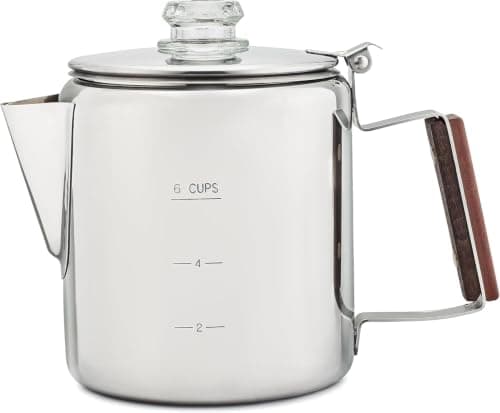
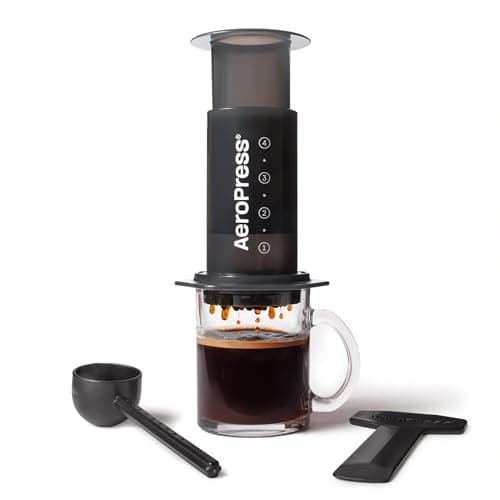
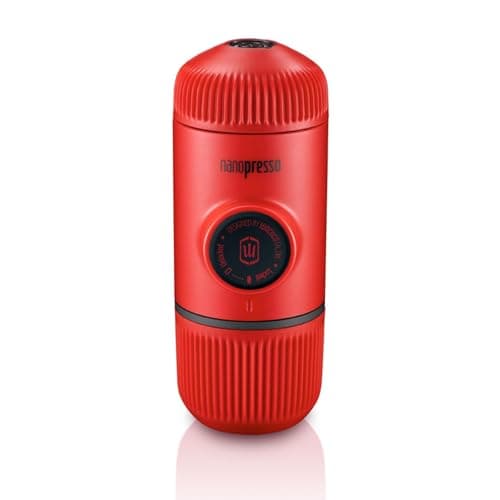
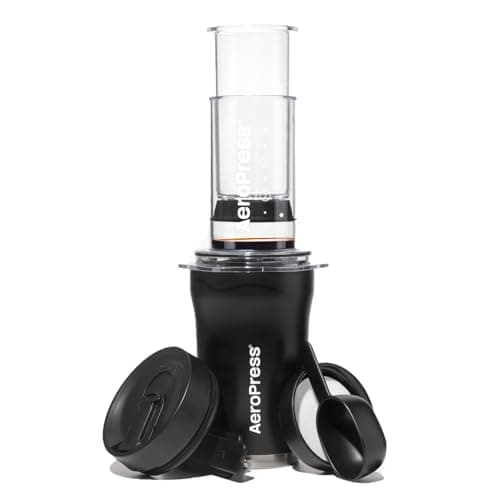
For most campers the best brewer is the AeroPress Go Plus: it needs only hot water, it packs inside its own tumbler, it cannot shatter, and cleanup is one push into the fire pit. If you are cooking for a group around a stove and want coffee the way a campsite smells like coffee, buy the COLETTI Bozeman stainless percolator instead — it brews several cups directly over a flame with no filters to forget. And if what you actually miss outdoors is espresso, the Wacaco Nanopresso makes a real pressurised shot with nothing but your hand.
Camp coffee is a constraints problem, not a taste problem. There is no outlet, so anything with a plug is out. There is one burner and it is probably not flat, so glass carafes and tall stacked towers are a bad idea. Water is finite, which rules out brewers that need rinsing in three stages. Your bag is full, so the brewer has to double as its own container or pack flat. And something in the bin of the car is going to land on it, which is why borosilicate glass stays home and stainless steel and copolymer plastic come along.
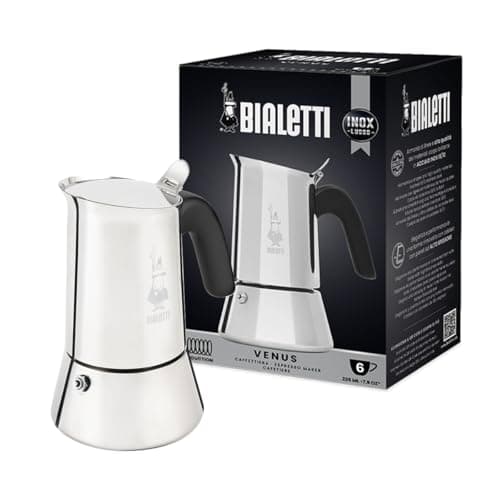
Within those constraints there are really three strategies, and this page ranks the best version of each. Immersion plus pressure— the AeroPress family — needs only hot water and makes a clean, strong cup in a minute with no sediment. Percolation is the traditional camp method: the pot sits on the flame and cycles its own water through the grounds, so it makes several cups with no paper and no technique, at the cost of some bitterness if you walk away. Stovetop pressure— a moka pot — gives you something close to espresso on a camp burner, as long as the pot's base suits the burner you have.
One thing worth doing before you leave: grind at home, or bring a hand grinder. Pre-ground coffee goes flat within a few days of opening, and the difference between camp coffee that is "fine" and camp coffee that is genuinely good is almost always freshness. A hand grinder needs no power either, which is the whole point, and how to store coffee beans covers keeping a bag alive in a hot car.
Match the brewer to the trip
Specs below are the manufacturers' published figures for the exact listings above. The "needs" column is the thing people forget: every brewer here except the percolator and the moka pot needs a separate source of hot water.
| Brewer | Method | Needs | Serves | Best trip |
|---|
| AeroPress Go Plus | Immersion + pressure | Hot water, paper filters | 1-2 | Backpacking, hotels, carry-on |
| COLETTI Bozeman 6-cup | Percolation | Flame only | 4-6 | Car camping with a group |
| Bialetti Venus | Stovetop pressure | Flame or induction | 1-3 small | Vans, cabins, induction tops |
| AeroPress Original | Immersion + pressure | Hot water, paper filters | 1-3 | Car camping, a kit crate |
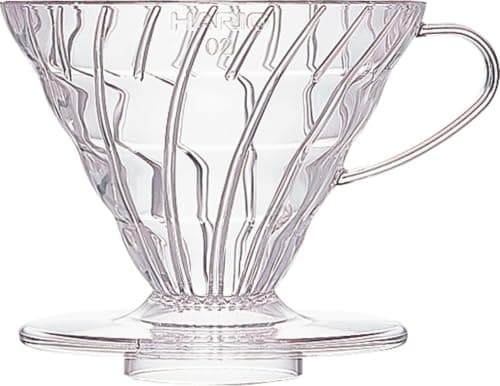
| Hario V60 plastic 02 | Pour over | Hot water, paper filters, a steady pour | 1-4 | Ultralight, coffee-first trips |
| Wacaco Nanopresso | Hand-pump espresso | Hot water, espresso-fine grind | 1 shot | Anywhere you miss espresso |
What breaks on a camping trip
Glass, first and always: a borosilicate carafe or a glass French press will survive four trips and fail on the fifth, usually in a bag with your clothes. Ceramic drippers chip at the rim and then pour unevenly. Anything with a thin aluminium base scorches on a high-output camp burner, which is a real argument for stainless. And paper filters absorb every bit of moisture in a damp bag — pack them inside something rigid and dry.
Grind before you go
The single biggest quality difference in camp coffee is not the brewer, it is how long ago the coffee was ground. If you can take a hand grinder, do: it needs no power, it is the same tool you would use for espresso at home, and it means the coffee is ground minutes before brewing instead of weeks. If you cannot, grind for the specific brewer you are taking — coarse for the percolator, medium for the AeroPress, medium-fine for the moka pot — and seal it. Grind sizes by method are in espresso grind size, and the ratio to start from is in the coffee-to-water ratio guide.
Water is the other half
Coffee is almost entirely water, and camp water is whatever you brought. Very soft water — distilled or heavily filtered — makes coffee taste flat and hollow, because minerals are what carry extraction. Very hard water makes it dull and chalky. If the coffee tastes wrong everywhere you camp but fine at home, suspect the water before the brewer; water for espresso explains the mechanism and applies just as much to filter coffee.
How we picked
We did not lab-test this gear
Everyone in this category says they tested twenty machines. We have not pulled shots on every product here, and we say so. What we did instead: compiled the published specifications, cross-checked the manufacturer manuals, computed the running cost (wattage to energy, grams-per-shot to cost-per-cup), weighed aggregated owner reports, and scored each product against a published rubric. The scores are judgments from documented research — not measurements we took, because we do not have a test lab and we will not pretend we do. Where hands-on time would tell you more than a spec sheet, we flag it. Where a number came from someone else's work, we name them in Sources.