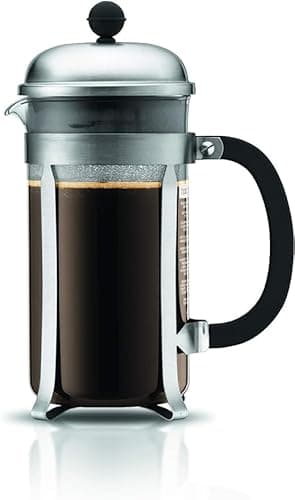
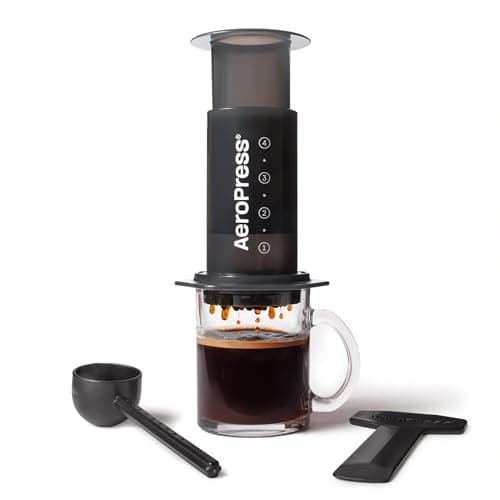
The AeroPress and the French press are the two brewers most first-time coffee people weigh against each other, and for good reason: both are cheap, both are fully manual, both are hard to get badly wrong, and both make far better coffee than a supermarket drip machine. What trips people up is that they make genuinely different cups. The AeroPress is a quick single-serve brewer that steeps the coffee and then pushes it through a paper microfilter with gentle hand pressure, so it lands a clean, smooth, low-bitterness cup in under two minutes. The French press is full immersion through a metal mesh, so it keeps the oils and fine particles in for a heavier, oilier, more textured brew — and it makes a whole carafe at once.
We are comparing the two definitive, affordable versions of each — the AeroPress Original and the Bodum Chambord French press— because they are the standard entry to each method and the ones most people actually end up buying. For the wider field, see the best AeroPress setups and the best French presses. Neither brewer is better in the abstract; they win at different things, and the right pick comes down to how many cups you make at a time, whether you want body or clarity, and how much cleanup and travel matter to you. And read this first if you take one thing away: both live or die on the grind, so a decent burr grinder matters more than which of these two you choose.
The head-to-head, point by point
Cup character — clarity vs body: this is the real divide. The AeroPress pushes the coffee through a paper microfilter, which traps the oils and micro-fines for a clean, smooth, low-bitterness cup; the French press strains through a metal mesh that lets those same oils and fines through for a heavier, oilier, more textured brew. If you like a crisp, easy-drinking cup, the AeroPress wins; if you like weight and mouthfeel, the press does. Batch size:the French press wins outright — a 34 oz carafe fills several mugs in one press, while the AeroPress makes roughly one mug per brew and you repeat for a second person. Speed and cleanup:the AeroPress is the clear winner — it brews in under two minutes and cleans up in seconds by popping the spent puck into the bin and rinsing, where the press has a plunger, mesh and carafe to rinse and a wet bed of grounds to dig out. Travel and durability:the AeroPress again — it is compact, nearly unbreakable plastic, and a favorite for camping and hotel rooms, while the Chambord's glass carafe is a home fixture, not a backpack item. Cost and paper:both are inexpensive and close on price, but the AeroPress needs a steady supply of paper microfilters, while the French press needs no consumables at all — its metal mesh is reusable forever.
The grind is the real variable
As with any brewer, the single biggest thing that decides your cup is not the device — it is the grind, and these two want different things. The French press wants a coarse grind (think coarse sea salt) so the mesh does not pass a muddy, over-extracted cup, and it is genuinely fussy about it: too fine and you get sludge and bitterness. The AeroPress is far more forgiving and likes a medium to medium-finegrind, closer to table salt, but because the paper filter and short contact time do so much of the work, it tolerates a wider range of grinds and even a wider range of technique. Either way, a cheap blade grinder cannot hold an even setting, which is why both cups taste better from a burr grinder — see our hand grinder roundup, and our grind size guide for where filter grinds sit relative to espresso.
Which should you brew
- Brew an AeroPress ifyou mostly make coffee for one, you want it clean, smooth and low in bitterness, you want it fast, and you value something that cleans up in seconds and survives travel. It is the solo, weekday, packs-in-a-bag choice — see the best AeroPress setups.
- Brew a French press ifyou want a heavy, full-bodied cup, you often make coffee for two or more, and you would rather press a whole carafe at once than brew mug by mug — and you do not mind a little sediment or a bit more cleanup. It is the sociable, no-paper choice — see the best French presses.
Plenty of people own both and pick by the day: the AeroPress for a fast, clean solo cup, the press for a lazy weekend carafe shared over breakfast. If you are torn between manual methods more broadly, our French press vs pour over comparison covers the other classic fork in the road. Whichever you brew, start with fresh, whole beansground just before brewing — it matters more than the choice of brewer.
What we didn't test
We did not run these two side by side in a lab. This comparison is compiled from AeroPress's and Bodum's published specifications plus aggregated owner reports, and the scores are our judgments from that research — not measured extraction yields or blind tastings. Our methodology explains exactly how we reach a verdict and what our scores do and do not mean.
How we picked
We did not lab-test this gear
Everyone in this category says they tested twenty machines. We have not pulled shots on every product here, and we say so. What we did instead: compiled the published specifications, cross-checked the manufacturer manuals, computed the running cost (wattage to energy, grams-per-shot to cost-per-cup), weighed aggregated owner reports, and scored each product against a published rubric. The scores are judgments from documented research — not measurements we took, because we do not have a test lab and we will not pretend we do. Where hands-on time would tell you more than a spec sheet, we flag it. Where a number came from someone else's work, we name them in Sources.