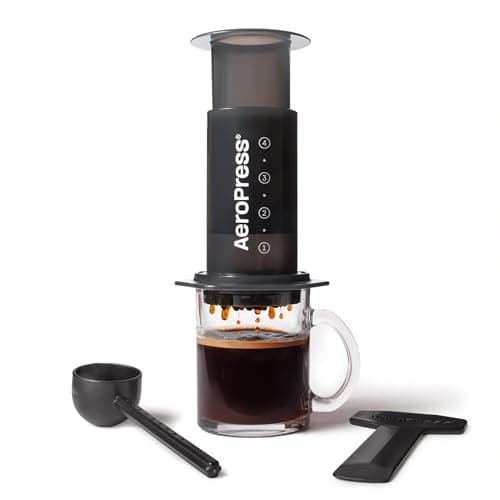
An AeroPress is the great equalizer of home coffee: a three-part cylinder that brews a clean, full-bodied cup in one to three minutes and then shrugs off being thrown in a backpack, dropped on a tile floor, or handed round a campsite. You seat a paper microfilter in the cap, add ground coffee and hot water to the chamber, stir, and press the plunger down by hand. That press is the trick — it is an immersion brew (grounds steep in water, like a French press) finished with gentle hand pressure that pushes the coffee through the filter, so you get body without the muddy sediment. The paper microfilter is the other half of the magic: it strains out the fines and most of the oils, which is why an AeroPress cup reads bright and tidy rather than heavy.
Two honest caveats up front. First, an AeroPress is famously durable and portable, but it is not a true espresso machine — the pressure you make by leaning on a plunger is a small fraction of the nine bars a pump machine hits, so an “AeroPress espresso” is a concentrated, syrupy shot rather than a crema-topped one. Second, and more usefully, the hard part of choosing an AeroPress is no longer whether to buy one — it is which of the five current models to buy. They all brew the same way and taste effectively identical in the cup. What changes between them is the body: a full-size everyday press, a see-through version, a double-capacity one, and two travel kits that pack into their own mugs. Pick the body that matches your life and you are done.
That is how we ranked them. The coffee makers hubcovers the alternatives if immersion-and-press is not your method, but if you already know you want an AeroPress, the rest of this page is about matching model to routine — and about the two things that actually change your cup, which are the grind and the beans, not the model number. Get a burr grinder sorted (our best hand grinders pair perfectly with a travel AeroPress) and read up on AeroPress grind sizebefore you blame the press for a weak cup — there is no single right answer, and that page gives you three settings that all work.
If you live alone and this is the only brewer you are buying, our best coffee makers for one person page ranks the AeroPress against the other single-cup options, and explains why a carafe drip machine is the wrong tool for one drink.
How we picked
Every model here is a current, in-stock AeroPress, and here is the honest starting point: they all brew the same way and taste effectively identical in the cup. So we did not rank on coffee quality — there is no meaningful difference to rank — we ranked on how each body fits a real life. Five things decided the order.
- Brew quality. Scored near-equal across the range on purpose, because the three-part immersion-and-press design and the paper microfilter are shared. Small differences reflect chamber size and how much a model limits your recipe options.
- Build and durability.AeroPress's whole reputation is that these things do not break. The copolymer and Tritan bodies all take abuse well; we nudged the newest model down slightly only for a shorter track record.
- Versatility. Full-size chambers let you run big-dose, concentrated and diluted recipes; the travel kits trade some of that flexibility for compactness, and we scored that trade honestly.
- Portability. The reason two of these models exist. A kit that nests into its own mug and packs to eleven-odd ounces earns full marks; the double-capacity XL, which is built to stay home, does not.
- Value. What you pay for what you get. The Original wins here by a wide margin because it brews the same cup as everything else for the least money; the travel and see-through models charge a premium for portability or looks, not for better coffee.
What we didn't test:we did not run these presses in a lab, time extractions, or measure pressure — we don't have a lab, and we won't pretend to. Our scores are judgments compiled from AeroPress's published specifications and aggregated owner reports, exactly as our methodology explains. Where a figure was not clearly documented, we described it qualitatively rather than inventing a number.
Original vs Clear vs XL vs Go — which model fits
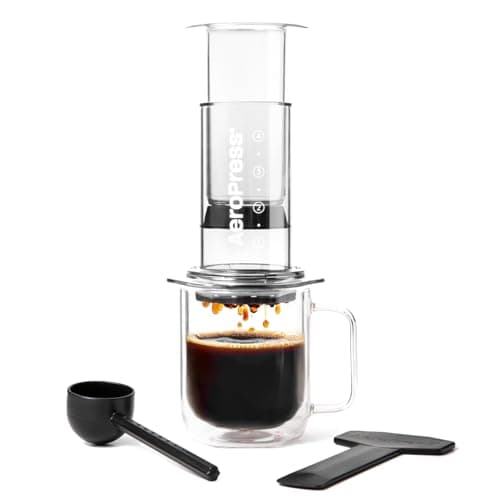
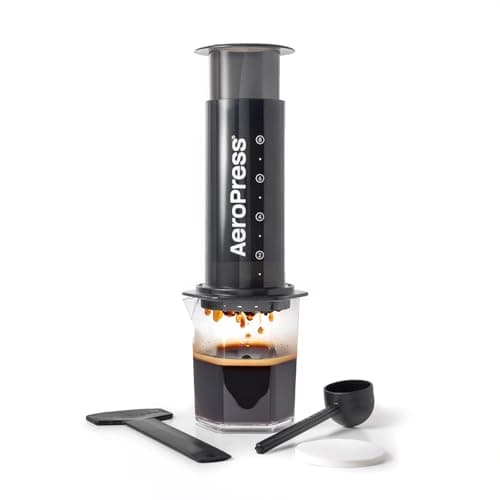
Think of the five models as one brewer in four bodies plus a size upgrade. The Original is the baseline: full-size chamber, opaque body, lowest price, and the one most people should buy. The Clear is the exact same brewer in shatterproof Tritan, so you can watch the water and the plunge; it costs more and brews no differently, so it is a looks-and-usability upgrade, not a coffee one. The XL is the capacity play — roughly double the batch and a bundled carafe — and the only reason to buy it is that you routinely brew for two. It is also the bulkiest and the least suited to travel.
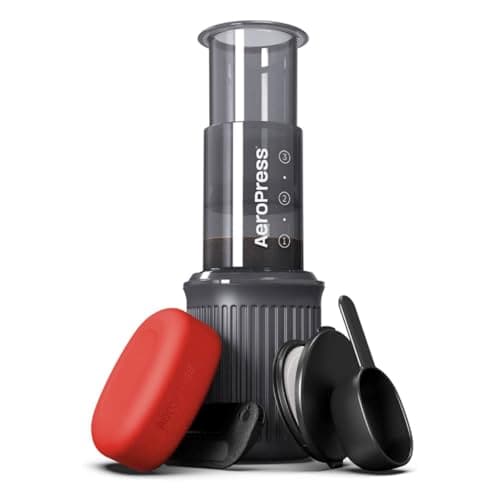
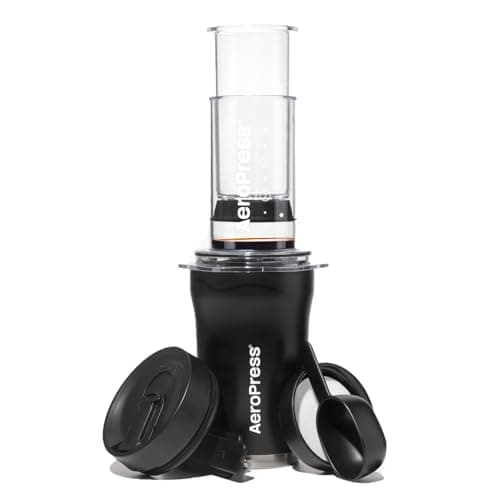
The two travel kits split by size. The Go is the smaller, lighter, cheaper one: it nests into an included mug with a lid and packs to a little over eleven ounces, at the cost of a slightly smaller cup than the Original. The Go Plus is the newer, larger travel kit that brews closer to a full-size cup and packs into its own tumbler; it costs the most of the travel options and is a touch bigger packed. If you travel and are happy with a small cup, the Go wins on price and pack size. If you travel and refuse to downsize your morning mug, the Go Plus is worth the premium. Everyone else should start with the Original.
What an AeroPress isn't
It is worth being blunt, because the marketing around “AeroPress espresso” sets a trap. An AeroPress is not an espresso machine. Real espresso is extracted at around nine bars of pressure by a pump; the pressure you generate by pressing a plunger with your hand is a small fraction of that. What you can make with a fine grind and a short brew is a concentrated, intense shot — lovely as the base of a milk drink or an Americano — but it will not have the crema, the mouthfeel or the pull of a pump-machine espresso. If real espresso is the goal, an AeroPress is the wrong tool and no model here changes that; look at a proper machine instead. As an immersion brewer, though, it competes directly with a French press and a pour-over, and it holds its own. It sits between them: cleaner than a French press because of the paper filter, more forgiving and faster than a pour-over because the immersion does the work for you. Our French press vs pour-over comparison is the best primer on where the AeroPress cup lands between those two styles.
Grind, filters and dialing it in
The model you buy barely affects your cup; the grind absolutely does. AeroPress is flexible, but a medium-fine grind — finer than a French press, coarser than true espresso — is the sensible home base, and you adjust from there: finer and slower for a stronger, more concentrated shot, coarser for a lighter, tea-like cup. A cheap blade grinder undoes all of this by producing uneven particles, so a burr grinder matters far more than which AeroPress you own. Our grinders for drip and filter roundup covers good countertop options, and the hand grindersare the natural partner for a Go or Go Plus on the road. If a cup comes out sour or weak, the fix is almost always grind and dose, not hardware — our grind size guidewalks through the adjustments. On filters: the paper microfilters are the point, straining oils and fines for that clean cup, and a bag costs almost nothing. Reusable metal filters exist and let more oil through for a heavier body, which some people prefer — but they are a taste tweak, not a saving worth chasing, and the coffee itself starts with the beans you put in.
Which AeroPress fits you
- Just want the best AeroPress for most people?The Original — full size, lowest price, brews the same cup as everything else.
- Want to watch the brew and like the look? The Clear, same brewer in shatterproof see-through Tritan.
- Brew for two, most mornings?The XL — roughly double the capacity, with a carafe, as long as you have the space.
- Travel light and don't need a big cup?The Go — the smallest, cheapest kit that packs into its own mug.
- Travel but refuse to shrink your mug?The Go Plus — travel portability with close to a full-size cup.
For almost everyone reading this, the honest answer is the Original: it is the cheapest model, it brews the same coffee as the rest, and it travels perfectly well on its own. Buy a model other than the Original only when you have a specific reason — you want to see the brew, you regularly make two cups, or you need a self-contained kit for the road. Whichever body you pick, spend the saved money on a burr grinder and better beans, because those are the two things that actually change what is in the cup.
Travelling with it
The Go and Go Plus exist because the AeroPress is one of the best travel brewers ever made: no power, no glass, and cleanup in one push. For how it compares with the other off-grid options — a camp percolator, a stainless moka pot and a hand-pump espresso maker — see best camping coffee makers.