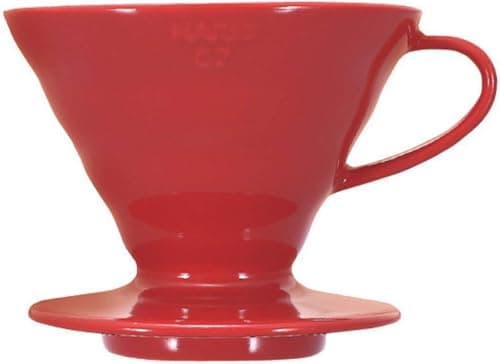
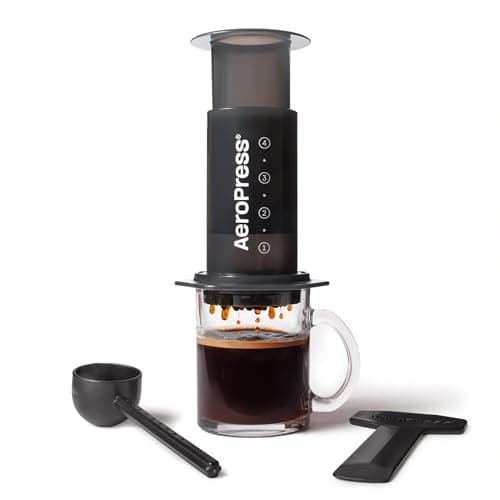
The AeroPress and a pour-over cone both run your coffee through a paper filter, so both make a clean, sediment-free cup with none of the sludge a French press leaves behind. That is where the similarity ends. The AeroPress is immersion plus a gentle push: the grounds steep in the brew chamber and you press the water through a paper microfilter with light hand pressure. Pour over is percolation: you pour hot water in a slow, controlled stream through a cone-shaped bed of grounds and let gravity draw it through the paper. Same filter, opposite method — and the cups, the effort and the forgiveness are genuinely different.
We are comparing the two definitive, affordable entries to each style: the AeroPress Original and the Hario V60 ceramic dripper (size 02). The short version is that the AeroPress is the fast, forgiving, travel-proof daily driver — it shrugs off a rough grind or a hurried pour, brews a single mug in about a minute, and rinses clean in seconds. The V60 is the connoisseur's choice: brewed well, it gives the cleanest, brightest, most articulate cup you can make by hand, the one specialty roasters use to show off a coffee — but it is pour-dependent and rewards a steady hand and, ideally, a gooseneck kettle. For the full field on either side, see the best AeroPress setups and the best pour-over brewers. And if you take one thing away: both cups live or die on the grind, so a good burr grinder matters more than which of these two you pick.
The head-to-head, point by point
Cup character:both are paper-filtered, so both are clean and sediment-free, but the V60 edges it for outright clarity — a well-pulled cone is the brightest, most articulate way to brew by hand, which is why roasters demo beans on one. The AeroPress cup is very clean too, just a shade rounder and less crystalline. Forgiveness and technique: the AeroPress wins by a wide margin. Because you steep and then press, small errors in grind or pour matter far less, so it is genuinely hard to brew a bad cup; the V60 is pour-dependent and an uneven pour shows up as an uneven, flat cup. Speed and cleanup:the AeroPress again — about a minute to brew, and cleanup is ejecting the puck and rinsing, where the V60 asks for a slower, staged pour and a wetted filter. Batch size: the AeroPress is a one-mug brewer; the size 02 V60 stretches from one to a few cups. Kit needed:the V60 really wants a gooseneck kettle to control the pour — see the best gooseneck kettles— while the AeroPress needs no special kettle at all. On cost they are close: both the brewer and its paper filters are inexpensive, though the V60 adds a kettle if you want its best. We did not lab-test these brewers; our methodology explains how we judge from published specs and aggregated owner reports instead.
What we didn't test
We have not run these two side by side in a controlled setting with refractometer readings or a blind tasting panel. This comparison is compiled from AeroPress's and Hario's published product information and from the pattern of what owners consistently report over years of daily use — not from our own lab. Treat the scores as informed judgments about how each method behaves, not measurements.
The grind is the real variable
As with any brewer, the single biggest thing that decides your cup is the grind — and the two methods want slightly different things. The AeroPress is happy across a wide window, roughly medium to medium-fine, and it forgives being a little off because the immersion step does the heavy lifting. The V60 wants a clean, even medium grind so the water flows at the right rate through the cone; too fine and it stalls and turns bitter, too coarse and it runs through weak and sour. Either way a cheap blade grinder cannot hold a setting evenly, which is why both taste better from a burr grinder. Our hand grinder roundup covers the options, and our grind size guide shows where filter grinds sit relative to espresso if you are calibrating a new grinder.
Which should you brew?
- Brew an AeroPress ifyou mostly make one cup, you want it fast and clean with no technique to master, or you travel and camp and need something you cannot break. It is the forgiving everyday single-serve — see the best AeroPress setups.
- Brew a V60 ifyou want the single cleanest, brightest, most nuanced cup you can make by hand, you enjoy the few minutes of ritual, and you either own or will buy a gooseneck kettle. It is the method that best shows off good, fresh beans — see the best pour-over brewers.
- Consider both if you brew differently by mood: the AeroPress on a rushed weekday morning, the V60 for a careful weekend cup of something special. They are cheap enough that plenty of people own one of each.
Whichever you choose, start with fresh, whole beans ground just before brewing — it matters more than which of these two brewers is in your hand. And if you are still weighing methods, our French press vs pour over comparison covers the heavier, immersion side of the fence.
How we picked
We did not lab-test this gear
Everyone in this category says they tested twenty machines. We have not pulled shots on every product here, and we say so. What we did instead: compiled the published specifications, cross-checked the manufacturer manuals, computed the running cost (wattage to energy, grams-per-shot to cost-per-cup), weighed aggregated owner reports, and scored each product against a published rubric. The scores are judgments from documented research — not measurements we took, because we do not have a test lab and we will not pretend we do. Where hands-on time would tell you more than a spec sheet, we flag it. Where a number came from someone else's work, we name them in Sources.