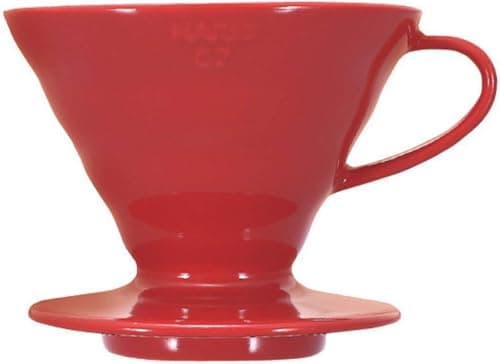
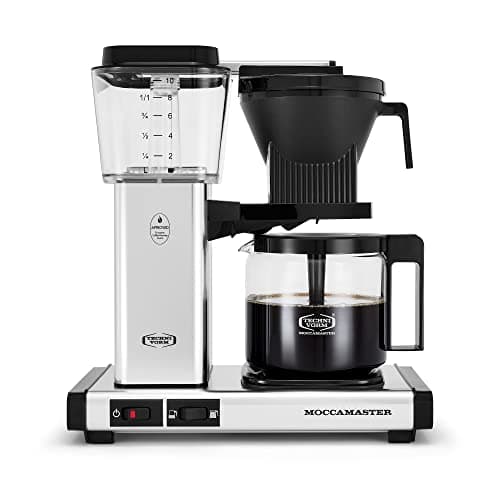
Drip and pour over are closer cousins than the coffee internet lets on. Both push hot water once through a bed of grounds and a paper filter, so both land in the same family: a clean, clear, sediment-free cup that shows off a coffee's brighter, more delicate flavors rather than burying them under oils and body. The real difference is not the cup family — it is who does the pouring. A drip machine heats the water and showers it over the grounds for you, on a switch, while pour over hands you the kettle and asks you to do that job by hand, every morning. One is set-and-forget; the other is a small daily ritual you control from start to finish.
To make that fork concrete we are comparing the two brewers most people actually cross-shop: the Technivorm Moccamaster KBGV Select, the reference automatic drip machine, against the Hario V60, the reference hand pour-over dripper. They cost very different amounts and ask very different things of you, but they chase the same clean cup from opposite directions. For the wider field on each side, see the best drip coffee makers and the best pour-over brewers. And read this first if you take one thing away: neither brewer can outrun a bad grind, so a burr grinder built for filter coffee and the same medium grind matter more than which of these two you pick.
The cup: same family, different ceiling
Start with what these two share, because it is more than the marketing suggests. Both are percolationbrews through paper: hot water passes once through the grounds and the filter traps the oils and fine particles that a metal mesh would let through. That is why drip and pour over both taste clean and bright rather than heavy and muddy — they are the same style of cup, not opposites the way a French press and a pour over are. Where they part is the ceiling. A machine wets the bed the same way every time, so its cup is even and dependable but fixed. A pour over puts the bloom, the pour rate and the water's path in your hands, which raises the ceiling on nuance for a careful pourer — and lowers the floor when your pour is rushed or sloppy. The machine has the higher floor; the hand has the higher ceiling.
Effort: a switch versus a ritual
This is the honest heart of the comparison. With the Moccamaster you fill the reservoir, load a filter and grounds, and flip a switch — then you walk away and come back to a finished carafe. It asks nothing of you and forgives everything. A pour over asks for the opposite: you heat the water, wet the grounds and wait for the bloom, then pour in slow, even stages over two to three minutes, paying attention the whole time. For someone who finds that a meditative few minutes, it is the best part of the morning. For someone trying to get out the door, it is a task. Be honest with yourself about which one you are before you spend a cent.
Volume: a household versus a cup
The Moccamaster brews a full carafe at once — enough for a household or a table of guests — and its half-carafe switch lets you drop to a small pot without the weak, under-extracted result you get from just brewing less in a full-batch machine. The V60 is a one-to-few-cupsbrewer: a size 02 tops out around one to four cups, and in practice most people brew a single mug at a time because pouring for a crowd by hand is slow. If two or more people want coffee at the same moment, drip wins on volume, full stop. If it is just you and one careful cup, the V60's small batch is a feature, not a limit.
Temperature and consistency
Great filter coffee lives in a narrow window — roughly 195 to 205°F at the bed — and this is where the machine's certification earns its keep. An SCA-certifiedbrewer like the Moccamaster has been independently checked to hold the water in that band and to brew for the right length of time, and it repeats that number every single morning without you thinking about it. A pour over can absolutely hit the same window, but only if your kettle is at the right temperature and your pour is steady, so cup-to-cup consistency rests on you. That is the trade in one line: the machine removes the variables; the pour over hands them to you. We did not lab-test either brewer; these scores come from published specifications, SCA certification records and how each method brews — our methodology explains exactly how we judge.
The grind and kettle: the shared foundation
Here is the part that undoes most of the drip-versus-pour-over arguing: both methods want the same medium grind— nearer granulated sugar than sea salt — and both taste better from a burr grinder that holds that setting evenly than from a blade grinder that cannot. Spend on the grinder before the brewer and either cup improves more than a fancier dripper or machine would improve it. The one tool that is pour-over-specific is the kettle: a gooseneck kettle gives you the slow, controlled stream that a good pour over depends on, while the drip machine needs no kettle at all. Factor that into the true cost of the pour-over side before you decide it is the cheaper option.
Which should you brew?
- Choose drip ifyou want coffee on a switch with no skill, you brew for two or more people, or you value a consistent carafe over the last few percent of nuance. A certified machine like the Moccamaster is the set-and-forget workhorse — see the best drip coffee makers.
- Choose pour over ifyou want the brightest, most articulate single cup, you mostly brew for one, and you genuinely enjoy the few minutes of ritual. The V60 gives you the control to chase that cup — see the best pour-over brewers.
Plenty of people own both and pick by the day: the Moccamaster for a weekday carafe the household shares, the V60 for a slow weekend cup of a special coffee. Whichever you brew, start with fresh, whole beans ground just before brewing — on a good grinder, that matters more than the choice between these two.
How we picked
We did not lab-test this gear
Everyone in this category says they tested twenty machines. We have not pulled shots on every product here, and we say so. What we did instead: compiled the published specifications, cross-checked the manufacturer manuals, computed the running cost (wattage to energy, grams-per-shot to cost-per-cup), weighed aggregated owner reports, and scored each product against a published rubric. The scores are judgments from documented research — not measurements we took, because we do not have a test lab and we will not pretend we do. Where hands-on time would tell you more than a spec sheet, we flag it. Where a number came from someone else's work, we name them in Sources.