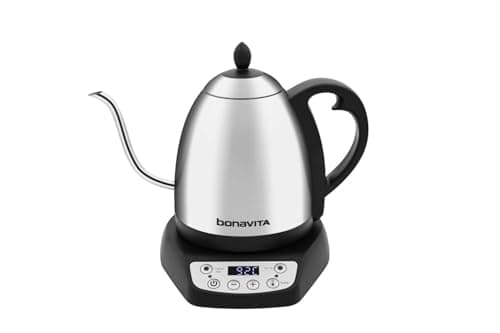
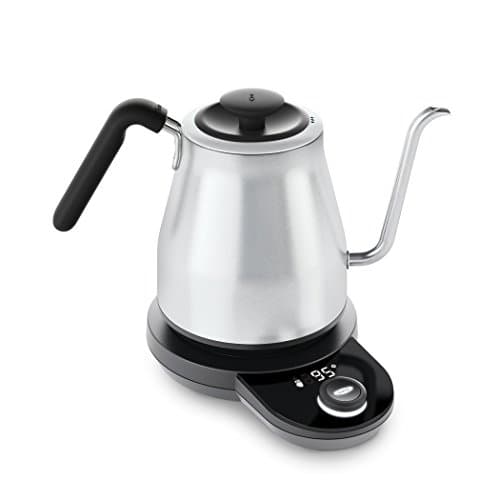
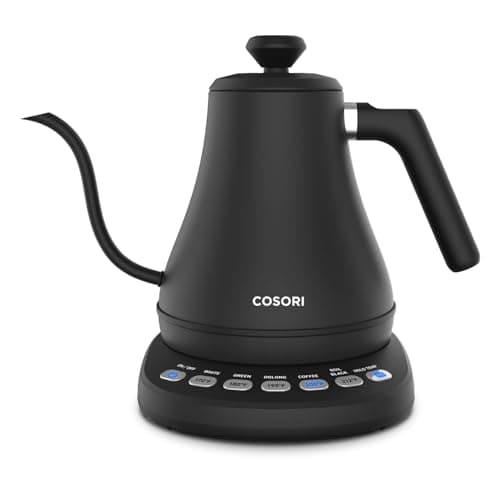
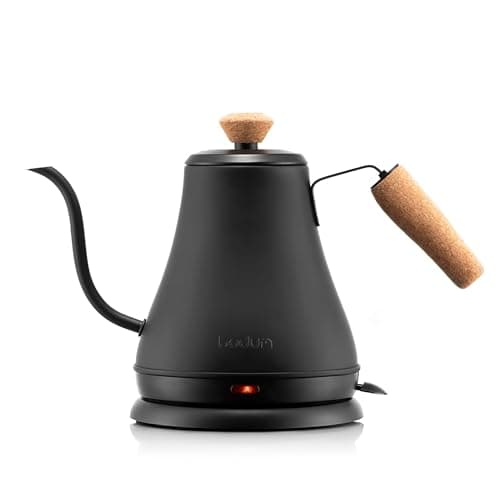
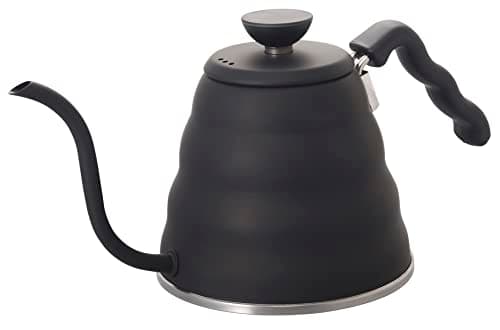
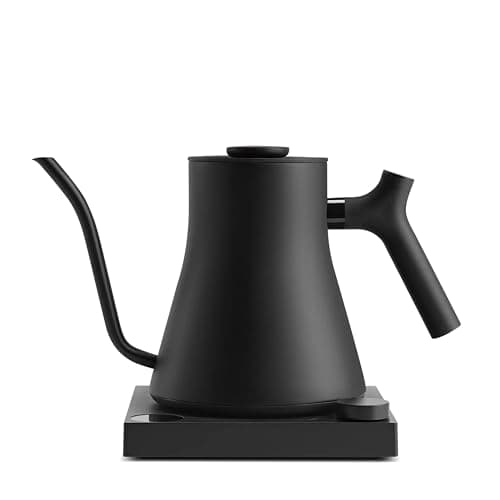
The gooseneck is the whole point. Where an ordinary kettle dumps water in a wide, uncontrollable gush, a gooseneck's long, narrow, swan-necked spout pours a thin, steady stream you can steer in slow circles over the coffee bed — and that steering is the single thing that most separates a good pour-over from a mediocre one. A controlled pour wets the grounds evenly, keeps the bed level, and lets you pour in the slow, deliberate stages a proper pour over depends on. Try the same brew from a stovetop kettle with a fat spout and you flood one side of the filter, blow a channel straight through the middle, and never quite work out why the cup tastes thin and uneven. The spout is not a styling detail; it is the tool.
The second thing that separates these kettles is temperature. Coffee does not brew at the boil — the working window is roughly 195-205°F, with lighter roasts near the top of it and darker roasts a little lower, and the beans you reach for change the answer, which is why gear and bean choice go hand in hand. A variable-temperature kettle lets you dial the exact number and hold it there while you weigh, bloom and pour, so the shot you liked yesterday is repeatable today. That consistency is worth paying for if you brew light roasts or chase precision; if you drink darker roasts and pour by feel, a plainer kettle that simply boils will get you most of the way there.
And you do not strictly need electronics at all. A stovetop gooseneck pours just as precisely as an electric one — you heat it on the hob and check the water with a cheap thermometer — so if you already own a thermometer, or like the idea of a kettle with nothing to fail, it is a perfectly good route in. If you are still deciding whether pour-over is even your method, our french press vs pour over comparison is the honest place to start before you spend anything on a kettle. Everything below is ranked on pour control, temperature control and what you actually pay for it.
How we picked
Every kettle here is a real, currently-purchasable gooseneck you can buy in the US, and every spec below is taken from the maker's own listing. We ranked on five things, in this order.
- Temperature control. Coffee brews in a window, not at the boil, so the ability to reach and hold the right degree is the biggest single differentiator. Variable digital kettles that set and hold an exact number score highest; boil-only kettles score lowest.
- Pour control. The reason to own a gooseneck at all. We weighed how thin, steady and steerable the stream is, which comes down to spout taper and how balanced the kettle feels as you pour slowly.
- Build. Materials, handle balance, base stability and how well the kettle feels put together for daily use — and, for the electric ones, how solid the temperature hardware seems.
- Ease of use. One-touch heating, clear readouts, a hold mode, a built-in timer, and whether you can just pick it up and brew without wrestling a menu. Stovetop kettles lose ground here because they need a thermometer and the hob.
- Value. Not the lowest price, but what you get for it — capacity, presets, a hold function, a real gooseneck spout — measured against what you actually need to brew a good cup.
We did not lab-test these kettles; we do not run a lab. The scores are editorial judgments built from published manufacturer specs and aggregated owner reports, and our methodology pagespells out exactly how. Specifications come from the makers' own product pages, listed in Sources.
Do you really need temperature control?
Honestly, it depends on what you drink. For light and medium roasts, temperature is doing real work: those beans give up their best flavors near the top of the 195-205°F range, and a few degrees low leaves the cup sour and underdeveloped. If that is you, a variable-temperature kettle that sets and holds an exact number is worth the extra outlay, because it makes yesterday's good cup repeatable rather than lucky. Dark roasts are more forgiving — they can even taste a touch better slightly below boiling — so a plain boil-only kettle plus a short wait covers you.
If you go without temperature control, the trick is simple: bring the water to a boil, take it off the heat, and wait roughly thirty seconds before you pour. That drops the water into the brewing window without any electronics, which is exactly how the budget Bodum and the stovetop Hario are meant to be used. It is one more thing to remember every morning, but it works, and it costs nothing. The kettles that justify their price are the ones that take that guesswork off your plate entirely.
Electric vs stovetop gooseneck
An electric gooseneck lives on its own base, heats at the press of a button, and — on the variable-temp models — sets and holds a precise temperature so the water is ready when you are. That convenience is the whole reason most people buy one, and it is why five of our six picks are electric. The catch is that electronics are what eventually fail, and a variable kettle costs more than a plain one for the temperature hardware inside it.
A stovetop gooseneck like the Hario flips the equation. There is nothing to break, it usually holds more water, and the pouring spout is every bit as precise as an electric one — but you heat it on the hob and check the temperature yourself with a thermometer, and it will not hold a set temperature while you fuss with your grinder and scale. If you already own a thermometer, value simplicity, or want a kettle that will outlive three electric ones, a stovetop model is a genuinely sound choice rather than a compromise.
What we would skip
Over-featured smart and app-connected kettles. A phone app that schedules your kettle or logs pour profiles is a solution to a problem almost no home brewer has. The features that change the cup are a thin spout and a temperature you can trust — pay for those, not for connectivity you will use twice and forget. A giant kettle if you brew single cups. Capacity sounds useful until you realize you are boiling and reheating far more water than a mug of coffee needs; a 0.8-1L kettle heats faster and takes up less counter. And skip treating the kettle as the fix for a bad brew. A gooseneck controls the pour, but the grind controls extraction, and no amount of careful pouring rescues coffee that is ground wrong or stale — sort the grinder and the beans first.
Which gooseneck kettle fits you
- Want the best and do not mind paying for it? Fellow Stagg EKG Pro, with to-the-degree temperature, a built-in timer and the finest pour here.
- Chasing an exact, repeatable temperature for less? Bonavita 1L, with full-range digital control and a hold function.
- Want a dependable all-rounder from a brand you know? OXO Brew, with an adjustable dial and a bloom timer.
- On a mid budget and learning pour-over? Cosori, with five presets and a real gooseneck at the lowest sensible price.
- Want the cheapest way into a real gooseneck? Bodum Bistro — no temperature control, but the spout that matters.
- Prefer no electronics, or want a second kettle? Hario V60 Buono — a stovetop classic, just add a thermometer.
Whichever you land on, remember the kettle finishes a good setup rather than creating one. Get the right grinder for drip and pour-over and fresh beans sorted first, then let the gooseneck do the last, most satisfying part: a slow, even pour over a properly brewed pour over that tastes the same every morning.