Skip to content
Portafilter Co

Makers & Brewers · Coffee Makers

Moka pot vs French press: which should you brew?

Two cheap classics that make completely different coffee - a small, hot, intense stovetop cup against a heavy, full-bodied carafe. Here is which one belongs on your counter.

By Stephen V.Updated How we pick
#ad

We earn a commission when you buy through our Amazon links, at no extra cost to you. It never changes a verdict, and we say so when the cheaper product is the better buy. How this works.

The moka pot and the French press are two of the cheapest, most beloved ways to make coffee without a machine on your counter — and they make almost nothing alike. A moka pot sits on the stove and uses mild steam pressure to push hot water up through the grounds, so it brews a small, hot, strong, espresso-adjacent cup. It is not true espresso: the pressure is a fraction of a real machine's, there is no proper crema, and the flavor is closer to a very concentrated brewed coffee than to a cafe shot. A French press does the opposite — it is full immersion, where a coarse grind steeps loose in hot water and a metal mesh strains it out, leaving a heavy, oily, full-bodied carafe with the coffee oils and some sediment left in.

So the real question is not which is better but which cup you want and how much you want to fuss. The moka pot rewards a fine-ish grind and a little heat control and pays you back with intensity; the French press wants a coarse grind, asks for almost no skill, and pays you back with body and a full pot for a group — at the cost of sediment and a bit more cleanup. We are comparing the two flagships from our roundups, the Bialetti Moka Express and the Bodum Chambord French press, because they are the classic, affordable entry to each method. For the full field, see the best moka pots and the best French presses.

The short answer

Quick picks

#ProductBest forScorePrice
01
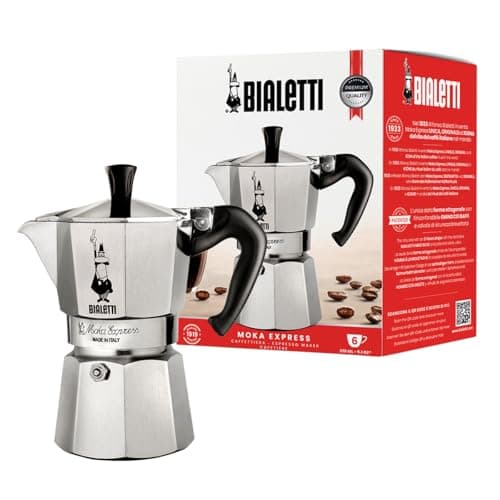
Bialetti Bialetti Moka Express (6-Cup)
Bialetti Moka Express (6-Cup)

The one to reach for when you want a small, intense, piping-hot cup with a near-espresso punch. The moka pot builds mild steam pressure on the stove to push water up through a fine-ish grind, so it brews strong and concentrated - not true espresso, and no real crema, but rich enough to drink neat or to build a stovetop latte on. It asks for a little heat control and attention, which is the price of that intensity.

Best for a small, strong cup
7.8
$49.99Amazon
02
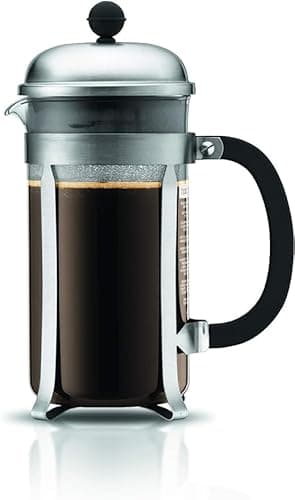
Bodum Bodum Chambord French Press (34 oz)
Bodum Chambord French Press (34 oz)

The one to reach for when you want a heavy, full-bodied carafe with almost no skill. Coarse grounds steep loose in hot water for about four minutes, then the mesh plunger pushes them down and you pour - that is the whole method. The metal filter leaves the coffee oils in for a round, satisfying body, and it brews enough for a group in one go. The trade is sediment in the cup and a little more to rinse out afterward.

Best for an easy full carafe
7.8
$39.99Amazon

#ad · Live prices from the Amazon Product API, as of Jul 27, 2026. Where we have no verified live price, we show none — a gap beats a number that has rotted.

In detail

The picks, in full

01
Bialetti Bialetti Moka Express (6-Cup)

Best for a small, strong cup

Bialetti Moka Express (6-Cup)

Aluminum6 espresso cupsSafety valveNot induction-compatible
7.8/10

The one to reach for when you want a small, intense, piping-hot cup with a near-espresso punch. The moka pot builds mild steam pressure on the stove to push water up through a fine-ish grind, so it brews strong and concentrated - not true espresso, and no real crema, but rich enough to drink neat or to build a stovetop latte on. It asks for a little heat control and attention, which is the price of that intensity.

Cup intensity
9
Body & mouthfeel
8
Ease of use
6
Cleanup
7
Value
9

Pros

  • Makes a small, strong, piping-hot cup that reads close to espresso in intensity
  • The classic near-90-year-old design is cheap, simple and easily repairable
  • A great base for a stovetop latte, cappuccino or Americano
  • Brews in a few minutes on any gas or standard electric burner

Cons

  • Not true espresso: only mild pressure and no proper crema
  • Aluminum body will not work on an induction cooktop and is hand-wash only
  • Needs some heat control and attention or the cup can taste bitter or metallic
  • Only makes the amount it is sized for - a half-full pot brews poorly

Don't buy this if…

you want a big, hands-off carafe for a group or a heavy, full-bodied cup with zero technique - the French press does both better.

$49.99View on Amazon

$59.9917% off

Price as of Jul 27, 2026. Prices change — Amazon's at checkout is the one that counts.

#ad · we may earn a commission from this link to Bialetti Moka Express (6-Cup)

02
Bodum Bodum Chambord French Press (34 oz)

Best for an easy full carafe

Bodum Chambord French Press (34 oz)

34 oz / 8-cupBorosilicate glassChrome-plated steel frameStainless mesh filter
7.8/10

The one to reach for when you want a heavy, full-bodied carafe with almost no skill. Coarse grounds steep loose in hot water for about four minutes, then the mesh plunger pushes them down and you pour - that is the whole method. The metal filter leaves the coffee oils in for a round, satisfying body, and it brews enough for a group in one go. The trade is sediment in the cup and a little more to rinse out afterward.

Cup intensity
6
Body & mouthfeel
9
Ease of use
9
Cleanup
6
Value
9

Pros

  • Heavy, round, full-bodied cup with all the coffee oils left in
  • Almost foolproof: coarse grind, steep, press - no technique to learn
  • Brews a full 34 oz carafe at once, good for two or more people
  • No paper filters, no electricity, and the glass beaker is replaceable

Cons

  • Fine sediment settles in the cup; the single mesh passes fines
  • Single-wall glass loses heat, so the coffee cools in the pot
  • More parts to rinse, and coffee left on the grounds turns bitter
  • A milder, less concentrated cup than a moka pot's

Don't buy this if…

you want a small, intense, espresso-adjacent shot or the base for a stovetop latte - that is the moka pot's job, not the press's.

$39.99View on Amazon

Price as of Jul 27, 2026. Prices change — Amazon's at checkout is the one that counts.

#ad · we may earn a commission from this link to Bodum Chambord French Press (34 oz)

The head-to-head, point by point

Cup intensity:the moka pot wins clearly — steam pressure and a fine-ish grind push out a small, concentrated, espresso-adjacent cup, where the French press brews a longer, milder carafe. Body and mouthfeel:the press edges ahead — its metal mesh lets every bit of coffee oil and some fines through for a heavy, round texture, though the moka pot is no lightweight here either. Ease and forgiveness: the press is far more forgiving — steep and plunge is nearly foolproof, while the moka pot needs you to watch the heat and pull it off the burner at the right moment. Batch size: the press makes a full 34 oz carafe for a group; the moka pot makes a few small, strong servings at a time. Cleanup:the moka pot is a touch tidier day to day — knock out the puck and rinse the basket — where the press leaves wet grounds and a mesh to clear. On cost they are a genuine tie: both are inexpensive and neither needs paper filters. We did not lab-test these brewers; our methodology explains how we judge.

The grind is the real variable

As with any manual method, the single biggest thing that decides your cup is not the brewer — it is the grind, and these two want opposite ends of it. A moka pot wants a fine-ish grind (finer than table salt, but not as fine as true espresso) so the water meets enough resistance to brew strong without stalling or going bitter. A French press wants a coarsegrind (think coarse sea salt) so the mesh does not pass a muddy, over-extracted cup. A cheap blade grinder cannot hold either setting evenly, which is why both taste noticeably better from a burr grinder — our hand grinder roundup covers options at every budget. Getting the grind right matters more than which of these two brewers you own.

Which should you brew

  • Brew a moka pot ifyou want a small, hot, intense cup with a near-espresso punch, you like the idea of a stovetop latte or Americano, and you do not mind a little heat control. It is the strong-and-concentrated choice — and the how to use a moka pot guide walks through the technique, while the best moka pots covers induction-ready stainless options if the aluminum Bialetti will not work on your cooktop.
  • Brew a French press ifyou want a heavy, full-bodied carafe with almost no skill, you make coffee for two or more, and you would rather steep and pour than watch a stove. It is the easy, sociable choice — see the best French presses for glass and insulated stainless picks.

Plenty of people keep both and choose by mood: the moka pot for a quick, punchy morning cup or the base of a milk drink, the press for a relaxed weekend carafe shared around the table. Either way, start with fresh, whole beans ground just before you brew — at the fine-ish setting for the moka pot, coarse for the press — because that matters more than the choice of method.

How we picked

We did not lab-test this gear

Everyone in this category says they tested twenty machines. We have not pulled shots on every product here, and we say so. What we did instead: compiled the published specifications, cross-checked the manufacturer manuals, computed the running cost (wattage to energy, grams-per-shot to cost-per-cup), weighed aggregated owner reports, and scored each product against a published rubric. The scores are judgments from documented research — not measurements we took, because we do not have a test lab and we will not pretend we do. Where hands-on time would tell you more than a spec sheet, we flag it. Where a number came from someone else's work, we name them in Sources.

Questions

Frequently asked

Does a moka pot make real espresso?
No. A moka pot builds only mild steam pressure on the stove — roughly one to two bars, versus about nine bars in a real espresso machine — so it makes a small, strong, concentrated cup rather than a true shot, and it produces no proper crema. It is best thought of as espresso-adjacent: intense and rich, and a fine base for a stovetop latte, but not the same drink a pump machine makes.
Which is stronger, a moka pot or a French press?
The moka pot tastes stronger to most people because it brews a small, concentrated, espresso-adjacent cup, while a French press brews a longer, milder carafe. Strictly, 'strong' depends on your ratio of coffee to water, so you can push a press stronger with more grounds — but sip for sip, the moka pot is the more intense of the two by design.
Do a moka pot and a French press use the same grind?
No, and it is not close. A moka pot wants a fine-ishgrind — finer than table salt, though not as fine as true espresso — so the water meets enough resistance to brew strong. A French press wants a coarsegrind so the mesh does not pass a muddy, silty cup. A burr grinder that holds an even setting is what makes both work — see our hand grinder roundup.
Which is easier to use, a moka pot or a French press?
The French press is easier: coarse grind, hot water, wait about four minutes, press — it is close to foolproof. A moka pot needs a fine-ish grind and a bit of heat control, and you have to pull it off the burner at the right moment or the cup can turn bitter. If you want the least fuss, start with the press; if you want the intensity, the how to use a moka pot guide makes the technique quick to learn.
Can I make a latte with a moka pot or a French press?
The moka pot is the better latte base by a wide margin. Its small, strong, concentrated cup stands in for espresso, so you can pour steamed or frothed milk over it for a stovetop latte or cappuccino. A French press makes a milder, longer cup that gets lost under milk — it is built for drinking black or with just a splash. If milk drinks are your goal, brew the moka pot.

Keep reading

Receipts

Sources

We do not run a testing lab, and we do not pretend to. Where a measured number came from someone else's work, we name them and link them. Where we could not verify something, we say so on the page rather than quietly leaving it out. Read our full method.