Skip to content
Portafilter Co

Makers & Brewers · Coffee Makers

Moka pot vs espresso machine: which should you buy?

A stovetop moka pot makes a small, strong, espresso-adjacent cup for very little money. A pump espresso machine makes real espresso and cafe milk drinks for a lot more. Here is the honest case for each — and why plenty of people own both.

By Stephen V.Updated How we pick
#ad

We earn a commission when you buy through our Amazon links, at no extra cost to you. It never changes a verdict, and we say so when the cheaper product is the better buy. How this works.

If you want espresso at home and you are new to it, this is the crossroads almost everyone hits: do you buy a cheap stovetop moka pot, or a proper pump espresso machine? They look like they do the same job, and they do not. A moka pot sits on your stove and pushes hot water up through a bed of coffee using gentle steam pressure, producing a small, rich, strong cup that is espresso-adjacent— concentrated and intense, wonderful black or stirred into a little hot milk. A pump machine actually forces water through a compacted puck of coffee at high pressure, which is what makes real espresso, real crema, and gives you a steam wand to froth milk for lattes and cappuccinos. One costs a fraction of the other, and the gap between them is the whole point of this page.

We are using the two devices that best represent each path: the Bialetti Moka Express, the classic aluminum stovetop pot that has barely changed since the 1930s, and the De'Longhi Stilosa (EC260), an accessible 15-bar pump machine that is one of the cheapest genuine doorways into home espresso. The short version: if you love strong black coffee and want cheap and simple, the moka pot is honestly the right answer and we will not pretend otherwise. If you want lattes, real crema and true espresso — and you are willing to add a grinder and a little practice — get the machine. For the wider field either way, see the best moka pots and the best espresso machines for beginners.

The short answer

Quick picks

#ProductBest forScorePrice
01
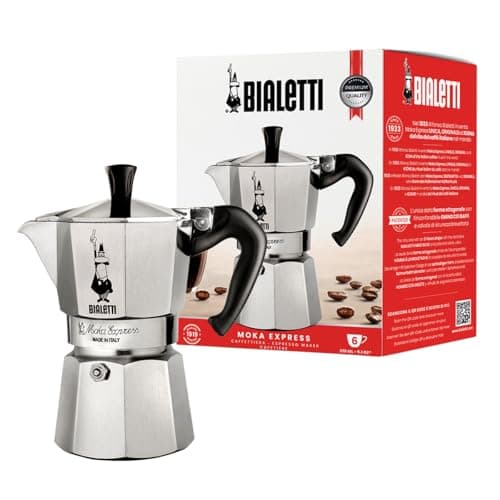
Bialetti Bialetti Moka Express (6-Cup)
Bialetti Moka Express (6-Cup)

The right answer if you love strong, black, espresso-adjacent coffee and want to spend almost nothing. It makes a small, rich, intense cup on any gas or electric stovetop with no electricity of its own and next to no cleanup — but it is not true espresso, there is little to no crema, and you cannot make a proper latte with it. For cheap, simple and strong, very little beats it.

Best for cheap, strong, simple
6.6
$49.99Amazon
02
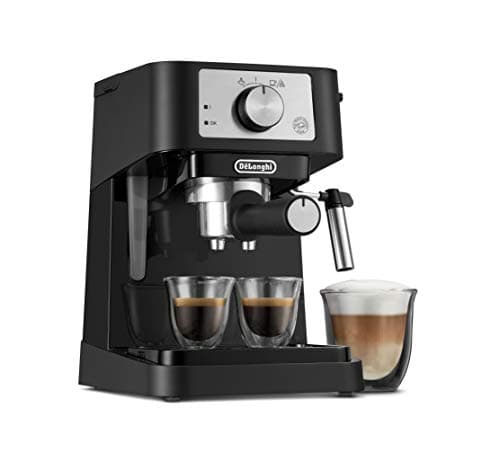
De'Longhi De'Longhi Stilosa Compact Espresso Machine (EC260)
De'Longhi Stilosa Compact Espresso Machine (EC260)

The right answer if you want real espresso with crema and cafe-style milk drinks at home. The 15-bar pump and manual steam wand do what a moka pot cannot — genuine espresso and steamed milk for lattes and cappuccinos — but it costs far more, wants a good grinder to shine, and has a real learning curve. Worth it if you will invest a little in the setup and the practice.

Best for real espresso & milk drinks
6.4
$146.95Amazon

#ad · Live prices from the Amazon Product API, as of Jul 26, 2026. Where we have no verified live price, we show none — a gap beats a number that has rotted.

In detail

The picks, in full

01
Bialetti Bialetti Moka Express (6-Cup)

Best for cheap, strong, simple

Bialetti Moka Express (6-Cup)

Aluminum stovetop6 espresso-size cupsSafety valveNot induction-compatible
6.6/10

The right answer if you love strong, black, espresso-adjacent coffee and want to spend almost nothing. It makes a small, rich, intense cup on any gas or electric stovetop with no electricity of its own and next to no cleanup — but it is not true espresso, there is little to no crema, and you cannot make a proper latte with it. For cheap, simple and strong, very little beats it.

Espresso authenticity
4
Milk drinks
2
Ease of use
8
Cleanup
9
Value & running cost
10

Pros

  • Costs a fraction of even a cheap espresso machine, with nothing to plug in
  • Makes a small, rich, strong, espresso-adjacent cup that is great black or in a small milk drink
  • Dead simple — water, coffee, heat — with no dose, tamp or timing to master
  • Classic, near-indestructible design that has been made largely unchanged since 1933
  • Almost no cleanup and nothing to descale — rinse, dry and it is done

Cons

  • Not true espresso: only a small fraction of real espresso pressure, so little to no crema
  • No steam wand or frother, so no proper lattes, cappuccinos or flat whites
  • The aluminum body is not induction-compatible without an adapter or a steel model
  • Easy to scorch and turn bitter if you brew on high heat or walk away from it

Don't buy this if…

you want real crema, cafe-style milk drinks, or true espresso pressure — a moka pot makes none of those, and a pump machine is what you actually want.

$49.99View on Amazon

$59.9917% off

Price as of Jul 26, 2026. Prices change — Amazon's at checkout is the one that counts.

#ad · we may earn a commission from this link to Bialetti Moka Express (6-Cup)

02
De'Longhi De'Longhi Stilosa Compact Espresso Machine (EC260)

Best for real espresso & milk drinks

De'Longhi Stilosa Compact Espresso Machine (EC260)

15-bar pumpManual panarello steam wandPressurized basketsCompact stainless accents
6.4/10

The right answer if you want real espresso with crema and cafe-style milk drinks at home. The 15-bar pump and manual steam wand do what a moka pot cannot — genuine espresso and steamed milk for lattes and cappuccinos — but it costs far more, wants a good grinder to shine, and has a real learning curve. Worth it if you will invest a little in the setup and the practice.

Espresso authenticity
8
Milk drinks
7
Ease of use
6
Cleanup
5
Value & running cost
6

Pros

  • Actually forces water through the puck at pressure for real espresso with crema
  • A steam wand lets you froth and steam milk for lattes, cappuccinos and flat whites
  • Pressurized baskets are forgiving of a coarser or less consistent grind while you learn
  • Compact footprint with stainless accents that suits a small kitchen counter
  • A genuine, affordable doorway into real home espresso rather than an espresso-style shortcut

Cons

  • Costs far more than a moka pot to buy, and adds electricity and descaling to running cost
  • Needs a good burr grinder to reach its potential, which is effectively a second purchase
  • A real learning curve: dose, tamp, shot timing and milk steaming all take practice
  • The panarello wand froths capably but yields coarser foam than a bare pro-style wand

Don't buy this if…

you mainly drink strong black coffee, want to spend as little as possible, or do not want a grinder and a learning curve — a moka pot does that job for a fraction of the outlay.

$146.95View on Amazon

Price as of Jul 26, 2026. Prices change — Amazon's at checkout is the one that counts.

#ad · we may earn a commission from this link to De'Longhi Stilosa Compact Espresso Machine (EC260)

What each one actually makes

Start here, because it settles most of the argument. A moka potmakes a small, concentrated, powerful cup — darker and stronger than drip, thinner and less syrupy than a real espresso, with a distinctive intensity people either love or find sharp. It is often called “stovetop espresso,” and that name causes half the confusion on this page: it is espresso-adjacent, not espresso. A pump espresso machinemakes an actual espresso shot — a thick, viscous ounce or two topped with crema — and, crucially, gives you steamed milk. That difference is not a preference; it comes straight from how each device moves water through coffee.

Crema and pressure

Real espresso is defined by pressure: a pump machine drives water through a tightly tamped puck at roughly nine bars, and that pressure is what emulsifies the coffee oils into crema, the golden-brown foam on top of a good shot. A moka pot works on steam pressure that reaches only a small fraction of that — typically around one to one-and-a-half bars — so it produces little to no true crema. You may see a light foam from a fresh, oily bean, but it is not the same thing. If crema and true espresso texture matter to you, only the machine delivers them, and no moka pot ever will.

Milk drinks

This is the single most decisive difference for a lot of buyers. A pump machine has a steam wand, so you can froth and steam milk into the microfoam that makes a latte, cappuccino or flat white. A moka pot has no way to do this on its own — you would need a separate milk frother, and even then you are stacking espresso-adjacent coffee under frothed milk, not pulling a real shot. If your daily drink is a milky one, that alone points you at the machine. If you drink your coffee black or with just a splash of milk, the moka pot never misses this feature because you were never going to use it.

Cost and running cost

A moka pot costs a fraction of even an entry espresso machine — it is one of the cheapest ways to make a genuinely strong cup, uses no electricity of its own, and has nothing to descale. The machine costs meaningfully more up front, and the honest running-cost note is that it really wants a good burr grinder to shine, which is a second purchase you should budget for. It also draws power and needs periodic descaling. None of that makes the machine a bad deal — it does far more — but pretending the sticker price is the whole cost would be dishonest. For the value end of the machine field, see the best grinders for espresso, because that pairing is what actually decides how good the shots taste.

Effort and cleanup

The moka pot wins ease and cleanup outright. There is no dose to weigh, no tamp, no shot to time: you fill the base with water, add coffee to the funnel, put it on the heat and take it off when it burbles. Cleanup is a rinse and a dry. The machine asks more of you at every step — grinding to the right fineness, dosing and tamping evenly, timing the shot, then purging and wiping the steam wand — and it has a portafilter, basket and drip tray to keep clean plus the descaling schedule. That effort is the price of real espresso and milk drinks, and many people enjoy the ritual, but it is a real difference in daily hassle.

Counter space

A moka pot lives in a drawer or cupboard and travels well — it is a natural for a small kitchen, an office, a camp stove or a trip. The Stilosa is compact for a machine, but it is still an appliance that occupies permanent counter space and needs an outlet. If your counter is precious or you move around, that counts in the moka pot's favor.

Which should you buy

  • Buy the moka pot ifyou love strong black coffee (or just a splash of milk), you want to spend as little as possible, you value simplicity and near-zero cleanup, or you want something portable. It is genuinely the right answer for that person — see the best moka pots for sizes and induction-safe options.
  • Buy the espresso machine ifyou want real espresso with crema, you drink lattes or cappuccinos and want to steam your own milk, and you are willing to add a grinder and put in a little practice. It does things the moka pot simply cannot — see the best espresso machines for beginners.
  • Own both if you are like a lot of coffee people: the moka pot for a fast, strong cup on a busy morning or a weekend away, and the machine for a proper latte when you have the time. They cost little together relative to one high-end machine, and they cover different moods.

Both taste far better with a grinder and fresh beans

Whichever way you go, the biggest upgrade is not the brewer — it is fresh, whole beans ground just before you brew. A moka pot wants a grind a touch coarser than espresso; a pump machine wants a fine, even espresso grind, and it is far more sensitive to getting that right, which is exactly why a good burr grinder matters more on the machine side. A cheap blade grinder holds neither setting evenly. We did not lab-test either of these devices; our methodology explains how we compile specs and owner reports into these judgments, and what we deliberately did not measure.

How we picked

We did not lab-test this gear

Everyone in this category says they tested twenty machines. We have not pulled shots on every product here, and we say so. What we did instead: compiled the published specifications, cross-checked the manufacturer manuals, computed the running cost (wattage to energy, grams-per-shot to cost-per-cup), weighed aggregated owner reports, and scored each product against a published rubric. The scores are judgments from documented research — not measurements we took, because we do not have a test lab and we will not pretend we do. Where hands-on time would tell you more than a spec sheet, we flag it. Where a number came from someone else's work, we name them in Sources.

Questions

Frequently asked

Is moka pot coffee the same as espresso?
No. A moka pot is often called 'stovetop espresso,' but it makes an espresso-adjacent cup, not true espresso. Real espresso is brewed at around nine bars of pressure, which builds crema and the syrupy texture of a shot; a moka pot brews at only about one to one-and-a-half bars, so it produces a strong, concentrated cup with little to no crema. It is delicious in its own right, just not technically espresso.
Is a moka pot cheaper than an espresso machine?
Yes, by a wide margin. A moka pot costs a fraction of even an entry-level pump machine, uses no electricity of its own and has nothing to descale. An espresso machine costs much more up front and really wants a good burr grinder to shine, which is a second purchase. If keeping the cost down is your main goal, the moka pot is the clear winner.
Can you make lattes with a moka pot?
Not properly on its own. A moka pot has no steam wand, so it cannot froth or steam milk into the microfoam a latte or cappuccino needs. You can approximate a milky drink by adding a separate handheld or standalone milk frother, but you are still combining espresso-adjacent coffee with frothed milk rather than pulling a real shot. If milk drinks are your daily order, an espresso machine with a steam wand is the tool for the job.
Which is easier for beginners, a moka pot or an espresso machine?
A moka pot is far easier to start with. There is no dose to weigh, no tamp and no shot to time: you add water and coffee, heat it, and take it off when it burbles. A pump espresso machine has a genuine learning curve across grinding, dosing, tamping, shot timing and milk steaming. Beginners who want a good cup on day one usually find the moka pot friendlier; those set on real espresso should expect to practice.
Do you need a grinder for a moka pot?
You do not strictly need one, but it helps a lot, and it matters even more for an espresso machine. A moka pot wants a grind a little coarser than espresso and is fairly forgiving, so pre-ground coffee works while fresh-ground tastes better. A pump machine needs a fine, even espresso grind to make a good shot, so a quality burr grinder is close to essential there. Fresh beans ground just before brewing are the single biggest upgrade for either device.

Keep reading

Receipts

Sources

We do not run a testing lab, and we do not pretend to. Where a measured number came from someone else's work, we name them and link them. Where we could not verify something, we say so on the page rather than quietly leaving it out. Read our full method.