Skip to content
Portafilter Co

Learn · Guides

How to make espresso without a machine

Four methods that work, ranked by how close they get to a real nine-bar shot — plus a straight answer about which ones are espresso and which are strong coffee wearing its coat.

By Stephen V.Updated How we pick
#ad

We earn a commission when you buy through our Amazon links, at no extra cost to you. It never changes a verdict, and we say so when the cheaper product is the better buy. How this works.

You can make real espresso without an espresso machine, and the two methods that genuinely get there are a manual lever press like the Flair 2GO and a hand-pump makerlike the Wacaco Nanopresso. Both reach the pressure espresso actually requires — roughly nine bars — using your arm instead of a pump, and both produce a short, thick, crema-topped shot. An AeroPress and a moka pot make excellent strong coffee that works beautifully in a latte, but neither reaches espresso pressure, and we are not going to pretend otherwise.

Start with the definition, because it decides everything that follows. Espresso is about 7-9 grams of finely ground coffee per shot (18-20g for a double), extracted with water at around 92-96°C, under roughly nine bars of pressure, in 25-30 seconds. The pressure is the part that needs a machine or a lever: it is what emulsifies the oils and dissolves the CO2 that becomes crema, and it is why a French press full of fine coffee is not espresso no matter how strong it tastes. Everything on this page is judged against that bar.

You also need a grinder that can reach espresso fineness, and this is where most attempts fail rather than at the brewing step. Pre-ground supermarket coffee is far too coarse: water will run straight through any of these devices in a few seconds and give you something pale and sour. A hand grinder with fine adjustment is the cheapest route in, costs less than most of the brewers here, and needs no power either — see best hand grinders and espresso grind size.

The choice between the four comes down to what you want out of it. If you want a genuine shot with crema and you will accept a ritual, take the Flair — it is the closest thing to a commercial lever machine that folds into a bag. If you want a shot in under a minute with minimal fuss, the Nanopresso. If you want excellent coffee and only sometimes want it short and strong, the AeroPress is the most useful object here and the cheapest. If you want something that has made coffee in Italian kitchens for ninety years and costs less than a takeaway week, the moka pot.

The short answer

Quick picks

#ProductBest forScorePrice
01
Flair Flair 2GO
Flair 2GO

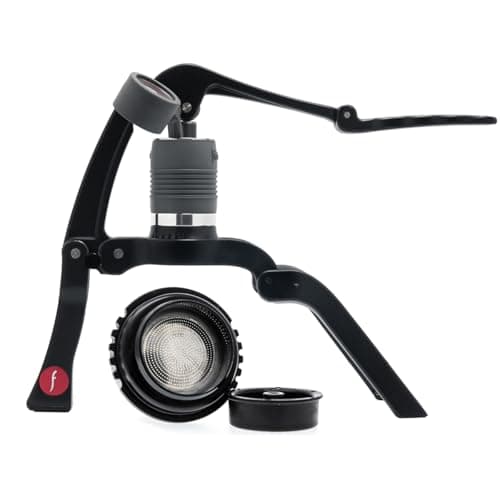
The closest you get to real espresso without a machine, and the pick if the shot itself is the point. A manual lever press with a pressure gauge, a 12-18g bottomless portafilter and a folding body: you control the pressure profile by hand, you can see what you are doing on the gauge, and the result is a genuine 9-bar shot with proper crema. The trade is a ritual — pre-heat, dose, press, clean — every single time.

Closest to real espresso
7.6
$169.00Amazon
02
Wacaco Wacaco Nanopresso
Wacaco Nanopresso

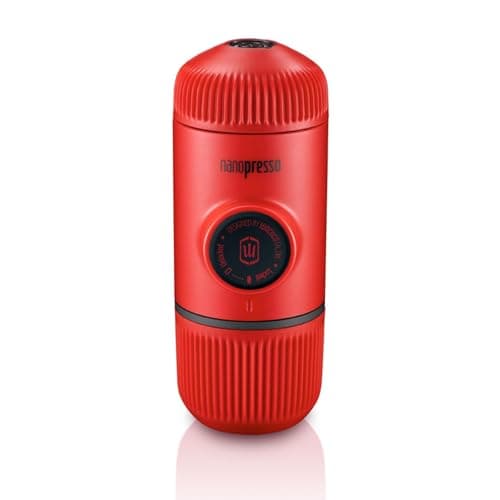
The practical answer: real pressurised espresso from a hand pump, in well under a minute, from a device that fits in a jacket pocket. Wacaco rates the pump at up to 18 bar, the basket takes 8g, and the output is a genuine short shot with crema. It is a single shot rather than a double, and it needs hot water poured in — but as a way to get espresso with no machine and no power, nothing else is this quick.

Fastest real shot
7.8
$64.90Amazon
03
AeroPress AeroPress Original Coffee Press
AeroPress Original Coffee Press

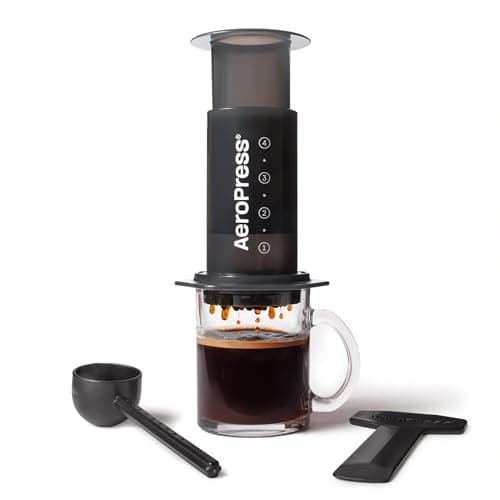
Not espresso — and the most useful thing on this page anyway. Hand pressure through an AeroPress is perhaps one to two bars, nowhere near nine, so you get a concentrated, clean, low-acid coffee rather than a crema-topped shot. Brewed short with a fine grind it makes a genuinely good base for a latte or an americano, costs a fraction of the pressure devices, and is unbreakable.

Best value — concentrate, not espresso
7.0
$39.95Amazon
04
Bialetti Bialetti Moka Express (6-Cup)
Bialetti Moka Express (6-Cup)

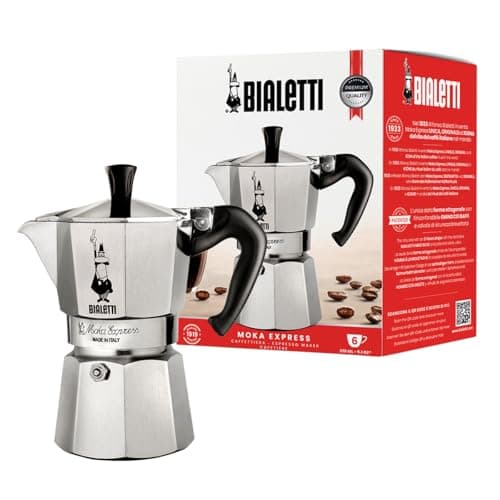
The traditional answer, and a wonderful object: steam pressure pushes water up through a basket of fine coffee on the stovetop, giving a small, intense, almost-syrupy coffee for the price of a couple of bags of beans. It runs at roughly 1-2 bars, so it is not espresso either — it is the drink Italian kitchens actually make, and it is excellent in a stovetop latte.

Cheapest traditional method
7.4
$50.95Amazon

#ad · Live prices from the Amazon Product API, as of October 5, 2026. Where we have no verified live price, we show none — a gap beats a number that has rotted.

In detail

The picks, in full

01
Flair Flair 2GO

Closest to real espresso

Flair 2GO

Folding lever press6-9 bar gauge12-18g bottomless PFPacks to ~9.5 in
7.6/10

The closest you get to real espresso without a machine, and the pick if the shot itself is the point. A manual lever press with a pressure gauge, a 12-18g bottomless portafilter and a folding body: you control the pressure profile by hand, you can see what you are doing on the gauge, and the result is a genuine 9-bar shot with proper crema. The trade is a ritual — pre-heat, dose, press, clean — every single time.

Espresso authenticity
9
Crema
9
Ease of use
5
Portability
8
Value
7

Pros

  • Reaches genuine espresso pressure and you can read it on the gauge
  • Pressure profiling by hand — a level of control most machines do not offer at all
  • 12-18g bottomless portafilter takes real espresso doses and real baskets
  • Folds down; no electricity needed at any point

Cons

  • You must boil water separately and pre-heat the brew head
  • One shot at a time, with a full clean-down after each
  • Costs more than every other method on this page
  • Technique matters: an uneven press gives an uneven shot

Don't buy this if…

…you want convenience. A lever press is a deliberate, hands-on ritual — that is the appeal and the cost.

A lever is the oldest espresso mechanism there is, and the reason it survives is control: you decide the pre-infusion, the ramp and the peak, which a 15-bar vibration pump decides for you. On a Flair the gauge turns that from guesswork into a readable target — ramp to 9 bar, hold, let it taper as the puck gives way. Our Flair PRO 2 review covers the bigger sibling, and best manual espresso machines ranks the lever category including the La Pavoni spring levers.

$169.00View on Amazon

Price as of October 5, 2026. Prices change — Amazon's at checkout is the one that counts.

#ad · we may earn a commission from this link to Flair 2GO

02
Wacaco Wacaco Nanopresso

Fastest real shot

Wacaco Nanopresso

18-bar hand pump8g dose, 80 ml336 gNo battery
7.8/10

The practical answer: real pressurised espresso from a hand pump, in well under a minute, from a device that fits in a jacket pocket. Wacaco rates the pump at up to 18 bar, the basket takes 8g, and the output is a genuine short shot with crema. It is a single shot rather than a double, and it needs hot water poured in — but as a way to get espresso with no machine and no power, nothing else is this quick.

Espresso authenticity
8
Crema
8
Ease of use
7
Portability
9
Value
8

Pros

  • Genuine pressurised extraction with crema from hand pressure alone
  • Fast: pump a shot in well under a minute once water is hot
  • No power, no battery, nothing to charge or plug in
  • Cheaper than a lever press and far smaller

Cons

  • 8g basket — a single shot, not a double, and not a mug of coffee
  • Needs a genuinely espresso-fine grind to build pressure
  • More parts to disassemble and rinse than an AeroPress
  • You still need a kettle

Don't buy this if…

…you want volume. This makes one small, strong shot at a time by design.

The Nanopresso is the device we would hand someone who says "I just want an espresso in a hotel room". It is also the one most dependent on grind: too coarse and the pump offers no resistance at all, which feels like a broken device and is in fact a broken grind. Our Nanopresso review covers it in full, and best portable espresso makers ranks the travel category.

$64.90View on Amazon

Price as of October 5, 2026. Prices change — Amazon's at checkout is the one that counts.

#ad · we may earn a commission from this link to Wacaco Nanopresso

03
AeroPress AeroPress Original Coffee Press

Best value — concentrate, not espresso

AeroPress Original Coffee Press

3-in-1 immersion + pressure brewBPA- & phthalate-free copolymerBrews ~1-3 cups per pressPacks down to ~7.75 oz
7.0/10

Not espresso — and the most useful thing on this page anyway. Hand pressure through an AeroPress is perhaps one to two bars, nowhere near nine, so you get a concentrated, clean, low-acid coffee rather than a crema-topped shot. Brewed short with a fine grind it makes a genuinely good base for a latte or an americano, costs a fraction of the pressure devices, and is unbreakable.

Espresso authenticity
4
Crema
3
Ease of use
9
Portability
8
Value
10

Pros

  • Cheapest route to strong, concentrated coffee that works in milk drinks
  • Extremely forgiving on grind and water temperature
  • Unbreakable, dishwasher-safe, cleans in seconds
  • Also makes excellent regular coffee — it is not a single-purpose device

Cons

  • Not espresso: hand pressure is nowhere near nine bars, so there is no true crema
  • Paper filters are a consumable
  • A short, strong AeroPress brew is still thinner in body than a real shot

Don't buy this if…

…you specifically want crema and a syrupy short shot. No AeroPress recipe produces that; the pressure is not there.

Be sceptical of "AeroPress espresso" recipes. They produce a concentrated brew that is delicious and useful — and the espresso-style crema in the photos is usually fine bubbles from the plunge, not emulsified oils under pressure. Treat the AeroPress as what it is: the best cheap concentrate maker in coffee. Our best AeroPress model page ranks the family, and AeroPress vs moka potsettles this page's two non-pressure methods against each other.

$39.95View on Amazon

Price as of October 5, 2026. Prices change — Amazon's at checkout is the one that counts.

#ad · we may earn a commission from this link to AeroPress Original Coffee Press

04
Bialetti Bialetti Moka Express (6-Cup)

Cheapest traditional method

Bialetti Moka Express (6-Cup)

Aluminum6 espresso cupsSafety valveNot induction-compatible
7.4/10

The traditional answer, and a wonderful object: steam pressure pushes water up through a basket of fine coffee on the stovetop, giving a small, intense, almost-syrupy coffee for the price of a couple of bags of beans. It runs at roughly 1-2 bars, so it is not espresso either — it is the drink Italian kitchens actually make, and it is excellent in a stovetop latte.

Espresso authenticity
5
Crema
4
Ease of use
8
Portability
7
Value
10

Pros

  • Cheapest method here and essentially indestructible
  • No power, no filters, no consumables at all
  • Makes several small servings at once, unlike the pressure devices
  • Outstanding base for a stovetop latte or cappuccino

Cons

  • Roughly 1-2 bars, not nine — concentrate rather than espresso, with no real crema
  • Aluminium body is not induction-compatible and will dent
  • Makes only the number of cups it is sized for
  • Easy to scorch with too much heat, which tastes bitter and metallic

Don't buy this if…

…you want crema and a 25-second shot. A moka pot is a different drink that happens to be excellent.

Technique decides the moka pot far more than the pot does: moderate heat, water filled to just below the valve, a level basket that is never tamped, and off the stove the moment the gurgle turns to a splutter. Our how to use a moka pot guide has the method, best moka pots covers stainless and induction-safe alternatives, and moka pot vs espresso machine is the honest pressure comparison in full.

$50.95View on Amazon

$59.9915% off

Price as of October 5, 2026. Prices change — Amazon's at checkout is the one that counts.

#ad · we may earn a commission from this link to Bialetti Moka Express (6-Cup)

Pressure is the whole argument

The figures below are the manufacturers' published ratings and the generally documented operating ranges for each method — not pressures we measured ourselves. They are what separates "espresso" from "strong coffee", and no amount of recipe cleverness moves a device out of its row.

MethodPressureReal espresso?Effort per shotNeeds
Flair 2GO (lever)Up to ~9 bar, on a gaugeYesHighKettle, fine grind, pre-heat
Wacaco Nanopresso (hand pump)Rated up to 18 barYesModerateKettle, very fine grind
AeroPressRoughly 1-2 bar by handNo — concentrateLowKettle, paper filters
Moka potRoughly 1-2 bar steamNo — concentrateLowStove or camp burner
French press, pour over, dripNone (gravity/immersion)NoLowNot an espresso method at all

The recipe, whichever device you use

Grind fine — finer than you think, close to powdered sugar in feel for the pressure devices and a little coarser for a moka pot. Dose by weight, not by scoop: 7-9g for a Nanopresso basket, 12-18g for the Flair. Use water just off the boil, around 92-96°C, and pre-heat the brew chamber on a lever press or your first shot will run cold. Aim for a yield about double the dose for a lever or pump shot, and stop when the stream goes pale and thin. Taste and adjust the grind, not the dose: how to dial in espresso is the same loop here as on a machine, and the coffee-to-water ratio guide has the numbers for the non-pressure methods.

Things that do not make espresso, whatever the internet says

A French press with fine coffee: no pressure, just a muddy immersion brew that will also clog the mesh. Instant espresso powder: a soluble coffee product, not an extraction. A pod machine without a pump: the pod does nothing without pressure behind it. And boiling fine grounds in a saucepan, which extracts everything bitter in the bean. If what you actually want is convenience rather than espresso specifically, a good drip machine will make better coffee than any improvised espresso attempt.

Should you just buy a machine?

Worth asking honestly, because a Flair plus a hand grinder costs real money and an entry pump machine is not far off. Buy a manual method if you travel, if counter space is the binding constraint, if you like the ritual, or if you want one good shot a day. Buy a machine if you make milk drinks for more than one person, if speed matters on a weekday morning, or if you want to steam milk — none of the devices here steam milk at all. Our machines under $200 page is the cheapest real entry point, and the complete setup under $500 is what we would actually buy with the money a Flair plus grinder costs.

How we picked

We did not lab-test this gear

Everyone in this category says they tested twenty machines. We have not pulled shots on every product here, and we say so. What we did instead: compiled the published specifications, cross-checked the manufacturer manuals, computed the running cost (wattage to energy, grams-per-shot to cost-per-cup), weighed aggregated owner reports, and scored each product against a published rubric. The scores are judgments from documented research — not measurements we took, because we do not have a test lab and we will not pretend we do. Where hands-on time would tell you more than a spec sheet, we flag it. Where a number came from someone else's work, we name them in Sources.
Questions

Frequently asked

Can you make real espresso without an espresso machine?
Yes, with a manual lever press or a hand-pump maker. Both reach roughly nine bars of pressure using your arm, which is what produces a true short shot with crema. An AeroPress, a moka pot, a French press or a pour over cannot — they operate at a fraction of that pressure.
Is a moka pot espresso?
No. A moka pot runs at roughly one to two bars of steam pressure against espresso's nine, so it makes a strong, concentrated coffee rather than a crema-topped shot. It is excellent in its own right and excellent in a stovetop latte — see moka pot vs espresso machine.
Can an AeroPress make espresso?
Not espresso, no — hand pressure through an AeroPress is perhaps one to two bars. A short, fine-ground AeroPress brew makes a very good concentrate for milk drinks, and the foam you see is bubbles from the plunge rather than true emulsified crema.
What grind do I need for manual espresso?
Espresso-fine, the same as for a machine: fine enough that the pump or lever meets real resistance. This is the step that most often fails, not the brewing. A hand grinder with fine adjustment is the cheapest way there — see best hand grinders.
Can you make a latte without an espresso machine?
Yes. Make a strong base with any method here, then heat and froth the milk separately with a handheld frother, a French press or a jar. The guide is how to froth milk without a steam wand, and best milk frothers ranks the tools.
Which method is cheapest?
The moka pot, by a wide margin, followed by the AeroPress. Both cost less than almost any grinder — which is the real expense if you do not already own one, and the one worth paying.

Keep reading

Same gear, other pages

We cover this gear elsewhere too

Receipts

Sources

We do not run a testing lab, and we do not pretend to. Where a measured number came from someone else's work, we name them and link them. Where we could not verify something, we say so on the page rather than quietly leaving it out. Read our full method.